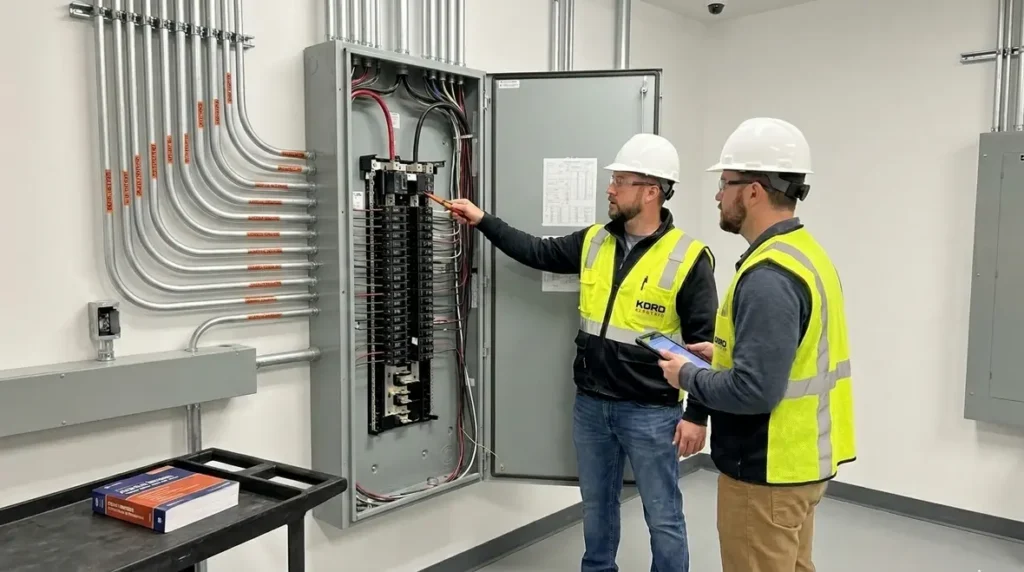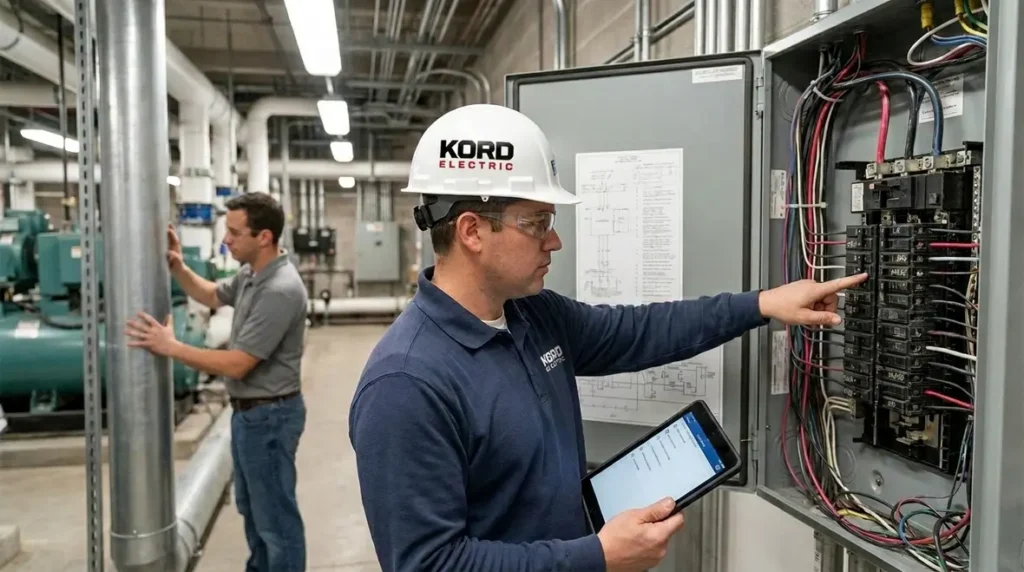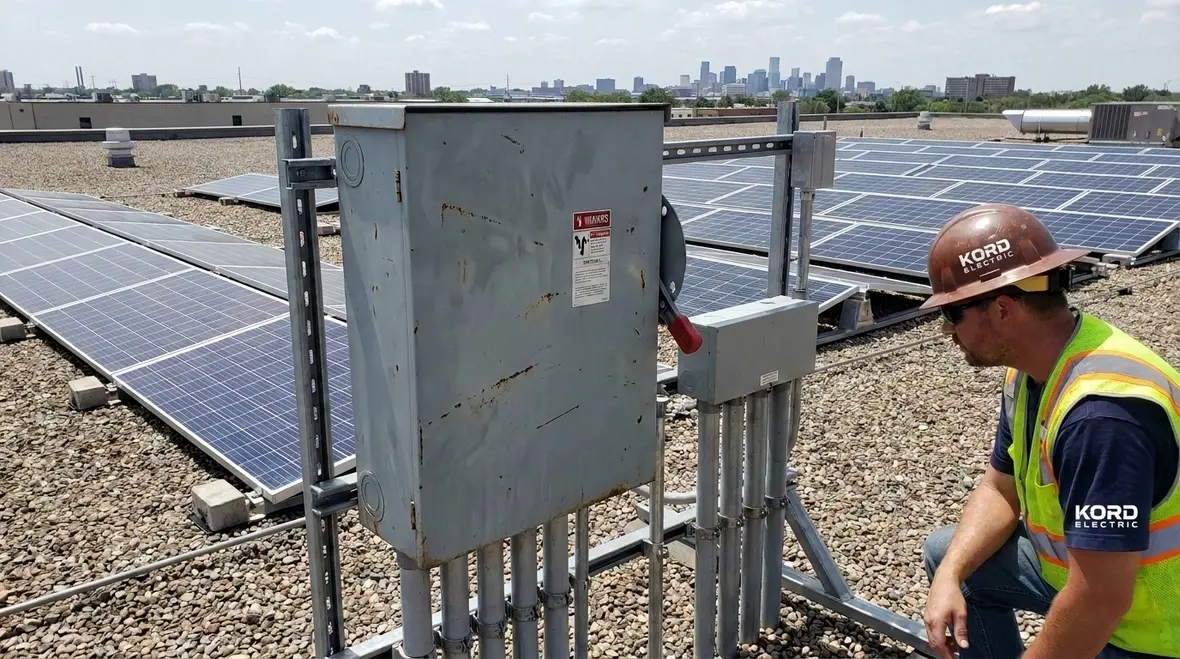
NEC Section 690.13 PV Disconnecting Means for Commercial Solar
NEC Section 690.13 PV disconnecting means and why it matters for commercial solar
For commercial and industrial solar systems, we do not treat code like bedtime reading. We treat it like a checklist that keeps people safe and keeps operations running. In the early stages of design and installation, NEC Section 690.13 PV disconnecting means sets key rules for how a PV system gets shut down for service and emergency response. It tells us how to provide a disconnect that helps reduce hazard risk for electricians, firefighters, and anyone who needs to work around live equipment.
Our team at Kord Electric and our expert service staff walk clients through these requirements in plain language, because nobody wins when the electrical design sounds like it was written by a robot who never went to trade school. And yes, we will explain it slowly, even if your project manager wants the quick version. Safety still comes first, and the best time to plan for a disconnect is before the wiring is buried.
What the NEC expects from PV disconnecting in field conditions
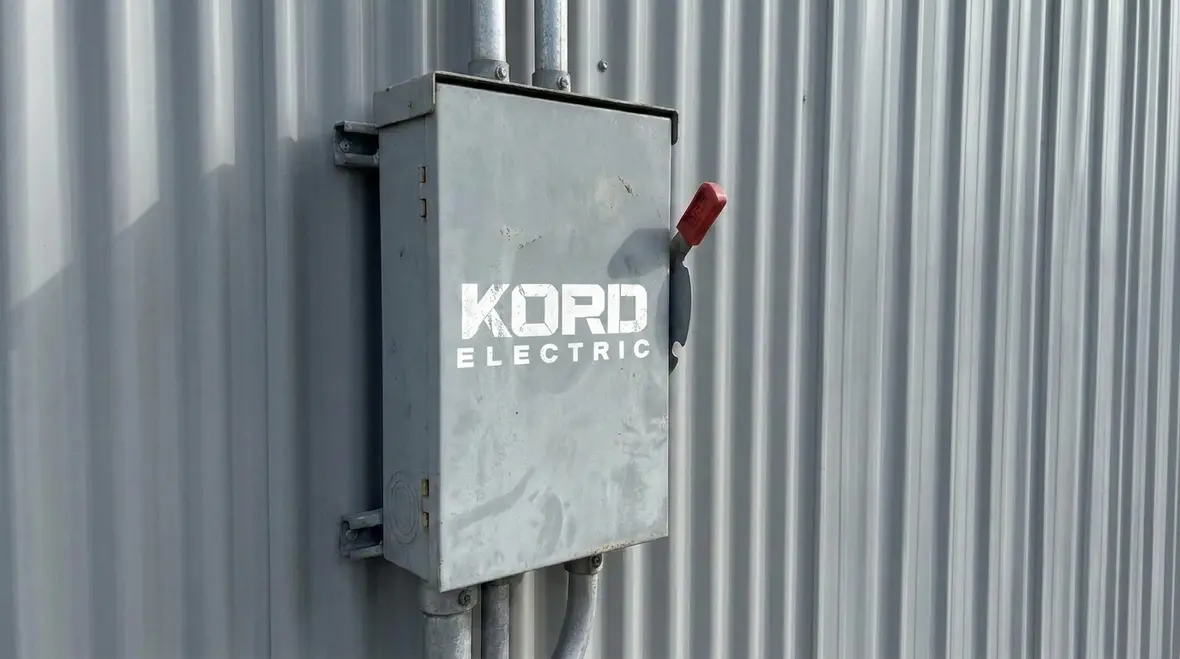
In practice, PV systems operate outdoors, in heat, wind, moisture, and the real world of equipment access. Therefore, the disconnecting means cannot be a “nice idea.” It must work when people need it most, and it must match the locations and operational needs of the facility.
When our technicians design or review a system, they focus on how the disconnect helps during tasks like troubleshooting, routine maintenance, and fault response. To do that, we confirm that the disconnect layout supports safe isolation of PV circuits. Then we align the disconnecting function with how the facility is actually used, including how crews enter equipment rooms and how emergency responders would reach controls.
At this stage, our expert service staff often explains a simple point: the disconnect is not there to impress anyone. It is there so that work can happen with fewer unknowns, and with better coordination between the electrical contractor and the site team. If you can isolate correctly, you can measure, test, and repair with more confidence. If you cannot, you end up chasing power you did not mean to chase, like looking for your keys in a gym while wearing the wrong shoes.
How we plan for accessibility, labeling, and safe shutdown
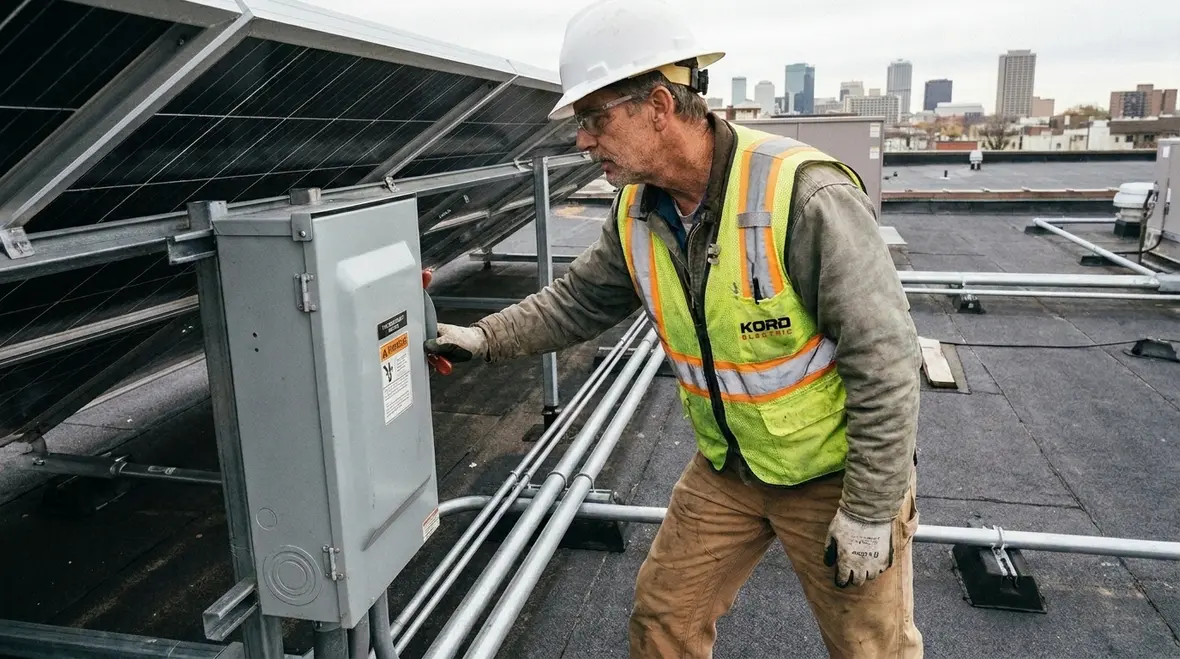
Accessibility matters because code requirements are only helpful when people can reach the equipment fast and safely. That means we look at mounting height, physical obstructions, access routes, and whether the disconnect can be reached with normal site traffic. In commercial and industrial settings, the “perfect plan” can still fail if it blocks a walkway or sits behind stored materials.
Next, we confirm labeling and identification. Clear markings help crews verify they are opening the right control point. Then, when maintenance or emergency response occurs, responders do not waste time guessing. Our technicians also coordinate with the facility’s standard operating procedures so the disconnect matches how the site already communicates hazards.
Because facilities vary, we treat labeling as part of a full operating picture, not as a sticker you throw on at the end. We also ensure the disconnect setup supports safe shutdown of PV circuits used in the system. In other words, we design for real steps, not theoretical steps.
For property teams that want a deeper foundation in how code shapes these choices, we often point them to resources like our NEC overview article, Understanding NFPA 70: The National Electrical Code Explained for 2026. It helps connect the big picture of electrical safety to specific field details like disconnect placement, identification, and shutdown behavior.
PV disconnect points, wiring, and coordination with facility electrical gear
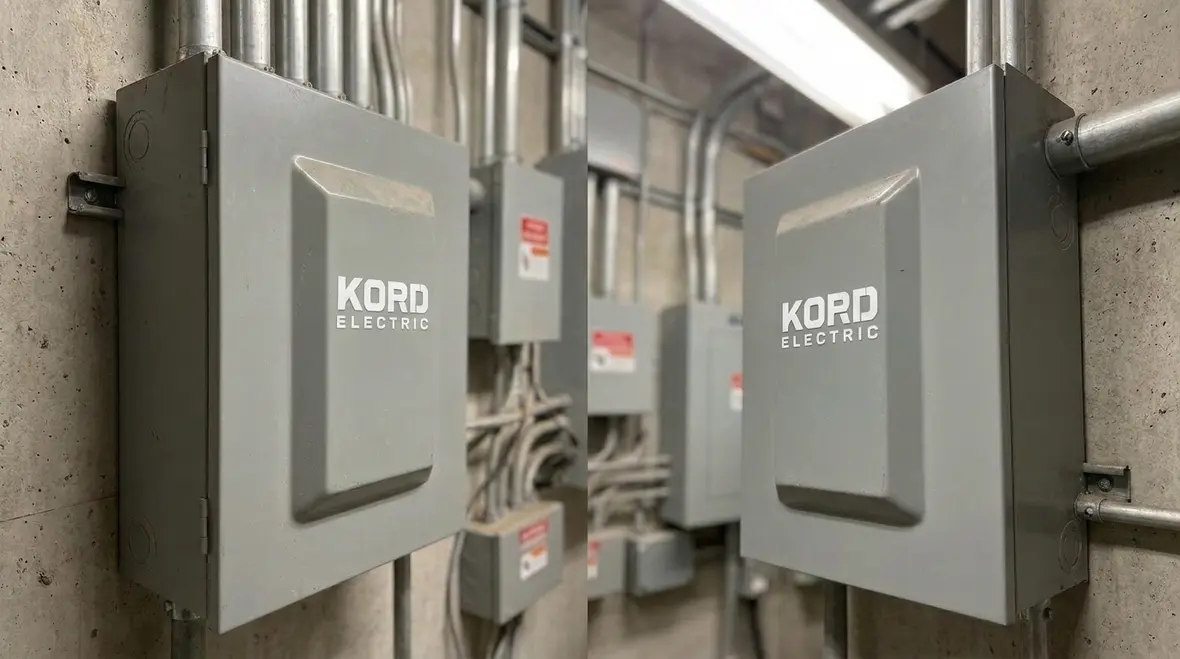
It is easy to talk about disconnects in isolation, yet PV circuits connect into the facility’s electrical system. So we plan the disconnect function with the rest of the one line and the equipment lineup. That includes coordination with inverters, rapid shutdown concepts, and downstream protective devices.
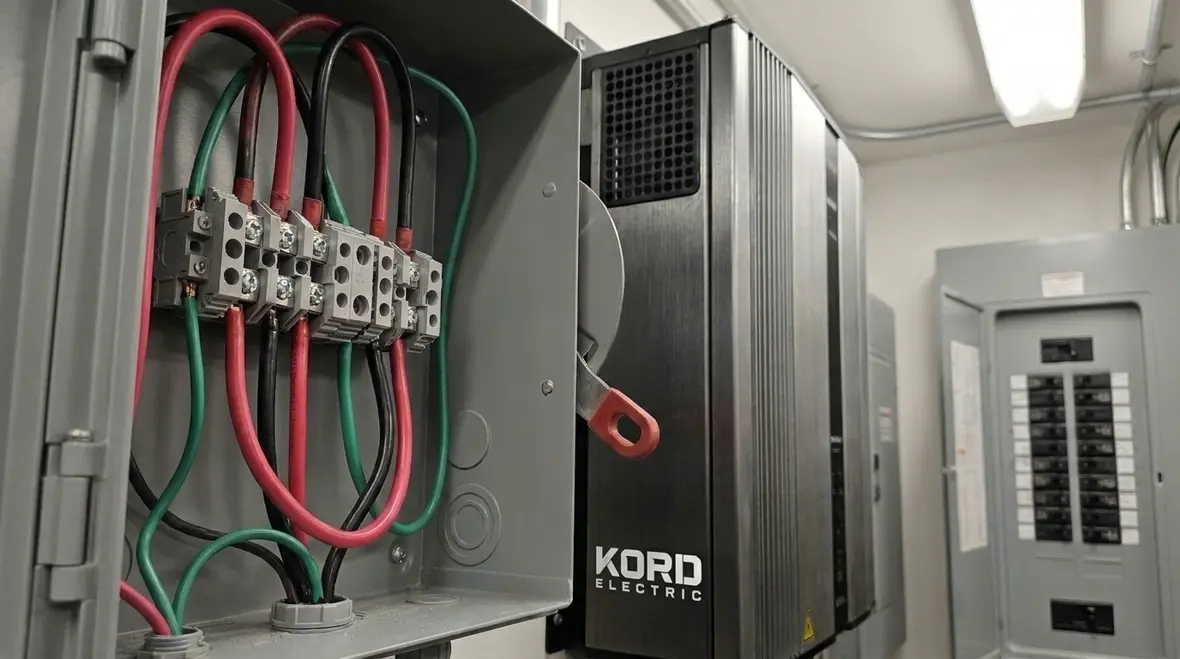
Our expert service staff explains this during project reviews. We show clients how the PV disconnect interacts with equipment that converts DC output to AC. Then we confirm the correct isolation boundaries so crews can test, verify, and safely service components without unintentionally exposing other energized parts.
We also check how the PV disconnect aligns with maintenance workflows. For example, if a facility frequently runs during peak production hours, our project plan includes safe isolation steps that minimize downtime risk. That coordination helps the electrical contractor and the client’s operations team work as one unit. And yes, it prevents that classic scenario where someone says, “We thought it was off,” and everyone suddenly becomes a very busy detective.
On large projects, we sometimes tie PV disconnect planning into broader electrical design-build work. A coordinated approach, like the one we use in our electrical system design-build projects, helps keep NEC Section 690.13 PV disconnecting means aligned with panel schedules, feeder routing, and future expansion plans.
Working with fire and emergency responders on commercial sites
Safety does not belong only to the electrical room. Therefore, we treat emergency access and shutdown coordination as a practical design goal for commercial and industrial facilities. Fire service needs clear expectations for how a PV system can be placed into a safer state for response and overhaul.
At Kord Electric, we connect design intent to on site realities. We ensure that the PV disconnecting approach supports safe operations and that the required disconnect information is available where it should be. We also advise property managers and facilities teams on how to share the relevant system details with emergency planning groups, so response does not start with guesswork.
We collaborate with client stakeholders, and when the project involves multiple trades, we help maintain a clean flow of information. Our goal is simple: reduce confusion, speed up action, and support safe work. If that sounds serious, it is. Yet we also keep it human, because nobody wants code complexity to feel like punishment.
Common compliance mistakes we see during reviews
Even solid projects can run into issues during construction or handoff. So, we review common problem areas early, and we fix them before they turn into costly changes.
Here are mistakes our technicians often flag during plan and site checks:
- Disconnect placement that fails accessibility needs, such as barriers, storage conflicts, or hard to reach locations that slow down safe action
- Insufficient identification, where labels are unclear or do not match the project documentation
- Misalignment with the electrical one line, where the disconnect function does not match how circuits are actually routed
- Coordination gaps, where crews service PV components but do not have a clear shutdown sequence for safe testing
- Incomplete documentation handoff, where the facility team receives equipment lists but not the shutdown related details needed for operations
Then, we handle each item with practical fixes. We explain the “why,” and we show how the correction supports safe shutdown and reliable service. We also share this knowledge in a way that works for facility managers and site electricians, not just for code readers. Because the best compliance plan is the one everyone can use.
How Kord Electric supports major property owners with PV electrical safety
Large buildings have one constant: schedules do not slow down for electrical questions. That is why we built our process around speed with accuracy. We support commercial and industrial facilities, major property buildings, and solar projects where uptime and safety matter.
We bring together experienced technicians and an expert service staff to manage the full path from review to installation support. Because planning prevents rework. Then we coordinate with the facility team so the disconnect strategy fits the real site, not just the drawings.
To keep projects aligned with current standards, we reference credible guidance connected to NEC topics and electrical safety, including resources we use for training and review. And when a project touches fire pump or emergency system considerations, we think beyond the solar equipment alone, because buildings work as a system.
In short, we help you move through PV electrical work with fewer surprises. And if you want to laugh a little while you do it, we are happy to be that calm voice in the meeting that says, “Yes, the disconnect requirement exists, and no, it is not optional.”
For portfolios that mix solar with other power upgrades, we can also connect PV safety planning to broader services like Los Angeles County commercial electrical services. That way, disconnect planning, panel capacity, and long term maintenance cooperate instead of competing for attention.
FAQ
Conclusion: Let Kord Electric handle your PV disconnect planning
When we plan PV electrical safety the right way, we protect people, reduce downtime risk, and make service work smoother for your site team. Our technicians and expert service staff help commercial and industrial facilities follow NEC Section 690.13 PV disconnecting means with clear placement, reliable identification, and good coordination with the rest of the electrical gear. If you are planning a new PV system or reviewing an existing one, contact Kord Electric for a focused compliance and safety review.
If your facility is also planning broader electrical upgrades, solar integration can sit comfortably beside panel work, EV charging, and smart building improvements. The key is to treat NEC requirements as part of one electrical story, not as an isolated chapter nobody reads until inspection day.
Our team supports property owners, managers, and contractors from early planning through commissioning, so your PV disconnects feel like a natural part of the system instead of an afterthought bolted on at the end. When you are ready to move from “we should look at this” to “we have a plan,” we are ready to help.