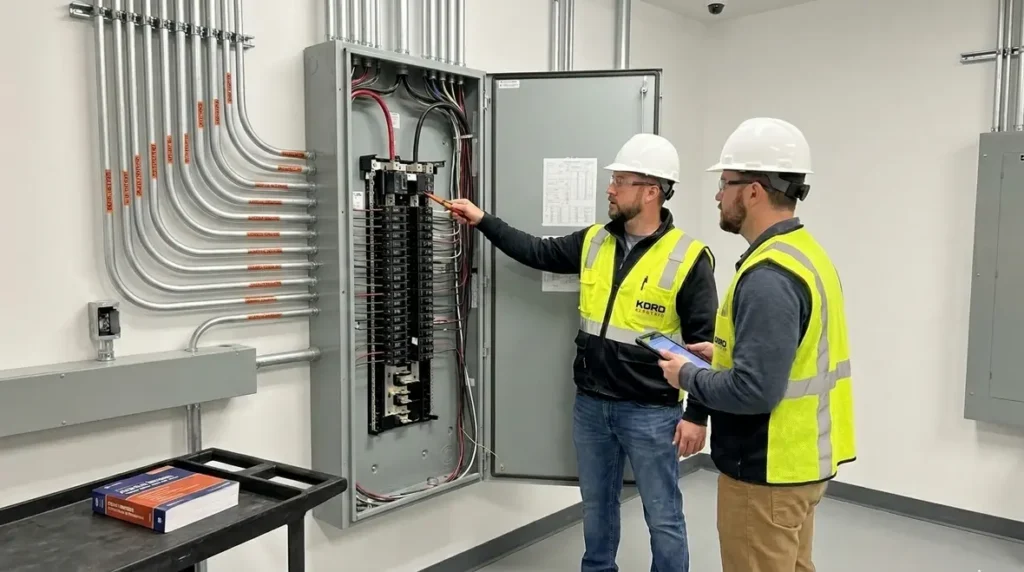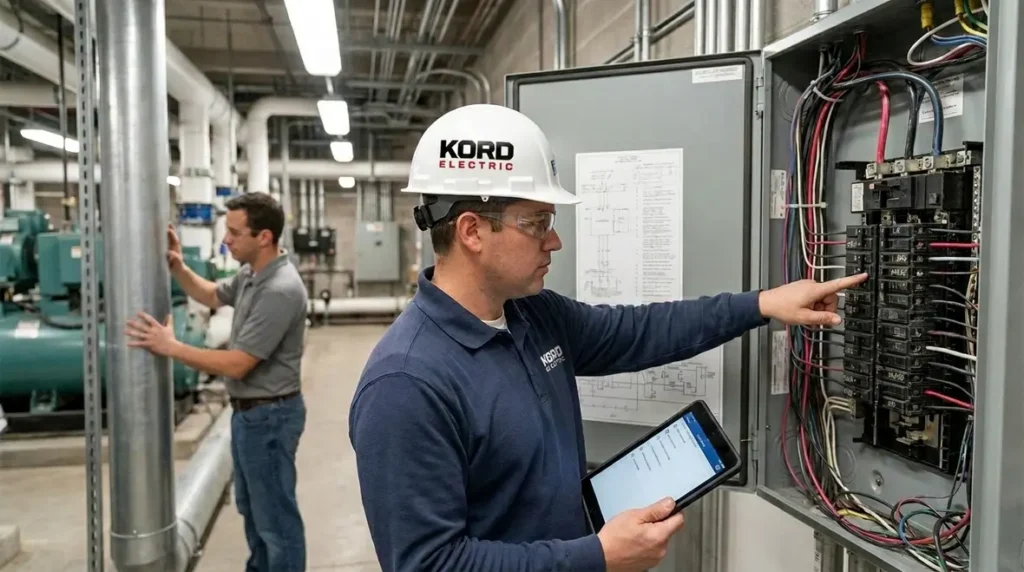
NEC Splices Taps Service Entrance Guide Section 230.46
Kord Electric supports commercial and industrial facilities with electrical work that follows the book, and we talk about it like we mean it. So when building teams ask about NEC splices taps service entrance details, our electricians and expert service staff explain how the rules apply in real life, not just on paper. In this article, we walk through NFPA 70 Section 230.46, the part that governs splices and taps in service entrance conductors. We do it with practical guidance, jobsite clarity, and yes, we will keep it calm even when the electrical code gets fussy. Because if the code were a person, it would be the type to correct your grammar while wearing safety gloves.
What Section 230.46 really controls at the service entrance
In the service entrance, the stakes get higher fast. That is where power transitions from the utility side toward building distribution. Section 230.46 focuses on how installers handle splices and taps within service entrance conductors. In plain terms, it limits where and how connections occur so the system stays safe under load, fault conditions, and long term wear.
Our technicians often see a common scenario: someone wants to “just make it work” in the field because the conduit route changed or the equipment location shifted. However, in service entrance wiring, the code does not treat that as a creative problem solving moment. Instead, it expects compliance in materials, workmanship, and connection methods. Therefore, we tell teams to plan the routing early, then execute the terminations and splices using the allowed approach for service entrance conductors.
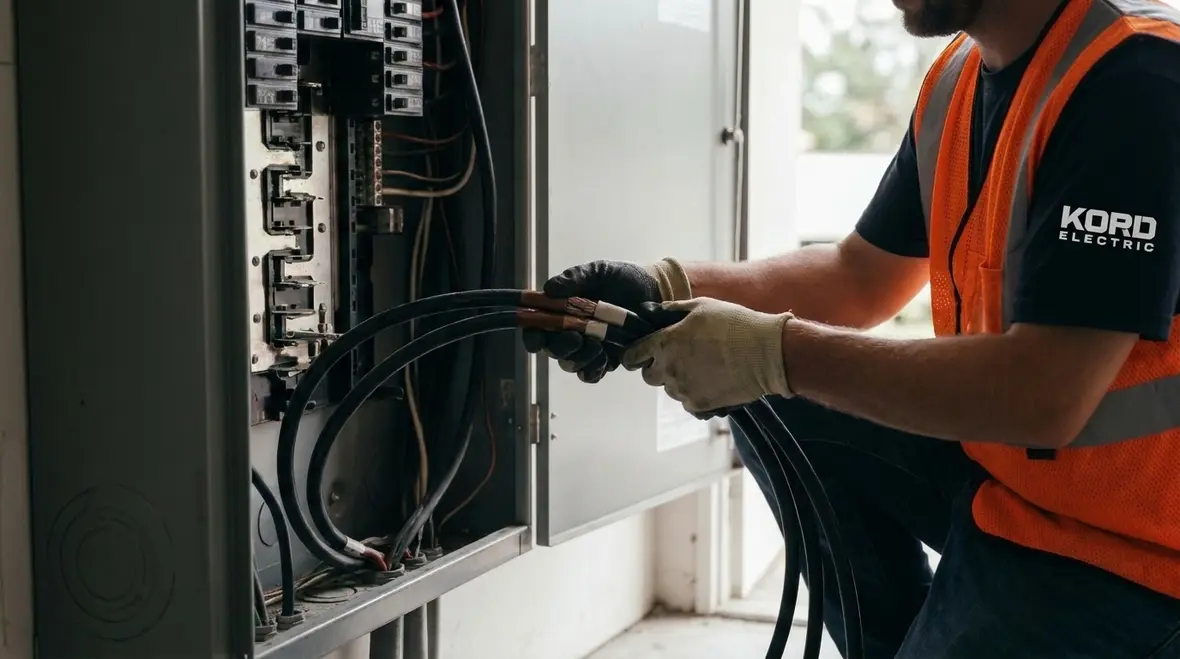
At the service entrance, this planning often connects to broader NEC decisions about how services are listed, labeled, and supplied. For teams who want a companion view of how service-level rules fit together, Kord Electric’s guide to NFPA 70 Section 230.2 NEC service listing requirements shows how upstream service choices shape everything that follows in the distribution system.
How splices differ from taps, and why that matters
People blend these words on site, and honestly, it is easy to do. Still, Section 230.46 treats the actions differently. A splice joins conductors to continue the circuit. A tap creates a branch connection to supply additional loads or equipment while still feeding from the service entrance conductor path.
Here is where our expert service staff helps: when a project uses multiple panels, switchboards, or service disconnect arrangements, the team needs to know whether they are extending the conductor run or branching off. If they use the wrong mindset, they may attempt a connection that looks similar, but behaves differently. And electrical behavior always shows up later, usually when someone is least available and the building is most dependent on uptime.
So, before the crew makes any connection, we recommend reviewing the one line diagram and the equipment layout. Then we confirm where the conductor is actually required to splice or where a tap is permitted. This reduces rework and keeps the service entrance clean and code aligned.
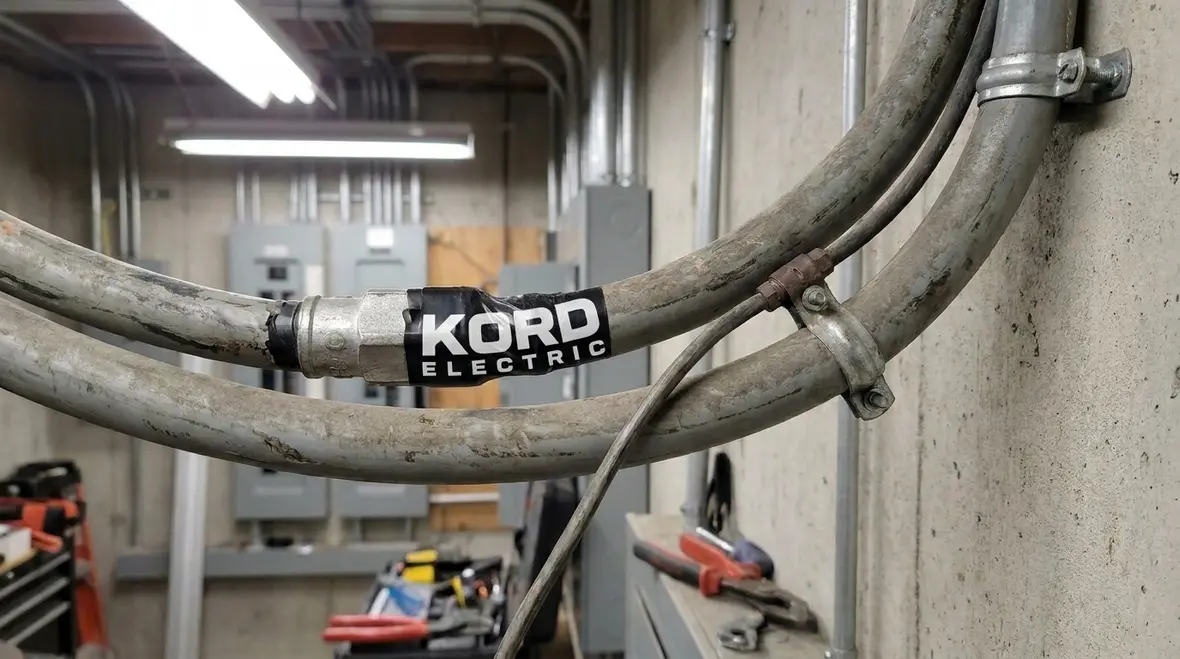
Allowed connection types and the workmanship expectations
NFPA 70 Section 230.46 ties the “where” to the “how.” Even when the location seems acceptable, connection methods must meet the required standard for service entrance applications. That means the installer must use components and installation practices that maintain safe conductivity and insulation integrity.
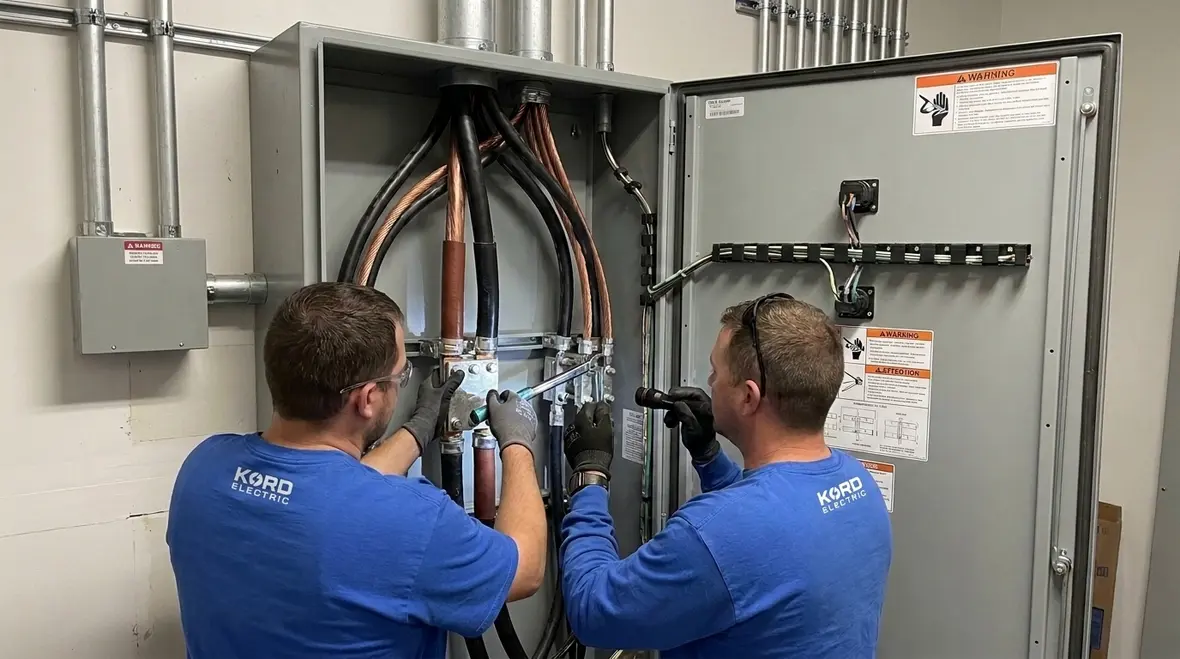
For example, when splicing service entrance conductors, the method cannot be a random grab bag of parts. Instead, it must work as a system. Our electricians look at a few critical factors:
- Appropriate splice or tap devices sized for the conductor type and rating
- Correct conductor preparation with clean terminations and secure contact
- Enclosure and environmental protection when the location exposes the splice to moisture, vibration, or other jobsite conditions
- Torque, compression, and tool verification where applicable, because loose connections do not stay loose for long
Next, we pay attention to installation quality. Workers can follow the letter and still fail the spirit if they damage insulation or leave conductors improperly supported. Therefore, our team stresses physical support, strain relief, and neat routing. It is not just aesthetic. It helps the splice survive the real world where buildings breathe, move, and settle over time.
And yes, we will say it: no one wants a “mystery connection” in the service entrance. That is the electrical equivalent of leaving a pop quiz for tomorrow. The system does not forget, and neither do inspectors.
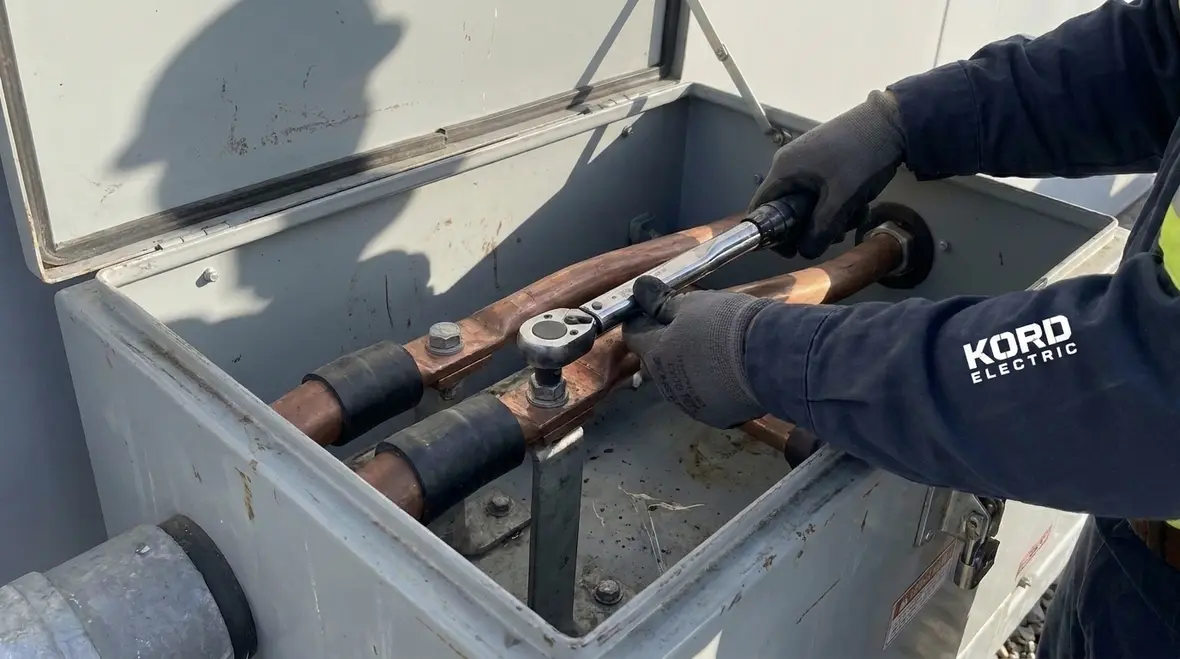
Where splices and taps usually land on real commercial projects
Commercial and industrial facilities rarely behave like simple textbooks. We install in warehouses with long conduit runs, office towers with strict routing constraints, and industrial buildings where vibration and heat matter. Therefore, the practical question teams ask is not “can we do it,” but “where does it fit and still pass review.”
In many builds, service entrance equipment may include switchboards, meter equipment, service disconnects, or distribution gear. Then conductors enter and transition to various assemblies. As a result, splices and taps often appear near equipment enclosures or within designated wiring spaces.
However, Section 230.46 requires the work to stay within allowed rules for service entrance conductors. So our approach is to map the conductor path early, then align connection locations with the project plan. We also coordinate with general contractors and equipment suppliers because a “small” change to transformer location or gear placement can force the service conductors to shift. When that happens late in construction, the crew tends to reach for shortcuts. We help the team avoid that trap.
Moreover, we consider commissioning and maintenance access. A properly installed splice location supports future inspection and fault troubleshooting. Consequently, it reduces downtime and keeps emergency service calls from becoming the latest episode of a very long TV series.
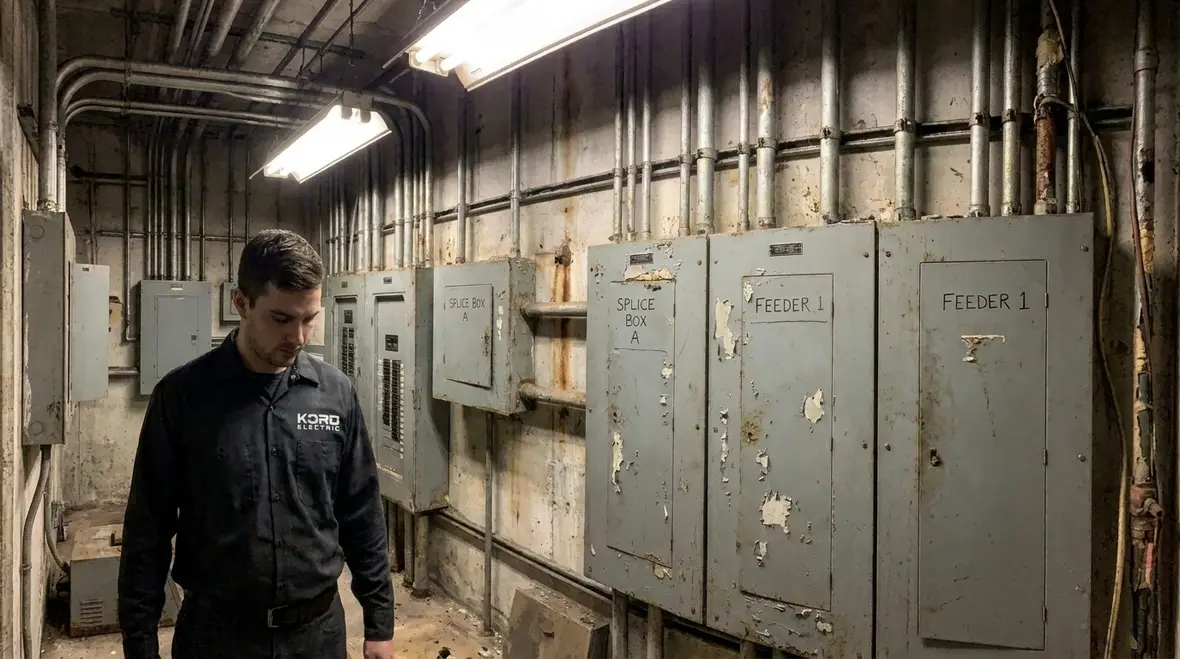
Inspection readiness and how we document compliance
Section 230.46 is one part of a larger electrical safety picture, so field documentation matters. Our technicians do not only install; we help facilities pass review with clear evidence of compliant work.
That documentation usually includes:
- Conductor labeling and as-built identification matching the one line diagram
- Manufacturer data for splice and tap devices used
- Photographs showing the splice method before enclosure closure when possible
- Torque or installation procedure notes when the method requires it
To make it easier for teams, we also explain what inspectors look for at the service entrance. Typically, they focus on connection integrity, correct device selection, and whether the splice or tap location aligns with the NEC rules for service entrance conductors.
Meanwhile, we keep the process calm. Our service staff speaks in plain language, and we walk building stakeholders through the “why,” not only the “what.” That way, decisions get made with less guesswork and fewer late-night calls that start with, “Do we really have to redo this?”
Code context: NEC structure and why it helps planning
NFPA 70 can feel like a maze until you understand how the NEC organizes requirements. Our team relies on a code based mindset: we connect the section rules to the system design, then we build a plan that survives both inspection and operation.
In that spirit, we connect Section 230.46 with the broader concept of safe service conductors, correct terminations, and protected wiring methods. When other parts of NEC guidance influence conductor routing, equipment arrangements, and protection, teams should treat these as one linked design.
Also, it helps to use the right resources. Our internal training draws from NEC guidance and code explanations we share through Kord Electric and our related fire and safety education properties. We also stay aligned with industry safety organizations such as firepumps.org, because fire and electrical safety often intersect in high demand facilities.
Many facility leaders want a broader map of how these NEC service entrance requirements connect to the rest of the code. For that big-picture view, Kord Electric’s resource on NFPA 70A vs NEC for commercial electrical compliance and their guide to understanding NFPA 70 for 2026 help teams see how section-level rules like 230.46 fit into everyday design and maintenance decisions.
And if you ever wonder why we are so steady about code details, it is because field fixes cost money, disrupt operations, and sometimes create risks no one wants to explain later. The NEC exists to prevent those problems, not to challenge your patience.
Quick comparison of splice and tap planning decisions
|
Planning focus for splices
|
Planning focus for taps
|
FAQ: NEC splices and taps for service entrance conductors
Call Kord Electric for code aligned service entrance work
If your project involves service entrance conductors, NFPA 70 Section 230.46 deserves real planning, not last minute improvising. Kord Electric supports commercial and industrial facilities with experienced technicians who explain the rules clearly, coordinate the layout, and install compliant NEC splices taps service entrance solutions with documentation built for inspection.
Our team can also help you align splices and taps with broader code strategy, from service listing decisions to downstream labeling. For facility leaders planning upgrades or expansions across Southern California, Kord Electric’s Los Angeles County electrical services support everything from new service entrance work to complex renovations, so your NEC strategy stays consistent from the first disconnect to the last branch circuit.
Contact us to review your one line, confirm connection locations, and keep your system safe and reliable from day one to long after the ribbon cutting.