

NEC Surge Arrester Conductor Sizing and Routing
Protecting commercial and industrial sites with NEC surge arrester conductors
At Kord Electric, we design and maintain electrical systems for commercial and industrial facilities and major property buildings. When lightning, switching surges, or utility transients show up, the real goal is simple: keep dangerous voltage from reaching sensitive equipment. That is why we think about NEC surge arrester conductors early in a project, not as an afterthought when the panel is already mounted and everyone is hungry. Our technicians and expert service staff explain the rules in plain language, and then they make sure the field work matches those rules.
And yes, we also remind people that electricity does not care about our schedules. Still, with the right sizing and routing, we can control where surge energy goes, instead of letting it wander around like a group chat at midnight.
What NFPA 70 Section 242.52 requires for surge arrester conductor sizing
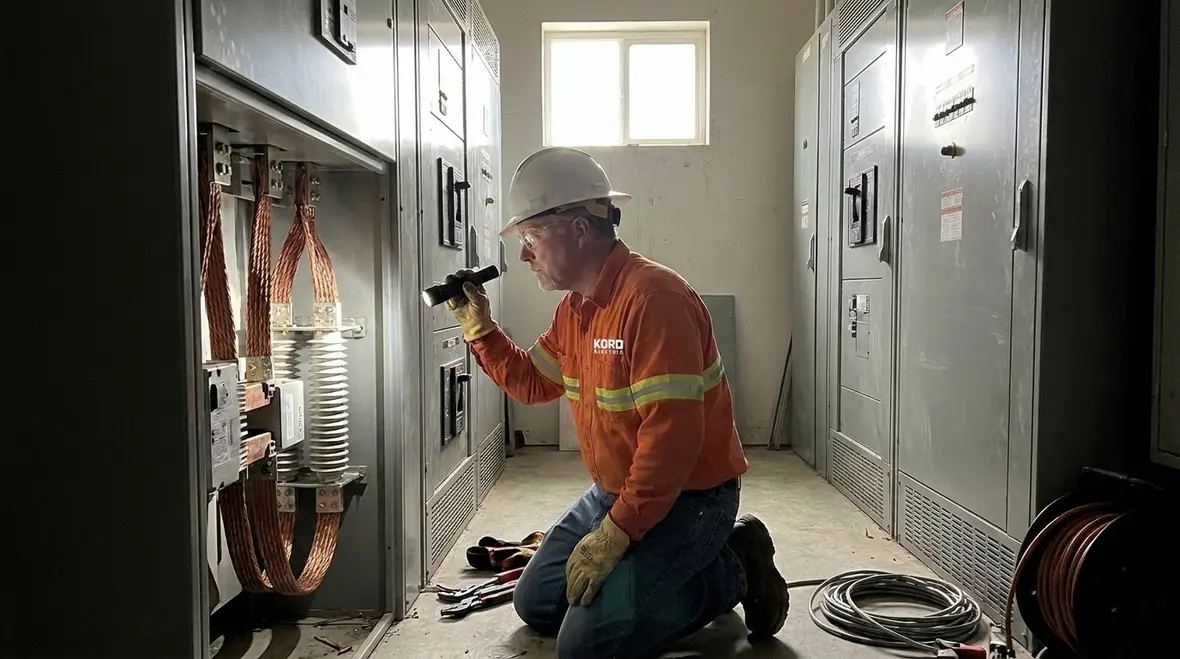
NFPA 70 Section 242.52 focuses on one key idea: the conductors connected to surge arresters must be sized and arranged so they can safely handle surge current. The code does not treat surge protection like decorative lighting. Instead, it treats it like a protection path that must perform during abnormal events.
In practice, our team uses the arrester manufacturer instructions and the wiring method requirements as the backbone. Then, we check conductor sizing so the assembly matches the surge current capability and does not create dangerous voltage rise at the equipment terminals. To do that, we do more than measure wire size with a tape measure and optimism. We verify the design basis, the connection method, and the installed path length.
Our technicians explain this part with a simple analogy. If you want a smoke detector to work, you do not block the sensor with a couch. If you want surge arresters to work, you do not “save time” by routing the conductor in a way that adds unnecessary resistance and inductance. The conductor becomes part of the performance story.
We also connect these details back to overall code intent. NFPA 70 is not just a long book of rules; it is the foundation for safe electrical design and maintenance across the United States. If you want a broader overview of how the National Electrical Code shapes commercial and industrial work, our team walks through the big picture in our guide Understanding NFPA 70: The National Electrical Code Explained for 2026, and then we apply that context when we design each surge protection path.
Routing matters more than people think
Now we get to the part that surprises most facility managers. Routing is not just “tidy cable management.” Under Section 242.52, the path of NEC surge arrester conductors must be routed to reduce voltage rise and keep surge energy from traveling through the wrong parts of the building wiring system.
So how do we guide routing? First, we keep the conductor path as short and direct as the design allows. Next, we avoid sharp bends and long detours. Then, we plan the route so the surge current does not flow through equipment grounding conductors and other paths that were never intended to carry that energy.
During commissioning, our expert service staff walks the route and checks how the conductors tie into the grounding and bonding system. Also, we look at how installers route cables in the tray. If the conductor path runs next to noisy circuits without the proper separation, the installer might be creating a new coupling problem. That can turn a surge event into “surge plus chaos.”

This is where field reality meets design intent. If cable trays get rearranged, conduits get added, or new equipment gets dropped into the lineup, we revisit the surge conductor path instead of assuming the original routing still works. In major property buildings that see constant tenant improvements, that simple discipline makes the difference between “documented protection” and protection that actually behaves under stress.
How bonding and grounding influence surge performance
Many people read surge protection and immediately think of arresters alone. However, in real commercial and industrial work, the results depend on bonding and grounding. We treat the surge arrester assembly as a system, not a single component.
That means we coordinate the surge arrester connection points with the building grounding electrode system and the equipment bonding network. When bonding points are loose, corroded, or incorrectly routed, the surge current can create voltage differences that stress equipment insulation and electronics.
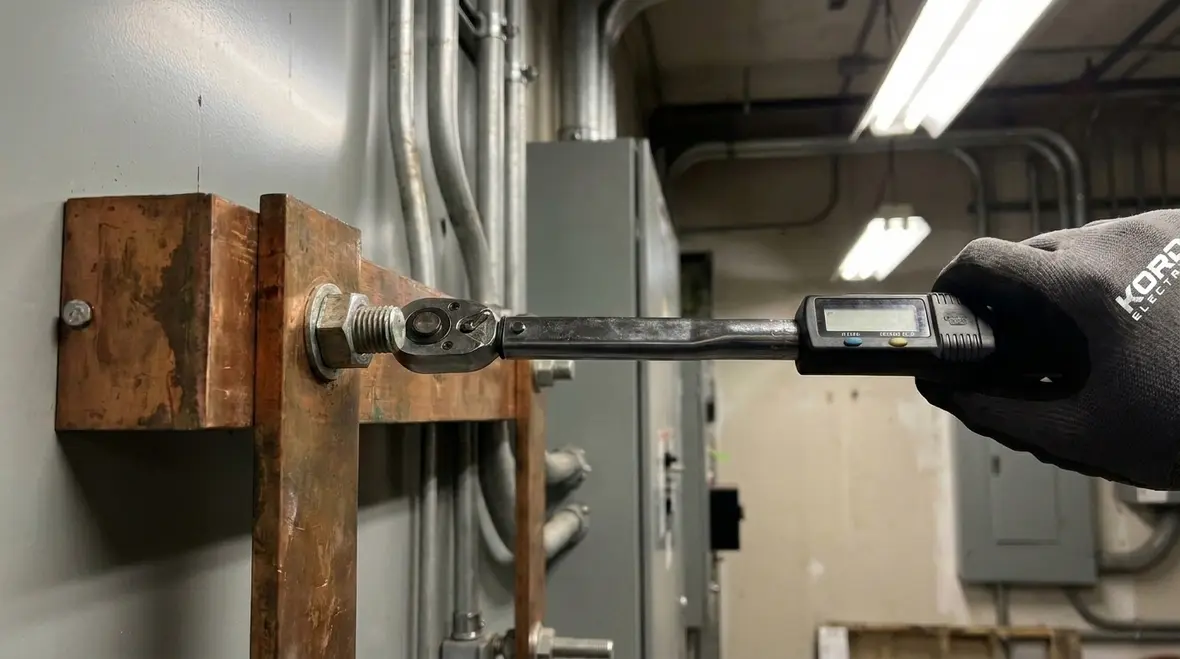
Our technicians also pay attention to connection quality. They tighten terminations to the correct torque, confirm conductor identification, and verify that the grounding conductors and bonding jumpers do not become accidental high impedance points. In other words, we make sure the protection path stays low impedance when it matters most.
And just to keep the mood light, we tell people this is not like building a LEGO set. If you leave the connector “good enough,” the surge event will not be polite about it.
Because bonding and grounding touch so many systems, our surge reviews often uncover other improvements too. We might find a grounding electrode conductor that needs cleaning and retorquing, a bonding jumper that no longer matches the fault current available, or an equipment ground path that was quietly compromised during a remodel. Fixing those issues supports surge performance and everyday safety at the same time.
Step by step: our field method for conductor sizing and installation
To keep installations consistent across warehouses, manufacturing floors, office towers, and major property buildings, we follow a method that our teams repeat and improve.
- Review the design intent: we confirm the surge device rating, its intended location, and the protection concept for the service or distribution level.
- Confirm sizing: we verify conductor size in line with the code requirements and the arrester manufacturer data, and we check the wiring method impacts.
- Plan the route: we map the most direct path, minimize length, and avoid unnecessary bends or detours.
- Coordinate bonding: we confirm the interconnection points, ensure proper bonding, and check how the surge arrester lead ties into the grounding system.
- Install with care: our technicians use correct termination hardware and ensure conductor support and routing stay stable over time.
- Verify in commissioning: we inspect the completed assembly, validate labeling, and confirm that the field build matches the approved plan.
Meanwhile, our service staff explains what we found and what it means for your facility. They also help stakeholders understand maintenance touch points, so the protection stays effective after renovations, cable adds, and equipment swaps.
For facility teams that like to connect these practices to a broader reliability plan, we often pair surge conductor reviews with services like electrical asset site analysis and emergency power planning. That way, conductor sizing, routing, and bonding do not sit as an isolated checklist; they become part of a coordinated reliability story that covers distribution, backup power, and planned maintenance.
Common mistakes we prevent in major buildings
Commercial and industrial environments change quickly. New tenants arrive. Equipment gets replaced. Contractors run “one small cable” that somehow becomes a week long project. During these cycles, surge protection details can quietly drift away from compliance and performance.
Here are mistakes we commonly prevent:
- Using conductors that are too small for the surge duty, which raises voltage stress at equipment terminals.
- Routing long conductor loops or detours that increase inductance and reduce surge energy control.
- Connecting to an incorrect point in the grounding or bonding network, creating unintended current paths.
- Skipping proper termination methods, which can lead to loose connections and heat during abnormal events.
- Rearranging cable trays without rechecking separation and routing, especially after building upgrades.
To be clear, we do not blame installers. Most of the time they are doing their best. Still, surge performance does not reward good intentions. It rewards correct execution, and that is what we focus on for our clients.
When we review surge protection for a site, we also look at how NEC surge arrester conductors interact with other protection layers, including panel-level devices and service entrance surge protection. That layered approach ties in directly with the strategies we describe in our guide on preventing commercial power surge damage in buildings, giving facilities a clearer roadmap from incoming power all the way to sensitive loads.
How NEC guidance connects to broader safety for facilities
NFPA 70 sits inside a wider world of code intent and practical safety. In many facilities, surge protection interacts with other electrical standards, fire life safety requirements, and facility electrical maintenance plans. That is why our teams stay aware of related requirements and the overall electrical design.
For major buildings, we think of surge control as part of risk reduction. It supports uptime goals, protects control systems, and helps prevent costly downtime. We also coordinate with other discipline needs when relevant, including planning around critical equipment and fire pump power systems where applicable. For some sites, fire pumps and life safety equipment require special attention because they support emergency response when conditions are worst.
Additionally, we stay informed through resources from organizations that track electrical code updates and safety practices, including guidance discussions from major code education platforms and regional safety centers. We apply what matters to the field, then we document the outcome for the facility’s records.
Because surge behaviour ties into everyday operations, we often connect conductor sizing and routing discussions with broader reliability topics like data center electrical solutions, electrical asset site analysis, and emergency power design. That way, NEC surge arrester conductors do not live in a separate technical silo; they plug directly into the way your facility handles interruptions, grows capacity, and plans for future code cycles.
FAQ
Ready for a surge protection check at your facility?
If you operate a commercial or industrial building, we recommend treating surge arrester conductor sizing and routing as a core part of electrical reliability. Our technicians and expert service staff review the installation path, verify bonding and grounding connections, and confirm the assembly matches NFPA 70 Section 242.52 intent. Then we explain what we find and what to fix, in business friendly terms. Contact Kord Electric today for an assessment, so your equipment gets protection during real events, not just during inspections.
For facilities in Southern California and the surrounding region, our Los Angeles County commercial and industrial electrical services team can integrate NEC surge arrester conductors into a broader power reliability plan, including distribution upgrades, emergency power strategies, and preventive maintenance programs that keep your building ready for the next surge event.


