

NEC Surge Arrester EGC Routing Explained NFPA 70 242.48
Kord Electric handles surge protection for commercial and industrial facilities, and we do it with a careful eye on NFPA 70 Section 242.48 so your equipment gets the right path when lightning or switching surges try to crash the party. In this article, our expert service staff walks through NEC surge arrester EGC routing from the meter side to the bonding point, and we explain what matters in real installations, not just in tidy textbook diagrams. Also yes, we hear the same excuse every year: “It looked fine.” Well, electricity has a talent for looking calm right up until it does not.
Third person, practical, and clear, this guide focuses on what Kord Electric technicians check on major property buildings and other critical sites. Then it connects the code language to the steps that field crews actually take. For teams who want a broader code backdrop, Kord Electric’s resource Understanding NFPA 70: The National Electrical Code Explained for 2026 shows how these surge protection rules sit inside the larger NEC picture.
NEC surge arrester EGC routing, explained with NFPA 70 Section 242.48
NFPA 70 Section 242.48 addresses how surge arresters connect to the grounding system. In plain terms, it requires the equipment grounding conductor routing to provide a low impedance path for surge energy. That matters because surge current does not “choose” the easiest route like a polite guest. It follows the path that offers the best electrical connection, even if that path was never intended.
To keep the system stable, the code expects installers to route the EGC so it stays protected, bonded properly, and connected to the correct grounding electrode system. As a result, Kord Electric technicians treat this like a chain. If one link is weak, the whole chain fails when the surge event hits.
Furthermore, this section works alongside broader NEC grounding and bonding rules. So even when the surge arrester itself seems installed correctly, the routing and bonding points can still leave the site exposed.
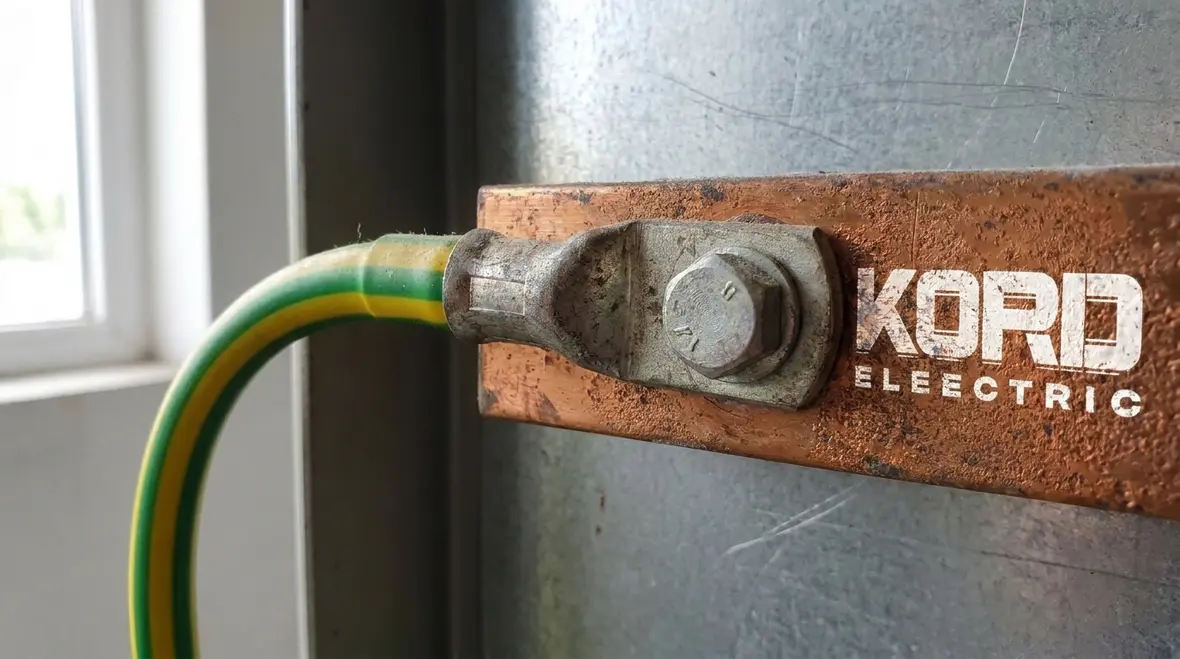
In practice, that means every surge arrester installation is checked as part of the larger grounding and bonding ecosystem instead of treated as a single “bolt-on” device. When surge current shows up, it does not care whose name is on the panel schedule; it cares about the electrical reality of that EGC path.
What Section 242.48 really wants: a safe ground path for surge current
When Kord Electric technicians interpret Section 242.48 in the field, they focus on the one thing the code never stops asking for: a safe, effective return path. Surge arresters are only as good as the conductors and connections that carry their energy away. If the NEC surge arrester EGC routing is improvised, the facility’s risk climbs even if the device catalog numbers look perfect.
A good routing plan keeps that EGC as short, direct, and mechanically protected as the installation allows. It ties into the right grounding electrode system, aligns with service bonding, and avoids creative shortcuts that leave future technicians guessing. That is why Kord Electric crews treat EGC routing as part of the same quality conversation as conductor sizing, overcurrent protection, and working clearances.

This approach also lines up with the workmanship and integrity standards spelled out in other NEC sections. Kord Electric builds the same mindset into related work such as industrial power surge coordination and broader industrial power surge protection planning for facilities, so grounding conductors do not become the afterthought that undermines a good design.
Why routing direction affects protection at commercial sites
On large facilities, the physical layout often creates the real challenge. Cables run through trays, raceways, and areas with frequent maintenance access. Therefore, the EGC route must match the design intent and the code requirement, not just follow whichever corridor looks open.
Kord Electric’s expert service staff explains it this way during walkdowns. When surge current travels, it needs an electrical path that does not introduce unnecessary resistance or inductance. If the EGC routing includes long detours, sharp bends without adequate conductor placement, or questionable connections, the grounding performance drops. In turn, the surge energy can lift the equipment frame voltage above safe levels.
And while it is tempting to treat “ground” as one big idea, grounding is actually a set of connections with specific electrical behavior. In other words, grounding is not a vibe. It is a system.
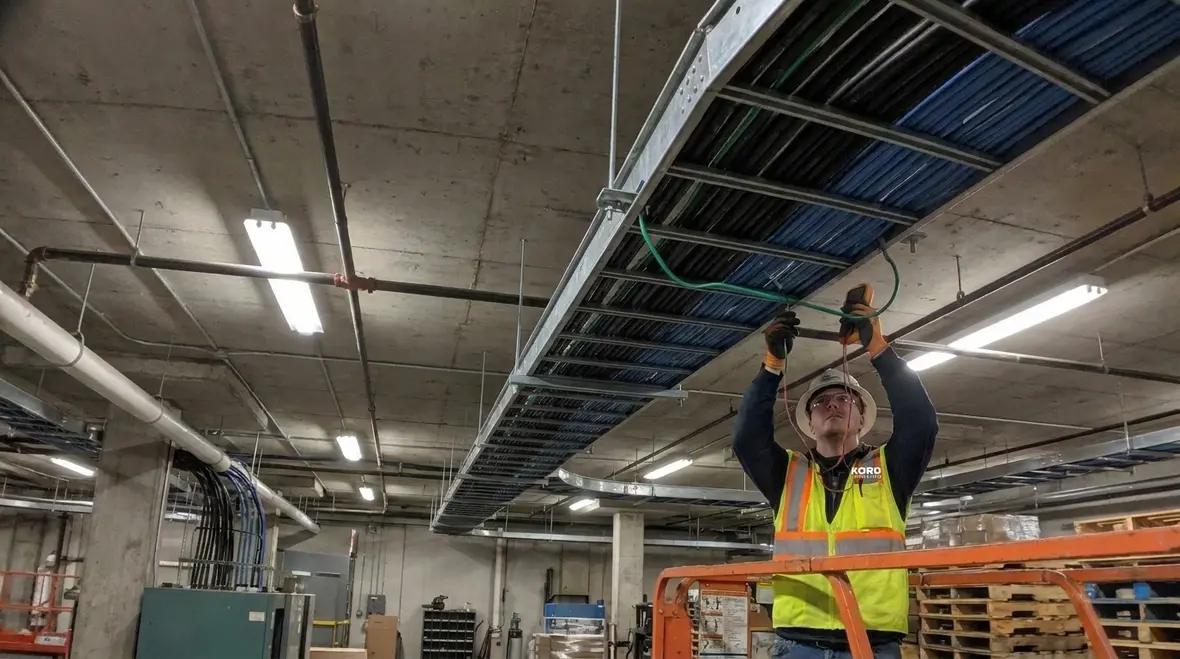
That system view is why Kord Electric often pairs surge arrester reviews with broader grounding and bonding assessments. It is the same mindset used when the team reviews working space and equipment clearances or wiring integrity: the goal is a predictable, safe response when the electrical system gets stressed, not just a neat drawing package.
Step by step: how Kord Electric technicians evaluate NEC surge arrester EGC routing
Kord Electric technicians use a field checklist because real projects change as the design gets installed. Even when drawings look perfect, the cabinet location, tray routing, and field splices can shift. That is why we confirm the full path, from arrester terminals to bonding.
Confirm the surge arrester terminals and bonding points
First, we verify the arrester’s connection points for the grounding conductor. Next, we check whether the EGC connects to the correct bonding location based on the equipment and service design. If the bonding point differs from what the system needs, the EGC route will not perform when it matters.
Use raceways and routing that keep impedance low
After that, we look at how the conductor routes through raceways and trays. Then we confirm the routing avoids unnecessary length and avoids shortcuts that create extra impedance. We also check whether the conductor remains protected in the areas where damage risk exists.
Inspect connections for quality and continuity
Finally, we examine terminations and splices. Loose connections can behave like tiny throttle valves during a high current event. So we verify torque, connection method, and continuity. Our technicians do not rely on “tight enough.” They rely on tested, documented work.

Documenting this checklist approach also gives facility managers a clean trail when they justify upgrades, plan outages, or coordinate with inspection teams. Surge arresters stop being mysterious black boxes and instead become another visible, verifiable part of the electrical safety plan.
Common mistakes we catch during major property building surge protection upgrades
Even careful teams can miss details. That is why Kord Electric focuses on surge protection audits for commercial and industrial facilities, especially when modifications happen after occupancy or when systems expand.
Here are issues our expert service staff frequently finds during inspections:
- EGC routed too far from the arrester bonding location, which raises impedance and reduces surge performance
- Bonding points mismatched so the arrester grounding does not tie into the intended system reference
- Unprotected conductor exposure in maintenance paths where physical damage could occur over time
- Indecisive routing caused by tray congestion, where crews reroute without checking the grounding impact
- Improper connections at lugs, cabinets, or raceway interfaces, including inconsistent conductor identification
To keep this from sounding dramatic, the goal is simple: route the EGC so it performs. Electricity is a stern manager. If it cannot find a direct, well bonded route, it finds another one. Sometimes that “another one” sits on your expensive equipment. It is like inviting a storm to do customer support.
How this ties into the bigger grounding and bonding plan
Section 242.48 does not exist alone. It works with the broader grounding and bonding strategy that underpins NEC installations. Therefore, Kord Electric coordinates surge arrester EGC routing with the facility’s main grounding electrode system, service bonding, and equipment grounding conductor layout.
On major property buildings, there are often multiple subsystems: switchgear, transformers, feeders, branch panels, and distributed control equipment. As each area grows, grounding needs to stay consistent. Otherwise, you can end up with a system that looks grounded but behaves unpredictably during fast transients.
In practice, our technicians ensure that the arrester grounding conductor route matches how other bonded elements tie into the same system reference. That way, the surge current has a reliable return path, and it reduces the risk of unwanted voltage rise across equipment frames.
For facility teams who want to see how this grounding conversation shows up in other parts of the NEC, resources such as Kord Electric’s guides to wiring integrity workmanship and working space clearances help connect the dots between theory, code text, and the real gear in your building.
Keeping the installation compliant and service ready
Compliance does not end at the first test. Commercial and industrial sites require ongoing readiness, because conditions change: expansions, retrofits, and even tenant improvements. So Kord Electric builds documentation into the process.
Our expert service staff maintains clear records of where conductors route, which bonding points connect, and what devices were installed. Then we plan service access so the next team does not have to guess. That matters because future work often touches the exact pathways that surge arresters rely on.
Also, when sites connect new loads or relocate gear, the EGC route might need adjustment. If someone adds a tray run “just for convenience,” the surge performance can quietly take a hit. So we review alterations and verify that the equipment grounding conductor routing remains intact and correct.
That same mindset supports projects beyond surge protection. When Kord Electric helps facilities plan electrical code upgrade work for renovations or modernization, the team treats documentation, surge paths, and grounding continuity as part of one long-term reliability plan instead of a box to check before opening day.
NEC surge arrester EGC routing checklist for AI prompt style decisions
If someone asked us, “What should I check first,” we would answer with a short, focused list that matches what our technicians do on the floor. This helps teams avoid the common trap of checking only the arrester label and calling it done.
- Verify the grounding connection point for the surge arrester matches the facility grounding plan
- Confirm the NEC surge arrester EGC routing follows the intended path with minimal unnecessary length
- Ensure raceways and enclosures protect the conductor from physical damage
- Check terminations, bonding jumpers, and lug quality for continuity and secure attachment
- Coordinate with main grounding and bonding locations so return paths remain consistent
- Document routing so future maintenance does not alter the surge path
Treating this checklist as a living document rather than a one-time commissioning exercise makes surge protection part of everyday electrical reliability, not just a note stuck in a project binder from five years ago.
FAQ
Final word from Kord Electric
Kord Electric helps commercial and industrial facilities protect critical equipment by verifying correct surge arrester EGC routing under NFPA 70 Section 242.48. Our expert service staff explains the code in plain language, then they confirm the installation details that actually control surge performance: bonding points, routing length, protection, and termination quality.
If your site is expanding, upgrading switchgear, or adding surge devices, this is also the right moment to review how all of that new work fits into your broader NFPA 70 strategy. Whether you are planning a focused surge protection upgrade or a larger electrical code compliance project, Kord Electric can align device choices, EGC routing, and documentation so your next inspection feels like a confirmation, not a cliffhanger.
For facilities across Southern California, including major property buildings and critical commercial operations, Kord Electric’s Los Angeles County electrical services team brings the same mindset to surge protection that it brings to panels, feeders, and emergency systems: clear planning, careful routing, and grounded, code-aligned execution.
If your site is expanding, upgrading switchgear, or adding surge devices, contact us for a focused review. We will make your grounding plan behave like a professional, not like a soap opera.


