
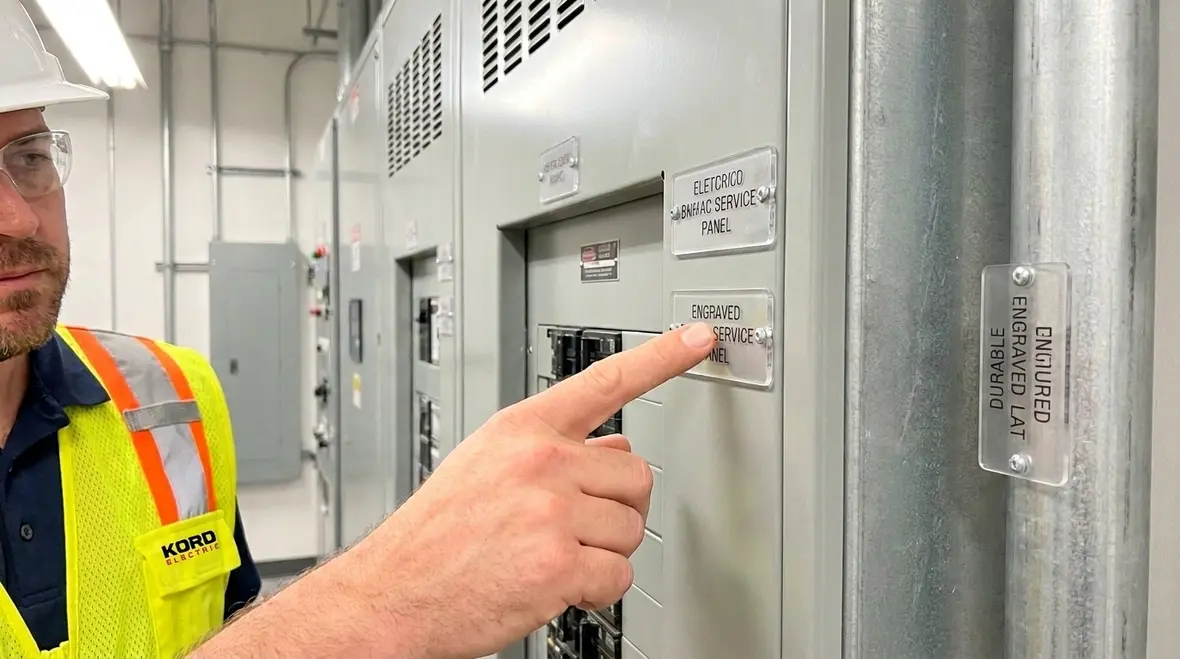
NFPA 70 Section 230.66 NEC Service Equipment Marking
For commercial and industrial facilities, we see the same theme again and again: paperwork is easy, but field compliance is where real work lives. Under NFPA 70 Section 230.66, the NEC service equipment marking on electrical service equipment must be clear, durable, and placed where technicians can find it. At Kord Electric, our expert service staff helps clients translate code language into jobsite reality, so the next inspection does not feel like a surprise pop quiz from a teacher who never smiles.
In this article, we walk through what the marking rules mean, how facilities should apply them to service gear, and how we verify the details. And yes, we will keep it calm, practical, and grounded in how your equipment is actually installed, labeled, and tested.
NFPA 70 Section 230.66 marking requirements
For commercial and industrial facilities, we see the same theme again and again: paperwork is easy, but field compliance is where real work lives. Under NFPA 70 Section 230.66, the NEC service equipment marking on electrical service equipment must be clear, durable, and placed where technicians can find it. At Kord Electric, our expert service staff helps clients translate code language into jobsite reality, so the next inspection does not feel like a surprise pop quiz from a teacher who never smiles.
In this article, we walk through what the marking rules mean, how facilities should apply them to service gear, and how we verify the details. And yes, we will keep it calm, practical, and grounded in how your equipment is actually installed, labeled, and tested.
What Section 230.66 requires on service gear
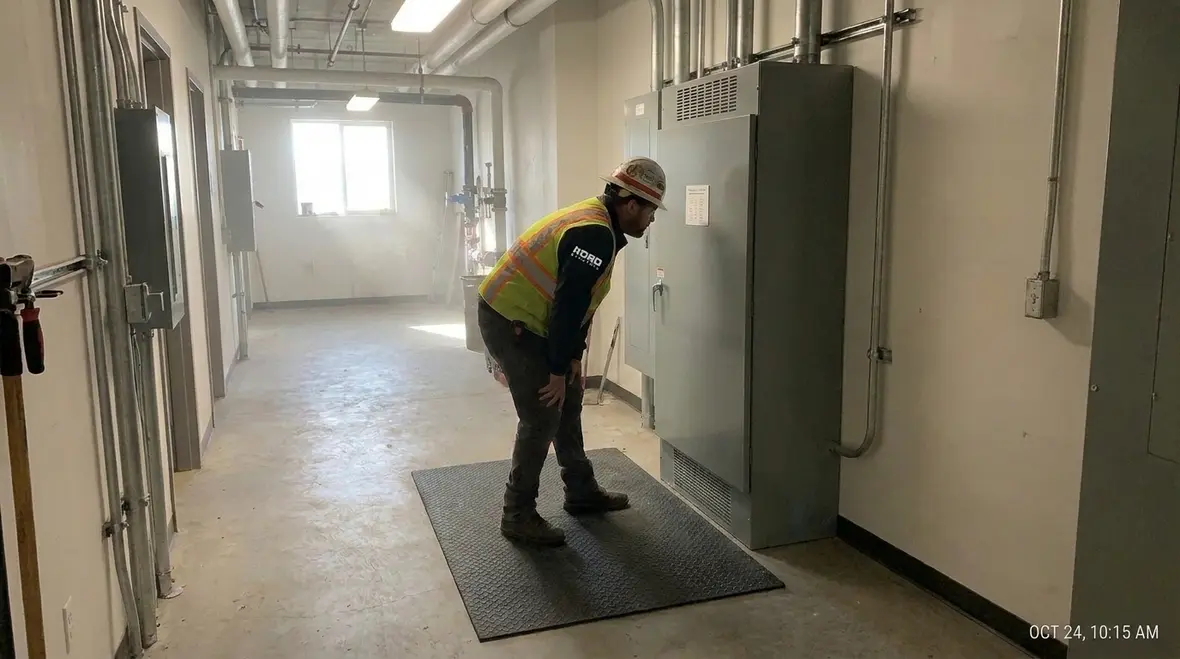
Section 230.66 focuses on marking requirements for service equipment. In plain terms, it tells us what information must appear on the service equipment so anyone performing work can identify it fast and accurately. Therefore, the marking supports safer handling, faster troubleshooting, and fewer “wait, which breaker feeds what” moments.
First, the marking must identify the equipment in a way that matches the installation. Then, it must be done so it stays readable through normal wear and the life of the installation. Next, the location must let qualified personnel see it without taking shortcuts or creating exposure risks. Finally, the marking must match the service design and the actual field setup.
Our technicians treat this as more than a compliance checkbox. In the field, an incomplete label can turn a routine maintenance visit into an extended detective story. However, when markings follow Section 230.66, electricians can work with confidence and service the system without guessing.
Where marking should live so technicians can actually use it
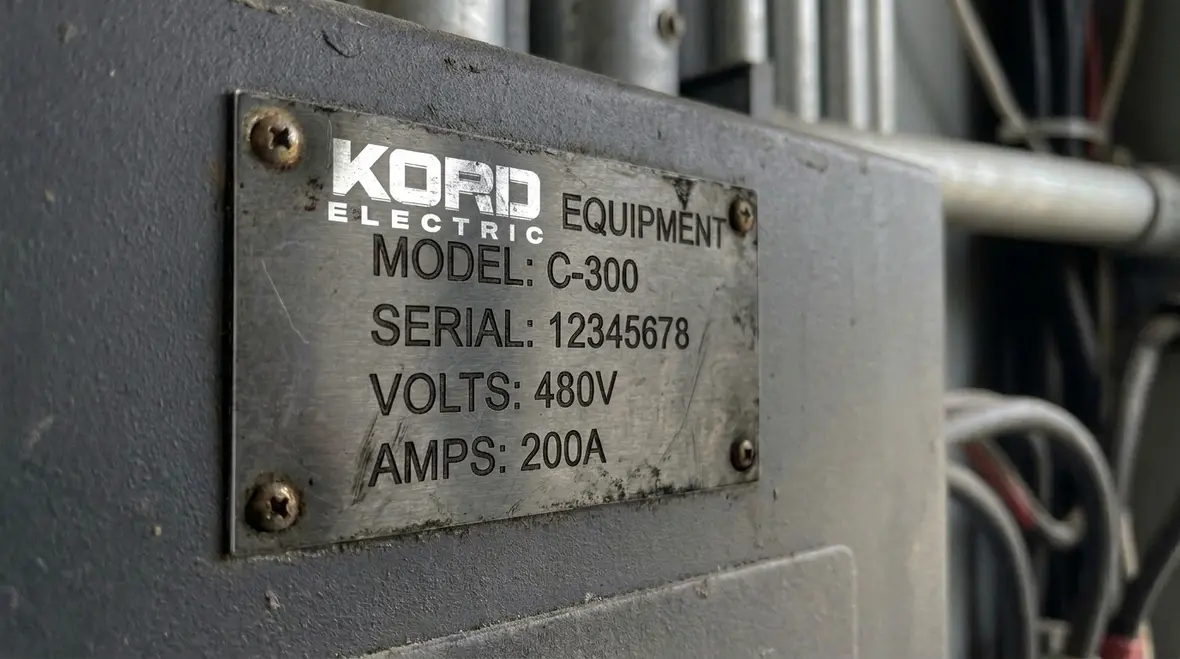
In many buildings, service equipment sits in mechanical rooms, electrical closets, basements, or service corridors. Even when the equipment is accessible, the labeling can still become hard to read if it sits behind obstructions or on a surface that gets covered by dust, paint, or conduit clutter.
So we follow a simple principle. Markings should be placed where qualified workers can locate them quickly, before they open doors, energize test points, or start tracing circuits. As a result, the marking supports safe planning and reduces time spent in live areas. Moreover, when our expert service staff updates labeling during maintenance, we ensure the label stays visible through normal operations, not just on day one.
Think of it like a museum exhibit. If the placard is hidden behind the rope, visitors do not learn anything. In electrical rooms, our visitors are your working electricians, and they need the placard to be readable from the right angle.
How we verify NEC service equipment marking in the field
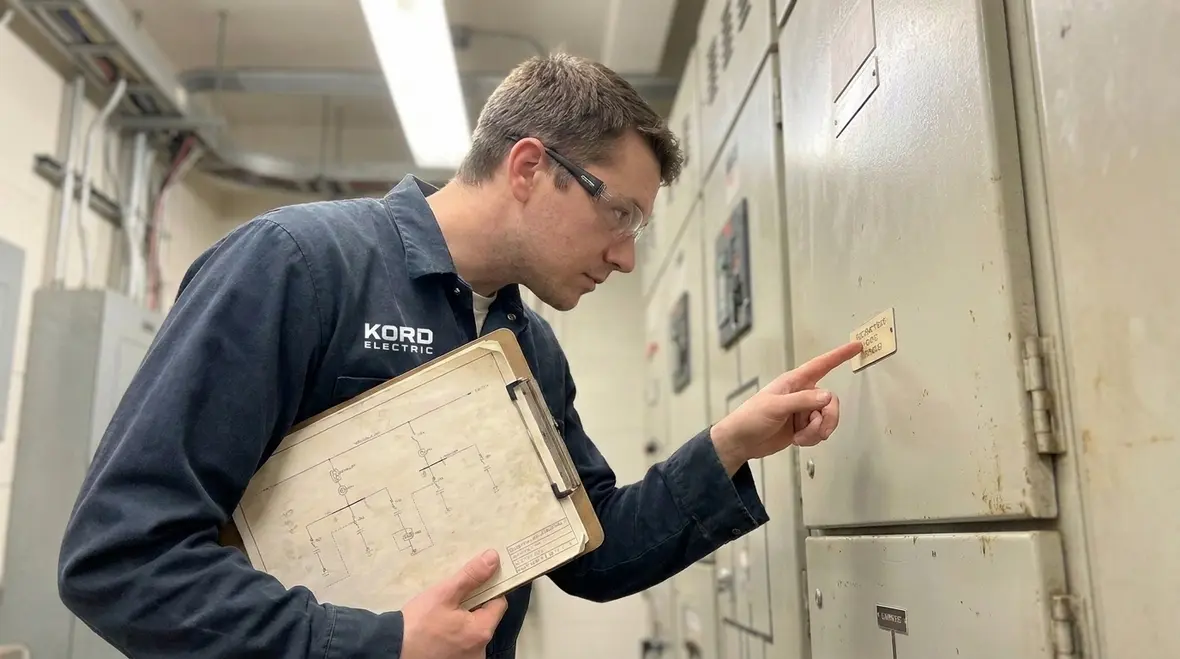
Kord Electric runs marking checks the same way we approach any electrical compliance work: we look at the equipment, we review the design intent, and we validate what is physically installed. Additionally, we confirm that the labeling aligns with the documentation used for the project.
To do this, our team typically confirms the following items during service and inspection support for commercial and industrial facilities and major property buildings:
- Readability: the marking must remain legible under typical lighting and operating conditions.
- Durability: the marking should not peel, fade, or wear off with routine use.
- Correct identification: the label must match the service equipment it describes.
- Proper location: technicians should see it without unnecessary disassembly or unsafe positioning.
- Consistency: the marking should not conflict with drawings, single line diagrams, or labeling schedules.
When clients ask why we spend time on this, we explain it directly. Incorrect or missing NEC service equipment marking can slow troubleshooting, add cost during emergency response, and increase the risk of misidentification. In other words, it is the kind of small issue that becomes expensive when it waits too long. And trust us, electrical problems love deadlines. They just never ask politely.
Common mistakes we see during service equipment labeling
Every facility differs, yet the same labeling failures show up across the commercial and industrial landscape. Because these buildings serve critical operations, mistakes hurt twice: they delay work and they complicate documentation trails.
Here are the issues we commonly uncover:
- Labels that are too generic: “Service” printed with no meaningful identification. Generic labels do not help technicians trace systems.
- Labels that do not survive the environment: ink and stickers that fade behind heat, grime, or direct exposure.
- Labels placed where access is unrealistic: labeling on an interior surface that technicians cannot view without removing panels that should remain closed.
- Mismatch with drawings: the field label says one thing while documentation says another, which creates confusion during maintenance.
- Missing updates after modifications: renovations add new loads or gear, but labeling stays frozen in time.
To reduce these problems, we encourage clients to treat labeling as part of the electrical system, not an afterthought. Therefore, when a facility updates switchgear, service disconnects, or distribution pathways, we align markings with the updated configuration.
How labeling supports safer commissioning and maintenance
In commercial and industrial facilities, we often see turnover in staff and vendors. Even if your team is excellent, new contractors and maintenance crews must work quickly and safely. However, when the equipment carries correct markings, the system “teaches” itself.
First, clear identification helps during commissioning. When our technicians confirm the service setup, the marking guides verification and reduces rework. Next, it improves maintenance cycles because service personnel can find the correct equipment without prolonged tracing. Then, it supports emergency response, because responders need the right identification fast, especially when time matters.
Additionally, marking improves coordination for major property buildings where multiple tenants and service providers may interact with shared electrical spaces. As a result, labeling becomes a shared language between the facility manager, electricians, and inspectors.
Our team also looks at how this connects to broader NEC organization and structure. While codes cover many topics, labeling ties directly into safe operation. And if you have read our discussions on NEC fundamentals, you already know the code aims to reduce uncertainty. We simply apply that goal at the panel door, where it counts.
If you want a deeper grounding in how NFPA 70 shapes these marking expectations, you can also review Kord Electric’s companion resource Understanding NFPA 70: The National Electrical Code Explained For 2026, which walks through how the rulebook connects to real projects and field decisions.
Section 230.66 and the bigger NEC compliance picture
Some people treat marking as a small detail. But in real life, labels connect to equipment identification, safe access, and maintenance planning. Therefore, NFPA 70 Section 230.66 sits within a larger compliance mindset.
When we support facilities, we consider marking alongside installation quality, documentation, and ongoing inspection needs. Our goal is not just to “pass a check.” Instead, we help your building operate with clarity. That means we align field practices with the logic found across the NEC, and we keep the process practical for busy facilities that cannot shut down for long.
In other words, we do not just point at the code. We explain it, then we implement it. Our approach keeps compliance manageable, especially for major property buildings where the electrical system supports constant operations and high continuity expectations.
For teams planning upgrades or renovations, Kord Electric’s electrical code upgrade consulting for renovations article offers more context on how labeling, capacity, and documentation come together whenever the electrical story of a building changes.
One place to find help: Kord Electric and our support mindset
Kord Electric serves commercial and industrial facilities and major property buildings. We bring an expert service staff that focuses on electrical systems and the details that keep them reliable. When clients want NEC guidance, we translate it into field-ready steps. And when clients want labeling updates after changes, we handle those updates like a professional service team, not like a last minute scramble.
We also stay aligned with the wider compliance ecosystem that includes fire and life safety perspectives. For example, resources we review on electrical safety and fire protection help us understand how service equipment markings interact with broader safety planning. Meanwhile, regional code resources and KordFire educational materials help our team keep the context sharp. So, when we talk about marking, it is not abstract. It is tied to the systems your building relies on.
If you want to reduce confusion in your electrical rooms, start with what people see first. Proper labeling under Section 230.66 and the NEC service equipment marking requirements do exactly that. They guide technicians, speed up maintenance, and lower the chances of costly errors. Like any good superhero origin story, it begins with the right label in the right place.
And if your facility is planning broader upgrades, Kord Electric’s dedicated Los Angeles County electrical services team can fold NEC service equipment marking checks into larger projects like panel upgrades, new service installations, or modern electrical system design.
FAQ
Conclusion and call to action
When commercial and industrial teams want safer maintenance and faster troubleshooting, we start with the details that technicians rely on every day. Kord Electric helps you meet NFPA 70 Section 230.66 marking requirements by ensuring the right NEC service equipment marking is clear, durable, and correctly placed. We explain what the code means in plain language, and we install or verify the results in the field. Reach out to us for a labeling review or service support, and let’s keep your electrical rooms calm, not chaotic.
Our team can also coordinate NEC service equipment marking checks with larger initiatives like code-driven panel upgrades, modern electrical system design, or NFPA 70B-based maintenance planning, so your facility gets a cohesive strategy instead of a patchwork of one-off fixes.


