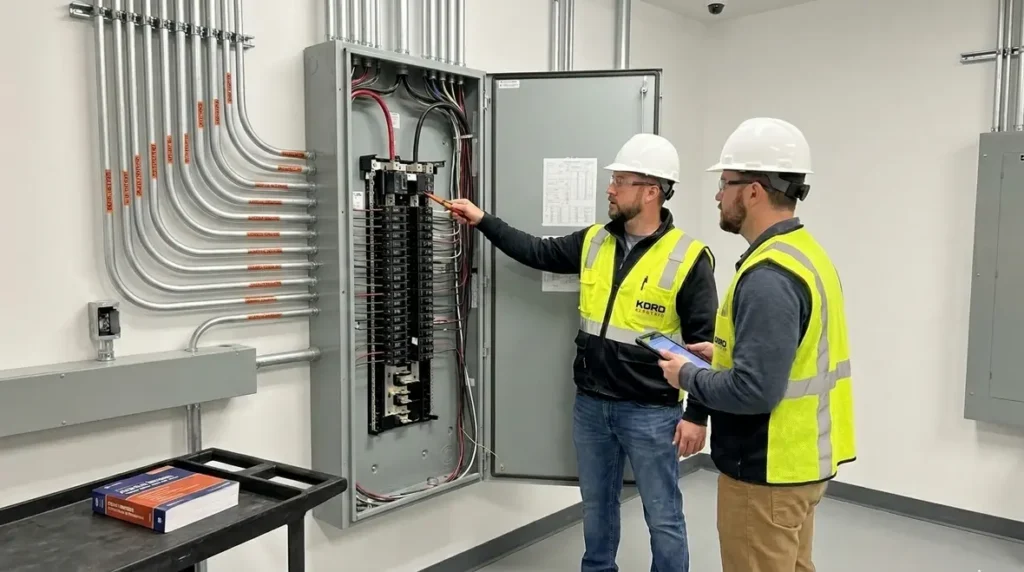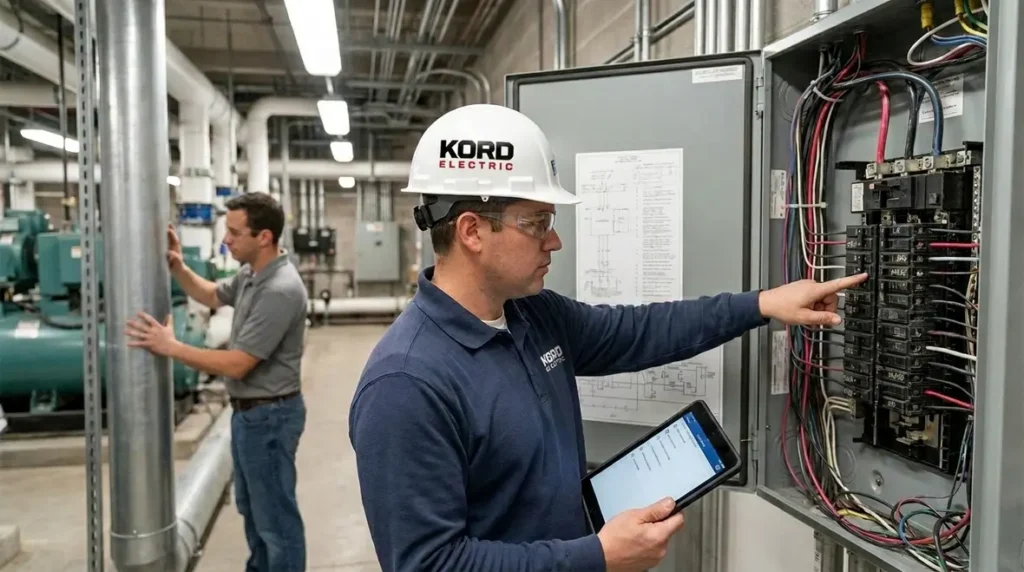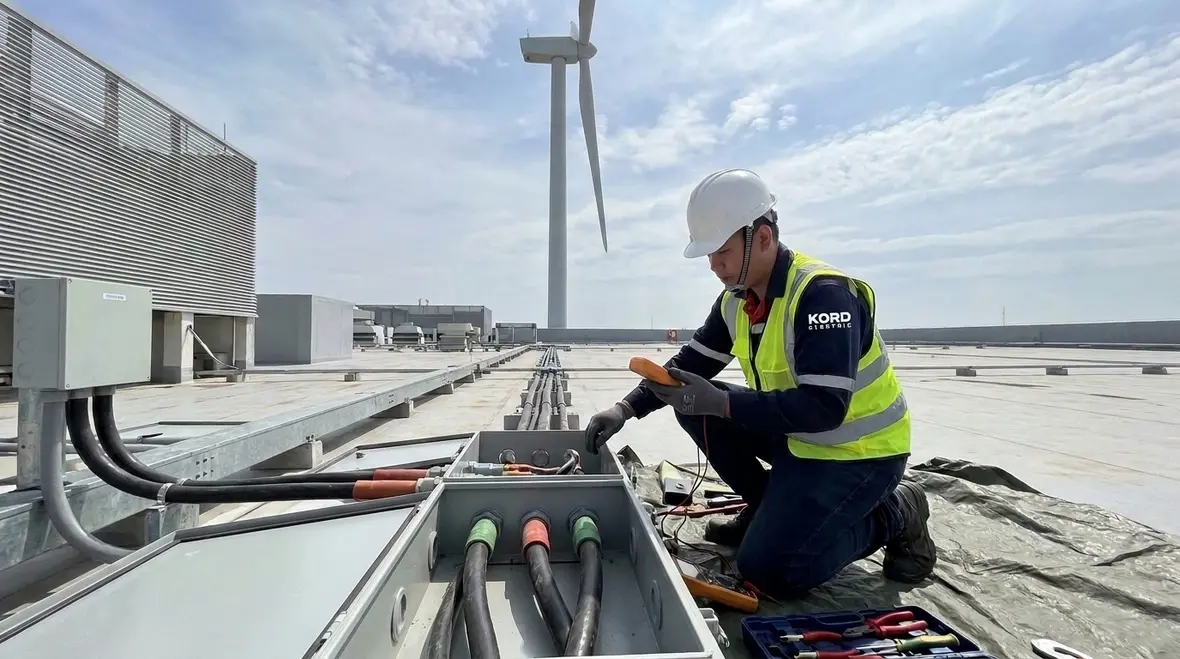
NFPA 70 Section 694.20 Wind Turbine Conductors
NFPA 70 Section 694.20 wind turbine conductors is one of those phrases that sounds like it belongs in a legal drama, not an electrical plan set. Yet, for commercial and industrial facilities, these rules matter because wind and renewable systems still move real energy through real wiring, and wiring does not care about your schedule. At Kord Electric, we focus on major property buildings and commercial and industrial sites, so we plan for safe installation, dependable performance, and code-aligned design from the start. In this guide, our expert service staff and technicians explain what matters, what often gets missed, and how the National Electrical Code, including NEC based requirements, connects back to wind turbine conductors. We keep it practical, because nobody wants surprises after the project moves from drawings to dust.
Why NFPA 70 rules decide how wind turbine conductors get installed
In the field, the NEC creates the baseline for how conductors get selected, routed, protected, and connected. Therefore, NFPA 70 Section 694.20 wind turbine conductors helps set expectations for conductors used in wind power systems. When we review plans with our technicians, we look at how these requirements affect the full path of power, from generation to connection points.
To keep things clear, we treat the NEC like a set of guardrails, not a maze. If you follow the guardrails, your system performs as intended. If you ignore them, the inspection process can turn into a bad sitcom where everyone shows up late and the jokes still fail. Also, code compliance helps reduce risk for staff, tenants, and assets.
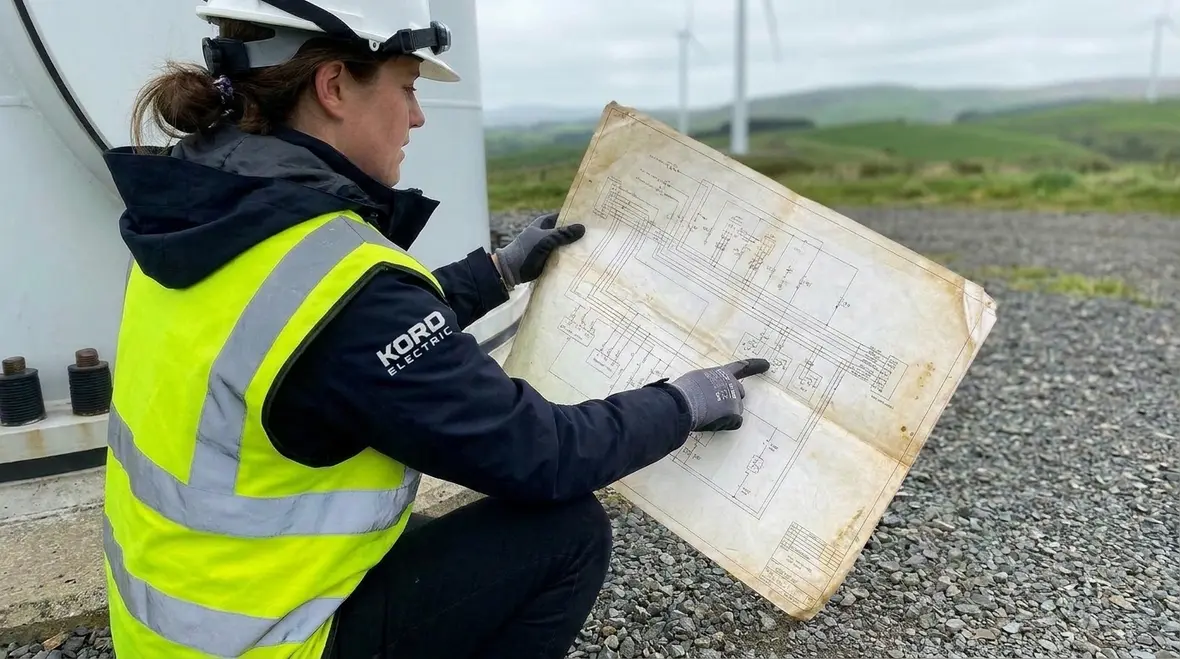
Additionally, our team uses a practical approach: we connect the rule language to the actual job steps. That means we talk about conductor temperature limits, protection methods, and how installation choices can either support safety or invite problems.
What Section 694.20 wind turbine conductor requirements usually focus on
When we explain NFPA 70 rules for 2026 updates, we keep the focus on what changes outcomes on site. Section 694.20 wind turbine conductors typically centers on how conductors must be handled so faults do not escalate and so performance does not collapse under expected conditions. So, our technicians plan for the full electrical environment the conductors will experience.
In most real projects, teams run into challenges in three places: selection, routing, and protection. Selection matters because the wrong conductor type can limit current carrying ability or create unsafe conditions. Routing matters because physical location affects heat, mechanical stress, and exposure risks. Protection matters because even good conductors still need the right overcurrent and fault management.
At Kord Electric, we also consider how other NEC sections interact with wind system wiring. In practice, the wind turbine conductor plan cannot sit alone. It needs to align with grounding and bonding expectations and with the broader electrical layout used across the facility. For facility teams who want a wider NEC view, resources like Kord Electric’s article on what NFPA 70 is and how it shapes commercial electrical systems help connect individual sections, including wind requirements, back to the bigger picture.
How NFPA 70 Section 694.20 wind turbine conductors fits into NEC planning
For commercial and industrial projects, NFPA 70 Section 694.20 wind turbine conductors lives alongside other NEC articles that define how generation systems tie into the rest of the building. Our technicians review conductor ratings, temperature limits, insulation types, and connection methods so the wind system behaves predictably under normal load and during faults. Because the NEC treats conductors as part of a system, we match those expectations instead of treating 694.20 as an isolated checklist item.
How our technicians apply NEC planning for commercial and industrial builds
Commercial and industrial projects bring complexity, and our process respects that. We assign experienced electricians and expert service staff to review the job from concept through commissioning. Then, we translate the NEC into clear installation steps that match the facility’s workflow.
First, we verify design intent. We do not just check whether a conductor exists on paper. We check whether the conductor approach supports safe operation in the real structure, including routing paths and equipment rooms. Next, we confirm protection coordination. After that, we ensure the installation supports inspection, maintenance access, and long term reliability.
To make this useful, our technicians explain what we do in plain terms. For example, they will walk the client through how conductor protection aligns with NEC expectations. They also explain why certain routing decisions matter, especially when systems share pathways with other electrical loads. Because in major property buildings, space is tight and “close enough” can turn into “call us again.”

Connecting wind conductors to broader NEC strategies
Wind turbine conductor design often shares corridors, raceways, and equipment rooms with other systems. Our field teams use the same disciplined approach they apply in topics like NEC working space and equipment clearances and fuel cell and feeder wiring. That means we look at conductor ampacity, working clearances, raceway fill, and guarding as connected decisions, not separate tasks. NFPA 70 Section 694.20 wind turbine conductors becomes one more piece of the same safety puzzle.
Routing, protection, and labeling: the practical details that prevent failures
Even when the electrical design looks correct, small installation gaps can create big problems. Therefore, we focus on the day to day details that keep wind turbine conductors safe and reliable. That means we pay attention to mechanical protection, separation from hazards, and correct terminations.
Routing deserves extra care. Conductor paths that cross or run near heat sources can raise operating temperatures beyond safe levels. Routes that ignore expected movement or vibration can lead to physical strain. So, we guide installations to avoid stress points and we document the chosen paths in a way maintenance teams can follow later.
Protection is the next pillar. Conductors connected to generation systems still need proper fault management. We coordinate overcurrent protection and we verify that protective devices match the conductor and load behavior. If someone tells you protection is optional, we politely disagree. Code does not negotiate, and neither do we.
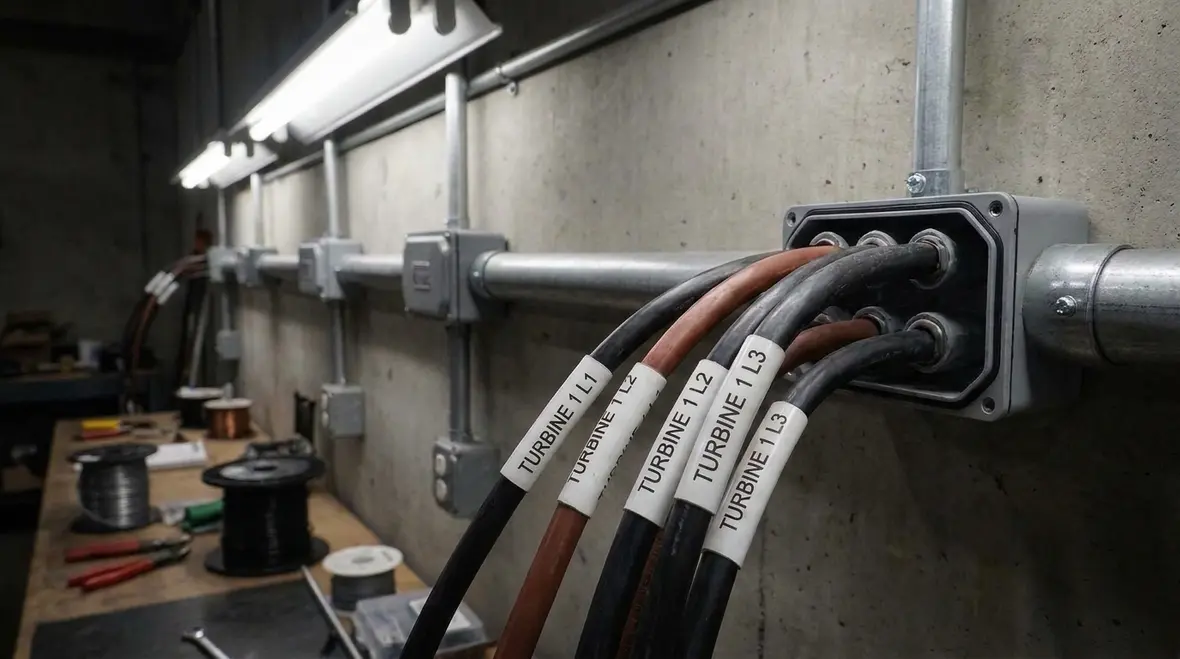
Finally, labeling and documentation keep the system serviceable. When the project team later returns for inspections or upgrades, clear marking reduces downtime. We create a clean handoff that supports ongoing operations for property managers and facility engineers. When we talk with facility leaders about these details, we often point them to resources such as Kord Electric’s guide on how to read NFPA 70, so the labeling and documentation strategy lines up with how the NEC expects systems to be read and maintained.
Common mistakes with NEC wind wiring in large buildings
Field experience tells us the same issues tend to repeat. Even strong contractors can stumble when schedules tighten. Meanwhile, code requirements still need to be met. So, we point out the errors we frequently see during review and commissioning.
One frequent mistake involves inconsistent conductor selection. Someone may choose conductors for one portion of the circuit and then switch approaches elsewhere. As a result, the system may not meet NEC aligned performance expectations across the full run.
Another mistake involves routing shortcuts. Crews sometimes place conductors where they fit today, not where they will survive long term. In commercial and industrial buildings, shared trays and tight corners can cause abrasion or undue bending. Over time, that can compromise insulation.
A third mistake involves inadequate terminations. Loose connections and improper termination practices can create heat and voltage issues. And yes, those problems can look small at first, like a quiet villain in a superhero movie, until they suddenly become the plot.
Our expert service staff helps prevent these issues by reviewing installation steps, verifying materials, and confirming workmanship before closeout. When appropriate, we reference other NEC focused resources Kord Electric provides, like our 2026 application and scope guide, so project teams understand how NFPA 70 Section 694.20 wind turbine conductors ties into the overall decision chain for conductor choice, routing, and protection across the building.
How NEC guidance connects to the NFPA 70 approach and inspections
Our clients often ask how this all relates to broader NEC and inspection practices. The answer is simple: NFPA 70 provides the electrical standard, while inspection teams verify that installed work matches safe and code compliant methods. Therefore, the best way to avoid delays is to build to the code and to confirm alignment throughout installation, not only at the final walkthrough.
At Kord Electric, we also align with the ecosystem around NEC and fire safety. When wind systems connect to electrical infrastructure, the overall safety strategy matters. We coordinate our electrical approach with the facility’s safety expectations and with related systems that support risk reduction. That mindset aligns with how Kord Fire resources approach code awareness, focusing on how safety systems work together. On many projects, our technicians will reference guides such as Kord Fire’s coverage of NFPA 70 and related topics to help facility leaders see how conductors, clearances, and fire protection strategies share the same goal: protecting people and property.
We also understand that clients may compare guidance from multiple sources, including NFPA focused references and fire and pump systems in some facility contexts. While those topics differ, the common theme remains: install with clarity, verify with discipline, and document so everyone stays on the same page. That is the same philosophy we bring to NFPA 70 Section 694.20 wind turbine conductors, whether the project sits on a campus rooftop, an industrial yard, or a mixed use property.
FAQ about NFPA 70 Section 694.20 wind turbine conductors
Ready for a code aligned wind electrical plan?
If you operate a commercial or industrial facility and you are planning wind power equipment or upgrading existing electrical infrastructure, we can help you move with confidence. At Kord Electric, our technicians and expert service staff review designs, coordinate safe installation steps, and confirm compliance with NFPA 70 requirements so inspections go smoother. Let us support your project from planning to commissioning, and help prevent avoidable downtime. Contact Kord Electric today and let’s build a solution that performs, protects, and holds up under scrutiny.
For facility leaders comparing options or planning broader upgrades, it can also help to review how NEC direction affects systems beyond wind alone. Kord Electric’s resources on topics like NFPA 70 scope and application, feeder guarding, and working space clearances show how conductor design, equipment layout, and protection schemes work together. And when your plans extend beyond a single building or require support across Los Angeles County, our dedicated Los Angeles County electrical services team can coordinate your wind and conventional electrical work under one code aware roadmap.