Preventative Electrical Testing for Commercial Uptime
Kord Electric builds advanced preventative electrical testing strategies for commercial and industrial facilities, and for major property buildings that cannot afford surprise downtime. We start before problems grow teeth by mapping risk, verifying protection devices, and trending results over time. Then our expert technicians document everything in plain language, so your team can act with confidence instead of guessing like it is a mystery episode of your favorite crime show. In this article, we explain how our preventive approach strengthens safety, improves uptime, and supports compliance without turning every job into a chaotic science fair.
Risk mapping first: how we decide what to test and why
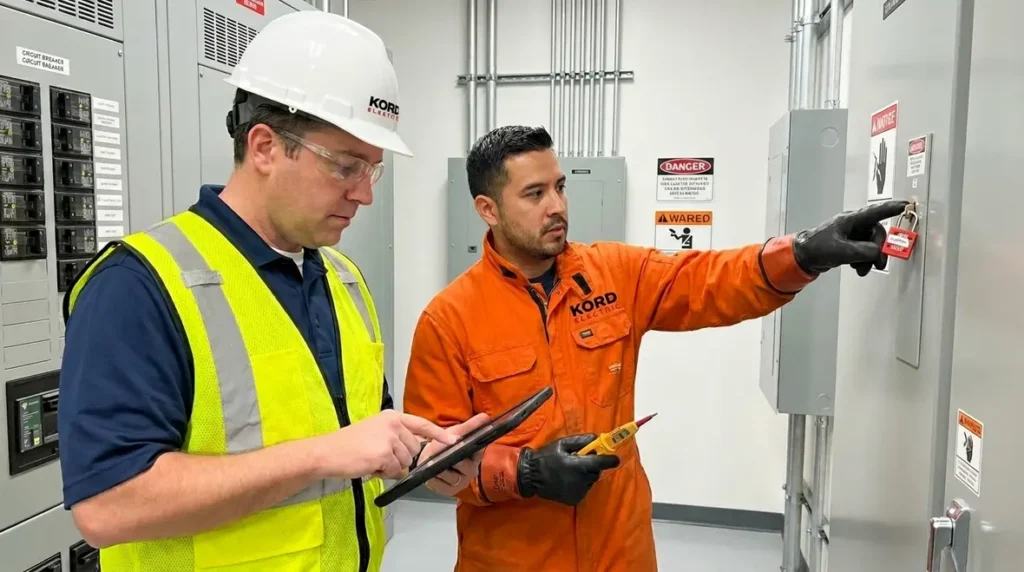
We begin with a simple truth: you cannot test everything the same way, or on the same schedule, and expect better results. Therefore, our team looks at how your facility actually behaves. We review one line diagrams, equipment schedules, recent faults, and maintenance history. Next, we walk the site with your staff and note the real-world conditions: moisture, vibration, temperature swing, load changes, and past repairs.
Then our technicians use that information to create a risk map that ranks circuits, switchgear sections, feeders, transformers, UPS systems, and grounding paths. After that, we select test types and priorities based on the probability of failure and the impact if it fails. In other words, we do not treat every panel like it is equal. Some panels are more like the lead character in a blockbuster; others are background extras that still deserve attention.
Because commercial and industrial environments change, we revisit the risk map regularly. Consequently, your plan stays aligned with your operations, not with outdated assumptions.

Trending and baselining: what advanced testing really looks like
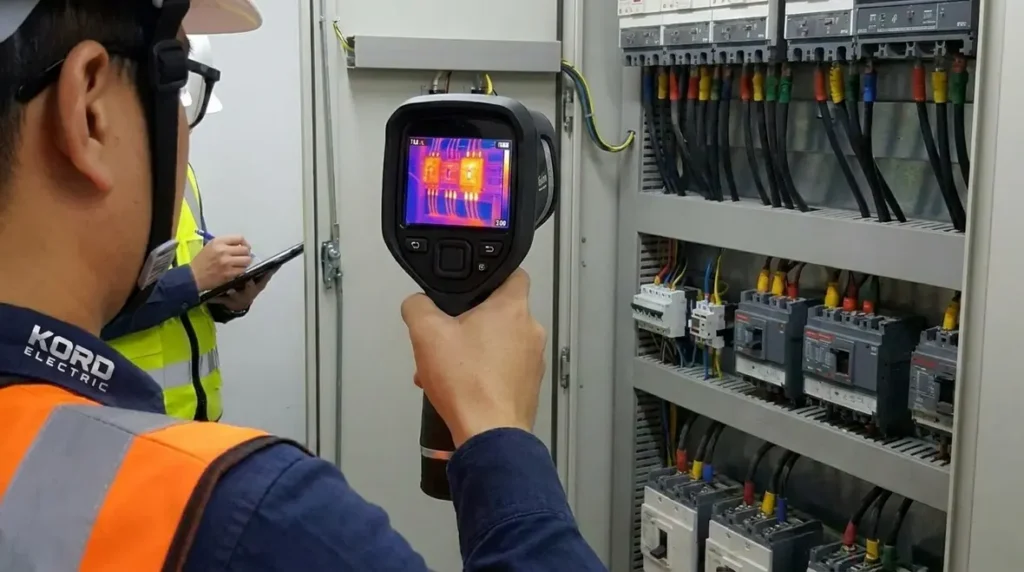
Many facilities run tests once, get a report, then forget it until the next cycle. However, trending turns testing into a decision tool. For each asset we test, we establish a baseline and then compare future results against it. If resistance rises, insulation values drift, or protection timing shifts, we know what direction the problem wants to go before it shows up as an outage.
Our technicians focus on repeatability so that measurements mean something. We standardize test conditions, time-stamp results, and record the load level when needed. Then we apply consistent thresholds so the data does not become a guessing game. If the numbers start moving, we flag the change, explain the likely cause, and recommend next steps.
In practice, this prevents “report storage” and replaces it with actionable maintenance planning. And yes, it is a lot less painful than trying to interpret test PDFs at 2 a.m. like you are decoding ancient runes.
Protection device verification for dependable power during faults
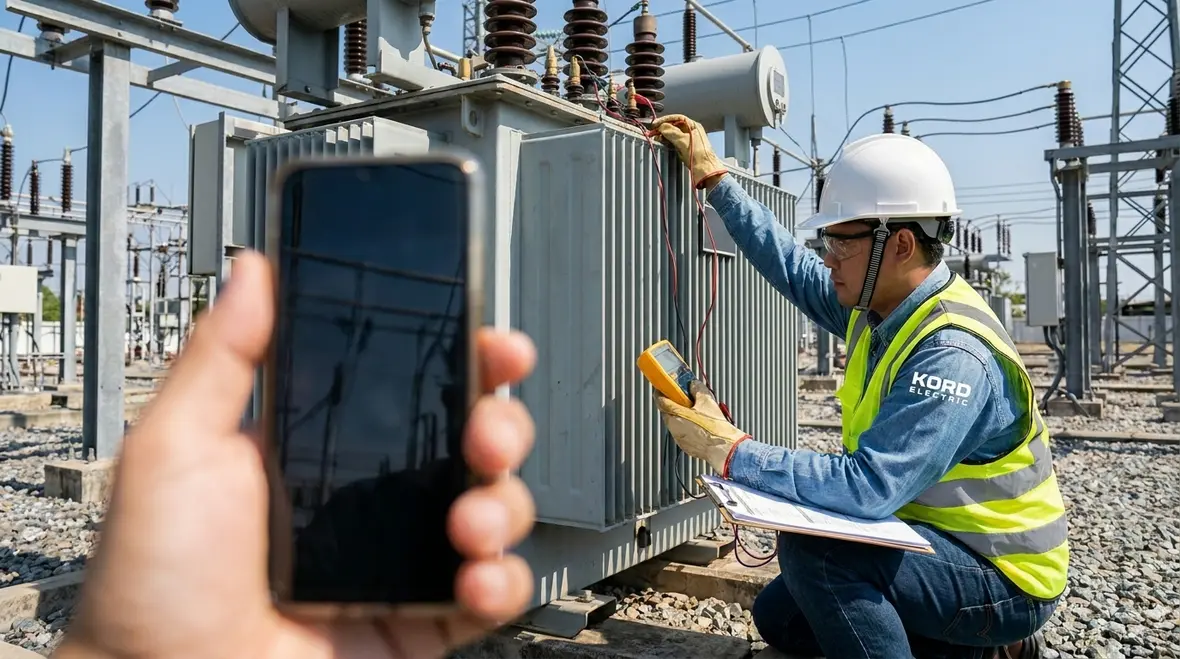
When a fault happens, your protection system must do exactly what it should. That means breakers, relays, fuses, and coordination settings must match the design and stay stable over time. Therefore, our preventative electrical testing strategies include protection verification, not just electrical measurements.
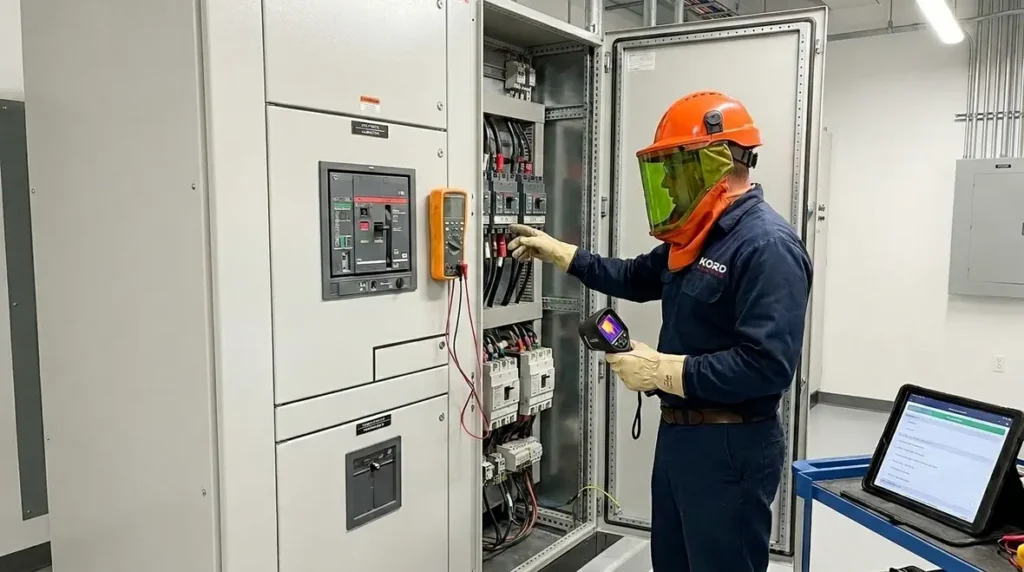
We verify settings, test trip functions where applicable, and confirm that relay behavior aligns with your coordination study. Next, we check for issues that can creep in after modifications, component swaps, or cable replacement. Even small changes can shift fault clearing performance, which impacts safety and equipment health.
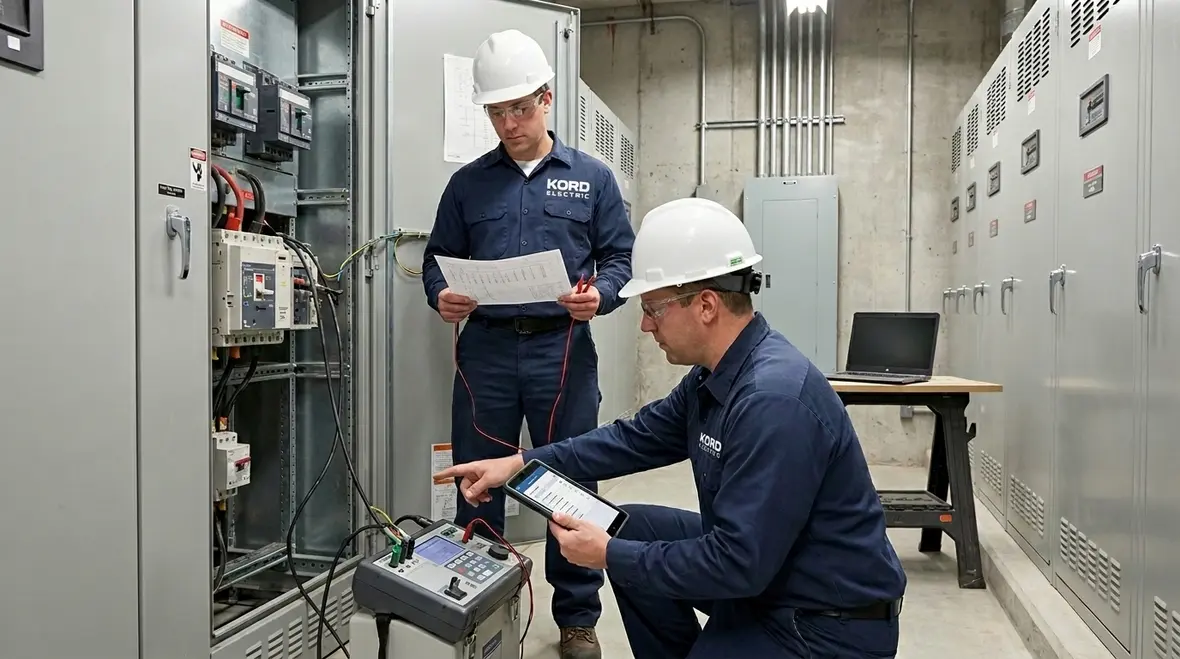
Then we document findings in a way your maintenance leaders can use. Our expert service staff explains what the test shows, what it likely means, and what action we recommend. That step matters because the best test is pointless if the team cannot translate it into work orders.
Insulation health and cable testing without guesswork
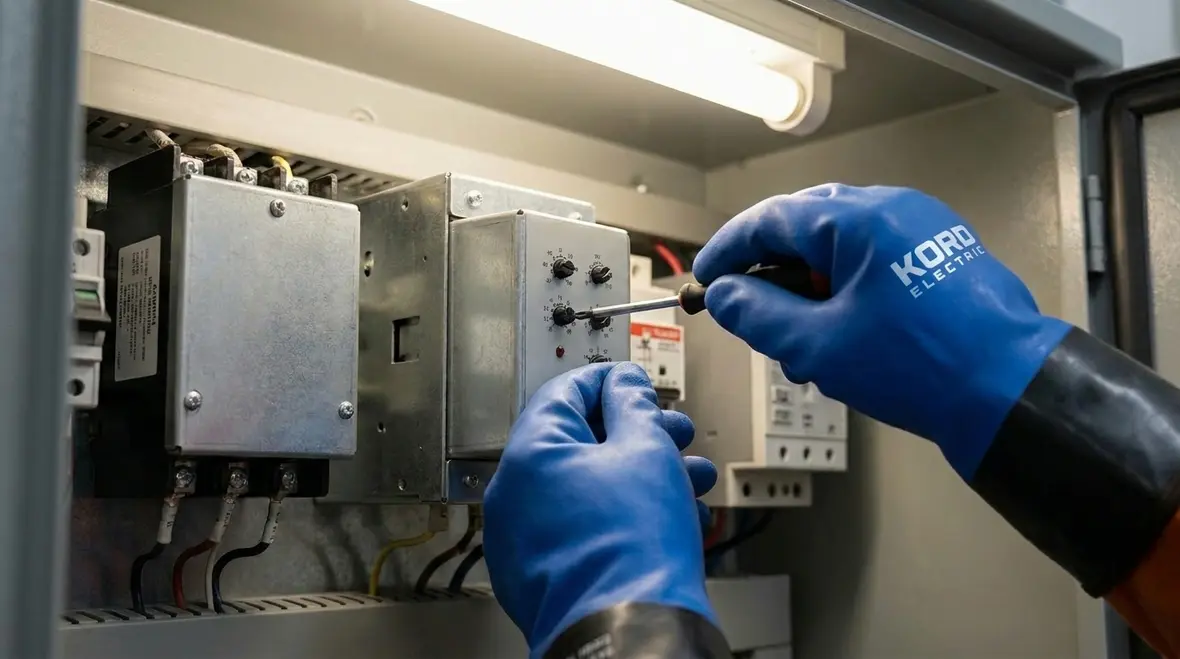
In commercial and industrial facilities, insulation issues rarely appear instantly. Instead, they grow quietly through aging, heat stress, contamination, and water intrusion. So we evaluate insulation condition and cable integrity in ways that support real maintenance decisions.
We typically combine test methods that match the asset and the operating environment. We also pay attention to how results connect to load patterns and physical risks. For example, sections exposed to moisture or frequent thermal cycling often show different behavior than well-protected runs in stable spaces.
Because results can be misread when testing is rushed, we slow down where it matters. Our technicians follow procedure, avoid shortcuts, and confirm anomalies through appropriate follow-up steps. Consequently, we reduce the chance that you replace equipment that is not actually the problem.
And if a component truly needs service, we help you plan it. That means timing the work to reduce disruption, especially in facilities that never stop producing or operating.
Grounding and bonding checks that keep your systems safe
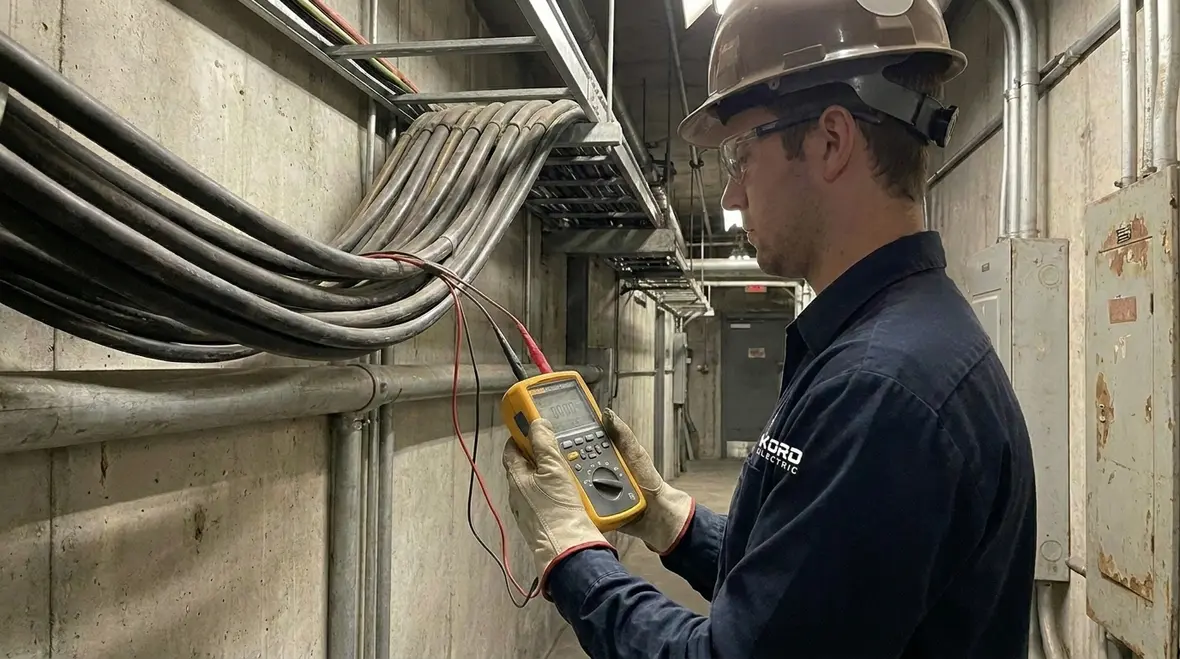
Good grounding and bonding help protect people and equipment. However, it is also an area where small changes can create big outcomes. A loose connection, corrosion, or a broken conductor can turn a “safe” system into a risk.
Our approach includes verifying grounding continuity, inspecting bonding connections, and evaluating grounding system performance. We also consider how the grounding network interacts with equipment types such as metal enclosures, process systems, UPS installations, and surge protection devices.
Then we align recommendations with the facility layout and your maintenance workflow. For instance, if a connection needs repair, we help your team plan access and timing. In addition, we note common causes we see in major property buildings, like construction-related changes, replacement work, or long periods without verification.
We explain findings clearly, and our technicians answer questions on the spot. That way, your stakeholders understand the “why,” not just the “what.”
Automation, load changes, and why facilities need updated plans
Modern commercial and industrial buildings run on more than old switchboards and steady schedules. There are variable speed drives, automation controls, energy management systems, EV charging, and fast operational changes driven by demand. As a result, your electrical system experiences different stresses than it did five years ago.
Therefore, our preventative electrical testing strategies adjust to real operating conditions. We consider load profiles, power quality trends, and major project updates. If a facility adds new equipment, expands production, or upgrades distribution, we treat it like a new chapter in the facility’s electrical story, not a minor footnote.
Our technicians also help coordinate testing windows so operations keep running. Because downtime costs money, we plan for minimal disruption. Next, we verify whether protection settings and system behavior remain aligned after upgrades.
To keep it practical, we tie testing outputs to maintenance decisions. In short, we help you use your data to plan work earlier, so fixes arrive before failures.
What our teams deliver after testing: reports, action plans, and support
Testing is only the beginning. We provide structured deliverables that help your team move forward. After each visit, our expert service staff summarizes findings, highlights risk levels, and outlines recommended actions. Then we connect those actions to urgency and operational impact.
Our team also supports follow-up planning. If you need corrective work, we can help define the scope, prioritize tasks, and verify results after repairs. That matters because a test number without next steps is like ordering a pizza and refusing to eat it.
We also focus on clarity. We write so your maintenance manager can read it fast, and your leadership team can understand it without needing a graduate degree in electrical theory.
Finally, we help set a schedule that matches your facility needs. When the plan is realistic, it gets used. When it gets used, reliability improves.
For facilities building deeper, long-term reliability programs, these testing outputs integrate naturally with structured electrical preventive maintenance services and broader commercial and industrial electrical maintenance plans, so your preventative strategy stays aligned from day-to-day tasks to multi-year capital planning.
Preventative electrical testing strategies FAQ
Why clients trust Kord Electric for commercial reliability
Commercial and industrial sites need more than a box checked. They need dependable power, clear documentation, and a plan that reduces risk before it becomes an emergency. That is why our approach emphasizes risk mapping, trending, and protection verification, and why our technicians take time to explain the results in a calm, clear way.
We also understand the business side. Your facility operates under real constraints, so we coordinate testing and recommended work to support uptime. Meanwhile, we stay focused on the assets that matter most to safety and continuity of operations.
When stakeholders can see the “why,” they make better decisions. And when they make better decisions, reliability rises. That is the whole point.
If you want to see how preventative testing fits into a broader strategy, explore how it connects with Kord Electric’s dedicated electrical preventive maintenance services, their guidance on hidden electrical risks in commercial buildings, and related planning resources that keep major facilities prepared instead of reactive.
Ready to strengthen electrical safety and uptime
If you want advanced preventative electrical testing strategies built for your commercial or industrial facility, Kord Electric is ready. We will review your system, map risk, establish baselines, and trend results so you act early instead of reacting late. Our technicians explain findings clearly, then we help you plan corrective work with minimal disruption. Contact us today to schedule an assessment and build a testing plan that fits your facility and protects your operations.
For facilities that also need structured, ongoing support beyond individual testing projects, Kord Electric’s Electrical Preventive Maintenance service programs provide a natural next step, combining planned inspections, targeted testing, and clear documentation to keep commercial and industrial systems reliable year-round.