Preventing Commercial Electrical Fires in Facilities
Preventing commercial electrical fires starts with simple, disciplined habits
At Kord Electric, we focus on preventing commercial electrical fires in commercial and industrial facilities, plus major property buildings where the stakes are high and the downtime hurts. We have seen how small electrical issues grow quietly, then show up later as sparks, smoke, or worse. So, we take a steady approach: we inspect, we measure, and we fix. Our technicians and expert service staff explain what we find in plain language, so building teams can make smart decisions without guessing. And yes, we promise to be the adults in the room while the building’s wiring does its best impression of chaos. Let’s walk through the essential steps that protect people, property, and your bottom line.
Spot hidden electrical risks early in commercial spaces
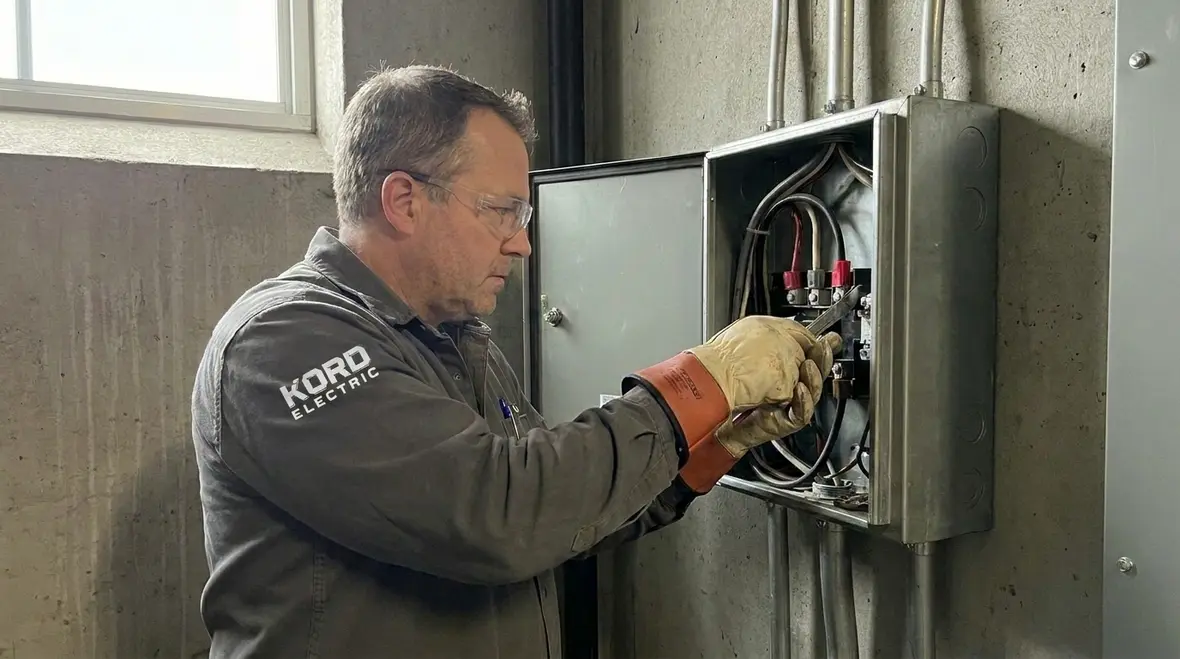
First, we follow the kind of detail you only get when someone has actually traced the problem before. In our blog about hidden electrical risks in commercial buildings, we highlight how problems often hide behind normal-looking surfaces. For example, overheating can happen inside panels, in junction boxes, and at loose connections where heat builds up over time. Then the building “seems fine” until it suddenly does not. We treat these risks like a detective treats clues, not like a homeowner treats a smoke alarm battery.
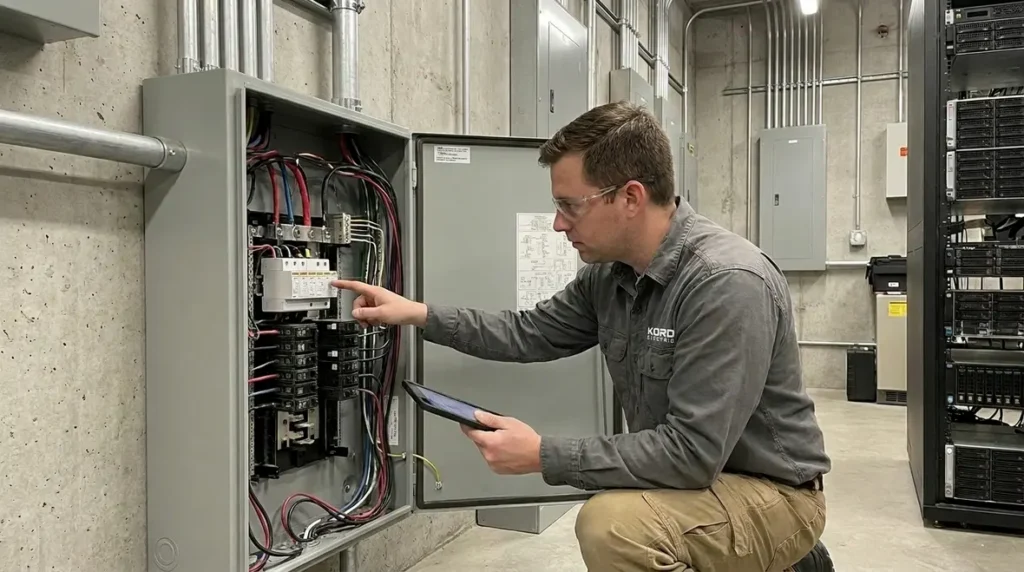
When others run quick checks only, they may miss what matters most. However, our technicians inspect the paths where current flows and where it tends to fail. We look for signs like scorched insulation, discoloration, brittle wires, and abnormal noise from breakers. After that, we compare what we see to what the system should be doing. Then we document it so you can track changes, not just react after something breaks.
How maintenance plans reduce fire risk over time
Second, we build prevention into the schedule. Preventing commercial electrical fires rarely comes from one hero moment. Instead, it comes from maintenance done at the right frequency, with the right test methods, by people who understand commercial loads and industrial duty cycles. When electrical systems get older or more stressed, even small issues can start to behave like they are in a hurry.
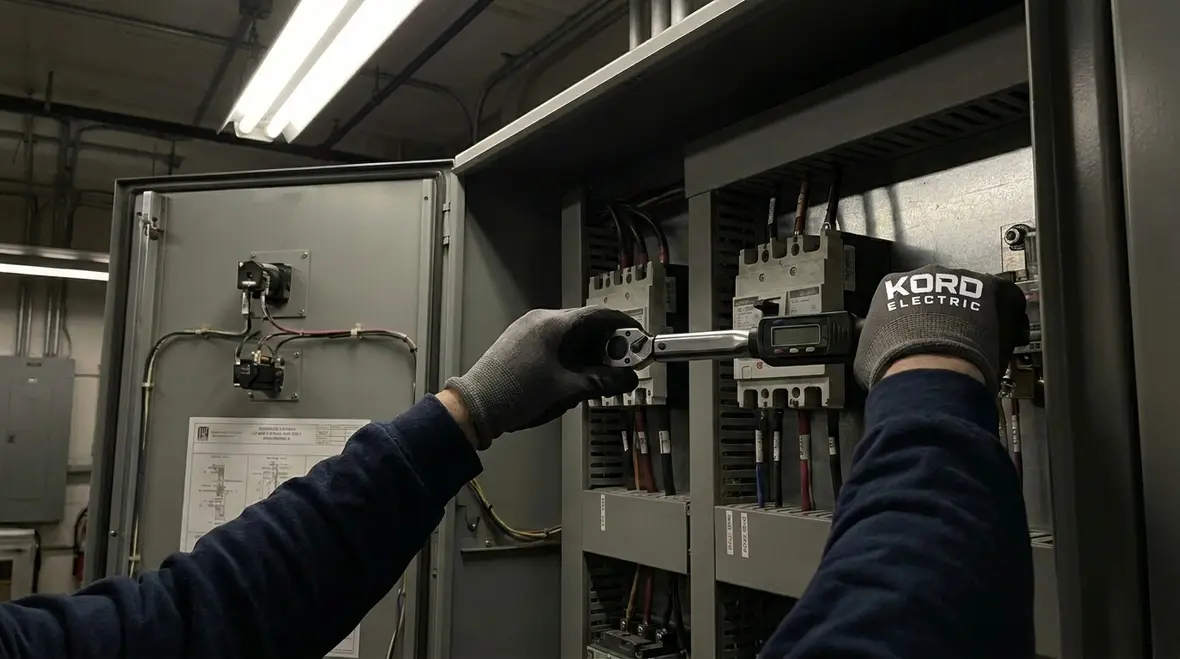
To reduce risk, we help facilities set up a practical plan that includes inspection, cleaning where safe and appropriate, torque verification, and temperature checks under load. We also coordinate the work with operations so production or tenant activities do not grind to a halt. And because we work with commercial and industrial environments, we account for the way those buildings actually operate, not the ideal way they are supposed to operate on paper.
Inspect panels, breakers, and connections like you mean it
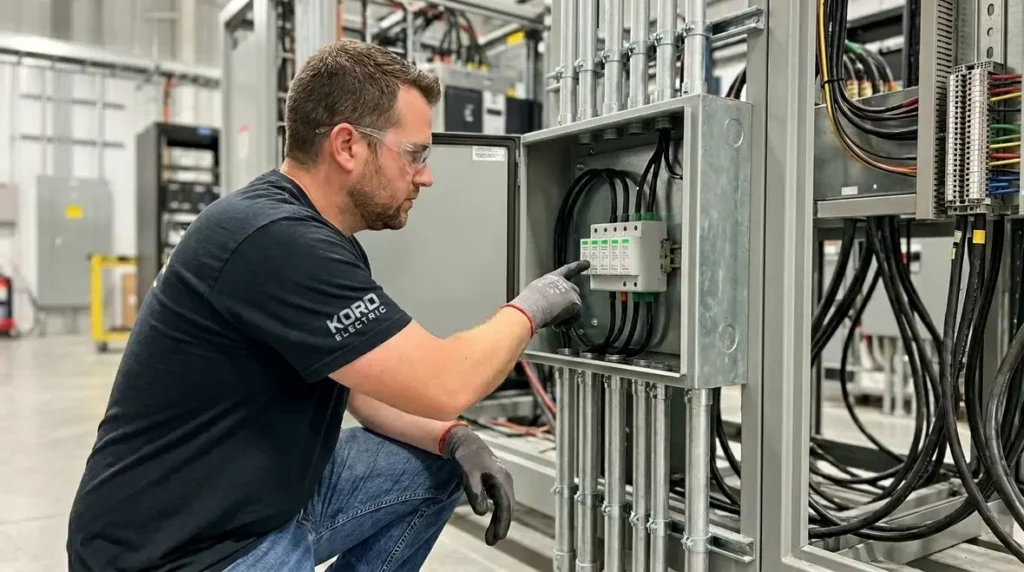
Third, we focus on what most fires start with: connections and distribution points. Loose terminations, damaged bus bars, and failing breakers can create resistance. Resistance creates heat. Heat finds weakness. Then the system turns into a slow cooker for the wrong ingredients.
Our expert service staff pays close attention to bus bars, feeder conductors, and every termination point inside panels and switchgear. We check for signs of arcing, and we verify that components are seated and tightened to proper specifications. In addition, we verify that protective devices still match the load they serve. If the building has changed, for example added equipment, expanded production, or new tenants, the electrical system must be updated to match reality.
Some facilities treat panels as if they are sealed vaults that never need attention. But equipment does not run on wishful thinking. So, we treat panels as living systems that need periodic review.
Use thermal imaging and data to catch overheating before it escalates
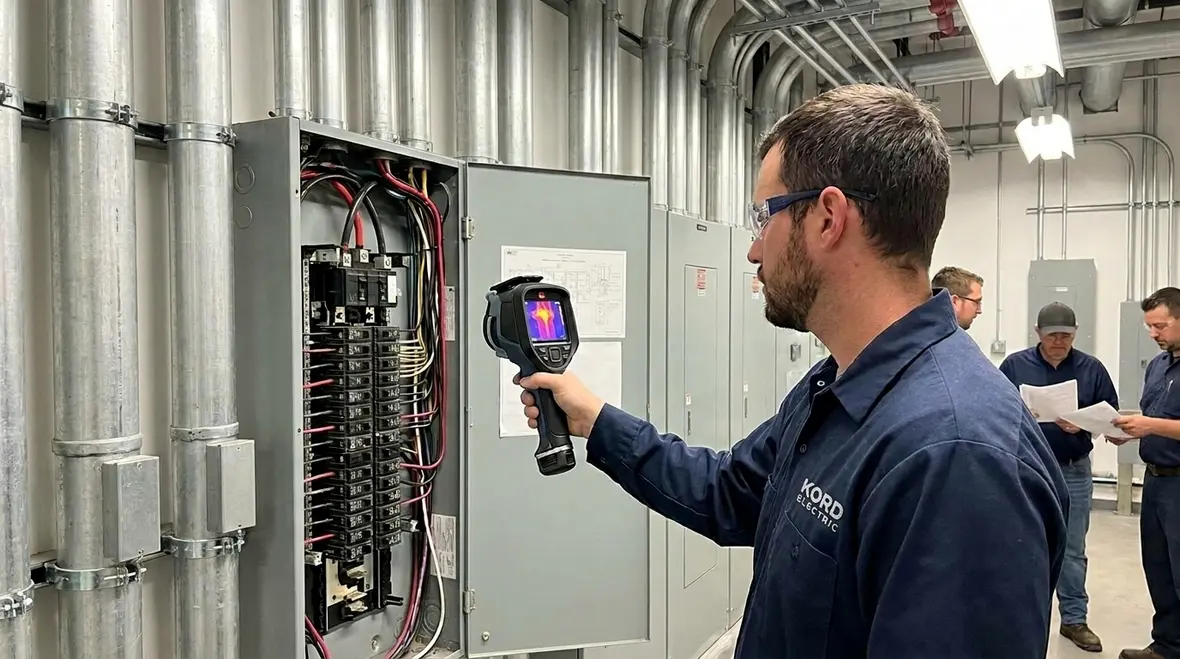
Fourth, we make prevention measurable. Visual checks help, but temperature data often tells the truth faster. Therefore, we use tools like thermal imaging to identify hotspots at terminations and connections, especially in areas that are hard to access. We also look at patterns, because a one-off warm spot can differ from a recurring trend that suggests a growing fault.
Our process works best when we combine temperature readings with load conditions. We coordinate inspections so the system runs similarly to how it runs during normal operations. Then we compare readings across time. This helps us spot where overheating is active, where it is improving after repairs, and where it is likely to worsen if nothing changes.
If you have ever watched a TV show where someone says “It’s probably fine” right before everything explodes, you already understand why we do not rely on guesses. Electrical faults tend to follow that same story arc, just slower and with more smoke.
Manage load growth and keep electrical systems sized correctly
Fifth, we help our clients handle load growth without scrambling. Over the years, commercial and industrial facilities expand: new lines, new HVAC upgrades, added lighting, EV charging, server rooms, equipment retrofits, and temporary power that becomes permanent. When the load changes and the electrical design stays the same, you create stress. And stressed wiring does not fail politely.
We review equipment demand and panel capacity to see if circuits operate within safe margins. We also confirm that wiring sizes and protective devices fit the actual load, not just the original plan from years ago. When we find mismatch, we propose solutions that fit the facility’s needs, such as circuit rebalancing, updated breaker coordination, or targeted upgrades.
Then, we explain the “why” to building managers and facility teams. Our technicians and expert service staff speak clearly, because the best electrical fix is the one your team understands and supports.
Improve safe shutdown, grounding, and surge protection
Sixth, we address safety layers that limit damage when something goes wrong. Grounding that does not perform as expected can increase shock risk and cause equipment to behave unpredictably. Similarly, inadequate surge protection can lead to repeated stress on sensitive equipment, which can eventually cause faults.
We verify grounding and bonding continuity, and we inspect for signs of deterioration at grounding points. Then we review surge protection choices for the building’s equipment categories, including control systems and sensitive loads. In many commercial and industrial facilities, this work helps reduce equipment failures as well as fire risk.
Also, we recommend clear shutdown and maintenance procedures for critical equipment. When teams know the steps, they can isolate faults faster, prevent escalation, and keep the facility safer during repairs.
Train teams, document findings, and close the loop on every repair
Seventh, we support prevention through communication. We can inspect, test, and repair, but the best results happen when the facility team understands the system’s health and ongoing responsibilities. So we help you document findings and track corrective actions. This makes it easier to plan future work and avoid repeating the same mistakes.
We also explain what each issue means in practical terms. For example, a loose termination is not just a loose connection, it is a heat source that can grow with current load. Likewise, a hotspot may not look dramatic, but it can lead to insulation breakdown. When your team knows that, they respond faster and maintain better habits.
And yes, we include a little light humor when we can, because safety training should not feel like a funeral. But we keep the jokes away from the part where the wiring starts doing suspicious things.
Preventing commercial electrical fires FAQ
How we keep commercial and industrial buildings safer
Commercial and industrial buildings run hard, and electrical systems take the hit. At Kord Electric, our focus stays narrow and intentional: we serve commercial and industrial facilities and major property buildings, not one off projects that do not match the scale of the risk. We help teams prevent escalation through targeted inspections, thermal evaluation, maintenance planning, and practical upgrades. Our technicians and expert service staff bring calm, careful attention to details that other teams may skip. Then we document everything so you can act with confidence, not anxiety.
If your facility is already thinking about system reliability and long-term performance, you can also explore structured support through resources like our insights on commercial and industrial electrical maintenance plans and the specialized perspective we share on hidden electrical risks in commercial buildings. Together, these approaches strengthen your strategy for preventing commercial electrical fires across complex sites.
For facilities dealing with unstable power conditions, it is also worth understanding how issues like voltage swings affect safety and uptime. Our service perspective on voltage fluctuations in commercial and industrial facilities connects directly to fire prevention, because poorly controlled voltage can drive heat, stress, and repeat faults at exactly the wrong points in your system.
Call Kord Electric for a prevention plan that fits your facility
If you want a clear path toward safer operations, reach out to Kord Electric. We will review your panels, connections, and load conditions, then recommend a plan designed for your commercial or industrial environment. You get honest findings, clear explanations from our technicians, and corrective actions that reduce risk without guesswork. Preventing commercial electrical fires is not luck, it is process. Contact us today to schedule an inspection and start protecting your building the right way.
For organizations that prefer a structured, program-level approach, our dedicated electrical preventive maintenance services translate this focus on preventing commercial electrical fires into recurring, documented action. From thermal scans and panel inspections to reporting and optimization, we help you move from “hoping nothing fails” to a clear, repeatable plan for reducing risk.
And when an issue does appear suddenly, even in a well-maintained facility, our emergency electrical services team is ready to respond, stabilize, and get you back to safe operation as quickly as possible—so small surprises never have the chance to turn into large-scale electrical fires.