Reliable Electrical Equipment for Data Centers in the USA
When a data center in the USA runs, it must run cleanly, quietly, and without drama. That is why Kord Electric focuses on Reliable Electrical Equipment for Data Centers in the USA, built for the kind of loads that do not forgive mistakes. In our world, “stable power” is not a slogan. It is a daily commitment backed by tested components, careful planning, and experienced technicians who understand how power behaves under real conditions. And yes, we have heard every excuse during an outage. Someone always says the UPS “should have handled it.” Then we show them the logs. The records usually tell a different story.
Why data center power reliability starts at the first decision
Power reliability does not begin at the generator or the switchgear. It begins with choices made before a single cable gets pulled. First, we look at the facility profile, which includes critical loads, growth plans, and uptime goals. Then we align the electrical design to how your teams actually operate. That is the difference between equipment that looks good on paper and systems that perform during the messy parts of real life.
From there, our expert service staff walks through the design reasoning in plain language. They explain why certain redundancy schemes fit your risk level and why some “cheap now, pay later” upgrades cause headaches later. We keep it practical. We also keep it calm. If that sounds like we are trying to put you to sleep, good. You should be relaxed. The electrical system should not be something you have to babysit.
Reliable design strategies: redundancy that does not waste power
One reliable approach we commonly use is power path diversity. Instead of forcing every critical load through the same route, we separate pathways so a single event does not take everything down. When the design supports proper separation, you gain resilience without adding unnecessary complexity. In addition, we plan for graceful maintenance windows. That matters because downtime for scheduled work can create risk if the system cannot transfer smoothly.
We also follow the reliability strategies discussed in our own guidance on data center power reliability and uptime design. That includes the idea that reliability is not just about having backup sources. It is about how you coordinate them. For example, we help teams define the right level of switching and monitoring so transitions happen predictably. Then we validate the approach during commissioning so the system behaves as intended, not as hoped.
Of course, no one wants to turn a data center into a science project. So we keep the strategy grounded. We aim to make changes that improve stability while staying practical for the site staff and the maintenance team.
Connecting redundancy to real uptime goals
Behind every redundancy diagram is a business goal. Some sites chase “maximum uptime at all costs.” Others need high reliability without turning every upgrade into a capital project. We map redundancy choices to those goals, instead of copying a template from another facility. That includes:
Clarifying which loads are truly mission critical versus important but interruptible
Choosing N, N+1, or 2N strategies that match your risk and budget
Designing maintenance paths that let you work on gear without shutting down the room
Coordinating with cooling and network redundancy so power is not the only strong link
We also tie these strategies back to broader planning topics like data center power redundancy for maximum uptime, so your electrical decisions stay consistent with the rest of your reliability roadmap.
How we match equipment to real loads and real heat
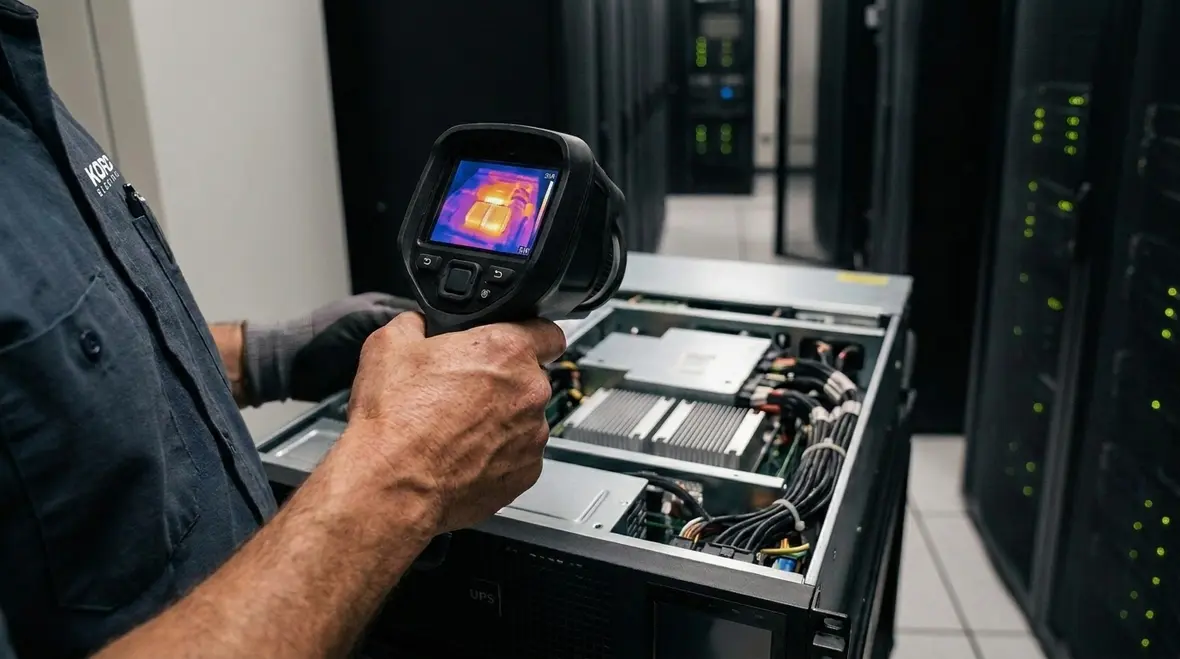
Many facilities choose electrical gear by name and rating alone. We do not. We match equipment to the load profiles, harmonic content, and thermal environment of the building. That means we consider how IT loads behave during peak demand and during partial load conditions. It also means we account for how heat impacts performance and life cycle. In short, we treat power as a living system, not a static box on a one line diagram.
Our technicians and expert service staff review the full electrical chain: power distribution, protective devices, UPS integration, and backup transfer. Then we confirm that the equipment selection supports the duty cycle. When a device is stressed beyond what it was meant to handle, it does not always fail loudly. Sometimes it fails quietly, then later it fails at the worst time. That is the kind of “mystery” outage we help clients prevent.
Designing around thermal realities, not lab conditions
Data centers in the USA operate in real buildings, with real hot spots, airflow quirks, and seasonal swings. We evaluate:
Room layouts that trap heat around switchgear, UPS, or PDU lineups
Cable routing that increases conductor temperature and derates effective capacity
Interaction between IT load ramps and transformer or breaker temperature profiles
How maintenance modes change cooling patterns and stress specific equipment
We then connect those realities to smart distribution choices, like those outlined in Kord Electric’s work on data center electrical distribution design for reliability, so your system performs under the actual conditions it will face, not the ideal ones in a catalog.
UPS, switchgear, and transfer systems: what we verify before turnover
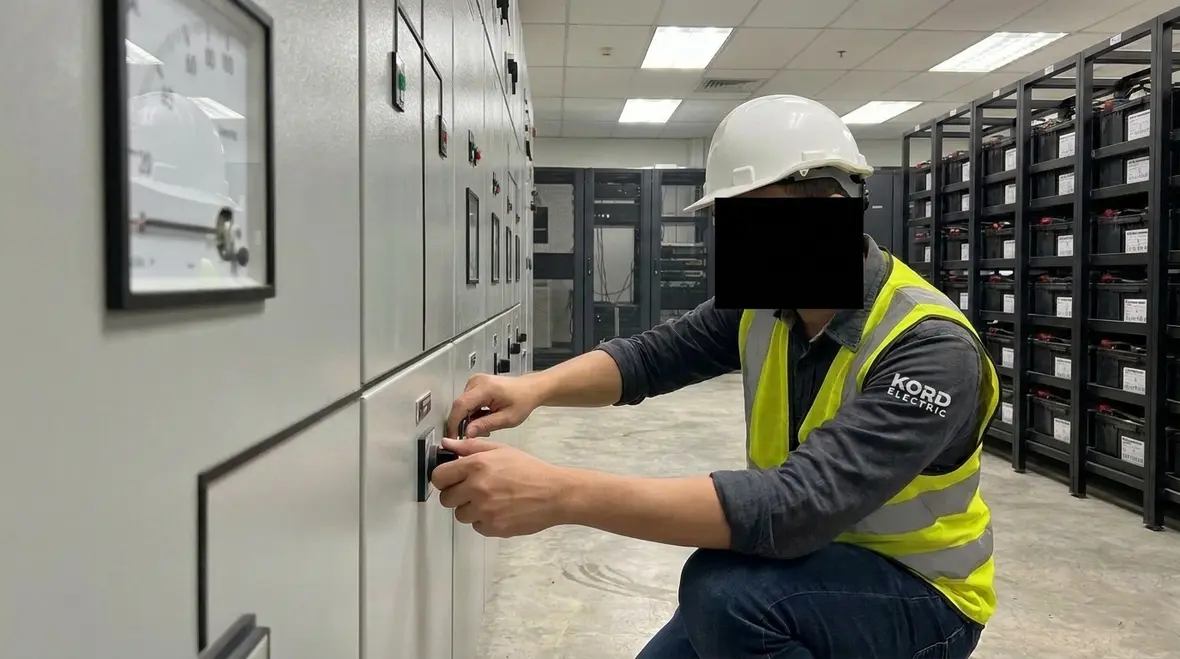
When teams ask about Reliable Electrical Equipment for Data Centers in the USA, they usually start with UPS and switchgear. Fair. Those are the backbone pieces. However, we verify more than the component itself. We verify coordination. We verify timing. We verify that protective settings and transfer logic align with the design intent.
First, we confirm UPS performance under expected operating modes. That includes normal operation, maintenance conditions, and transfer events. Next, we review switchgear configuration to make sure it supports the electrical architecture you designed for. Then we validate transfer systems so the switchovers perform smoothly during load changes and disturbances. We also check labeling, documentation, and controls logic so your operations team can respond fast, even on a bad day.
And yes, sometimes we catch errors that make you wonder how the drawings ever got approved. Other times we find the system is fine, but the setting files were not loaded exactly as intended. Either way, we handle it before turnover. Because after turnover, it is no longer our problem, and we prefer our problems to be solvable on our side.
Commissioning checks that go beyond a quick walk-through
Our approach to commissioning aligns with broader reliability guidance, like the principles in data center electrical infrastructure design for reliability. We:
Simulate realistic transfer events, not just idealized test sequences
Confirm short-circuit and coordination studies match actual protective settings
Verify alarms and trend logs are mapped where operators will actually see them
Walk operations teams through failure scenarios they are most likely to face
Monitoring, testing, and service that stays on schedule
Even the best equipment needs service, testing, and monitoring. That is where reliability becomes repeatable. We help commercial and industrial facilities build service plans that match their operational calendar, not just a generic checklist. We also make sure inspections and test routines cover the areas that actually drive risk: protective device behavior, transfer performance, UPS alarms, battery health, and sensor readings tied to real operating points.
We keep this ongoing because power systems drift. Settings can change. Loads grow. Cooling patterns shift. Over time, what was once correct can become outdated. Therefore, our expert service staff reviews trends and helps clients interpret what the data is saying. We explain it clearly, and we recommend actions that reduce downtime risk without forcing every site into constant upgrades.
As part of our process, we document what we find and what we do. We also outline next steps so teams know what to watch between service visits. That way, reliability does not depend on guesswork. It depends on evidence.
Turning monitoring data into decisions, not just dashboards
Many data centers deploy sophisticated monitoring, then drown in alarms and trend lines. We help you turn that stream into a maintenance and upgrade roadmap by:
Flagging patterns that hint at loose connections, overloaded paths, or aging components
Linking event logs to specific operating modes, so you can see what really caused a blip
Aligning your test intervals with industry best practices and your own risk profile
Coordinating findings with broader uptime strategies for data center electrical requirements for uptime
Commissioning and documentation: the quiet heroes of uptime
Commissioning looks boring until it prevents a costly failure. Then it looks like the best investment you ever made. We treat commissioning as a real phase, not a sign off at the end. It starts with test plans that connect to the power reliability goals of the site. Then we verify that each system behaves as designed under defined scenarios.
We also emphasize documentation because your electrical system outlives the project team. Your staff needs clean diagrams, correct settings records, and clear guidance on how to operate and troubleshoot. That is where our technicians help most. They translate complex behavior into practical instructions your team can use during incidents and maintenance.
Additionally, we encourage structured handover that supports long term reliability. When the handover is sharp, your team can respond quickly. When it is sloppy, your team spends the first hour hunting down the right file. And if that happens during a power event, well, that is how people start writing angry emails.
Keeping documentation useful, not just stored
We favor documentation that your operators can actually use during a stressful moment. That means:
Clear single-line diagrams with real equipment names, not just symbols
Settings files that match what is actually programmed into devices
Step-by-step procedures for common and high-risk switching operations
Cross-references to broader infrastructure guides like data center electrical infrastructure essentials
Equipment lifecycle planning for long term reliability
Reliability is not only about today’s uptime. It is also about planning for tomorrow’s replacement and modernization. We help major property buildings and commercial and industrial facilities build lifecycle strategies for critical electrical gear. That means we consider component aging, battery replacement intervals, and how load growth affects the original design margins.
When clients plan too late, they get forced into urgent decisions during peak operational seasons. Therefore, we recommend planning early enough to align procurement timelines, installation scheduling, and downtime management. We also help teams evaluate whether repair, refurbishment, or replacement makes the most sense based on actual performance and condition.
In the end, we focus on reducing risk and keeping operations stable. We do not push change for the sake of change. We push clarity, because clarity keeps the lights on.
Aligning lifecycle planning with growth and regional needs
For data centers in the USA, lifecycle planning needs to track more than age alone. We connect it to:
Regional grid conditions and how they stress UPS, transformers, and switchgear
Growth planning insights from data center power scalability and growth planning
Opportunities to modernize controls, monitoring, and protection in the same window
Coordinating upgrades with broader Los Angeles County electrical services for sites across the region
FAQ
Ready to strengthen your data center power reliability?
If you want Reliable Electrical Equipment for Data Centers in the USA that performs under pressure, Kord Electric is ready to help. We bring experienced technicians and expert service staff who explain decisions clearly, verify performance before turnover, and keep reliability on schedule. Contact us to review your power architecture, identify risks, and build a plan for stable operations in commercial and industrial facilities and major property buildings. Let us handle the hard parts, so your team stays focused on uptime.
If you are planning new capacity or modernizing existing systems, it can also help to explore how broader power reliability themes show up in resources like Kord Electric’s Data Center Power Reliability and Uptime Design and related guides such as data center power reliability strategies. Together, these approaches connect equipment choices, redundancy design, commissioning, and ongoing maintenance into one reliability plan instead of a series of disconnected projects.
From new builds to upgrades, our team supports planning, installation, testing, and long-term service for mission critical electrical systems. When you are ready to move from “we hope it holds” to “we know how it behaves,” Kord Electric is ready to step in.