Retail Lighting Maintenance Preventive Service Troubleshooting Guide
Retail Lighting Maintenance: Preventive Service & Troubleshooting Guide for Busy Commercial Spaces
Retail Lighting Maintenance: Preventive Service & Troubleshooting Guide is our starting point for keeping storefront and back-of-house lighting steady, safe, and predictable. At Kord Electric, we do this with scheduled inspections, clean reporting, and hands-on follow through by our technicians and expert service staff. We treat lighting like a system, not a bunch of glowing boxes. So, instead of waiting for a failure that steals attention from your customers, we prevent it. And yes, we also know the classic moment when someone says, “It only flickers a little.” Flicker is how problems introduce themselves before they grow teeth.
What does retail lighting maintenance include for commercial buildings?
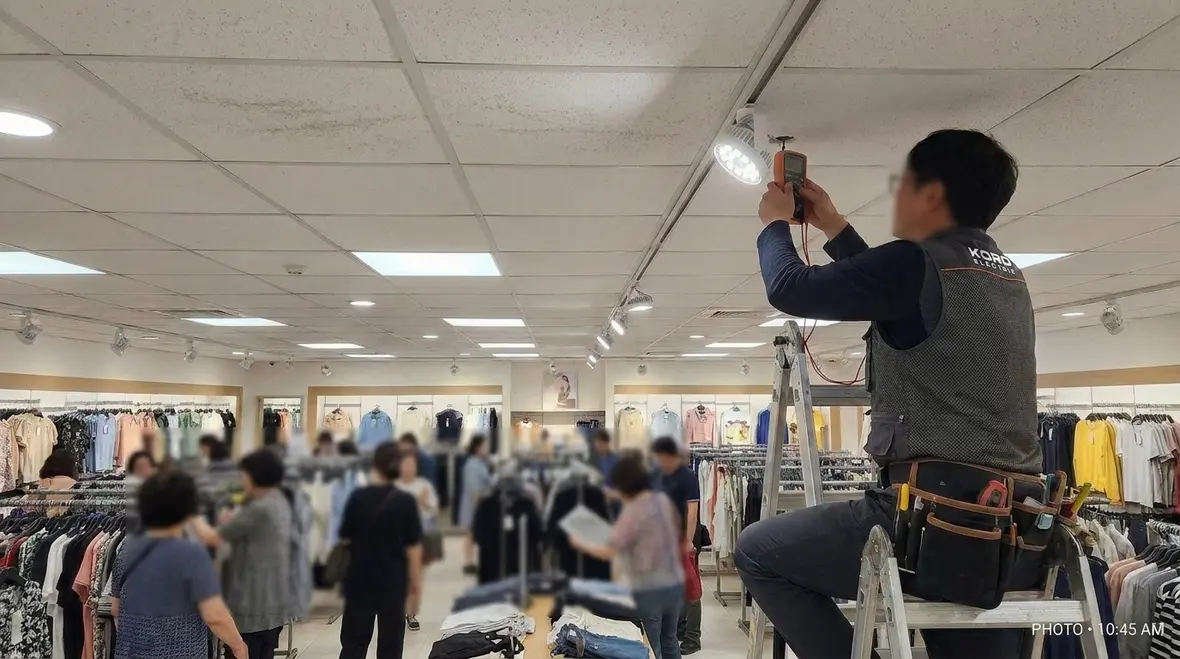
For commercial and industrial facilities, retail lighting maintenance goes beyond swapping bulbs. We focus on the parts that fail quietly over time, then show up later as downtime, callbacks, and uneven illumination. Our technicians check fixtures, drivers, ballasts where applicable, occupancy controls, dimming components, and wiring connections. Then we confirm the lighting output matches what your space needs for safety, navigation, and display quality.
Next, we inspect how heat and dust affect performance. Lighting systems hate poor airflow and love collecting grime, especially in mechanical rooms, warehouse edges, loading areas, and storefront corridors. Therefore we clean and verify mounting stability, then we document the condition so facility managers can budget with confidence.
Finally, we coordinate any repairs with your operating schedule. Because nobody enjoys a “quick fix” that turns into a full closure. We plan access, manage downtime, and keep the work organized, like a well stocked tool cart and a calm crew.
How do preventive inspections stop expensive lighting failures?
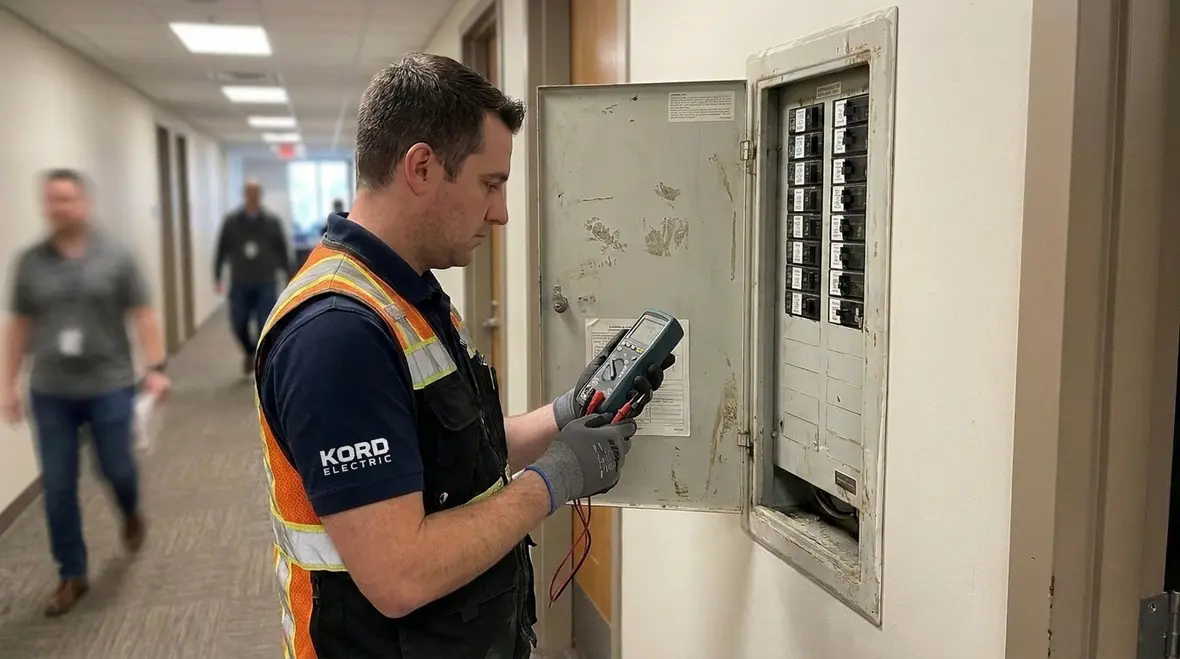
Preventive service works because most lighting issues follow a pattern. Parts drift out of spec slowly. Connections loosen through vibration. Corrosion builds at contact points. Light output drops long before a fixture fully fails. In other words, problems rarely arrive as a surprise; they arrive as a trend.
To interrupt that trend, our team uses a steady inspection rhythm. We look for early signs, such as inconsistent brightness, repeated flicker, intermittent outages, and uneven coverage that suggests failed optics or failing components. Then we correlate symptoms with specific fixture types and control zones, so you do not chase random ghosts across your property.
Moreover, we evaluate control settings and switching behavior. A mismatch between occupancy, daylight sensing, and dimming can create stress and shorten component life. When systems behave like they cannot decide what to do, they wear out faster. We help others avoid that situation by verifying settings and confirming control logic during service.
For teams planning broader upgrades, it often helps to pair preventive inspections with a structured retrofit plan. Resources like Kord Electric’s energy efficient commercial lighting retrofit guide show how maintenance, fixture selection, and controls all work together over the life of the system.
How do our technicians troubleshoot flicker, dimming, and outages?
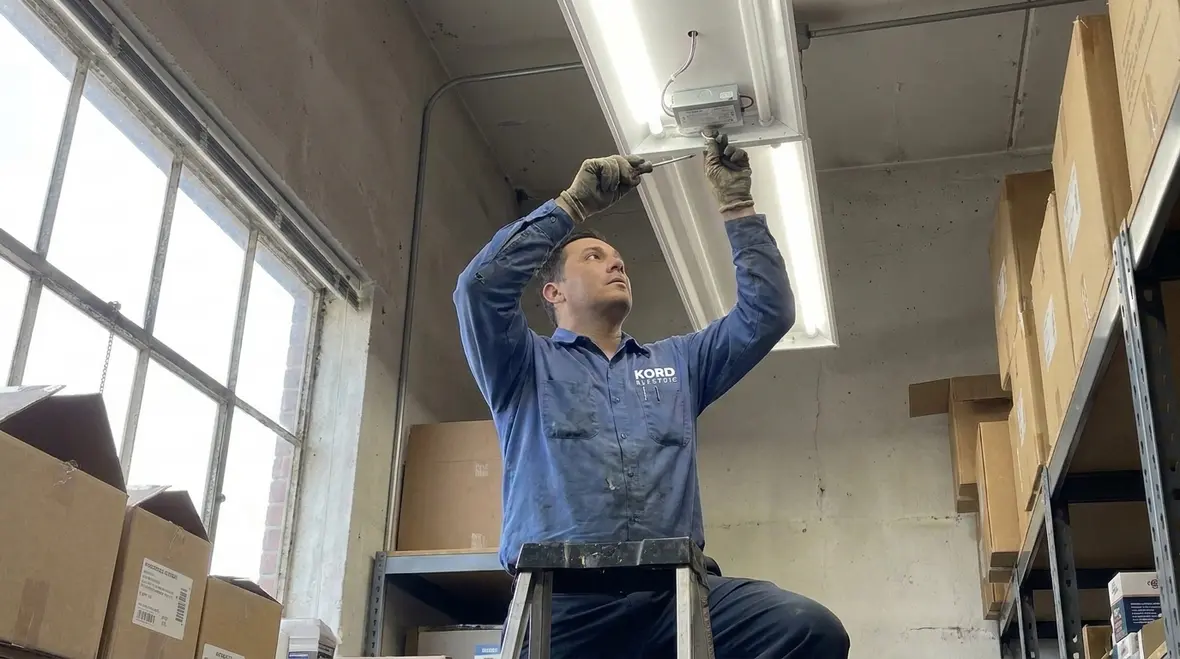
When lighting misbehaves, our technicians use a method that keeps things clear. We start by narrowing the complaint to a pattern: location, time of day, control mode, and whether it affects a whole row, a single fixture type, or one control circuit. After that, we test systematically rather than replacing parts blindly. That saves time, and it saves money.
For flicker, we inspect drivers, power quality impacts, and connections. We also confirm whether a fixture responds properly when controls change states. If the lighting flickers only at certain dim levels, the issue often points to driver behavior or settings. When outages happen in batches, we check whether there is a shared driver population, wiring fault, or control board problem.
For dimming problems, we review configuration and compatibility. Some systems tolerate certain controls, but not others. Therefore we confirm the dimming method, check for correct voltage and signal behavior, and verify that the fixtures can respond within their designed operating range.
And when someone says, “We replaced the bulb last time,” we politely remind them that commercial fixtures are not simple. Many modern systems rely on drivers and optics, so the replacement may not address the actual root cause. That is where expert service staff earn their keep.
If your facility is also wrestling with control logic and automation, pairing this troubleshooting approach with insights from Kord Electric’s commercial lighting control automation guide can help you connect what the fixtures are doing with the way your control system is actually configured.
Where do lighting systems fail most often in commercial facilities?
In large properties, failures cluster around predictable conditions. First, exterior and loading dock areas see high temperature swings, moisture exposure, and constant vibration from daily operations. Therefore fixtures can degrade faster due to weather stress and physical wear.
Second, back-of-house spaces often get overlooked. Warehouses, corridors behind storefronts, and service areas hold dust, humidity, and air flow limits. Over time, dirt and heat reduce performance and can cause overheating. Our technicians look for that during routine checks so the issue does not reach the point where a fixture starts acting like a malfunctioning mood ring.
Third, control points fail when systems get adjusted without full coordination. People change scheduling, occupancy settings, or daylight thresholds for energy goals, then the lighting response becomes inconsistent. We help by validating the full control path and confirming that the setup still matches how the building operates.
Finally, wiring and terminations become the quiet problem. Loose connections, damaged insulation, and corrosion often show up as intermittent outages. We check terminations, examine physical cable condition, and confirm that loads remain balanced so the system stays stable.
For facilities across Los Angeles and surrounding areas, keeping those weak points under control is part of a larger strategy. Kord Electric’s Los Angeles County electrical services help major properties line up lighting reliability with broader electrical safety and capacity planning.
How do we document service so your team can act?
We understand that a lighting service visit must do more than “fix something.” It should help property teams make better decisions. So we provide clear documentation that helps others understand what we found, what we repaired, and what needs attention next.
Our approach supports planning. We identify which fixtures show early signs of wear, which circuits need follow up, and which control settings require adjustment. Then we classify findings by priority so managers can schedule work before it becomes emergency service.
Additionally, we align our records with how commercial facilities operate. Whether the building runs late hours, hosts regular traffic surges, or requires coordinated access, our reporting helps others avoid downtime that disrupts operations.
In practice, this Retail Lighting Maintenance: Preventive Service & Troubleshooting Guide approach often pairs well with more comprehensive strategies like Kord Electric’s commercial and industrial electrical maintenance plans, so lighting, power distribution, and controls all move in the same direction over time.
Can a maintenance schedule fit both safety and energy goals?
Yes. In fact, we treat safety and energy as partners, not rivals. When lighting output becomes unreliable, it affects wayfinding, worker safety, and customer experience. Therefore strong preventive service supports safe visibility while keeping the system within designed performance.
Meanwhile, smart scheduling reduces waste. Instead of patching failures one by one, our technicians follow a planned workflow that addresses common issues across zones and fixture groups. Then we verify control behavior so energy strategies stay accurate. If occupancy scheduling or daylight sensing drifts, you may save energy today and pay for repairs tomorrow. We help you avoid that by checking how the system responds in real conditions.
Finally, we encourage continuity. When the same team supports service and troubleshooting, results improve. Because knowledge travels. And we prefer steady improvement over the “new contractor lottery.”
If you are building a roadmap that combines lighting reliability with broader electrical resilience, you can also explore related guidance like Kord Electric’s proactive commercial lighting maintenance tips to keep your strategy ahead of day-to-day issues.
Dual column: example maintenance workflow and what outcomes to expect
Step we take
Inspect fixtures and optics for wear and uneven output
Check drivers, terminations, and power behavior
Verify controls, dimming response, and occupancy logic
Clean and recheck key areas where dust and heat collect
Test after repairs and confirm stable operation
Outcome you get
Consistent illumination for safety and customer areas
Reduced intermittent outages and fewer emergency calls
Improved reliability of energy and comfort settings
Longer fixture life through better thermal and cleanliness conditions
Clear proof the system runs correctly after service
FAQ: Retail lighting maintenance and troubleshooting
Call Kord Electric today for a maintenance plan that holds up
If you run a major commercial or industrial property, you cannot afford lighting that behaves like it is guessing. At Kord Electric, our technicians and expert service staff build a clear Retail Lighting Maintenance: Preventive Service & Troubleshooting Guide approach around your building’s needs. We prevent failures, troubleshoot fast when issues appear, and document everything so your team can plan next steps with confidence. Contact us to schedule an inspection and lock in steadier lighting performance, without the drama. And yes, we promise not to treat flicker like it is “just vibes.”
When you are ready to align lighting reliability with the rest of your electrical strategy, our dedicated Los Angeles County commercial and industrial electrical services help you connect preventive maintenance, upgrades, and troubleshooting across the entire facility.
For property teams who want to go deeper on lighting-specific planning, Kord Electric’s blog on proactive commercial lighting maintenance tips offers additional ideas you can combine with the Retail Lighting Maintenance: Preventive Service & Troubleshooting Guide approach outlined here.