Scalable EV Fleet Charging Infrastructure
At Kord Electric, we help commercial teams plan and scale EV fleet charging infrastructure that keeps working as demand grows. We have seen it in the real world: one depot adds a few chargers, then the next quarter brings more vehicles, a new route, or a lease change that demands more power. And suddenly everyone asks the same question, usually while staring at an electrical panel like it owes them money.
In this article, we explain how Kord Electric and our expert service staff design charging systems that expand without chaos. We also show how we build the right support around the electrical work so your fleet can move forward with fewer surprises, tighter downtime control, and better long term planning.
How we design EV fleet charging infrastructure for growth
We start by treating charging like a living system, not a one time install. First, our team reviews how the fleet works: routes, charging windows, daily usage, and vehicle mix. Then we map that demand to electrical capacity and physical layout. After that, we scale the plan so the next phase does not require major rewiring or costly rework.
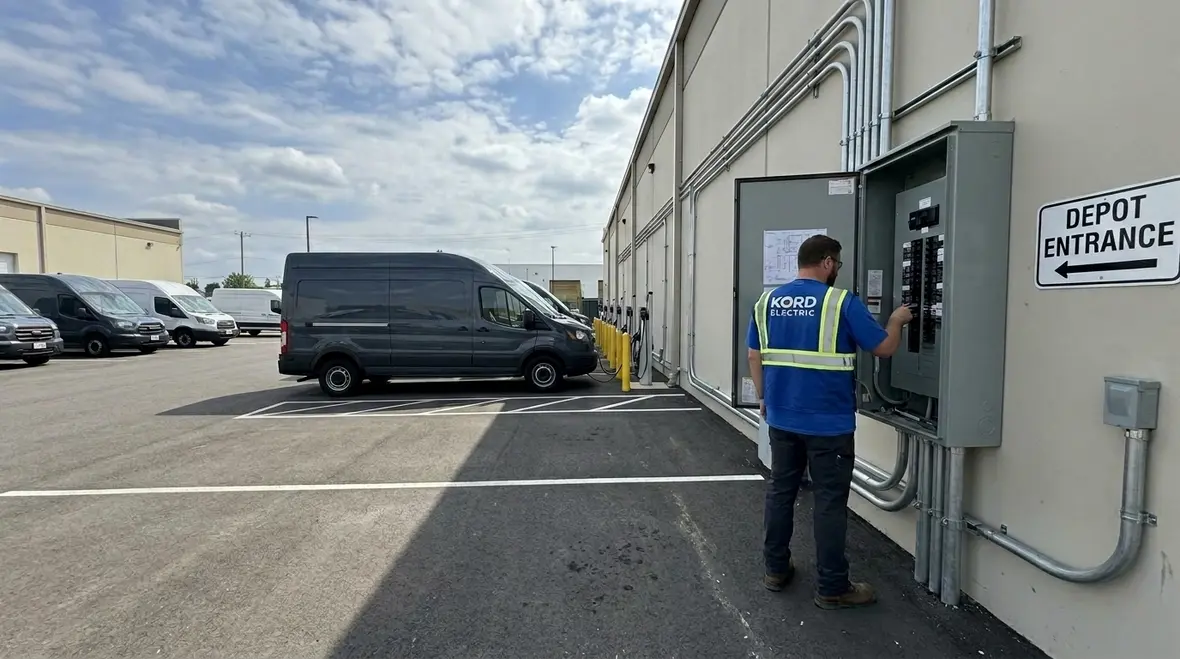
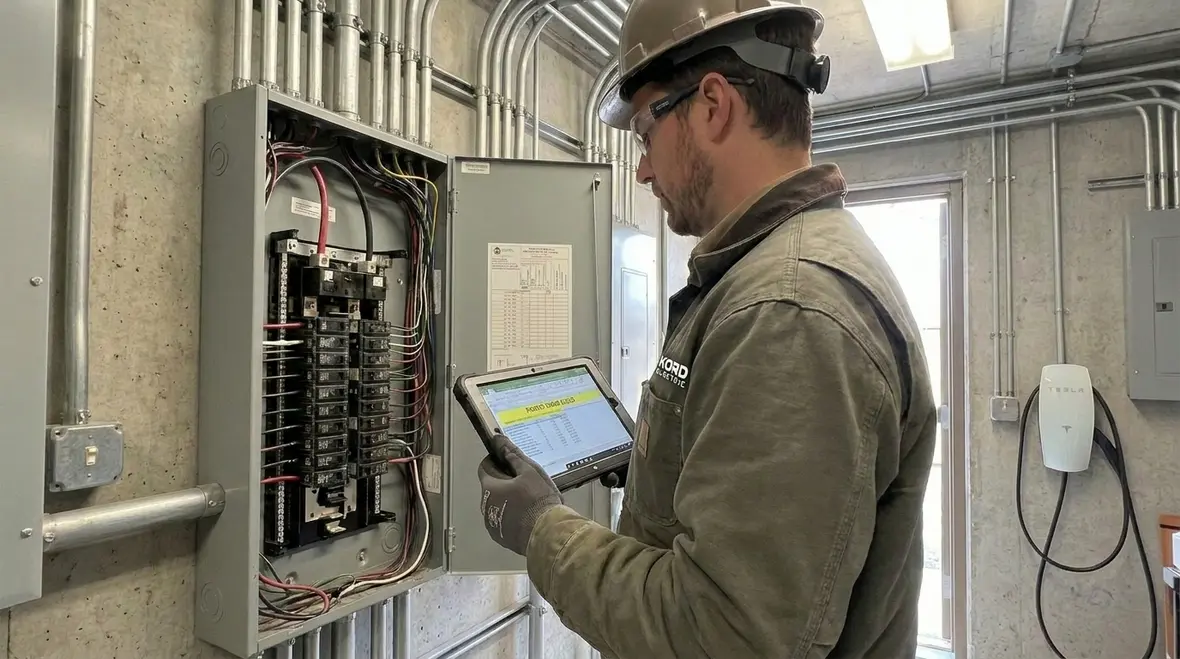
Next, we work with the building’s existing power story. We look at service size, feeder capacity, panel space, load diversity, and any nearby loads that will compete with charging. Then we align the charging layout with safe wiring runs and workable conduit paths, so future charger additions fit cleanly into the plan.
Here is a simple truth that saves money: if we design for expansion now, we avoid “measure twice, curse once” projects later. And yes, our technicians have heard every version of that phrase.
Capacity planning that avoids the “we need more amps” surprise
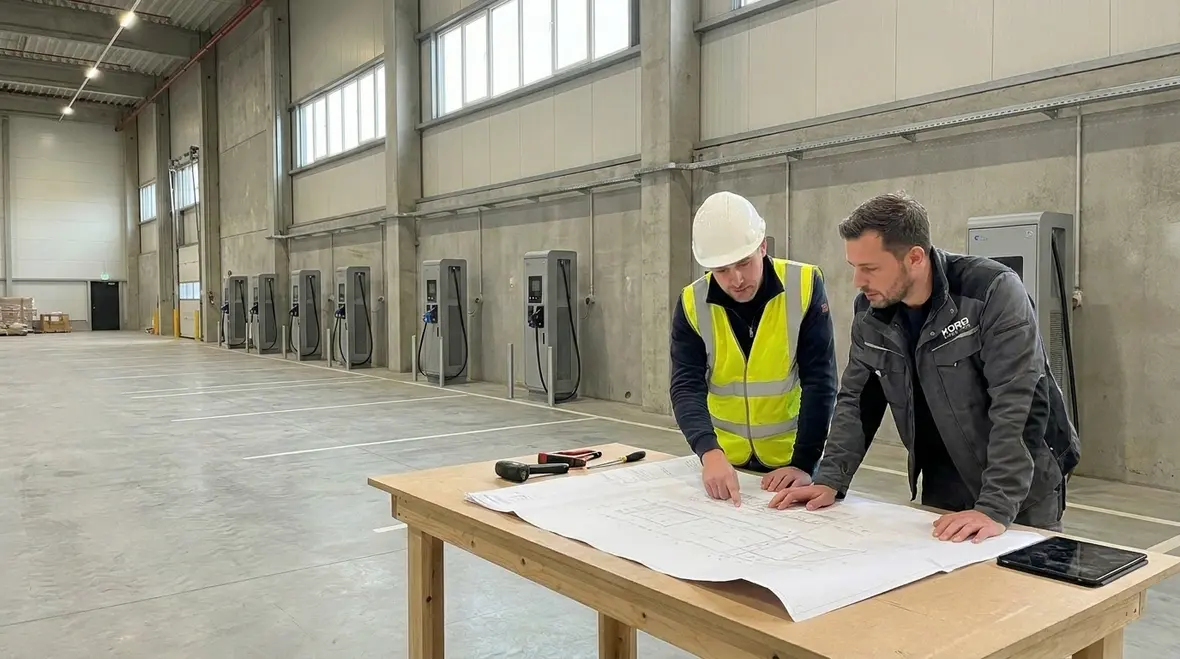
To scale, you need a clear path for power. We analyze what your facility can deliver today and what it can deliver after upgrades. That means we consider both electrical capacity and site constraints like utility coordination, transformer limits, and demand charges.
At this stage, our expert service staff often explains the next step in plain language. They walk stakeholders through load calculations, charging rates, and how smart controls can keep the system stable. Moreover, they outline the difference between adding chargers and adding the ability to support them at the same time.
When teams fail to plan, they end up with chargers that operate below targets or schedules that do not match driver needs. Therefore, we build a plan that supports intended charging behavior while keeping electrical systems within safe limits.
Phased deployment for depots, garages, and parking structures
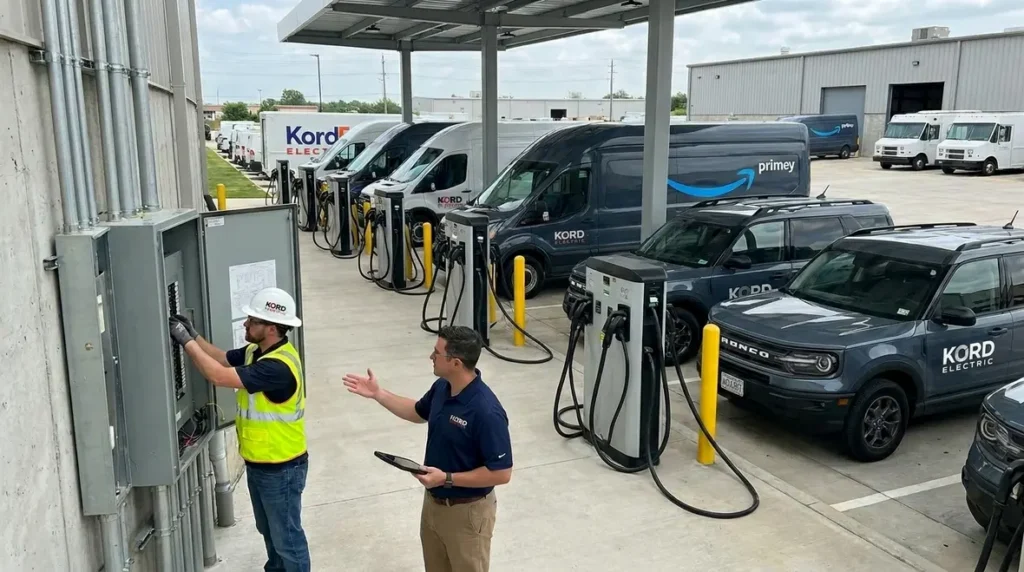
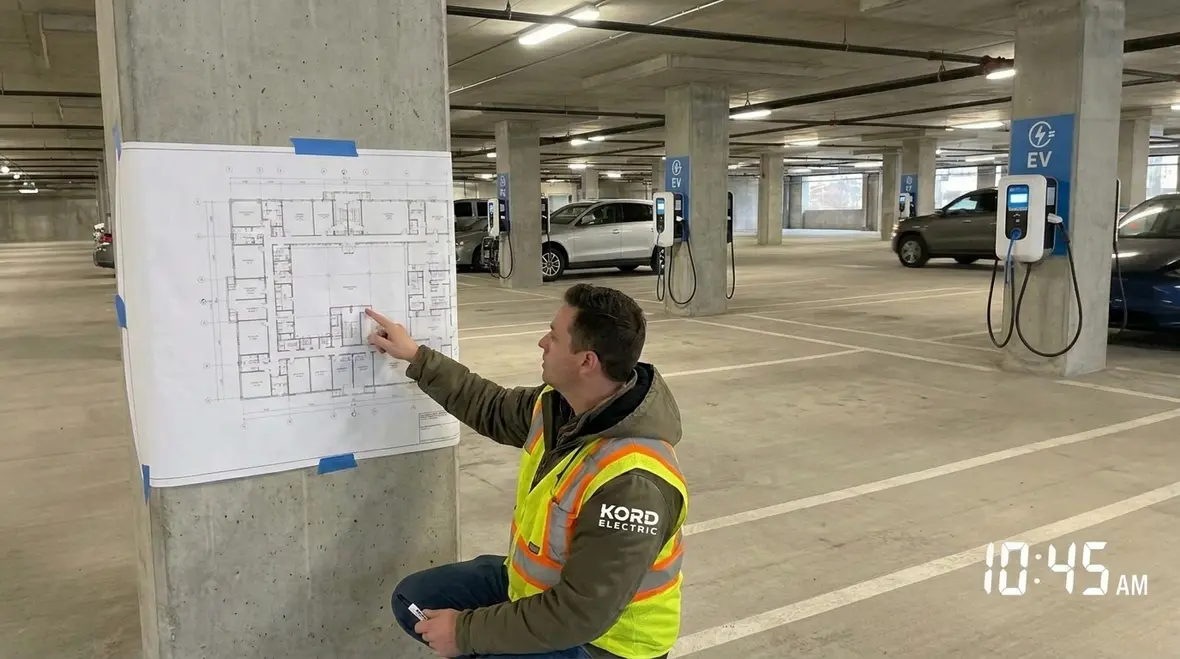
Commercial sites rarely change all at once. Instead, they grow in phases: new drivers, extra vehicles, fleet expansion, or route optimization. So we design for staged rollout, with clear milestones for power upgrades, equipment installation, and commissioning.
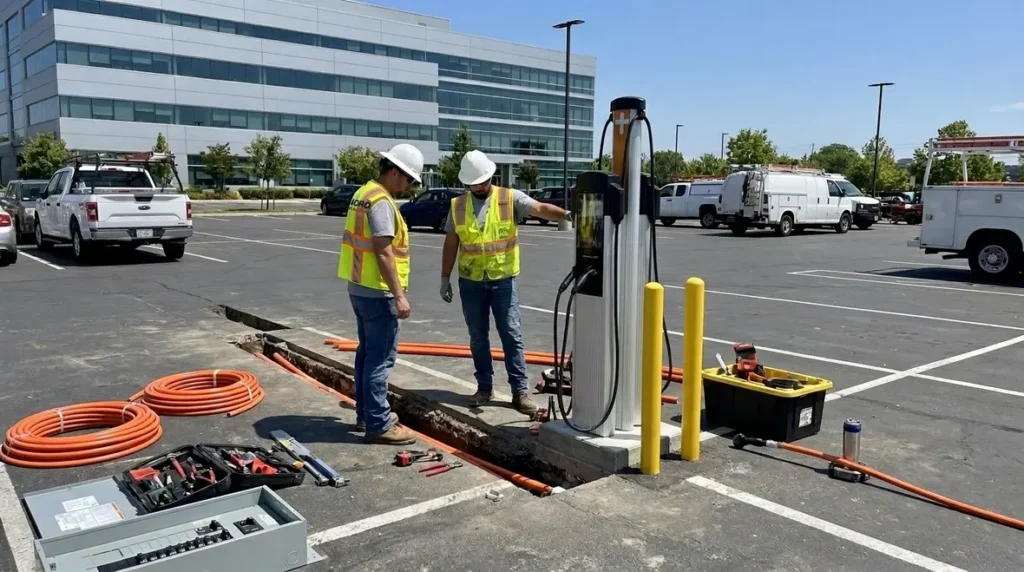
We also plan physical space early. That includes planning for cable routes, future pull points, and mounting locations that remain accessible. Additionally, we consider weather, wash areas, and vehicle traffic patterns so charging stays usable and safe.
Many property managers ask if they can install now and expand later without rebuilding everything. In many cases, they can, but only if the early phase includes the right electrical backbone and space planning. Otherwise, the “later” phase becomes a full reset, and nobody enjoys that meeting.
Service and maintenance plans that keep uptime steady
Charging systems do not only need power. They need care. We recommend a maintenance approach that fits commercial and industrial operations, where downtime costs more than most people expect.
Our method connects the technical and the operational. For example, we use the same logic behind our commercial and industrial electrical maintenance plans to guide how we schedule inspections, testing, and preventative work.
Then we tailor the cadence. We account for usage intensity, charger duty cycle, ambient conditions, and the risk level of each site area. After that, we document results and recommend next actions so your team has clear decisions instead of guesswork.
In plain terms, our technicians reduce the chances of failures that interrupt charging schedules. And when issues happen, they respond quickly because the system is not a mystery. It is a known asset with known history.
Smart controls, demand management, and future-ready scheduling
Scaling is not only about adding chargers. It is also about how those chargers share power. For that reason, we often recommend controls that manage charging loads based on available capacity.
Smart scheduling helps your fleet charge when demand is lowest or when your facility can support higher power. Moreover, demand management can reduce strain on feeders and help avoid costly electrical limits. It can also help align charging with off peak utility rates, depending on your contract and site setup.
We explain this to teams in a practical way. We do not treat controls like a buzzword. Instead, we talk about how the system decides power distribution, how it responds during peak operations, and how your team can adjust charging behavior as the fleet changes.
And yes, it still feels like magic to most people. But magic with wiring diagrams is usually the better kind.
Reliability at scale: commissioning, monitoring, and safety
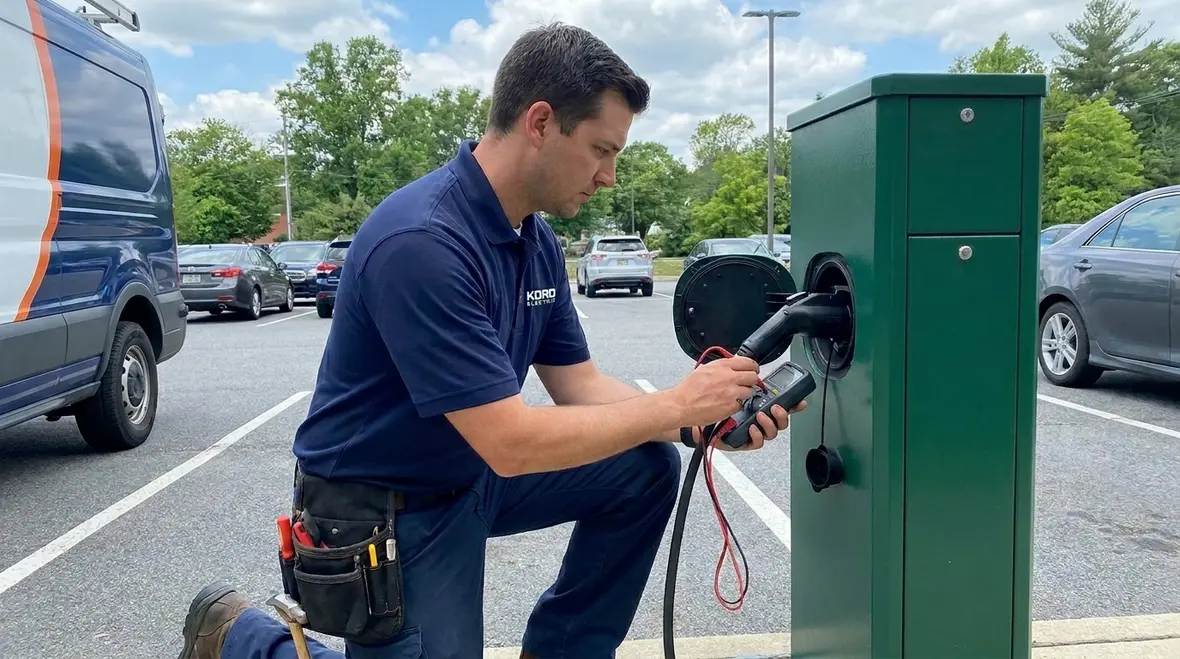
Before we close out a project, we commission the system so it performs the way it was designed. That means we verify electrical connections, confirm equipment behavior, and test charging performance under real conditions. Then we confirm safety features and protective settings so the system protects people and property.
After installation, we support long term reliability with monitoring and service workflows. That helps teams spot issues early, so they can act before a problem becomes a shutdown. Additionally, we support safe operations by aligning charger use with facility electrical practices.
This matters even more for large properties. When multiple chargers run across a busy site, tiny issues can multiply. Therefore, a solid commissioning step and a steady service plan help keep the entire system stable, not just the first charger installed.
Our expert service staff also helps the right people understand what they are seeing. When a warning appears or performance changes, your team should know what it means and what to do next. That clarity reduces downtime and keeps operations calm.
What to expect from Kord Electric on major property projects
Commercial and industrial facilities need a partner that treats the work like a system project, not a bolt on add on. We coordinate with the site, the electrical environment, and the operational goals of the facility.
First, we gather the details that matter: site power conditions, available space, charging needs, and growth plans. Then we build a plan that supports near term installation and future expansion. After that, we execute the work with a focus on clean installation, safe routing, and commissioning.
Finally, we help your team manage the asset. That includes recommending service schedules that fit your operation and clarifying how monitoring and response work.
If you own or manage major property buildings and you plan to electrify fleet operations, our goal stays the same. We keep charging reliable, expandable, and aligned with business needs, not just with a one day installation checklist. For regional projects, many facility leaders also pair long term charging work with broader Los Angeles County electrical services so the entire electrical environment supports uptime and growth.
FAQ
Ready to scale your charging plan with Kord Electric
If your fleet is growing or your property is preparing for electrification, do not wait for the “we need more amps” moment. We help commercial and industrial facilities build EV fleet charging infrastructure that scales with clear capacity planning, phased deployment, and a service approach that protects uptime. Our team also connects charging work with broader commercial and industrial support so your panels, feeders, protection, and maintenance approach all move in the same direction.
Reach out to Kord Electric and let our technicians and expert service staff map the right path forward. We will review your site, explain your options, and set you up for future growth with confidence. Whether you are adding your first EV route or coordinating a multi-depot rollout, we focus on reliable power, practical schedules, and charging systems that keep pace with your fleet instead of holding it back.
For large properties across the region, especially those operating in and around Los Angeles County, combining scalable EV charging with structured electrical support means fewer surprises and calmer operations. When you are ready to align your fleet plan with your electrical reality, Kord Electric is ready to help design, install, commission, and maintain the system that will carry your vehicles into the next phase of growth.
You can also explore our broader service capabilities and regional coverage on our dedicated service pages, including offerings that support multi-site portfolios and complex commercial facilities as they modernize power, protection, and fleet infrastructure.