Scaling Commercial EV Charging Infrastructure
Scaling Commercial EV Charging Infrastructure is not a “flip a switch and hope” project. At Kord Electric, we see what property managers experience every day: owners want fewer complaints, fewer surprises, and a plan that still looks good after the first wave of EV drivers arrives. So, we build charging solutions for commercial and industrial facilities, and for major property buildings where uptime, safety, and smart power use matter. Our technicians and expert service staff walk people through each step, and we keep the process calm, clear, and practical.
Property managers need a build plan, not a wish list
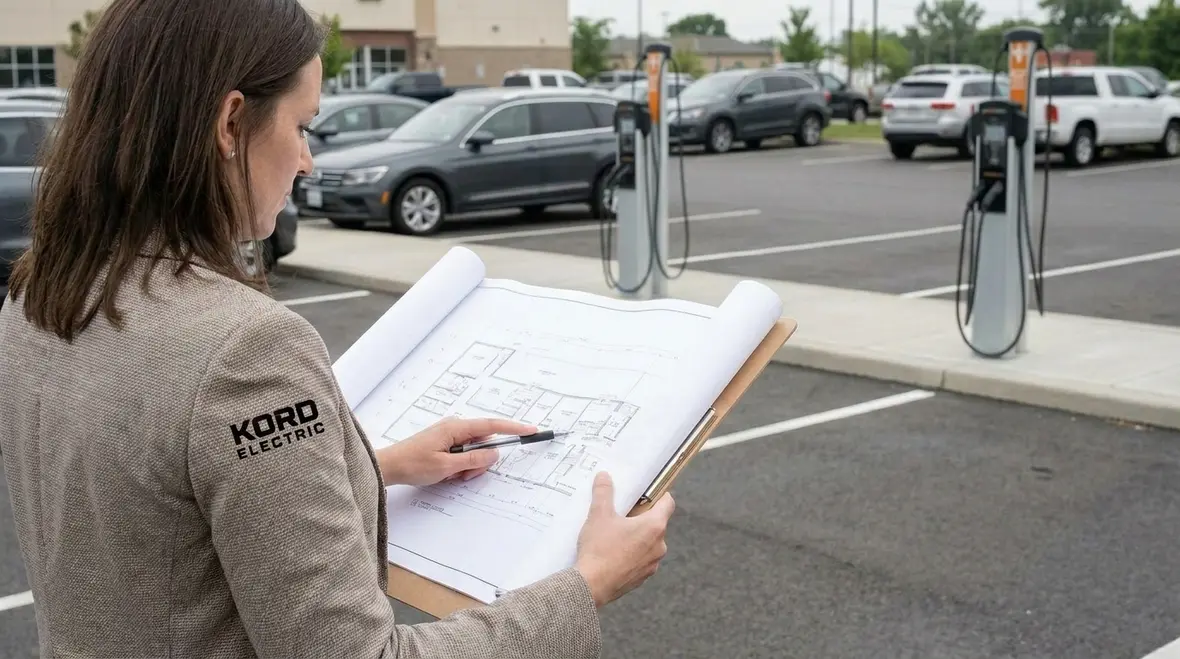
We start with a simple truth: scaling chargers means scaling decisions. When a property manager treats this like a shopping trip, the electrical reality later turns into a very expensive plot twist. Instead, we help you plan by looking at your site in layers, such as parking layout, customer patterns, and electrical capacity. Then we map those layers to a growth path, so upgrades do not require rebuilding everything from scratch.
To keep projects smooth, we recommend you think in phases. Phase one covers the chargers that meet near term demand. Phase two prepares for additional ports, and phase three accounts for future load changes as vehicle mixes evolve. Naturally, this also helps you avoid locking into equipment choices that do not fit your long range power strategy. And yes, it prevents the classic scenario where someone says, “We will deal with power later,” like power is a roommate you can ignore.
How we assess load capacity and avoid power bottlenecks
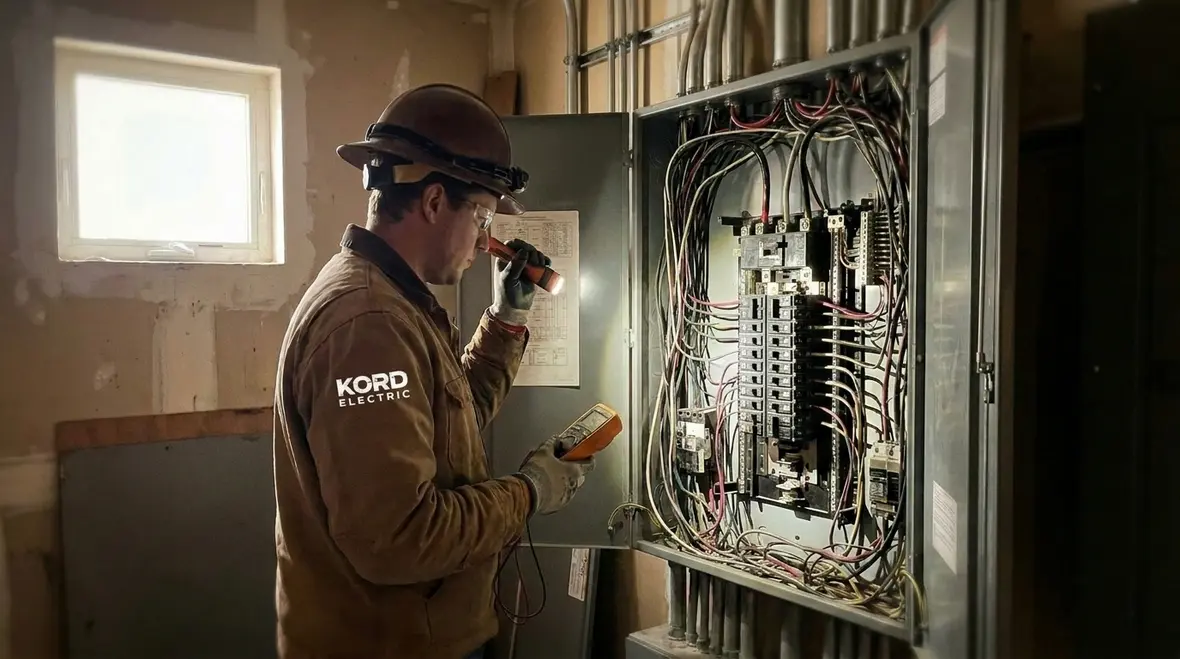
Because every site has its own limits, we examine available service size, distribution equipment, and power demand. Even when a facility has “plenty of capacity” on paper, actual usage can be uneven across shifts, seasons, and operating modes. Therefore, we evaluate how existing loads behave and where charging will land inside the electrical system.
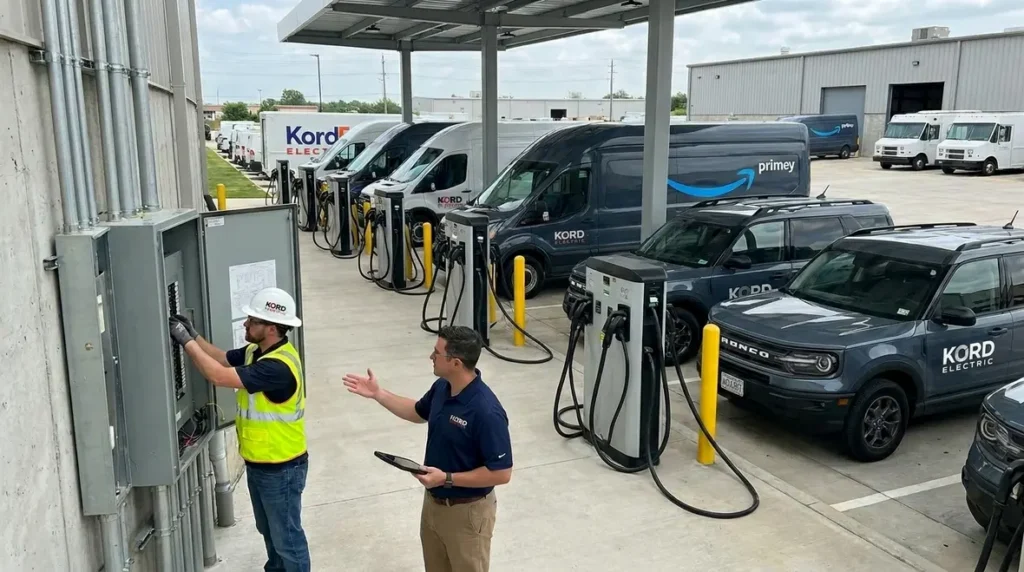
Then we choose solutions that scale. We may recommend load management, smart scheduling, or upgrades that match your project timeline. As a result, charging remains stable even when you run a busy event or when multiple drivers plug in at the same time. Our expert service staff also explains the reasoning in plain language. In other words, you do not just get a device, you get a system that behaves the way you expect.
During planning, we also coordinate with the building’s electrical and safety requirements. That way, the design supports compliance, and the installation process stays efficient. And if anyone asks why we care so much, we answer the same way every good technician does: because “future problems” have a way of arriving early, wearing a hard hat.
Design for real parking behavior, not average parking behavior
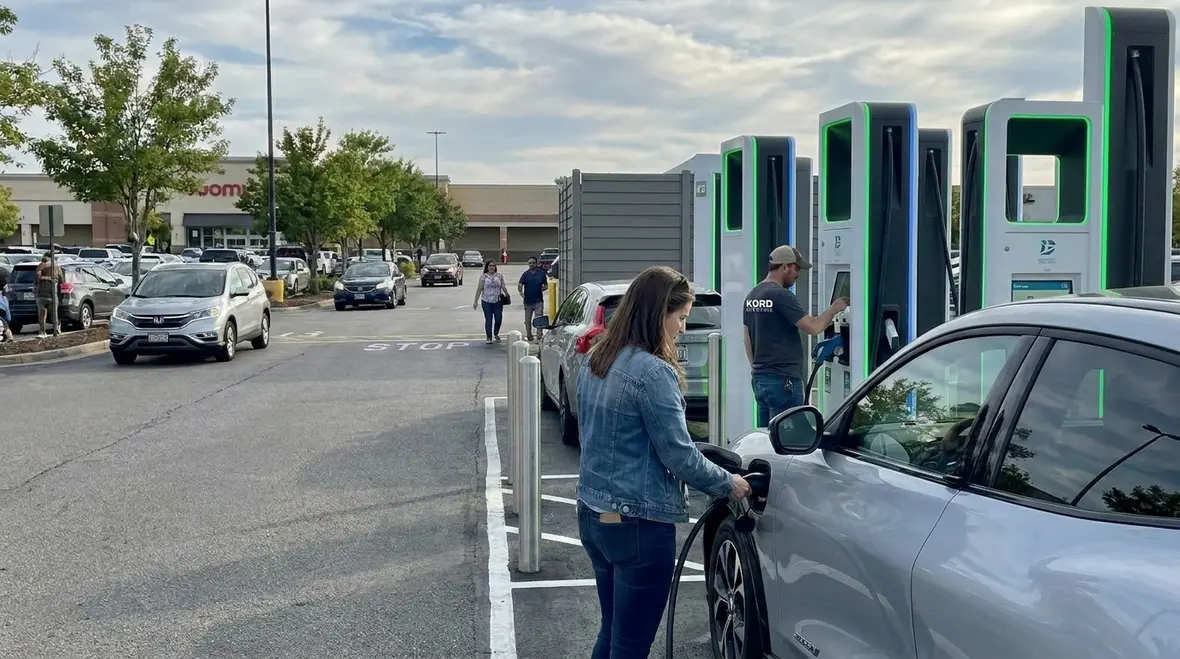
Commercial sites rarely operate like a textbook. People do not always park where you expect. Drivers might charge longer during off peak hours, or they might arrive during shift change and plug in together. So we design for actual behavior. That starts with site mapping and user intent, such as customer charging, fleet charging, tenant charging, and staff charging.
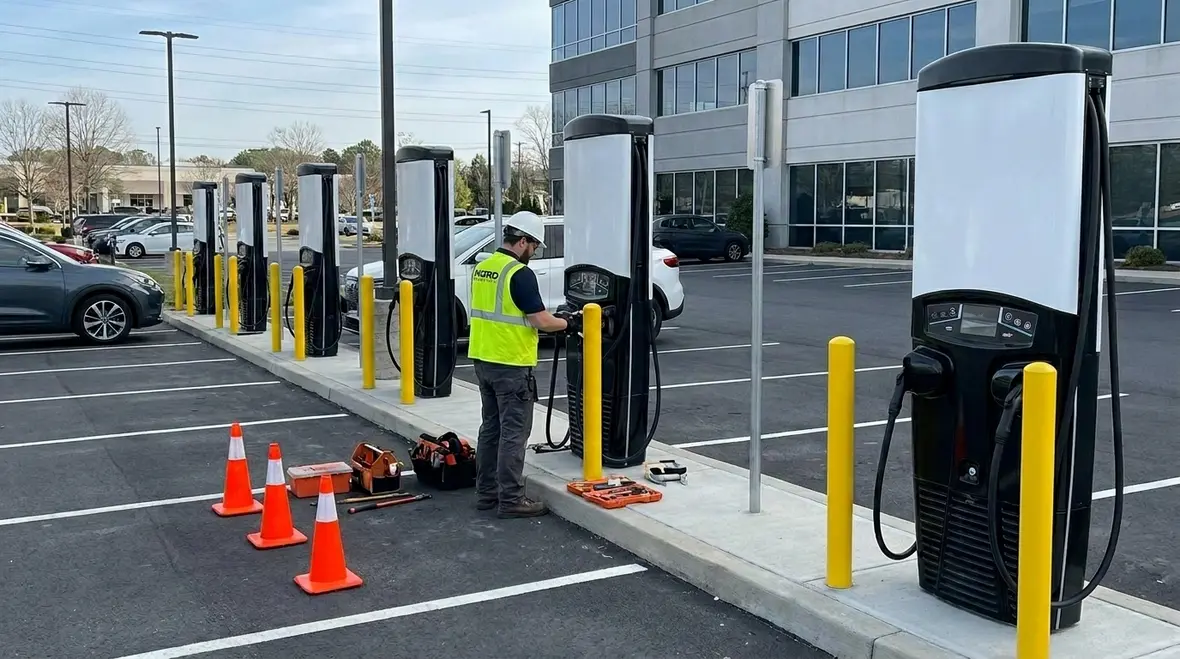
From there, we align charger placement with traffic flow and access. We consider cable routing, stall spacing, and how drivers interact with signage. Moreover, we plan for safe routes, so charging areas do not become a daily parking obstacle course. Most importantly, we design so future expansion fits the site. In practical terms, we avoid sealing off pathways that will matter later and we preserve space for added equipment where demand grows.
At Kord Electric, our technicians also consider durability. Commercial and industrial properties take real wear and tear, so we select components that handle the environment, and we install in a way that protects performance over time. When customers arrive, the charging experience should feel simple. If it feels like a puzzle, drivers leave, and property managers get the “we are not renewing” phone call. Nobody wants that.

Phased installation strategies that keep budgets and tenants calm
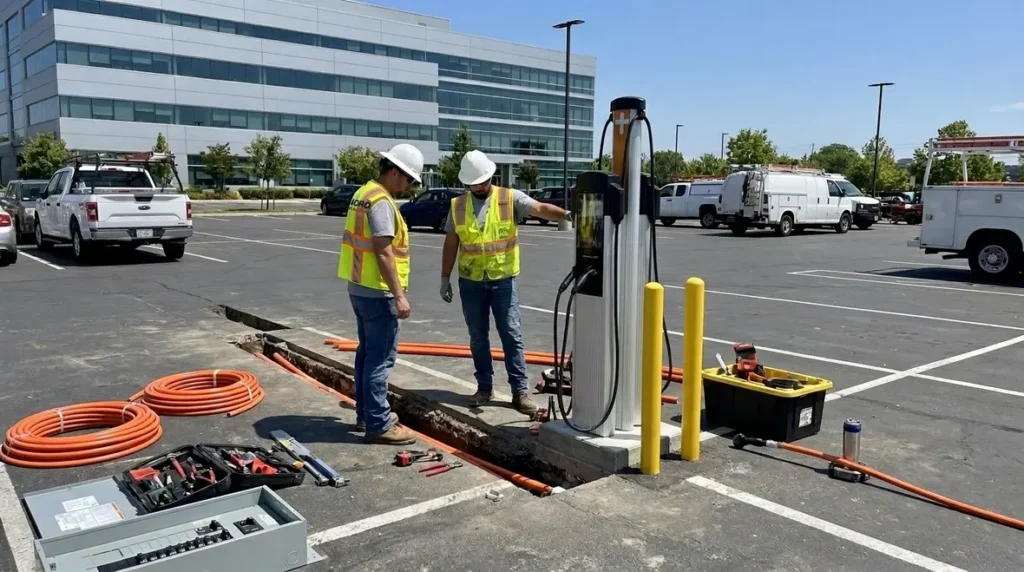
A phased approach protects your budget and your schedule. Instead of building everything at once, we recommend you scale around procurement timing, permit timelines, and occupancy needs. First, we plan the electrical backbone and the initial charging footprint. Next, we add ports when demand proves it is time. Finally, we expand capacity when the site requires it, without causing major disruption.
This matters because major property buildings can have strict operational constraints. Many facilities cannot shut down power, reduce access, or tear up pavement for long stretches. Therefore, we coordinate work so installation stays manageable. Our expert service staff also communicates before we start, and we explain what to expect during each phase.
In addition, a phased plan supports better decision making. Once you start monitoring usage, you learn what drivers actually do. You can then adjust your next steps with confidence instead of guessing. That is the difference between smart scaling and “spray and pray.”
Permits, compliance, and safety that property owners can trust
Commercial EV Charging Infrastructure projects depend on more than hardware. They depend on proper permitting, safety standards, and installation quality. We handle the design and installation process with a compliance first mindset, which helps property managers protect their investment.
Safety is not optional, and we treat it like it matters, because it does. We ensure proper electrical protection, safe routing, and correct grounding. We also verify that the installed systems match the final design intent. This is where our technicians shine. They do the work with care, and when questions come up, they answer them with clear reasoning, not vague phrases.
On the compliance side, we also support the documentation and planning steps needed for an efficient path from design to installation. Naturally, requirements vary by location, but the process stays structured. As a result, property managers spend less time chasing updates and more time managing tenants and operations.
Smart features that help chargers perform and reduce maintenance stress
Property managers want reliability. Therefore, we design charging systems that help you manage demand and protect performance. Smart load control can reduce peak strain on your electrical system. Scheduling can improve usage patterns. In addition, monitoring can help your team spot issues sooner rather than later.
However, smart features only help when they match your site goals. Some buildings prioritize customer experience. Others prioritize fleet uptime. Still others need clear reporting for internal stakeholders. So we guide each design choice to fit the facility’s reality.
Also, we keep maintenance in mind from day one. We explain how the system should operate, how to handle basic service questions, and what signs indicate a deeper issue. Our expert service staff helps property teams feel prepared. And if you ever heard someone say, “We will figure maintenance out later,” you already know where that story ends. It ends in service calls and frustration. We aim to prevent that.
Using our EV charging installation process as a roadmap
At Kord Electric, we treat every installation like a project with a starting point and a finish line. If you want a clear view of how we work, we recommend reviewing our EV Charger Installation overview. The goal stays the same: help property managers move from planning to installed performance without chaos.
Our process supports commercial and industrial facilities by focusing on site review, system design, proper installation, and follow through. Moreover, it keeps communication clear, so property teams know what is happening and why. Our technicians also stay grounded in practicality. They do not talk in buzzwords. They focus on the reality of conduits, connections, and real world power behavior.
And yes, occasionally we hear a joke like, “Do EV chargers come with a user manual?” We laugh, because most people will ask for one after day one. Still, we make sure your team receives the guidance needed to operate and manage the system confidently.
If you are evaluating project costs in more detail, our Commercial EV Charging Installation Cost Guide offers additional context on how power, layout, and phasing affect your budget.
For site owners planning beyond the first wave of chargers, we also recommend exploring how EV charging infrastructure scalability for commercial sites ties long term growth to disciplined electrical design and installation practices.
FAQ
Final thoughts from Kord Electric
Scaling Commercial EV Charging Infrastructure works best when property managers plan with power, parking behavior, and expansion in mind. At Kord Electric, we support commercial and industrial facilities and major property buildings with a structured installation approach, clear communication, and technicians who explain the details without drama. If you are ready to build a charging setup that grows with demand and stays reliable, contact us today. Let’s make your next phase feel smooth, not like a surprise late bill you forgot to budget for.
If you are looking for a service partner to help you move from planning into action, our dedicated EV charger installation services are built for commercial and industrial facilities that want reliable, scalable charging without chaos.