Troubleshoot Industrial Circuit Faults Safely
Kord Electric helps commercial and industrial teams solve electrical problems without turning maintenance into a guessing game. When a fault shows up, we focus on how to troubleshoot industrial circuit faults efficiently and safely, so power gets back online with fewer surprises. Instead of rushing in like a character who touched a hot pan in a sitcom, our technicians slow things down, follow the proper steps, and confirm results at each stage. This approach reduces downtime, protects people, and helps prevent damage that can cost far more than the original issue. In this guide, our expert service staff explains practical methods, clear safety checks, and how maintenance plans support faster diagnosis.
Industrial circuit faults often start with safety and scope
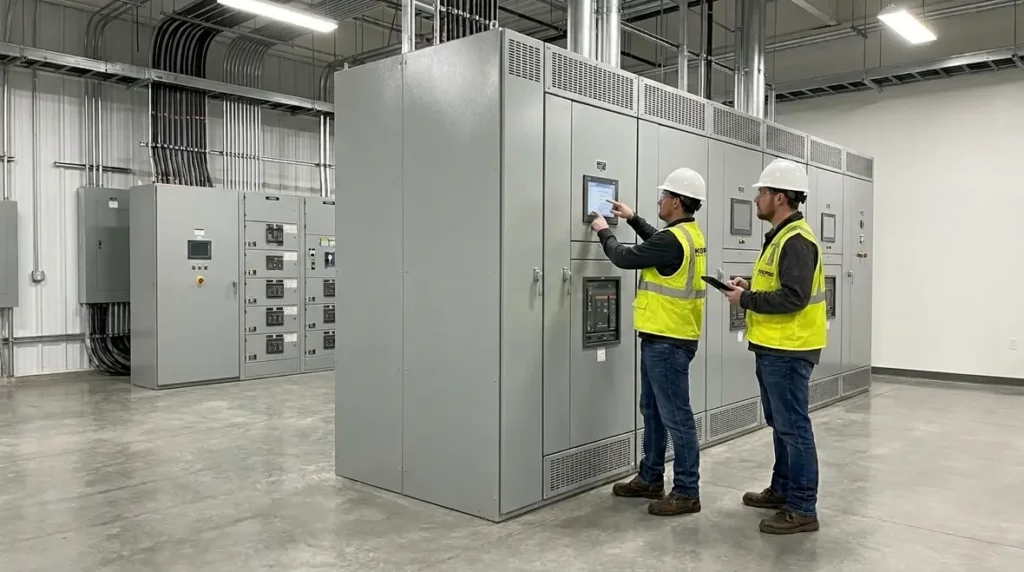
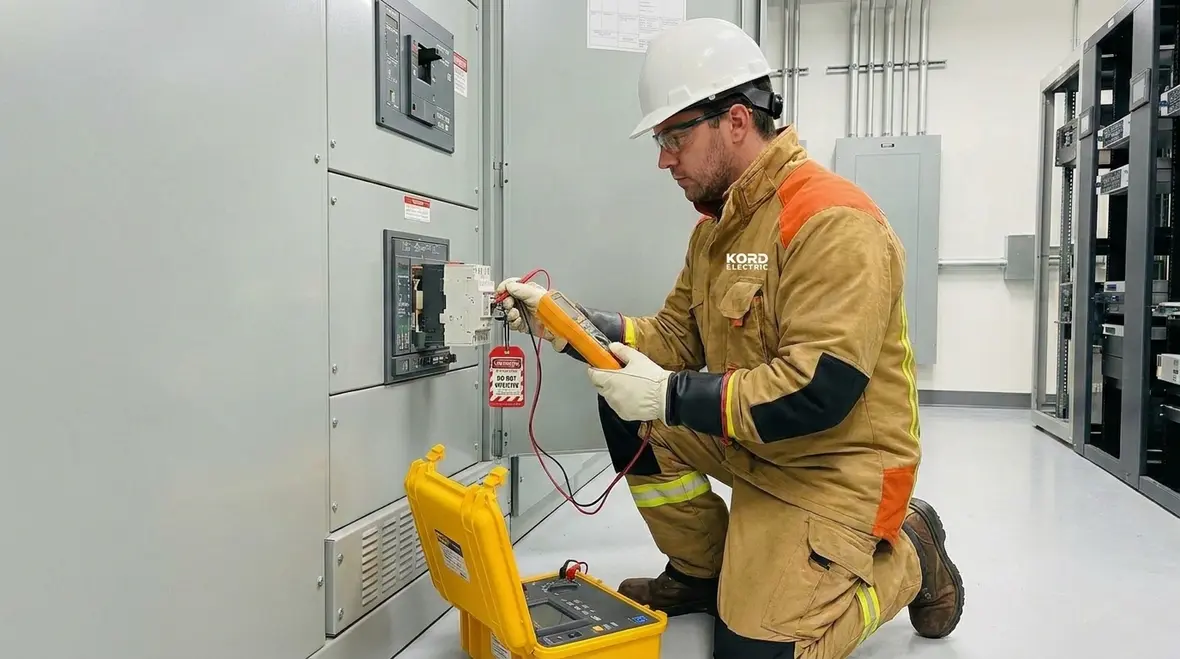
In commercial and industrial facilities, circuit faults rarely appear “out of nowhere.” Usually, they follow a change: a new machine, a maintenance job, a load shift, or even a seasonal operating pattern. Therefore, our team starts by defining scope and risk before opening panels. We verify lockout and tag procedures, confirm test equipment ratings, and ensure the area stays safe for anyone nearby.
Next, we identify what the customer’s process depends on. For example, a fault on a motor control circuit in a loading dock area creates a different risk than a fault on lighting circuits for offices. Meanwhile, we also check whether the problem is intermittent or constant, because intermittent faults often hide until conditions change.
Our technicians also look for obvious context clues, such as recent alarms, unusual smells, or repeated breaker trips. However, we do not let “it smells funny” become a full diagnostic method, even if it feels like a detective movie. We treat it as a reason to inspect carefully.
How to pinpoint the fault without guessing
Once safety checks pass, the next goal is narrowing the fault location step by step. Our approach relies on a simple idea: reduce variables. Instead of testing everything at once, we test in an order that matches how the circuit is built.
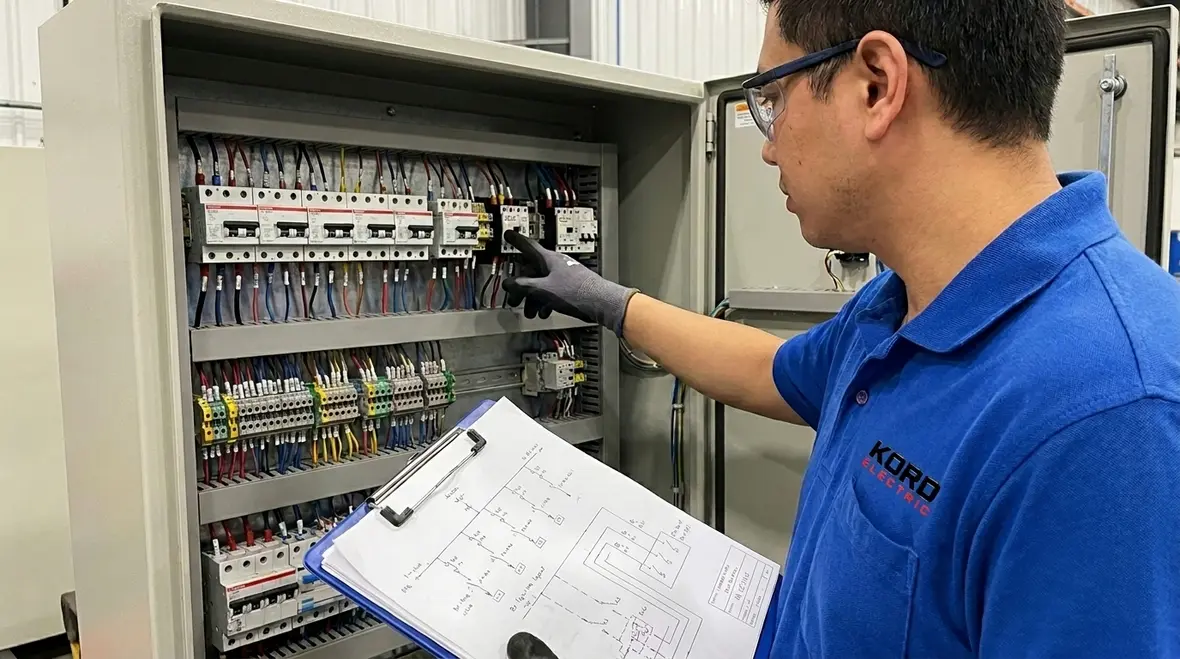
First, we review documentation. Then we compare the installed setup to what the drawings say. This includes one line diagrams, breaker labels, motor starters, control schematics, and any recent work orders. When documentation is incomplete, our expert service staff still builds a quick map by tracing conductors and identifying components by function.
After that, we inspect the known weakest links. Tighten loose terminations. Check for water intrusion. Verify cable condition where vibration occurs. Finally, we validate protection settings against actual load behavior. If a breaker trips too quickly or too slowly, it can mask the real fault or worsen the damage.
Use measurements and inspection in the right order
Accurate measurements reduce time and prevent repeat failures. Therefore, our technicians use both visual inspection and electrical tests, in a sequence that avoids unnecessary stress on equipment.
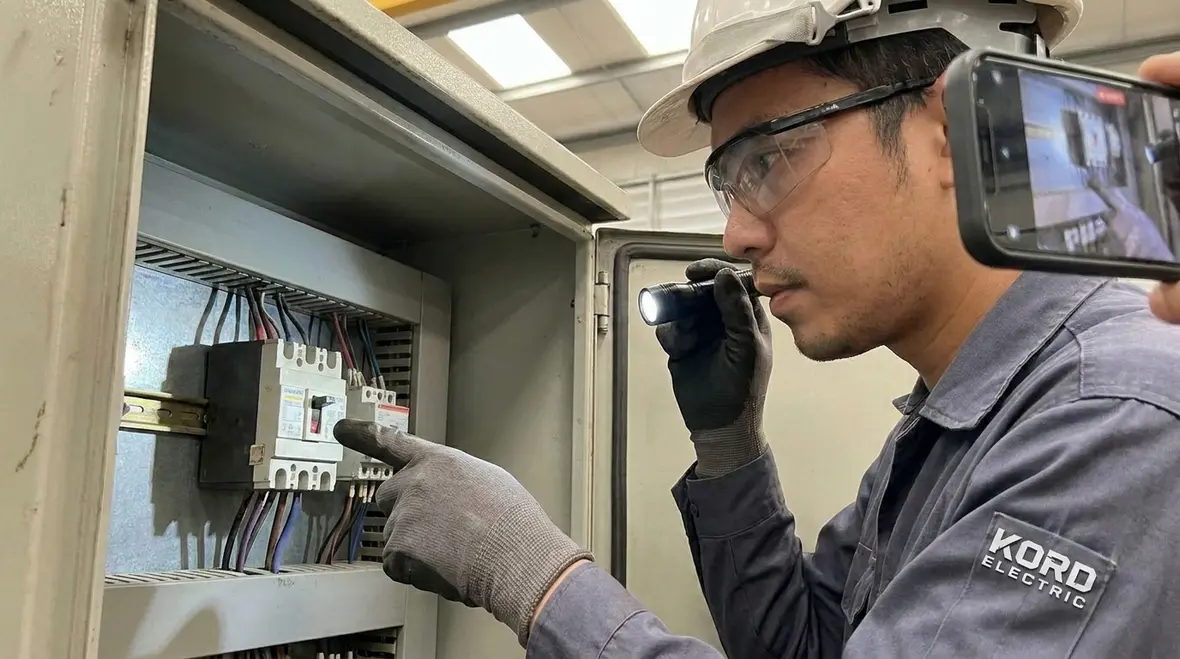
Visual inspection comes first. We check for heat marks, discoloration, corrosion, insect nests, and damaged insulation around enclosures and junction points. Even small signs often point to a bigger issue like poor connection resistance.
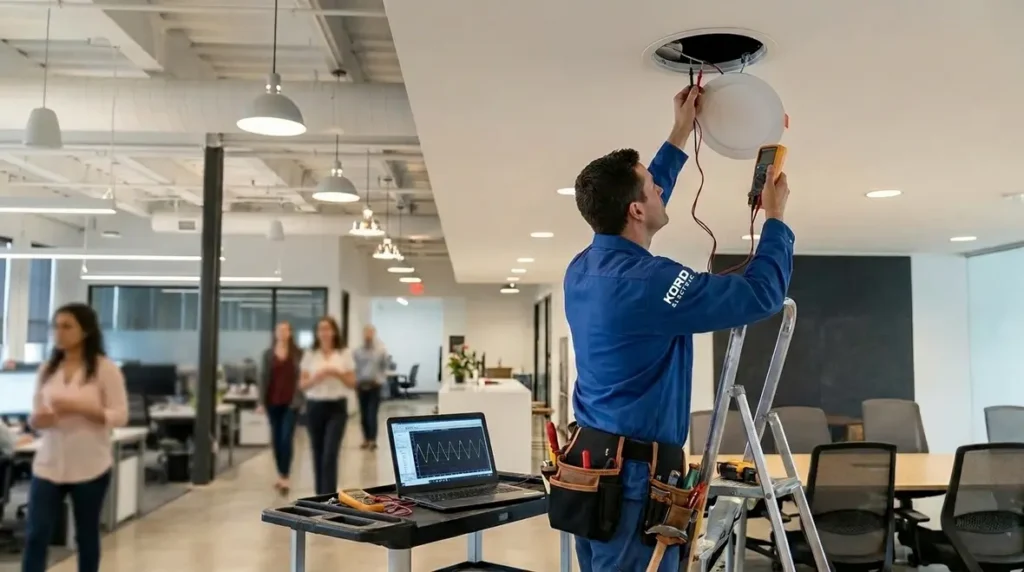
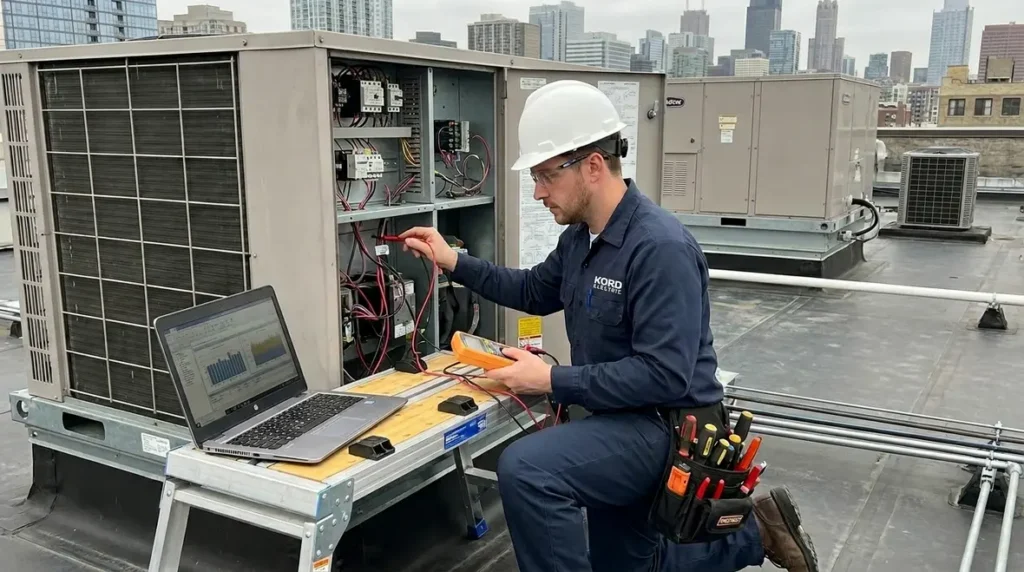
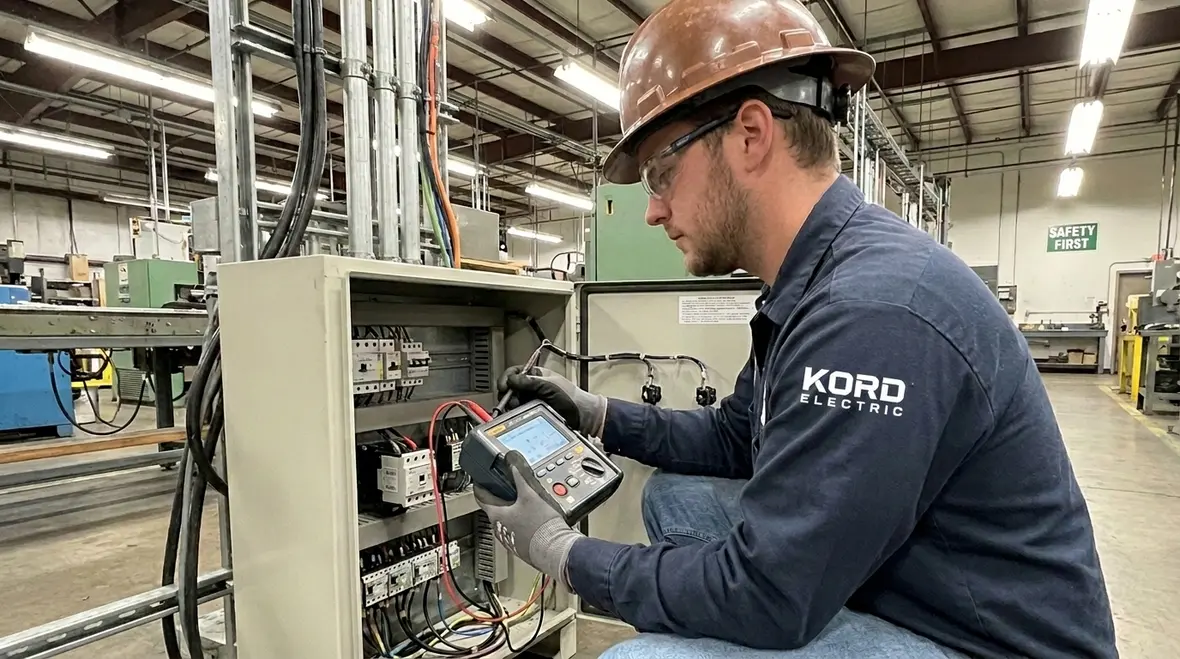
Electrical testing follows. We confirm incoming voltage quality, then look for abnormal current draw, grounding issues, and insulation problems. For control circuits, we also verify control voltage presence and continuity paths. In many cases, the fault is not in the power feeding itself, but in the control interface that tells contactors, relays, and drives what to do.
At this stage, our process keeps moving methodically. For example, we do not replace components based on rumor. We test, record, and then decide. So if someone in the building says “the relay is probably bad,” we treat that as a starting hypothesis, not a conclusion.
Common fault types in commercial and industrial panels
Different facilities show different fault patterns. Still, several repeat offenders show up across warehouses, manufacturing floors, multi site offices, and major property buildings.
Loose or failing terminations often create heat and intermittent trips. As a result, breakers may trip during load changes, and the fault may vanish when a team opens the door to inspect it. Our technicians therefore look for signs at the termination points, then verify with measurements.
Moisture and contamination affect control circuits and sensor inputs. Corrosion can break small signal paths even when power conductors look fine. Therefore, we check seals, conduit routing, and any nearby sources of humidity or dust.
Overload and protection mismatch can also trigger fault events. A motor that pulls higher current during startup can trip a protector if the settings or device selection does not match the real load. Meanwhile, some systems end up “fixed” by temporary bypasses that later become the root cause. We remove unsafe shortcuts and restore correct design.
Grounding and insulation breakdown creates leakage and unpredictable behavior. This shows up as nuisance alarms, GFCI like trips where applicable, or insulation resistance drops. Our team verifies insulation condition and insulation paths before recommending any part replacement.
Maintenance plans that cut diagnosis time and downtime
Many teams only think about electrical maintenance after a fault knocks the system offline. Yet, structured commercial and industrial electrical maintenance plans reduce the number of surprises and shorten troubleshooting timelines. Kord Electric supports facilities with proactive planning, so our technicians show up with a clear schedule, known history, and targeted checks instead of performing “random acts of troubleshooting.”
In our blog on commercial and industrial electrical maintenance plans, we outline how routine inspections, testing, and documentation improve reliability. When the plan includes periodic reviews of breakers, connections, terminations, insulation indicators, and control components, fault patterns become easier to spot. Then, when a problem occurs, our expert service staff already knows what “normal” looks like for that specific site.
Furthermore, a good plan keeps parts and tools ready. If a facility uses standard components, we can confirm replacements quickly. If the facility uses custom equipment, we still plan for proper spares and verification steps. As a result, teams lose less time, and the repair process runs calmer and more controlled.
In short, maintenance planning turns troubleshooting from a crisis into a workflow.
Step through troubleshooting while keeping people safe
In the field, safety is not a checklist item. It is a mindset. Therefore, our technicians follow strict rules while they diagnose faults on live systems, whenever local standards allow safe testing, or they isolate equipment when testing cannot proceed safely.
They also communicate. Before opening equipment, they confirm who needs to know the status of operations. Then they coordinate with building staff when equipment must be taken offline. This matters in commercial and industrial settings because a single shutdown can affect production lines, loading schedules, or critical services.
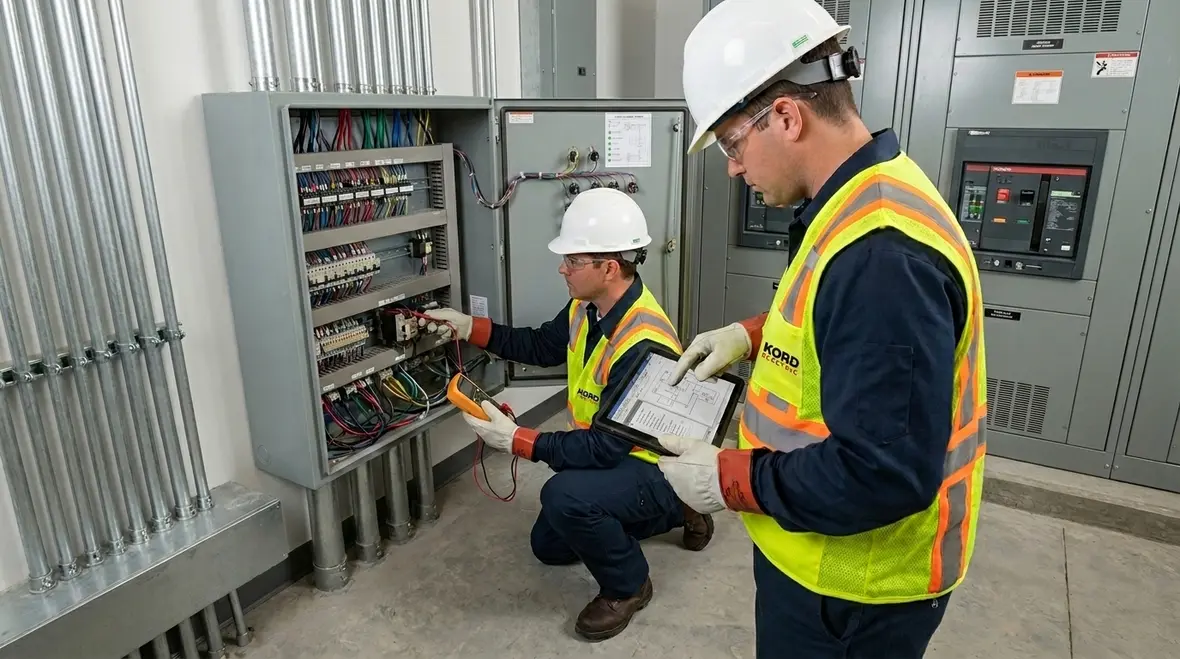
To keep the process efficient, we also separate tasks. One person verifies safety states. Another records readings. Another performs targeted tests. This division reduces mistakes and stops the classic “everyone tries, nobody documents” scenario.
And yes, documentation sounds boring, until you need to explain what changed, why it failed, and how it now behaves after the repair. Then documentation becomes the hero. Like the extra spare part no one notices, until the moment it saves the day.
When others should call Kord Electric
Some electrical issues require more than good intentions. Others can try basic resets and visual checks, but commercial and industrial facilities benefit from professional support once safety, testing, or equipment protection enters the picture. If a breaker repeatedly trips, if a motor control system behaves oddly, or if inspections show heat marks, our expert service staff should step in quickly.
Also, if the facility lacks updated drawings or maintenance history, calling professionals saves time. We connect what happened last with what the circuit is doing now. Then we restore reliable operation, and we help prevent the next event from following the same path.
For facilities facing recurring power quality problems or unexplained shutdowns, pairing fault diagnostics with services like voltage fluctuation repair for commercial and industrial facilities or structured electrical preventive maintenance programs helps stabilize systems long after the immediate fault is resolved.
FAQ
Conclusion and call to action
Electrical faults cost more than downtime. They cost safety, trust, and production time. When a team wants to troubleshoot industrial circuit faults efficiently and safely, Kord Electric brings a calm, methodical process backed by experienced technicians and proven maintenance planning. Our expert service staff helps you find the root cause, restore reliable operation, and reduce repeat failures. If your facility faces frequent trips, unclear alarms, or equipment that behaves “almost right,” contact Kord Electric today to schedule an on site assessment and a plan you can rely on.
For facilities looking to move from reactive repairs to a structured program, explore our dedicated guide on commercial and industrial electrical maintenance plans and consider pairing it with a tailored electrical preventive maintenance service package to keep circuits stable long before the next fault appears.