Smart Warehouse Lighting Upgrade ROI Guide
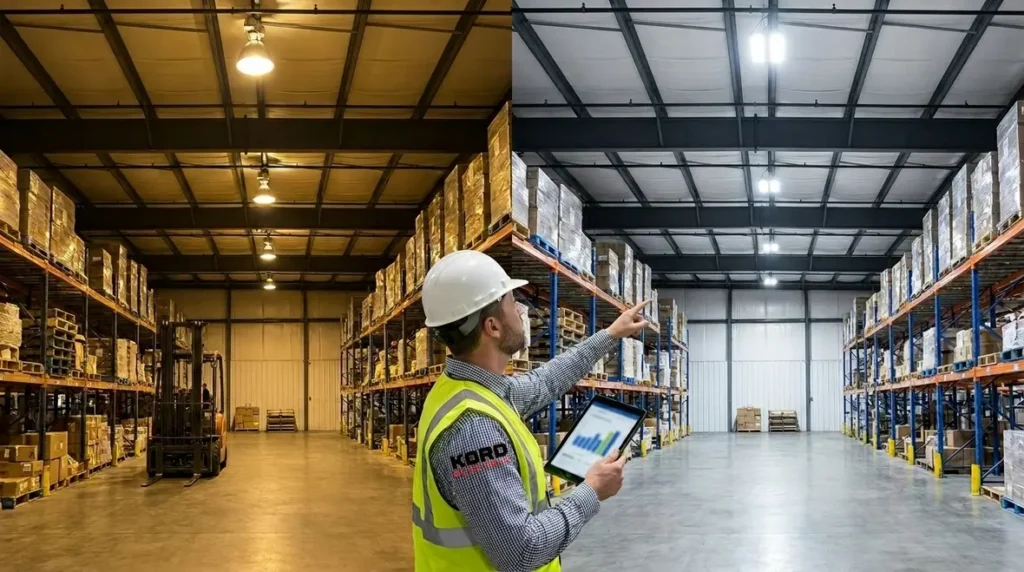
When facilities managers ask us about the smart warehouse lighting upgrade ROI, they usually want one thing: a clean, numbers based answer they can take to finance. At Kord Electric, we build that answer step by step, so the story is not only convincing, but also measurable. Instead of guessing, we calculate how new LED lighting lowers energy use, reduces maintenance calls, improves safety, and protects productivity. Then, we translate all of that into payback time, net savings, and long term value. And yes, we do it in plain language, because nobody should need an engineering degree just to understand why a brighter ceiling costs less.
What ROI means for smart warehouse lighting upgrade projects
ROI is simply the relationship between what you spend and what you gain. Yet for warehouses and major commercial and industrial property buildings, the gains do not come from lighting alone. They show up across operations. When technicians replace older fixtures with modern LEDs and controls, the facility usually sees lower kWh use, fewer lamp failures, and steadier light levels where workers move, load, and drive. As a result, the upgrade can reduce downtime and make inspections easier.
In practice, our team at Kord Electric sets up the ROI calculation using several inputs. First, we capture baseline energy and lighting costs. Then we add the installed cost for fixtures, controls, and installation. After that, we forecast yearly savings and apply a discount rate if the client needs a more formal finance view. Finally, we estimate payback time and long term net benefit.
Because every facility runs differently, we make sure others do not confuse “better lighting” with “better ROI.” Better lighting matters, but the ROI math is what keeps the project funded. In other words, we turn “this feels brighter” into “this saves money and reduces risk.”
Step by step: how we calculate energy savings
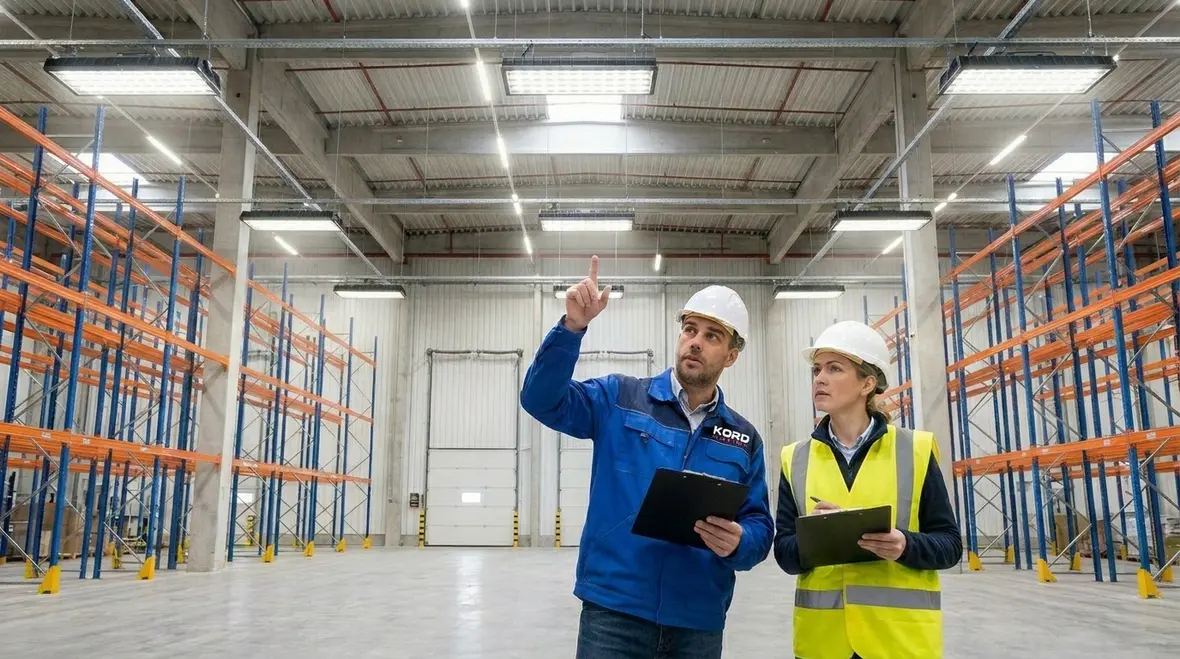
To calculate ROI, we start with energy. Lighting energy use typically drives a large share of the upgrade savings, especially for warehouses with long operating hours and high bay areas. Therefore, we begin by measuring or validating current lighting power, operating schedule, and utility rates. If we can access meter data, we use it. If not, we use fixture counts and wattage from the existing configuration.
Next, we estimate the new lighting load after the upgrade. That includes LED fixture wattage, any additional components, and whether controls will dim during lower demand periods. For example, occupancy sensing in offices or break rooms can cut usage after hours. Meanwhile, time based scheduling and daylight tuning can reduce output in areas near skylights or exterior walls.
Then we calculate annual energy cost savings using this basic logic. We subtract the post upgrade kWh from the pre upgrade kWh, and we multiply by the utility rate. After that, we may add demand charge impacts if your utility structure charges for peak demand. Many facilities overlook this, so we check it early.
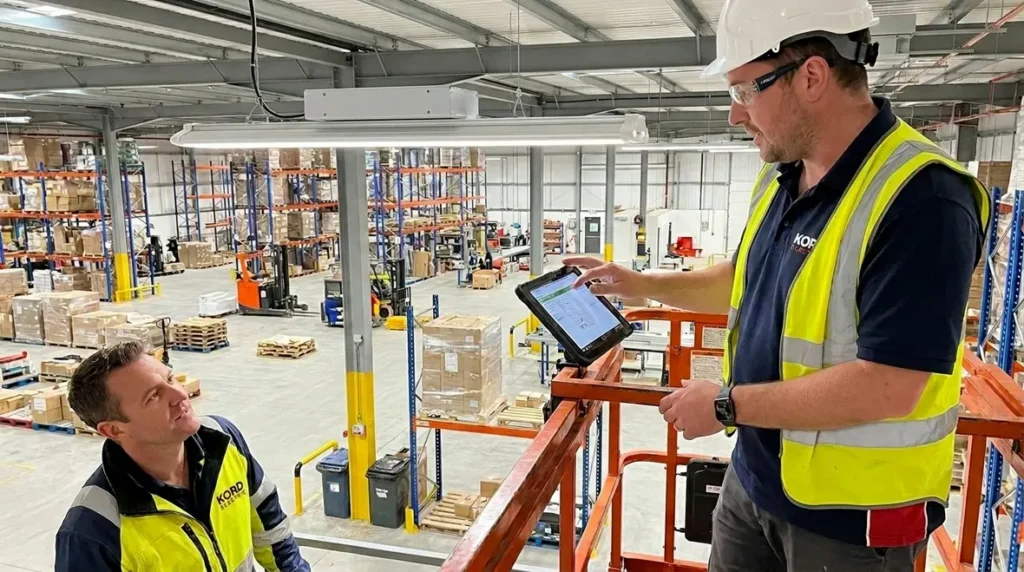
Our technicians and expert service staff explain each input as they go. So when clients ask why one scenario saves more than another, we show the math instead of waving our hands. And yes, we occasionally compare “always full power” versus “smart dimming” like it is two different playlists. One plays nonstop; the other only turns up when the warehouse actually needs it.
Include maintenance and downtime value, not just electricity
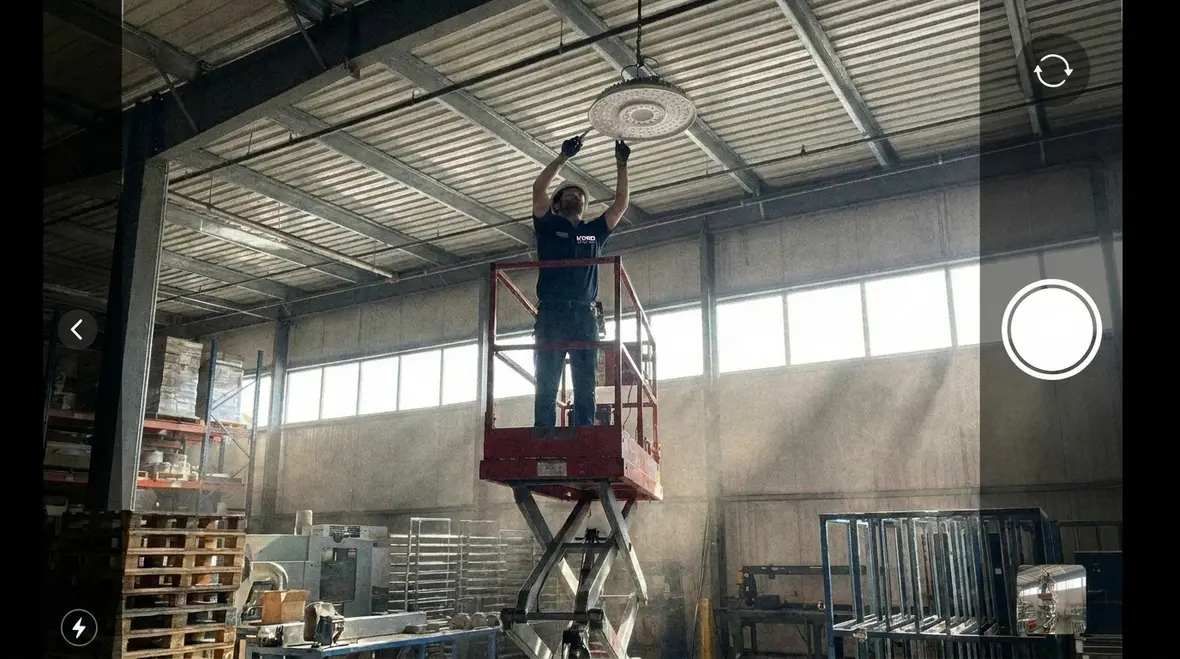
Energy is only part of the story. Maintenance and downtime costs can quietly stack up, especially where high bay lights sit high above the floor. Older fixtures fail more often, require labor for access, and force facilities to coordinate work permits and equipment rentals. With LEDs, failures generally happen less frequently, and with controls, the system can help maintain stable performance.
So we include these savings in the ROI model. We estimate current maintenance frequency, labor hours per service visit, and typical incident or downtime impact. For warehouses, even short outages can create operational friction. A pallet staging lane can slow down picking. A loading dock area can impact safe movement. Therefore, we treat reliability as a cost driver, not a “nice to have.”
To keep it realistic, we avoid inflated claims. We forecast maintenance reduction based on fixture lifetime expectations and the way the facility currently operates. Then we add the chance of emergency replacements when a fixture fails at the worst time. If your operation runs late shifts or weekends, that risk matters.
We also consider cleaning and optics. Some older systems lose output sooner due to dirt accumulation patterns or suboptimal optics. When upgrades improve distribution and reduce glare, facilities often spend less time dealing with complaints and spot fixes.

Quantify safety and productivity impacts that managers can defend
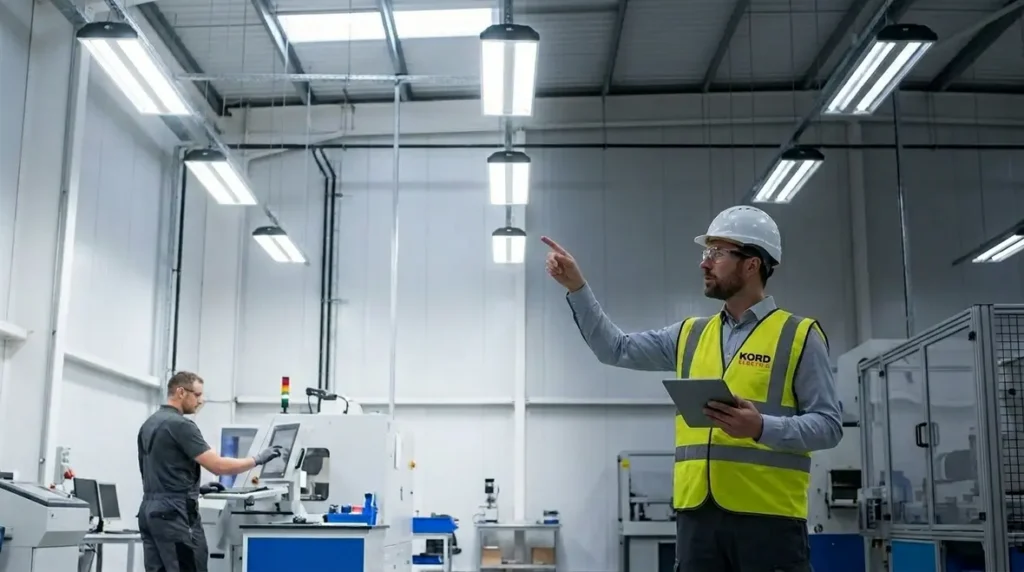
Many teams struggle with assigning dollars to safety and productivity. Yet for commercial and industrial facilities, stakeholders still want a defensible view. We handle this by tying lighting improvements to measurable outcomes where possible. Better visibility can reduce missteps, improve task accuracy, and support compliance with workplace standards.
We use a practical approach. First, we evaluate the current illumination and uniformity. Then we design a lighting layout that supports safe movement routes, staging zones, and picking areas. Next, we connect these improvements to operational KPIs the client already tracks, such as incident rates, rework, and throughput during peak shifts.
Now, if your facility does not track those KPIs, we help you set baseline targets as part of the project plan. That way, the upgrade does not become a mystery experiment. It becomes a monitored improvement.
Our staff talks through what can be measured and what should be treated as qualitative risk reduction. In a meeting, someone might say, “We will just feel safer.” We respond politely, then we add, “We can still quantify the cost of interruptions and the impact on compliance readiness.” That blend of practical logic and calm confidence helps approval move faster.
And if you are thinking this sounds like a motivational speech, it is not. It is operations. The warehouse does not run on vibes. It runs on timelines, safety, and uptime.
Model payback time and net savings for different control options
Once we have energy savings, maintenance impacts, and any measurable performance value, we build ROI outputs that decision makers can use. The two core results usually matter most. Payback time shows how quickly the project returns its cost. Net savings over a chosen period shows the long term value.
At Kord Electric, we model multiple scenarios because smart controls can vary. We compare options such as occupancy based switching, daylight harvesting, scheduling, and high precision dimming strategies. Each option changes yearly energy use and equipment behavior. Meanwhile, some facilities benefit from zone control to avoid over lighting entire buildings when only certain bays need full output.
In addition, we include installation schedule and project phasing costs where needed. A warehouse that cannot stop operations might require staged work, traffic control, and temporary lighting setups. Those costs affect payback. So we handle them early rather than pretending the project happens on a perfect weekend.
We also discuss risk tolerance. For example, if the facility values simplicity, we may recommend fewer control layers. If the facility wants maximum savings, we may recommend more granular zoning. Either way, our technicians explain the tradeoffs so others do not make decisions based on marketing claims.
For teams comparing project budgets across sites, this is also where it helps to line up ROI insights with broader cost planning. If you want to look at upgrade costs from another angle, you can review our Commercial Lighting Upgrade Cost Guide, which explores how fixture types, ceiling heights, and controls shape the investment for large facilities.
Common mistakes that lower real smart warehouse lighting upgrade ROI
Even well planned projects can under deliver when teams skip key steps. One common mistake is using only fixture wattage to estimate savings, without considering actual operating hours, dimming behavior, or control coverage. Another is ignoring utility rate structure, especially demand charges. In some regions, demand can swing the numbers significantly.
Teams also underestimate design and layout. If light levels do not match the storage height, rack geometry, and task areas, you might get energy savings but miss operational value. Then workers ask for overrides, maintenance calls increase, and controls end up bypassed. Nobody wants a “smart” system that gets treated like a stubborn remote control.
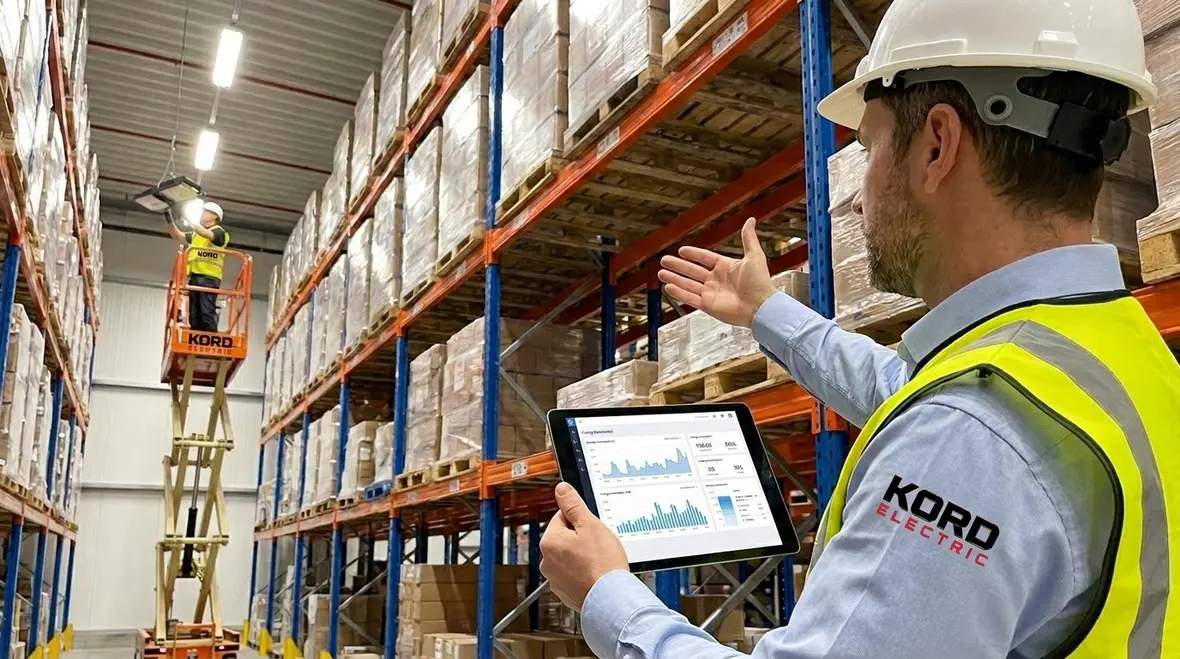
Another issue is procurement without commissioning. We recommend verification and tuning after installation. That means checking sensor placement, ensuring zones respond correctly, and confirming the system controls as intended. Without this, the facility might not reach expected savings.
Finally, some projects forget to plan for future changes. Warehouses reconfigure aisles, adjust rack layouts, and update shift schedules. When lighting controls are designed with adaptability, the ROI remains stronger over time.
We help avoid these pitfalls by running a careful assessment before we propose solutions. Then, we guide the facility through commissioning with expert service staff who explain the system settings and how to maintain them. For properties that want deeper support on compliance and inspection, our resources on Lighting Installation Code Compliance and Commercial Lighting Compliance in California show how good design, smart controls, and documentation work together in the field.
FAQ: ROI and implementation for commercial and industrial facilities
| Question | Short answer |
|---|---|
| How do we estimate energy savings? | We compare current lighting kWh to post upgrade kWh using fixture wattage, operating hours, utility rates, and control strategy. |
| What payback period is typical? | It varies by hours, rates, and controls, but we calculate payback using your actual site data rather than generic averages. |
| Do we include maintenance costs? | Yes. We estimate labor and access frequency and forecast reduced service needs after the LED upgrade. |
| Can controls increase savings in warehouses? | They can, when zones, schedules, and dimming match how the facility actually operates. |
| Do we need commissioning after installation? | We recommend it. It confirms sensor coverage, zone response, and system settings to protect expected savings. |
Frequently asked questions
What if we do not have utility bills? You can still estimate savings from fixture data and operating schedules, and then we refine the numbers once bills are available.
How long does the ROI model take? Typically, our team can build a solid first pass quickly once site data and counts are collected.
Does Kord Electric serve only commercial and industrial buildings? Yes. We focus on warehouses, manufacturing sites, and major property buildings, not residential projects.
Will lighting get dimmed and affect work? That is controlled by design. We set dimming and zoning to support tasks, then technicians help validate real performance on site.
Ready to turn lighting upgrades into defendable ROI
If your facility is ready to reduce energy costs, cut maintenance, and improve safe visibility, Kord Electric can help you calculate a real business case. We collect site data, model scenarios, and show payback and net savings in plain language. Then our technicians and expert service staff guide commissioning so the system performs as designed. Reach out for a site assessment and a practical ROI estimate tailored to your warehouse or major commercial and industrial building. Let us help you upgrade once, and get the value you expected from day one.
When you are ready to move from planning into implementation, it also helps to align the ROI model with the team that will actually build the system. Kord Electric’s dedicated Lighting Installation Services are engineered specifically for commercial and industrial properties, warehouses, and large campuses that need reliable performance, safety, and long term efficiency from their lighting systems.
By pairing a smart warehouse lighting upgrade ROI analysis with a proven commercial lighting installation partner, facilities can move confidently from spreadsheets to field work, knowing that the design, controls, and commissioning will be handled with the same attention to detail as the numbers that secured project approval.