Warehouse Lighting Energy Efficiency Upgrades
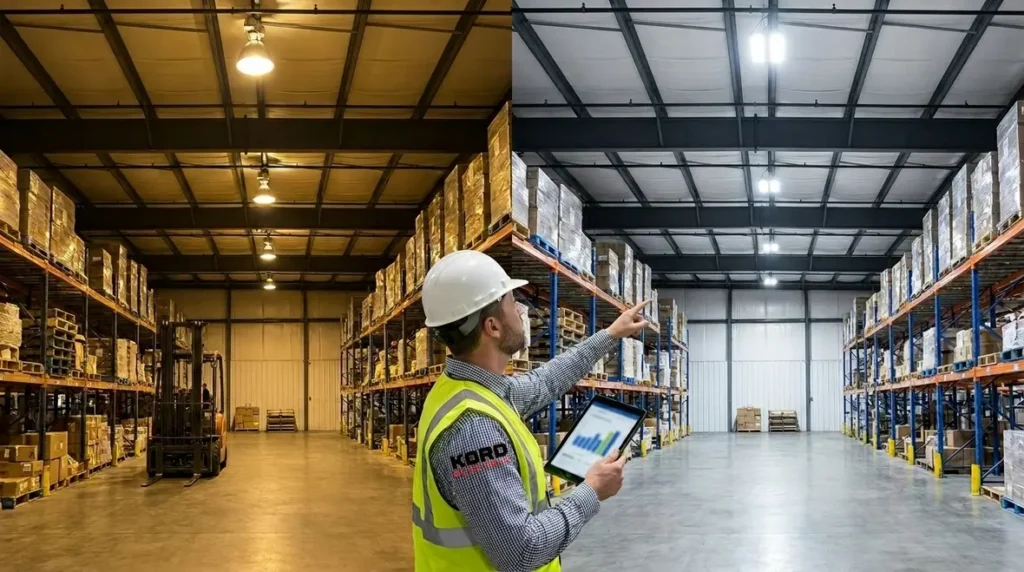
Warehouse Lighting Energy Efficiency is not just a buzz phrase at Kord Electric. It is a practical lever that reduces utility bills while improving visibility for workers and visitors. In fact, when we upgrade older fixtures, we often help clients lower energy use, cut maintenance calls, and keep lighting performance steady across busy aisles. And yes, we also like the part where fewer lamps fail during peak shifts. It turns out even light fixtures can get tired, and our job is to keep them working like they mean it.
Why lighting upgrades cut costs fast in commercial spaces
In commercial and industrial facilities, lighting costs stack up in a way that feels small per day and huge per year. The main issue is simple: many warehouses still run with outdated fixtures, weak controls, and worn optics. As a result, the building uses more electricity than it needs, and staff deal with uneven light levels that can slow movement and increase mistakes.
At Kord Electric, our approach focuses on reducing total operating costs, not just swapping bulbs. We start by looking at the real job of the lighting system in your facility, including high bay areas, loading docks, corridors, mezzanines, and storage zones. Then we identify what is wasting power, what is wasting labor time, and what is wasting your attention.
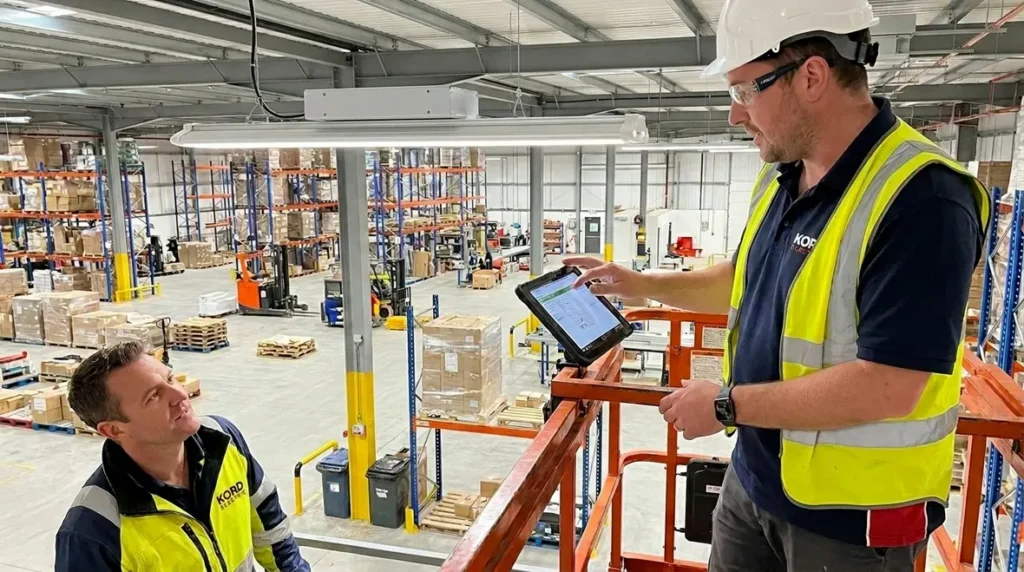
We also explain things clearly. Our technicians and expert service staff walk site teams through what we see, why it matters, and how the upgrade plan protects uptime. Because nobody wants to find out the hard way that the “easy fix” needs a bigger rewrite, like discovering the Avengers were missing one hero.
What we inspect before we recommend any change
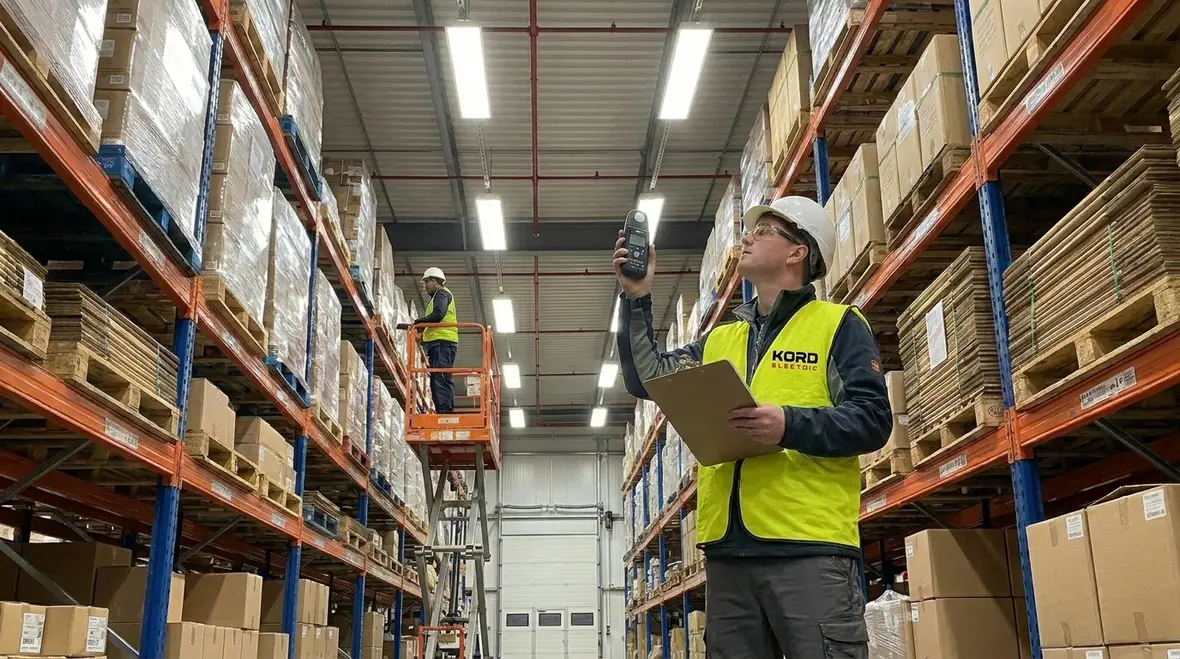
Before Kord Electric proposes an upgrade, we perform a practical audit that targets the parts of the system that drive both cost and reliability. We do not guess. We measure and observe, then we translate results into straightforward recommendations.
Our inspection usually includes these elements:
Fixture condition and age, including signs of lens yellowing, reflector damage, and lamp degradation
Wattage per luminaire and actual light output across representative locations
Control performance such as timers, photocells, motion sensors, and any override behavior
Electrical considerations such as ballast type, driver compatibility, and panel capacity
Layout details, including high bay spacing, rack geometry, and hot spot or shadow areas
Meanwhile, our technicians speak in plain terms as they go. They do not just drop a report on a desk. They explain the tradeoffs of each option, such as when controls save more money than fixture changes, or when both work best together.
How we design upgrades for real warehouse behavior
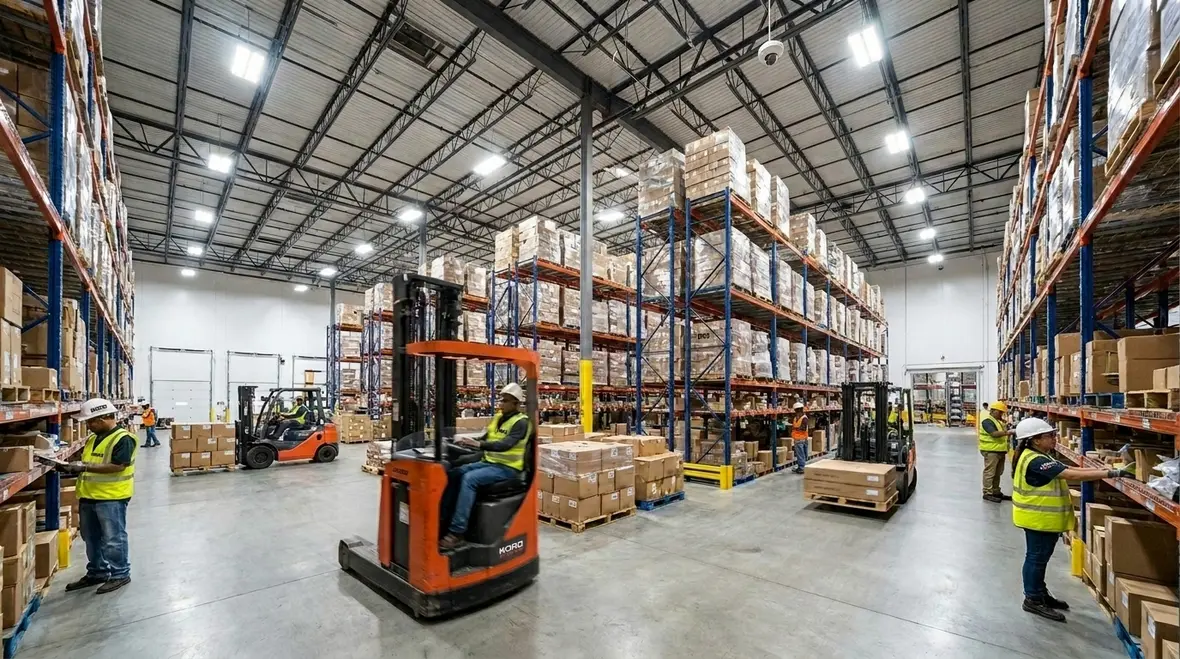
A warehouse does not operate like a living room. Activity changes by shift, dock doors open and close, and tasks cluster in certain zones. So, the lighting energy efficiency plan has to match how the space actually runs.
We design upgrades around zoning and dimming strategies that reduce power when full brightness is not required. For example, dock areas often need more output during arrivals, but they can dim during steady operations. Aisles near pick stations may need tighter consistency, while storage zones can benefit from smart scheduling based on occupancy and daylight.
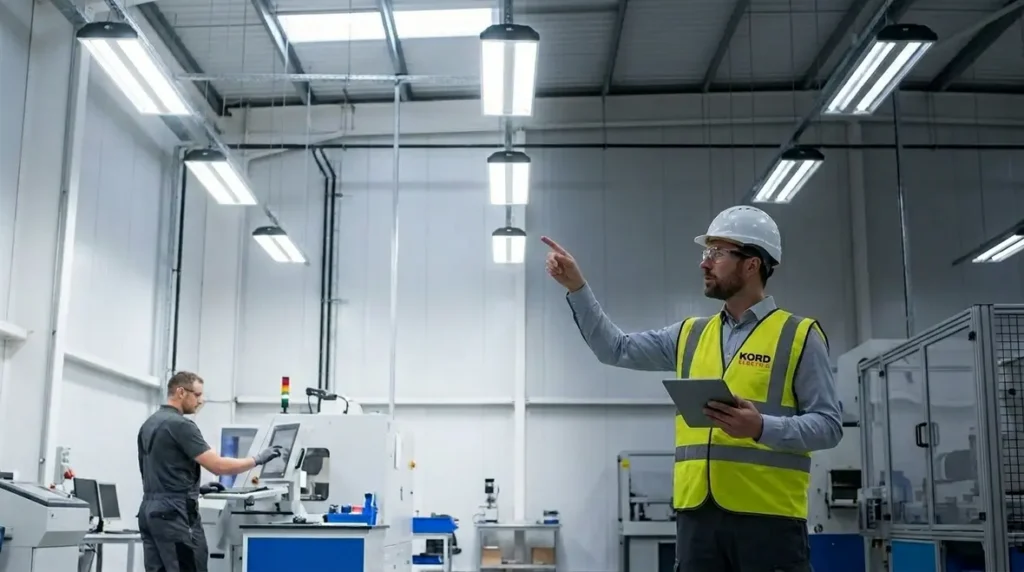
Additionally, we evaluate glare control and uniformity. Workers benefit from clear visibility, and better uniformity also helps cameras and safety systems perform more reliably. In other words, we avoid the common “bright everywhere” mistake that makes people squint and then you get complaints that sound like, “The lights are too much.” Sometimes the problem is not brightness, it is distribution.
LED retrofits, controls, and maintenance planning
When we upgrade warehouse lighting, we often use a layered method. That means we pair improved fixtures with controls and a maintenance plan that prevents small problems from turning into costly outages.
LED retrofits typically reduce power draw and extend service life. However, the best results come when the retrofit fits the electrical reality of the site. Our expert service staff checks driver compatibility, verifies wiring paths, and confirms that controls work with the new equipment. This avoids the kind of mismatch that causes flicker, early failure, or nuisance trips.
Controls provide the biggest long term lever when implemented properly. We set up dimming schedules that match occupancy and task needs. Then we tune sensor placement so lighting responds when people actually move, not when a shadow crosses the floor.
Maintenance planning keeps cost down after the install. We create a practical approach for cleaning, inspection, and replacement cycles. Since industrial facilities deal with dust and airflow, we advise on lens maintenance and the right timing based on your operating environment.
As a quick joke, think of it like this: lighting upgrades should not be a one time event. They should be a system that behaves. Otherwise, you get the corporate version of “set it and forget it,” except the fixture forgets everything and fails right before your biggest shipment.
How we lower downtime risk during installation
Commercial and industrial buildings cannot pause operations. So, Kord Electric plans installation to protect workflow and keep disruption low. We coordinate with facility managers, review shift schedules, and sequence work so production and safety stay intact.
We also plan access routes and staging to limit obstruction in aisles and around loading areas. Where possible, we use techniques that shorten outage time per zone. That way, the warehouse does not go from “well lit” to “mystery cave” during a critical period.
Our technicians explain the schedule on the front end, including what will happen each day, how we will manage temporary lighting needs, and how we will handle any unforeseen issues. In our experience, this communication reduces confusion and keeps work moving smoothly.
And yes, we know time is money. So we design the work plan to be efficient, because the fastest upgrade is the one that stays on schedule.
Quantifying savings: energy, labor, and performance
Most teams want a clear picture of where savings come from. At Kord Electric, we break costs into three buckets: energy use, maintenance labor, and performance value.
Energy savings come from reduced wattage and smarter control. When warehouse lighting energy efficiency improves through LED conversion and dimming strategies, the facility consumes less electricity during routine operation.
Maintenance savings come from longer lamp life and fewer service events. Older fixtures often need more frequent replacements, and ballasts or drivers can fail unpredictably. By modernizing the system, we reduce the frequency of emergency visits.
Performance value can feel harder to measure, but it matters. Improved uniformity supports safer movement, helps reduce mistakes during picking, and can improve visibility for inspection work. Also, better lighting supports camera systems and safety compliance, especially in high traffic areas.
We also help clients track results after the upgrade. That means verifying performance, confirming control behavior, and ensuring the system delivers the expected output in the real environment. Because numbers without verification are just educated wishes, and warehouses deserve better than wishes.
Want to go deeper on lighting ROI?
If you are planning a large project and want to understand how energy efficiency, controls, and code compliance shape your payback period, you can explore Kord Electric’s California Title 24 Lighting Retrofit ROI Guide for warehouses and large facilities. It walks through how fixture selection, control strategies, and operating hours work together so your upgrade behaves like a calculator, not a horoscope.
Read the California Title 24 Lighting Retrofit ROI Guide
FAQ: warehouse lighting upgrades for industrial facilities
Related reading on lighting safety and compliance
If you want to see how lighting affects safety and productivity beyond energy savings, Kord Electric’s Workplace Lighting Safety Hazards That Hurt Productivity guide walks through what happens when aisles feel like a cave instead of a workplace. You can also review the Commercial Lighting Compliance in California overview to understand how controls, zoning, and documentation keep your upgraded system aligned with state requirements.
Explore workplace lighting safety hazards | Review commercial lighting compliance in California
Ready to upgrade your warehouse lighting without the headache?
If your facility runs older fixtures, inconsistent light levels, or frequent maintenance calls, Kord Electric can help you cut operating costs and improve performance. We bring expert technicians to inspect, recommend, and install modern lighting systems designed for how your warehouse actually works. Get a site evaluation and a practical plan that protects uptime and targets real savings. Reach out today and let us handle the light work, while your team keeps moving product.
Plan your next step with Kord Electric
For teams that want a partner from the first walkthrough to final commissioning, Kord Electric’s dedicated Lighting Installation Services page outlines how we handle large scale commercial and industrial lighting projects, including warehouses, campuses, and multi building portfolios. It is a good place to align internal stakeholders around what a well planned upgrade actually looks like.
If your lighting system is already in place but you want to keep it reliable and compliant, especially for emergency circuits and Title 24 requirements, you can also explore Kord Electric’s Electrical Preventive Maintenance programs, which include Title 24 lighting compliance, emergency lighting testing, and structured PM for critical facilities.
When you are ready to talk specifics about warehouse lighting energy efficiency, project phasing, or ROI, the fastest path is a direct conversation with the team that will actually design and install your system.