
Why NFPA 70A Older Documents Appear in Records
Why NFPA 70A older documents still show up in commercial electrical records
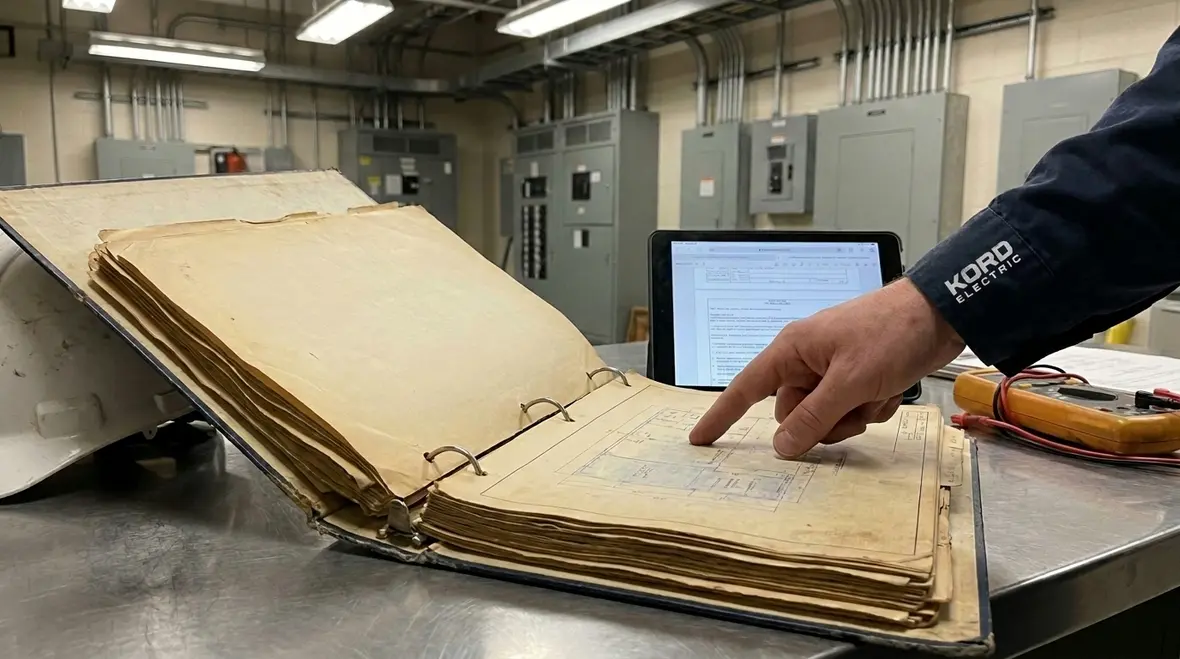
At Kord Electric, we still run into NFPA 70A older documents in commercial and industrial facilities, and in major property buildings where paperwork sometimes outlives the equipment it was meant to guide. In the first place, those older documents can feel like they wandered in from another decade, like a vintage VHS tape that still refuses to die. Yet they remain in plan sets, spec binders, and maintenance manuals because project teams and facility managers used to follow rules that fit their time.
Even so, the real reason these records persist is practical. We see it every day in the field: the paper is tied to permits, equipment listings, legacy drawings, and maintenance histories. Therefore, when our technicians and expert service staff review the system, they treat those references as clues, not as a mistake. And yes, sometimes the clue is buried under layers of “temporary” notes that became permanent. We handle that with calm, methodical work.
When NFPA 70A older documents were used and why that matters
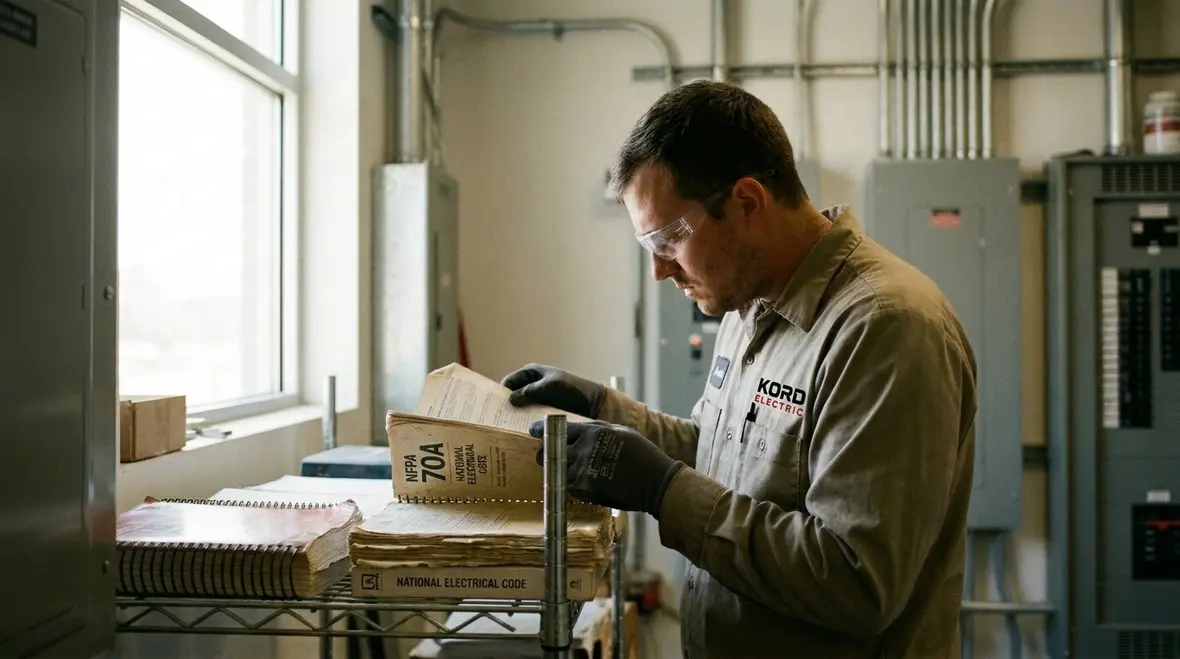
In many facilities, electrical design and installation timelines created a long trail of documentation. Back when crews built or renovated buildings, they often referenced older code editions and standards that were the norm. Consequently, a site might show NFPA 70A text because the project spec sheet, the inspection checklist, or the original contract drawings included it.
Furthermore, commercial and industrial buildings tend to last. A plant may expand over decades, and a major property building may undergo renovations in phases. As a result, newer work gets added on top of older baselines. Then the archive folder grows thicker, and the references keep their place, even when policies later change.
Our team explains this clearly during walkthroughs. We don’t just say, “That’s old.” Instead, we help others understand what the record likely meant at the time, and how it still helps us interpret equipment, circuit intent, and compliance history today.
For facility managers who want a deeper look at how documentation connects to long-term safety, Kord Electric’s guide to hidden electrical risks in commercial buildings shows how records, inspections, and field conditions come together in real-world settings.
How building permits and inspections keep legacy references alive
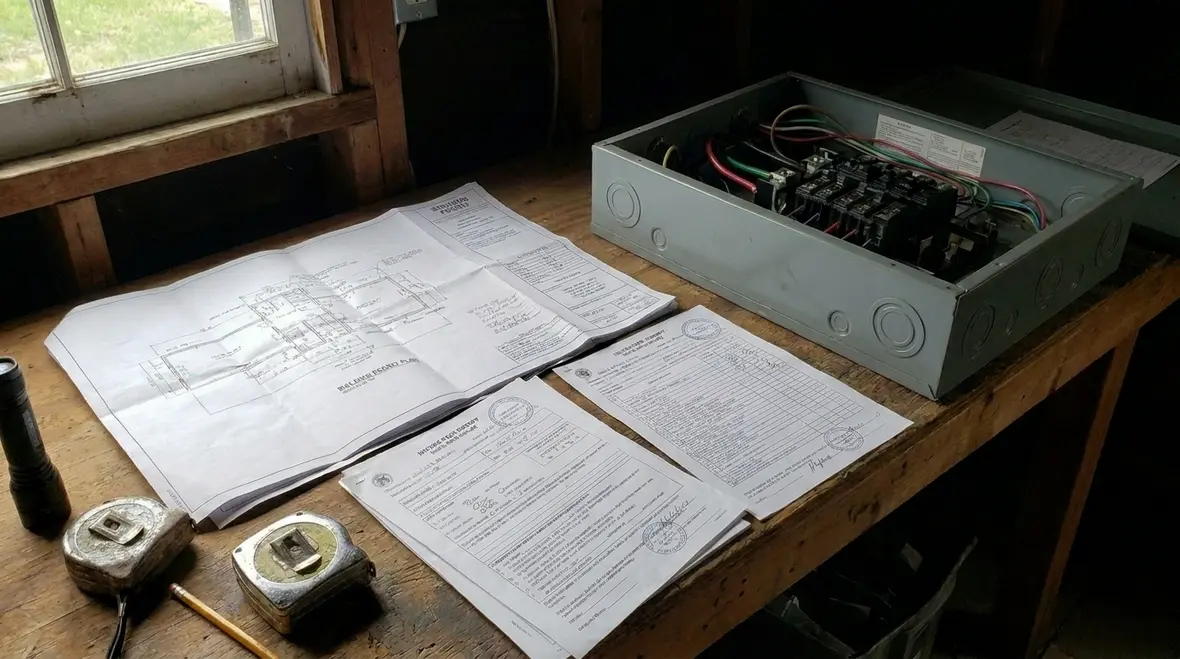
For commercial and industrial facilities, permits and inspections create legal and operational anchors. Even when later editions of codes update requirements, the original permit set often stays on file as the official backbone for the work that was approved. Therefore, NFPA 70A older documents may appear in the same folder as stamped electrical drawings and inspection notes.
Imagine a facility manager searching for the “why” behind a panel change. They look at the permit timeline, then the approved narrative, then the referenced standards. Because those records helped pass inspection once, staff may keep them as evidence of good intent and due diligence. Meanwhile, our expert service staff uses that same trail to avoid guesses.
In practice, we treat the referenced standard as a historic snapshot. Next, we verify what actually exists in the field. We check labeling, conductor sizing context, raceway types, protection devices, grounding details, and installation practices. That approach keeps the job grounded in reality, not nostalgia.
This is the same mindset behind our structured electrical preventive maintenance programs, where field verification and documentation updates move together instead of drifting apart.
Legacy labeling, equipment listings, and the “translation” problem

Older plans often include language that guided the installation method, even if the wording uses older references. For example, panel schedules might show a standard that influenced how the system was organized. Labels may align with the safety philosophy of that era. Equipment documentation might reference the standard because the manufacturer complied during that time window.
However, people can misread the record if they do not translate it properly. Therefore, we explain that an older reference does not automatically mean the current system violates newer rules. It may simply mean the system was built to a different edition, or the designer used a standard reference style that was common then.
Our technicians handle translation through comparison. They look at the as-built conditions and match them to the intent captured in the paperwork. Then we document what we find in plain language for facility stakeholders. Sometimes, we even joke that the drawings speak a dialect. We just make sure our work speaks the right one.
In complex facilities where translation errors can turn into downtime, our article on rewiring cost for commercial electrical systems shows how legacy design decisions, documentation, and modern upgrades intersect during major projects.
What we check today when codes and documentation don’t match
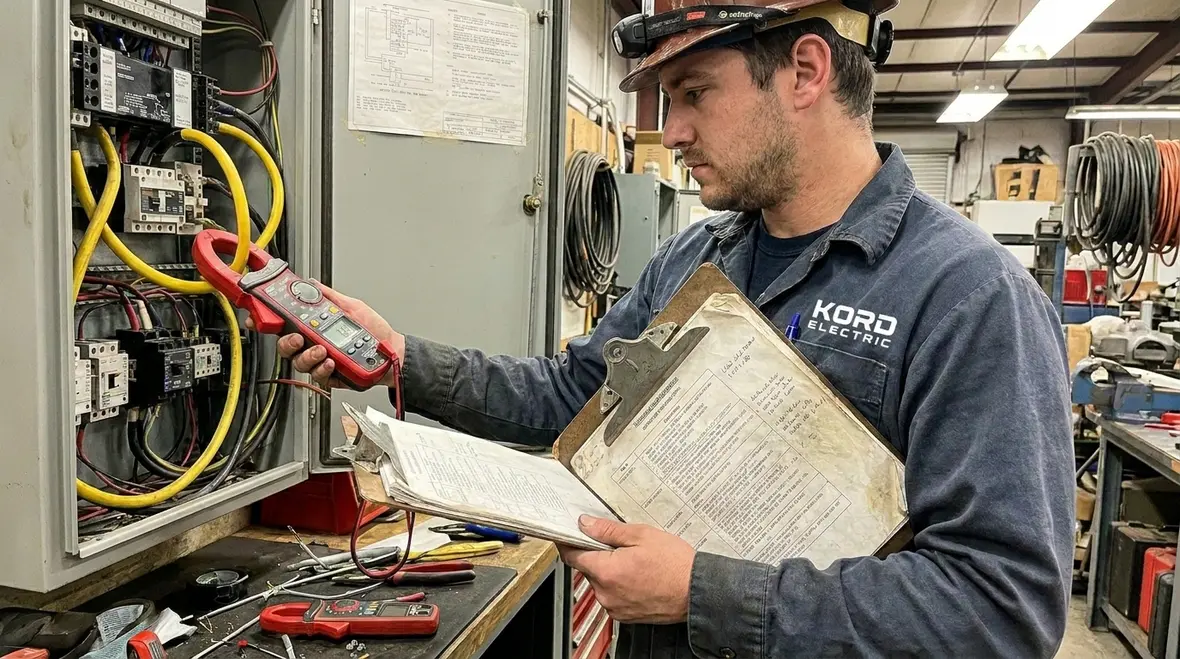
Modern facilities need safe operation, reliable uptime, and clear compliance paths. When NFPA 70A older documents appear alongside newer materials, our job is to connect the dots without creating confusion.
First, we confirm the system scope. Is the work electrical distribution, branch circuits, fire alarm power, grounding and bonding, or something specialized? Next, we review the installation details that matter most for safety and function. Then we verify the protection scheme: breakers and fuses should align with conductor protection needs and load behavior.
Third, we evaluate grounding and bonding continuity where the system can drift over time. Over the years, building renovations and equipment replacements can cause small gaps that add up. Additionally, we examine labeling and documentation practices so maintenance staff can actually use the information during emergencies.
Finally, we apply current best practices during service work, not because the past was wrong, but because the facility needs today’s clarity. In other words, we don’t rewrite history. We make sure the present is safe, understandable, and maintainable.
That same focus on present-day performance also drives Kord Electric’s support for voltage fluctuations in commercial and industrial facilities, where older infrastructure and newer loads have to coexist without constant nuisance issues.
Why facility teams keep old records instead of tossing them
Let’s be honest: throwing away old electrical documentation feels like doing spring cleaning. It also feels like a great idea right up until someone needs it during an outage. For large properties, that moment comes fast. A facility might need to trace a circuit, verify a modification, or respond to an audit.
Therefore, facility teams keep the files because they hold useful information, even when they mention standards like NFPA 70A. Older documents can show load assumptions, equipment locations, and historical changes. They may also reveal the original design logic that explains why certain pathways, conduits, or panel arrangements exist.
At Kord Electric, we support that thinking. We work with maintenance managers and engineering teams, and our expert service staff explains what matters and what does not. When we see references that no longer match current expectations, we highlight what those references likely meant and what we must verify now.
And yes, sometimes the record is held together with sticky notes. But we’ve learned to respect the sticky notes. They often contain the human truth the stamped drawings can’t capture.
For facilities that want to turn those sticky notes and legacy binders into a structured plan, our overview of commercial and industrial electrical maintenance plans shows how recurring service can slowly turn scattered records into a usable history.
How we communicate the meaning of older standards to stakeholders
Our field work matters, but communication keeps facilities moving. When we find NFPA 70A older documents during a review, we make sure the people involved understand the difference between an old reference and an active requirement. We do this in a business casual tone because our audience is busy, not because safety should be casual.
We explain in steps. We point out where the document likely fits in the project timeline. Then we describe what we verify during on site checks. After that, we outline next actions for upgrades, labeling corrections, or documentation updates. Throughout, our technicians speak plainly so facility teams can make decisions without hunting for a code book after hours.
In short, we translate the paper into real work. And when the paper is ambiguous, we don’t pretend. We test, measure, and document what we find, so the facility gets confidence that lasts longer than the next version of a binder.
That same clear, step-by-step communication style also guides our GFCI outlet California commercial compliance guide, where we help property teams sort through evolving standards without turning every decision into a code research project.
FAQ
Get the clarity your facility deserves, with Kord Electric
Older electrical paperwork does not have to be a headache. When NFPA 70A older documents show up in your records, we help you interpret them, verify what exists, and align the system with practical safety needs. Our technicians and expert service staff explain findings in plain terms and recommend next steps for commercial and industrial facilities and major property buildings. If you want fewer guesses and better confidence, call Kord Electric today to schedule a review. We’ll bring order to the binder chaos.
If you are ready to move from “mystery binders” to a clear, proactive plan, explore how our dedicated electrical preventive maintenance services can turn today’s inspection into tomorrow’s reliability story.
For facilities planning broader upgrades that go beyond documentation—such as panel work, distribution changes, and coordination with future projects—our commercial and industrial clients often start by pairing a document review with a tailored electrical preventive maintenance program so field findings, NFPA 70A references, and long-term strategy all line up.
When your records mention NFPA 70A, older documents do not have to slow down inspections, renovations, or capital planning. With the right commercial electrical partner, they become a useful chapter in the story of a system that is safer, clearer, and more reliable than ever.


