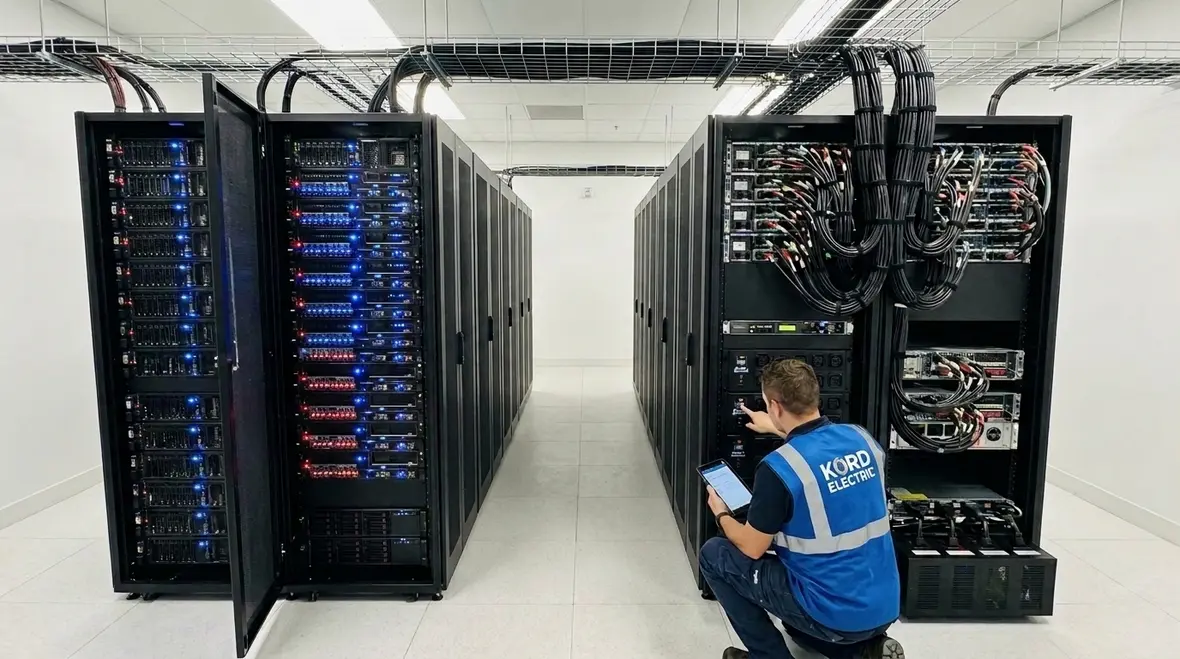
Block Redundant vs Distributed Redundant Power for Data Centers
At the heart of a reliable data center sits one decision that can make the difference between “we sailed through the outage” and “we all learned new prayers.” That decision is Block Redundant vs Distributed Redundant Power: Which Is Better for Data Centers? In simple terms, block redundancy groups key power gear in one place, while distributed redundancy spreads critical components across multiple locations within the facility. At Kord Electric, our team helps clients choose the approach that matches their risk profile, their budget, and their uptime goals. And yes, we also explain it in plain language, because nobody should need a decoder ring to understand power reliability.
If you are weighing Block Redundant vs Distributed Redundant Power: Which Is Better for Data Centers? as part of a broader reliability strategy, it also helps to zoom out. Many facility teams pair this decision with the principles we outline in our guide on data center electrical distribution design for reliability, so the redundancy architecture ties into how feeders, switchgear, and protection behave when it counts.
Why data center uptime depends on power design choices

In commercial and industrial buildings, power failures rarely happen like movies. They do not come with a clear countdown and dramatic music. Instead, they show up as subtle stress: a breaker that trips more often than it should, a transfer switch that takes longer than expected, or a maintenance window that went a bit too long. Over time, these small problems can snowball into downtime.
That is why our expert service staff at Kord Electric focuses on power design choices that reduce single points of failure. According to our internal guidance and the themes we discuss in our data center power redundancy articles, including our insights on data center power redundancy for maximum uptime, 99.9 and higher uptime targets require more than “having backups.” They require the right way to route, protect, and switch power during abnormal events. When engineers and technicians coordinate early, the system behaves predictably when conditions change.
Also, while we are on the topic, a data center does not care how good your backup generator marketing sounds. It cares if the transfer happens smoothly, if loads stay stable, and if the system restores power without chaos.
The choice between block redundant and distributed redundant architectures lives inside that reality. Each option can support strong uptime, but only when it lines up with the building’s electrical backbone, maintenance playbook, and testing strategy.
Block redundant power: what it does and why it appeals
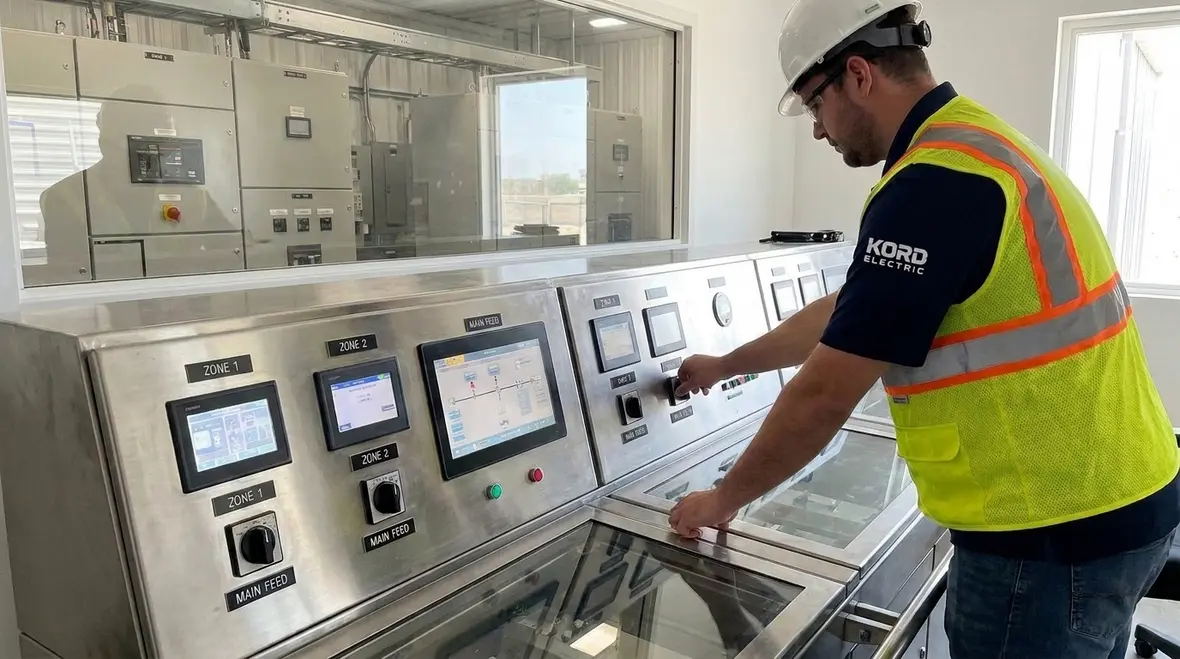
Block redundancy organizes critical power equipment into blocks that work together. When power paths stay inside a defined block, staff can isolate and service specific sections without disturbing the whole facility. Many owners like this approach because it is easier to map and operate. In practice, a block design can also simplify commissioning, testing, and documentation.
However, we do not treat it like a free lunch. Block designs concentrate key equipment in one area. Therefore, if an event hits that area, the facility can experience a larger impact than with a distributed design. That includes problems like localized cooling failure, cable damage in a common route, or a mechanical incident that affects one power room.
In many of the major property buildings we support, block redundancy fits well when a facility has strong physical separation and well planned maintenance procedures. Then, the block becomes a controlled environment. Yet if separation is weak, block redundancy can become a larger target. Our technicians explain this tradeoff clearly, and they help teams align the electrical design with how the building actually operates during real world events.
From a planning standpoint, block redundancy can also make it easier to stage upgrades and expansion. When new capacity fits into a defined block, construction teams can phase work, test transitions, and bring gear online in a more structured way. The catch is that every change must respect the original assumptions about fault levels, protection coordination, and cooling.
When block redundancy feels like the right fit
Block redundancy tends to shine in facilities where:
Dedicated electrical rooms and corridors already support strong physical separation.
Operations teams prefer clearly labeled, self-contained systems with straightforward one-line diagrams.
Commissioning and ongoing testing are scheduled, structured, and documented rather than improvised.
Growth plans can be grouped into logical blocks instead of scattered rack by rack.
When these conditions exist, block redundancy can offer a powerful balance of clarity and uptime—provided you treat each block as its own ecosystem with disciplined maintenance and protection reviews.
Distributed redundant power: how it reduces local impact

Distributed redundancy places critical power components across multiple areas so that no single location carries the same weight. Instead of stacking everything in one power zone, the design spreads key elements. This setup can reduce the chance that one local failure affects the entire system.
Think of it like seating in an auditorium. If everyone sits in one row and that row has a problem, the whole show gets messy. When you distribute seating, one seat issue becomes a much smaller annoyance. Distributed power works in a similar way, but with far more seriousness and fewer people eating nachos.
Still, distributed redundancy demands careful coordination. Power distribution can become more complex. Routing, labeling, switching logic, and load balancing all need strong execution. If the facility lacks standardized procedures, staff may struggle during an abnormal event. That is where Kord Electric stands out for commercial and industrial facilities. We bring clear engineering input and hands on expertise, so distributed designs stay manageable rather than chaotic.
When our expert service team walks clients through this approach, they focus on practical steps like test plans, switching sequences, and how to confirm stability during transfers. In other words, we help teams plan for the moment when reality shows up.
Where distributed redundancy shows its strengths
Distributed redundant power can be especially effective when:
The facility footprint is large or irregular, so concentrating power in one location would create long cable runs and shared choke points.
Cooling, mechanical, and structural constraints make it safer to spread heat and weight across multiple rooms.
Risk assessments prioritize limiting localized failures to the smallest possible slice of the load.
Teams are ready to invest in clear labeling, consistent operating procedures, and training to keep a more distributed layout understandable.
The payoff is a system that can ride through local incidents with less drama. The tradeoff is that you must keep configuration control tight and avoid the slow drift into “mystery mode,” where only one veteran knows which breaker feeds what.
Block vs distributed redundancy: impact on transfer events and fault behavior

Most uptime failures do not come from a “no power” scenario. They come from how the system responds during transitions and faults. Therefore, Kord Electric evaluates both design types through behavior, not slogans.
During transfer events, a block system can offer predictable switching if all elements align tightly within the same power block. Yet distributed systems can also provide smooth behavior when switching paths are well designed and well tested. The real differentiator is how quickly power stabilizes and how the system limits fault spread.
Fault behavior matters just as much. When a fault occurs, protection devices must isolate only the failing section and keep critical loads online. In block redundancy, protection selectivity often depends on tight coordination within that block. In distributed redundancy, selectivity depends on coordination across multiple zones. Either way, a poorly coordinated protection scheme turns one problem into a full day of troubleshooting.
That is why we often connect this decision with broader work on data center power redundancy strategies and protection coordination studies. The architecture and the settings have to back each other up, or the first real fault becomes an unplanned experiment.
So, we encourage our clients to treat redundancy like a team sport. You do not win by just buying players. You win by setting roles, practicing plays, and running drills. We also emphasize how maintenance affects protection behavior over time. Components wear, settings drift, and labels fade. Our technicians help owners keep systems aligned through service and documentation that holds up under pressure.
Block Redundant vs Distributed Redundant Power: Which Is Better for Data Centers?
Here is the part everyone wants in one sentence: Block Redundant vs Distributed Redundant Power: Which Is Better for Data Centers? The honest answer is that “better” depends on how your facility is built and how your team works.
Block redundant designs often win on clarity, contained fault zones within each block, and simpler mental models for operators.
Distributed redundant designs often win on limiting the blast radius of local problems and taking advantage of large or complex layouts.
Either architecture can support 99.9 and higher uptime targets when power paths, switching sequences, and protection are engineered as a single system. The wrong fit, or a good design that drifts over time, will undermine even the best hardware.
Design factors we weigh for commercial and industrial facilities
Every major property building brings different constraints. Therefore, we evaluate the decision using several practical factors that owners and facility leaders recognize right away.
Physical layout and separation: If the site has strong compartmentalization and physical barriers, block redundancy can stay safer. If separation is limited, distributed designs may reduce the chance of one incident affecting everything.
Cable routing and common pathways: We map cable routes and identify where many circuits share paths. Then, we design to avoid single common failure zones.
Mechanical and cooling reliability: Power systems depend on cooling, and cooling depends on mechanical systems. When one power room runs hotter than expected, the best electrical plan can still struggle. Our team ties power planning to facility conditions.
Maintenance workflow: Facility staff want service to happen without panic. Block redundancy can simplify isolation, while distributed redundancy can limit the scope of a localized outage. Both can work, but only when procedures match the design.
Load growth and expansion: Data centers and enterprise suites often change plans midstream. We consider whether the chosen approach supports adding capacity without forcing risky rework.
Our technicians and expert service staff explain these factors in a calm, step by step way. And yes, we do it without making clients feel like they need a second degree in electrical engineering. The goal stays simple: pick the option that supports steady uptime for the building, not just a clean diagram.
For some facilities, we also bring in lessons learned from projects focused on resilient electrical infrastructure for data centers and broader uptime design. That way, the redundancy decision does not live in a vacuum. It becomes part of a bigger reliability story that includes monitoring, operations, and gradual upgrades.
How Kord Electric helps you choose the right approach
Kord Electric supports commercial and industrial facilities and major property buildings. We do not treat redundancy like a generic checklist. Instead, we work with stakeholders to translate uptime goals into an electrical design that matches real operation.
First, we review the existing electrical architecture, including distribution paths, protection coordination, and transfer strategies. Then, we evaluate how Block Redundant vs Distributed Redundant Power: Which Is Better for Data Centers? applies to the facility’s layout, service access, and risk tolerance. Finally, we help plan commissioning and service activities so the system performs the same way on day one and on day one hundred.
Our expert service staff also emphasize documentation and training. When teams understand how the system responds during abnormal events, they act faster and safer. That is when redundancy becomes more than hardware. It becomes an operating advantage.
By the way, if you have ever tried to “wing it” during a maintenance window, you already know why we plan. You can wing a song request at karaoke. You cannot wing a transfer sequence for mission critical loads. Nobody wants a live demo of what not to do.
When clients need deeper support across their portfolio, we also connect this work with projects like emergency power for business continuity design and critical power architecture upgrades. Redundancy is one chapter in a much bigger playbook that keeps data centers and other critical spaces running when the grid does something unhelpful.
If your facility is in Southern California and you are balancing data hall uptime with office, retail, or industrial loads under the same roof, our broader Los Angeles County electrical services help unify those priorities. The same team that designs your data center redundancy can align it with panels, feeders, and life safety systems elsewhere in the building.
FAQ
Conclusion: let’s design redundancy that actually performs
At Kord Electric, we help commercial and industrial facility owners choose the right redundancy approach based on how the building operates, how faults behave, and how teams maintain the system. Whether you lean toward block redundancy or distributed redundancy, we guide you toward predictable transfer events and safer fault isolation. Now is the time to stop guessing and start engineering with confidence. Contact Kord Electric to review your power design, discuss your uptime goals, and build a plan your technicians can execute without drama.
If your next project also involves broader infrastructure planning, our guide to data center electrical infrastructure design for reliability pairs well with the Block Redundant vs Distributed Redundant Power decision, so you can move from theory to a complete, field-ready design.