
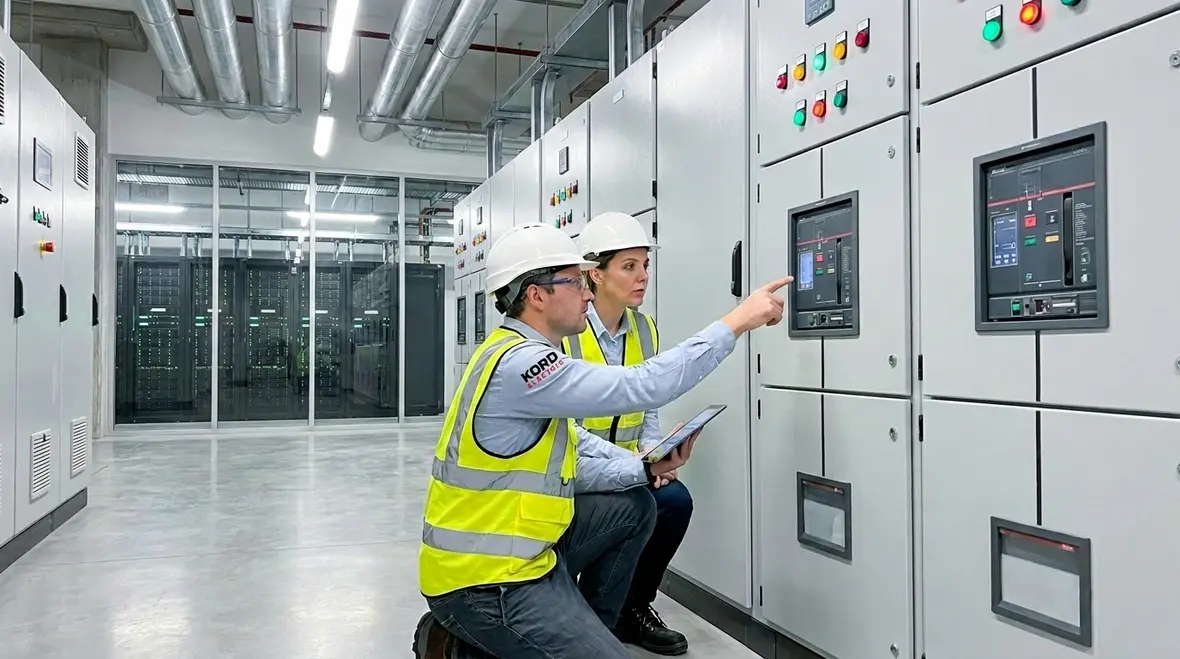
Business Continuity Power Solutions by Kord Electric
In commercial and industrial facilities, the lights need to stay on, the controls need to keep talking, and the operations need to survive the day something unexpected happens. At Kord Electric, we build business continuity power solutions that help organizations plan for outages, protect critical loads, and keep leadership from waking up to an emergency call that starts with “We have a problem.” The work does not stop at installing equipment. Instead, our team designs, tests, and supports electrical systems so the building can stay productive during storms, grid disturbances, equipment failures, or switching events. And yes, we know outages feel like pop quiz day for facilities teams, but planning turns that quiz into a take home test.
How Kord Electric supports business continuity with power systems
Others often treat resilience like a slogan. We treat it like an engineering requirement. Kord Electric focuses on commercial and industrial facilities, as well as major property buildings where downtime costs real money. Therefore, our approach starts with the loads that matter most and the time window that cannot be missed. Then we design a path that keeps power stable when normal supply changes.
Our expert service staff explains the logic in plain language, so facility managers do not have to decode technical diagrams like they are trying to read tea leaves. For example, we map critical circuits, confirm operating sequences, and verify that protection devices coordinate correctly. After that, we build power reliability into the electrical system itself, not just into a single piece of backup gear. In turn, the system performs as one unit when conditions shift.
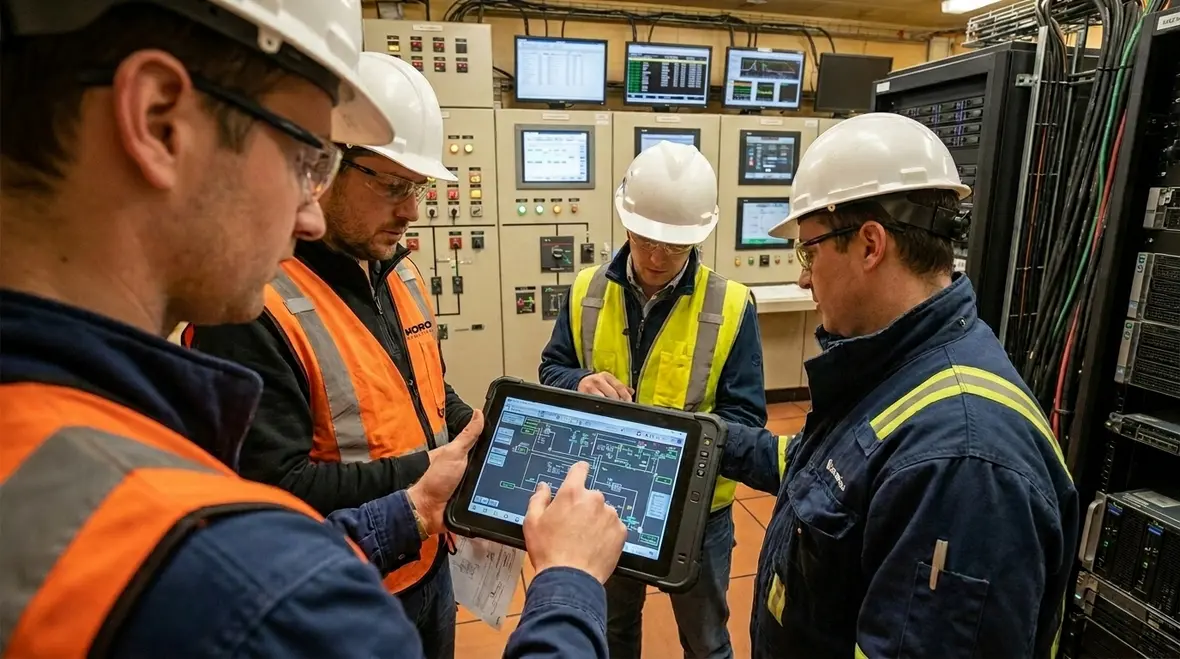
Design principles that keep operations running during electrical events
When an interruption occurs, the difference between a quick recovery and long downtime often comes down to design choices made long before the event. First, we use clear load prioritization. Critical systems get protected ahead of nonessential loads, and the electrical system respects that order every time.
Second, we plan for transfer and switching. The building needs smooth transitions, so controls do not get confused and equipment does not shut down unnecessarily. Third, we address power quality. Unstable voltage and harmonics can reduce equipment life and cause nuisance trips. Therefore, resilient designs include power conditioning where it fits and protective settings that match the real operating profile of the facility.
Also, redundancy matters, but redundancy must be practical. We do not chase complexity for its own sake. Instead, we focus on resilience that matches the facility’s risk profile, staffing levels, and response procedures. That means the system can recover under pressure, even when the person on shift is not an electrical engineer.
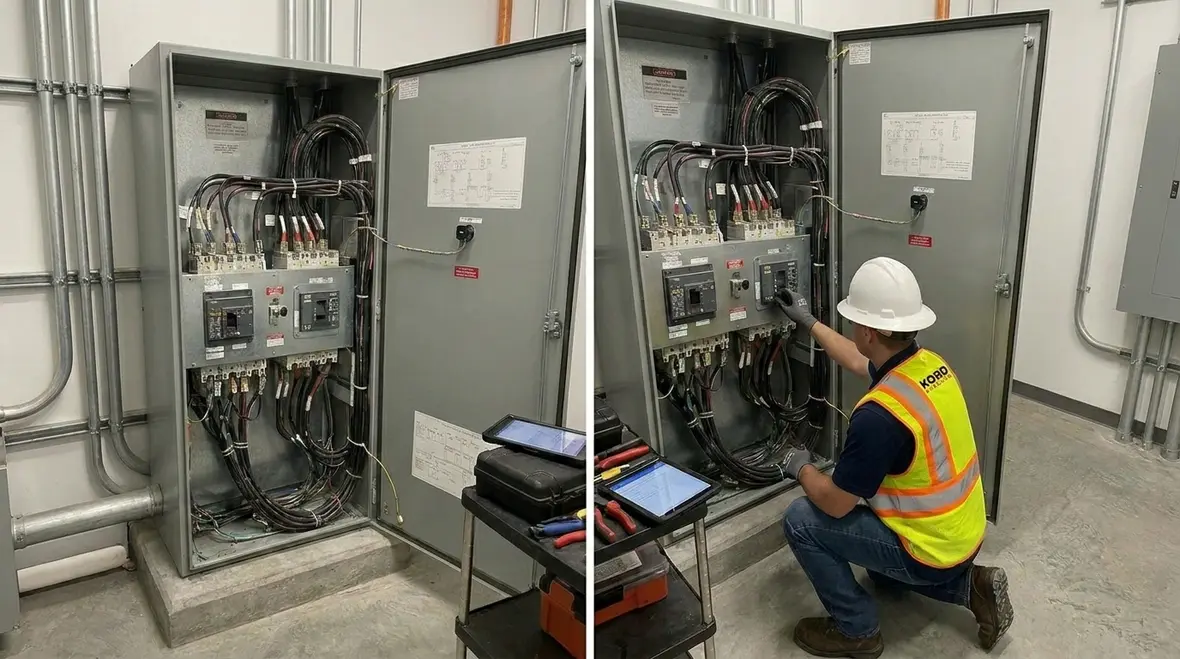
Load planning for critical circuits and short outage tolerance
In many commercial environments, not every circuit carries the same importance. So we begin by asking a simple question: which loads must survive, and for how long? Then we translate that answer into a power strategy that supports operations, life safety support functions where applicable, and continuous processes that define the business.
Our technicians work with facilities teams to build a practical load list. In addition, they look at startup currents, motor behavior, and control power needs. For example, a system that powers motors during a transfer must handle inrush without collapsing the voltage profile. Likewise, a control system that depends on stable power cannot “ride through” an event unless the electrical design actually supports it.
Then we verify that the backup plan matches reality. We simulate scenarios, review operating sequences, and check that protective devices coordinate. As a result, when the system switches, critical loads do not just get “some power,” they get the right power at the right time.
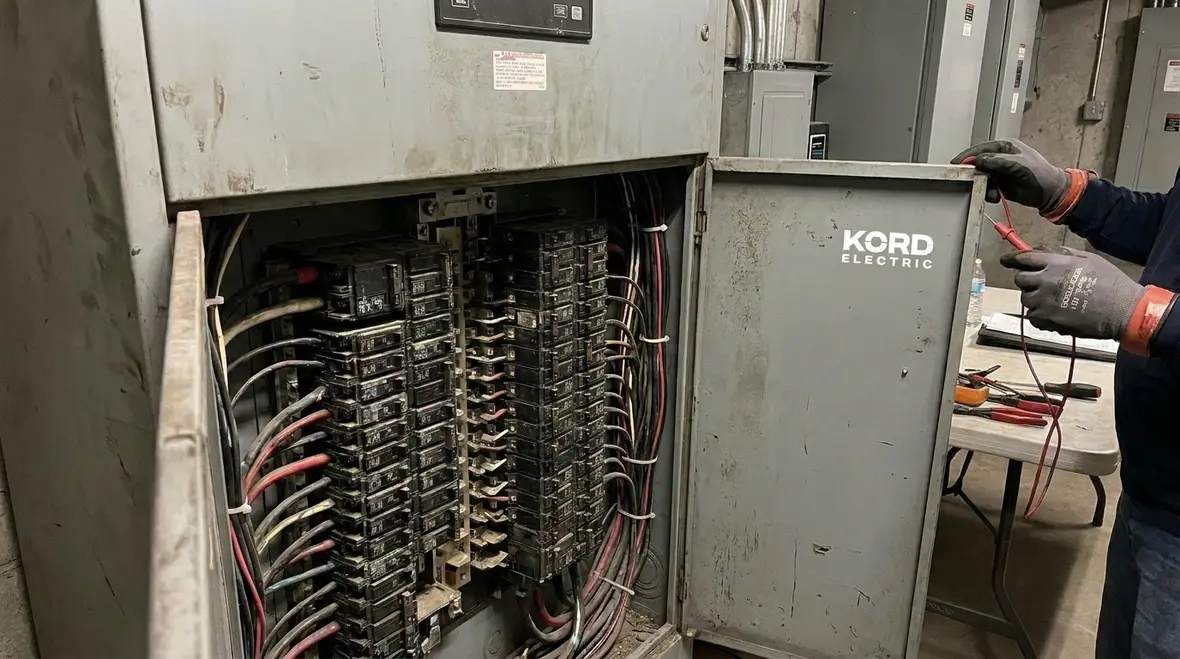
Coordination, protection, and testing that prevent surprise failures
Every facility has a moment when someone discovers a problem they did not know existed. We prefer to discover those issues during testing, not during business hours with stakeholders standing nearby. Therefore, Kord Electric builds resilience through coordination studies, protection review, and commissioning activities.
Protection coordination ensures that the correct device trips for the fault, and the rest of the system stays stable. This keeps minor issues from turning into major outages. Coordination also protects sensitive equipment like drives, PLCs, and process control hardware, so the facility avoids a “trip and reset” cycle that becomes a daily routine.
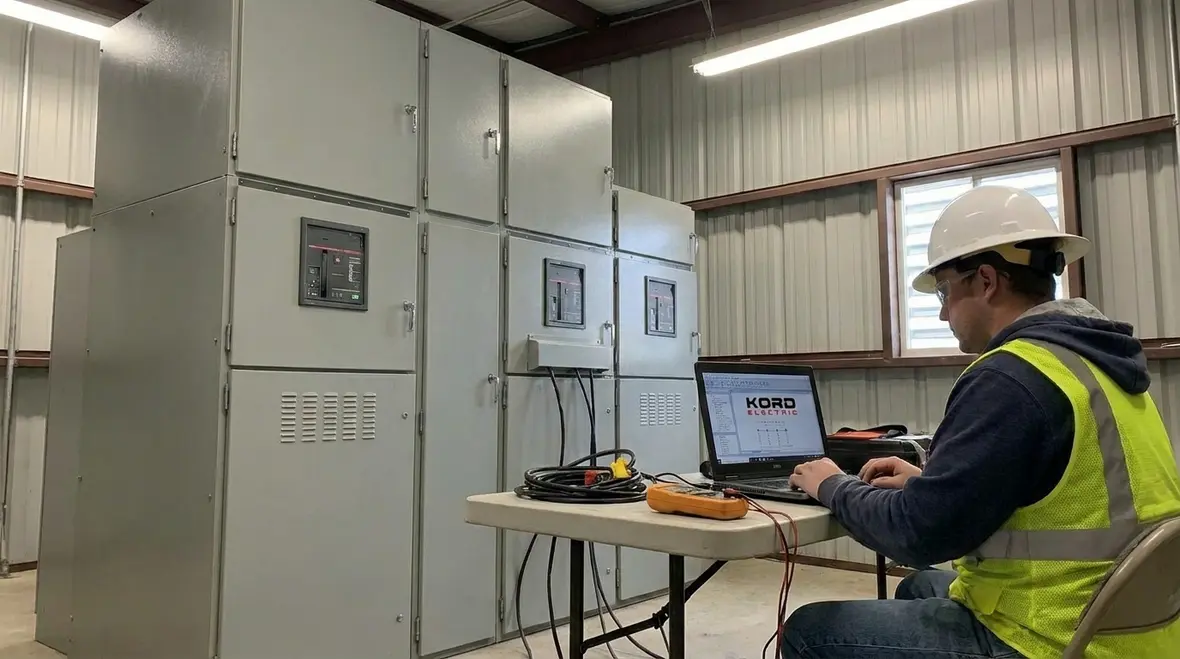
Then we test. Testing is not a checkbox. It is a verification step that confirms the system behaves as designed. During commissioning, our team validates switching sequences and ensures that control logic executes properly. Also, we verify that alarms and monitoring reflect real conditions, so operators can respond with confidence instead of guesswork.
And yes, systems can fail. But when they fail, they should fail in a predictable way. That is the difference between chaos and controlled recovery.
Building a power resilience roadmap for real budgets and real timelines
Resilience planning should not feel like planning a spaceship with a blank check. Our clients need solutions that fit budgets, renovation schedules, and uptime requirements. So we build a roadmap approach that sequences improvements based on risk, impact, and feasibility.
First, we assess the facility’s current electrical infrastructure. Then we identify gaps that affect business continuity power solutions performance, such as aging switchgear, weak coordination margins, limited transfer capability, or insufficient monitoring. After that, we propose upgrades that improve reliability without disrupting critical operations more than necessary.
To keep projects moving, our expert service staff explains each step and the expected outcome. They also help facilities teams understand what can be implemented now, what should be planned next, and what requires longer lead time. As a result, decision makers get clarity instead of confusion, and the facility avoids expensive rework.
Finally, we connect resilience to operations. We define responsibilities for testing, document operating steps, and align the plan with how people work on site. That is how resilience stays functional after installation.
For facilities planning multi-year upgrades, pairing this roadmap with resources like Kord Electric’s insights on commercial electrical cost drivers and rewiring strategies for large systems helps leadership align budgets, risk, and uptime without guesswork.
Maintenance and monitoring that keep uptime predictable
Installing equipment is only part of the story. Over time, electrical systems drift due to wear, changing loads, and environmental effects. Therefore, Kord Electric supports commercial and industrial facilities with maintenance and monitoring practices that keep the system dependable.
We recommend service plans that reflect actual operating conditions. For example, transfer equipment and protective devices benefit from scheduled inspections and performance checks. Also, batteries and power electronics require verification steps so they remain ready when the grid does not behave.
Monitoring supports faster response. When the right data is available, operators can identify trends, schedule service before failure, and avoid reactive maintenance. In addition, clear alarm pathways reduce downtime caused by uncertainty. Instead of “What happened?” teams can answer “What changed, and what do we do next?”
To keep this practical, our technicians explain the monitoring outputs and what actions each alarm indicates. That keeps the system from becoming a black box, like the control panel in an old action movie. In those movies, the hero always touches one wrong button and suddenly it is the final scene. In real buildings, we want fewer wrong buttons.
Many facilities tie these practices into structured commercial and industrial electrical maintenance plans so inspections, testing, and documentation stay on schedule instead of becoming a someday project.
Common resilience gaps in commercial buildings and how teams fix them
Even well managed facilities can miss key details. One common gap is unclear load prioritization. Another is lack of testing that confirms switching sequences under realistic conditions. Some teams also plan for backup power but fail to coordinate protection settings, which can cause unexpected trips and repeat failures.
Another gap is changing building usage. Equipment gets added, production lines expand, tenant needs evolve, and power demands shift. If the system does not adjust, the resilience plan can degrade silently. Then, during an event, the building does not respond the way the team expected.
Kord Electric addresses these gaps through structured reviews. We examine electrical design, confirm operating logic, and validate performance through commissioning and ongoing service. We also help clients keep their documentation current so that future modifications do not break the original continuity strategy.
For facilities that have already experienced emergency power events, articles like Kord Electric’s overview of emergency power failures in commercial buildings offer additional insight into how small oversights can grow into large disruptions.
| Resilience gap | How Kord Electric helps |
| Protection settings drift or do not coordinate | We review coordination and confirm correct fault clearing so critical loads stay supported |
| Transfer logic does not match facility sequences | We validate switching steps and control behavior during commissioning and tests |
| Power quality issues damage sensitive equipment | We assess voltage stability and harmonics risk so equipment performs reliably |
FAQ: Business continuity power solutions and electrical resilience
Connecting continuity planning to regional electrical support
Business continuity power solutions work best when they are paired with local expertise that understands how your region operates. For factories and commercial facilities in and around Los Angeles, that means coordinating long term resilience planning with on the ground troubleshooting and rapid response when conditions change unexpectedly.
Kord Electric’s experience with electrical system troubleshooting for factories and emergency electrical services helps bridge the gap between design and reality. The same team that writes the roadmap can also help execute it during real events, so facilities are not left translating theory into practice at 2 AM.
For organizations that want a broader view of support across the region, integrating continuity planning with dedicated Los Angeles County electrical services ensures that the team managing daily operations is connected to the same experts who understand the local grid, code requirements, and industrial load patterns.
Conclusion and call to action
When electrical reliability matters, resilience cannot be improvised. Kord Electric helps commercial and industrial facilities and major property buildings plan, design, test, and maintain electrical systems that support business continuity power solutions. If your team wants predictable recovery during outages, fewer surprises, and clearer operating confidence, we are ready to help. Contact Kord Electric to schedule a resilience assessment and build a power plan that protects your operations, not your next meeting agenda.
Whether you are concerned about hidden electrical risks, preparing for potential emergency power failures, or simply ready to turn pop quiz outages into take home tests your team is prepared to pass, Kord Electric can help you move from reaction to readiness with a plan that fits your facility, your budget, and your timeline.


