Commercial Charging Station Costs Guide
Kord Electric sees the decision about electric vehicle charging as a real business move, not a feel good poster. In that spirit, we outline Commercial Charging Station Costs early, because planning is cheaper than guessing. For many commercial and industrial facilities, the biggest drivers are the number of ports, the charging speed, the electrical work needed on site, and the path to installation approvals. And yes, we also account for the boring parts, like trenching and permitting, because those do not disappear just because a plug looks friendly.
Others may rush to price the hardware first and then “figure out the rest.” We do it the other way around. Our expert service staff and technicians walk through the site, review your load requirements, and explain what each line item means before we start pulling permits. Then we help you choose a setup that fits your property, your power capacity, and your timeline.
Commercial Charging Station Costs: what drives the final bill
When you look at Commercial Charging Station Costs, you should not treat them like one number. We break them into clear buckets, so your team can compare options without getting lost.
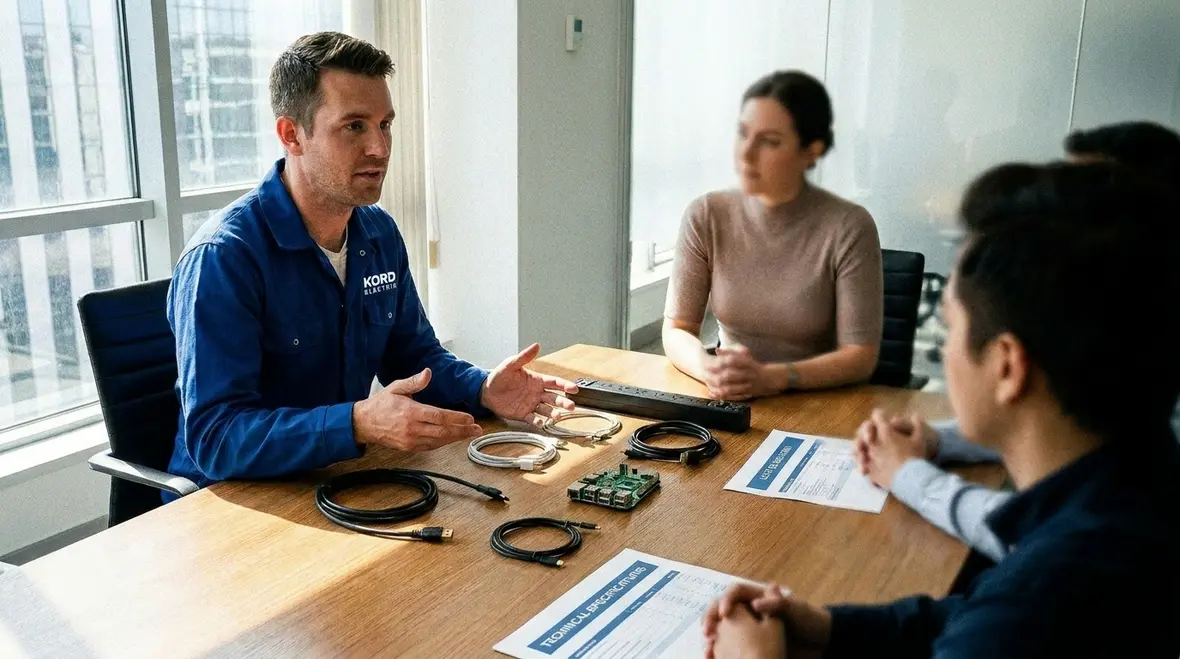
- Equipment and charging level: Faster charging usually costs more. However, you gain uptime and better turn time for drivers, which can matter in retail, logistics, and office settings.
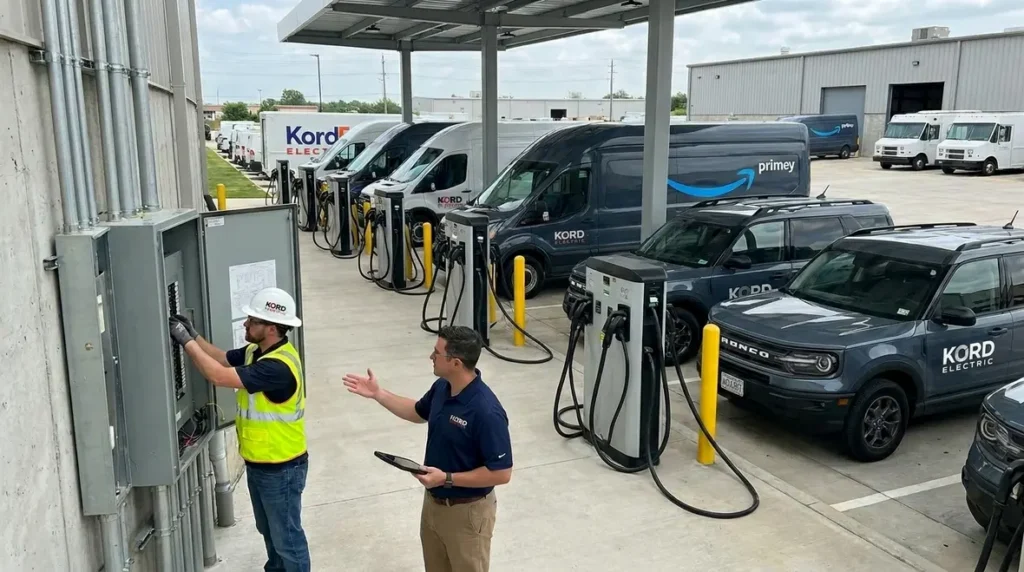
- Site power capacity: If your current electrical service cannot support the new demand, costs rise due to upgrades.
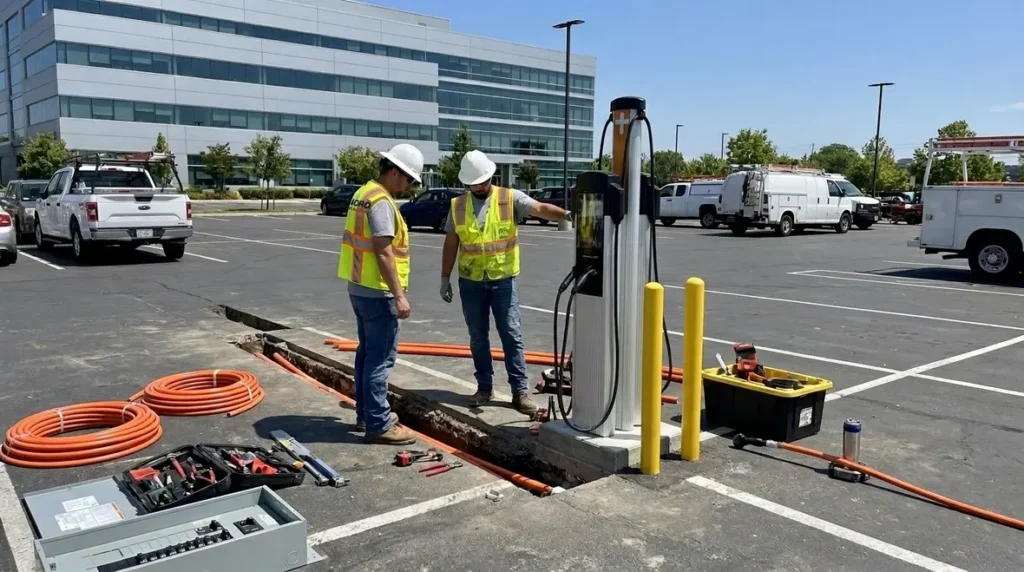
- Electrical installation: Trenching, conduit, wiring, switchgear work, and labor all change the total cost based on distance and site layout.
- Permits and inspections: Local rules and electrical code steps can vary. Our technicians explain the expected steps so the process stays calm and predictable.
- Network, access, and management: Many commercial sites need software for payments, user access, and reporting.
In other words, the “sticker price” for a charger is only part of the story. It is like buying shoes and acting surprised you still need socks. We help you plan for both.
How we estimate installation costs for commercial and industrial sites
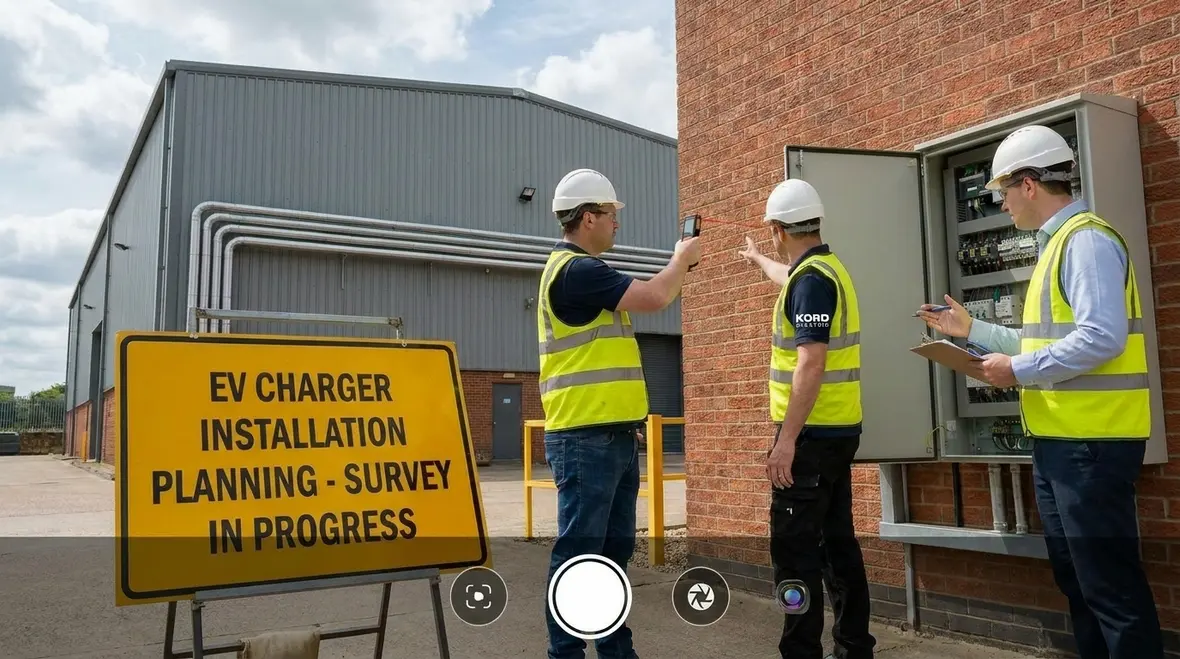
Our estimating process starts with how your building actually uses power, not how it hopes to use power someday. Therefore, we treat every commercial and industrial facility as its own system, even if two addresses look similar from the outside.
First, we gather site details. Our expert service staff asks targeted questions about your electrical panel capacity, existing loads, and any planned construction. Then our technicians review physical factors, like where you want stations to sit, how long runs of cable might be, and whether you have safe access paths for installation crews. After that, we map the charging plan to real electrical needs.
At this stage, we often help clients compare scenarios, such as:
- Fewer higher output ports versus more standard output ports
- One phase of installation now versus staged growth over time
- Dedicated circuit design versus shared capacity strategies where code allows
Because costs change with each layout and power constraint, we keep the discussion practical. We also explain terms in plain language, so your team can make a confident decision instead of playing “electrical bingo” with unfamiliar numbers.
Power upgrades, trenching, and permits: the hidden cost map
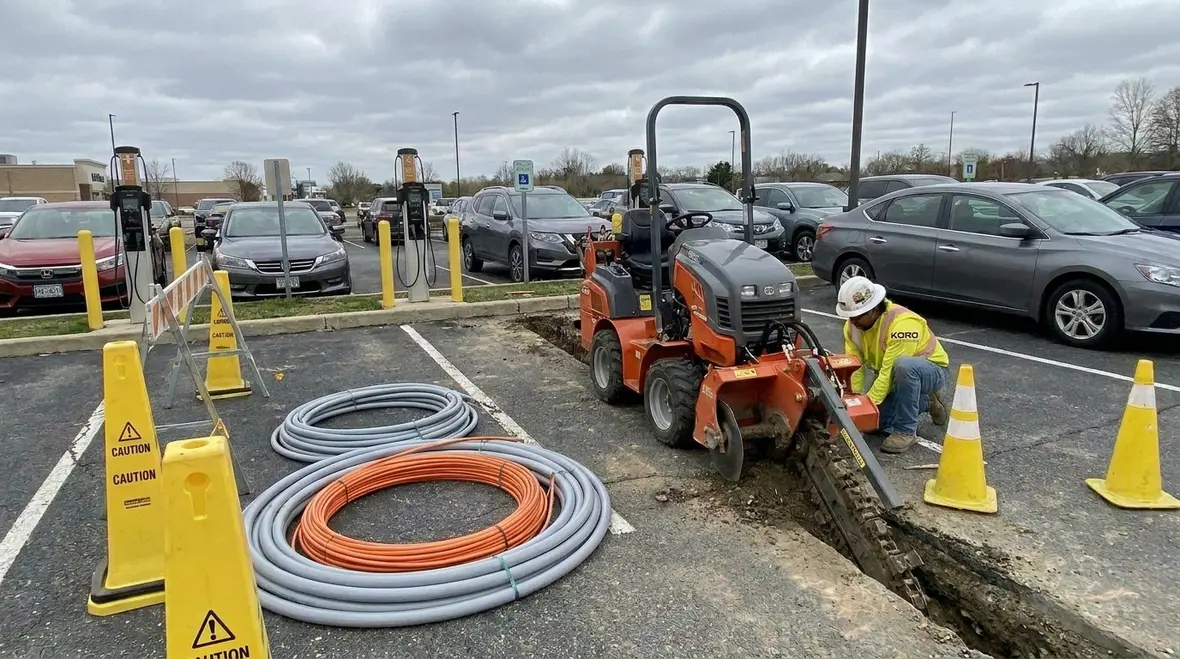
Some organizations expect the chargers to plug in neatly and behave like a toaster. Unfortunately, commercial charging sites rarely work that way. So we plan for the hidden cost map that shows up in real projects.
Power upgrades often become the largest variable. If your service has limited headroom, you may need new transformers, switchgear changes, or load balancing. In many cases, we help clients plan for the upgrades to match future growth, which can reduce repeated mobilization and avoid paying twice.
Trenching and conduit depend on distance from the electrical room to the parking bays. Surface mounting can help in some layouts, but many sites still need trenching for weather resistance and code compliance. We also think about vehicle clearance, drainage, and long term maintenance paths.
Permits and inspections follow local rules. Even when equipment costs stay stable, permit timelines can affect project schedules. Our expert service staff keeps you informed on the expected approvals so the project does not stall at the last moment.
Here is the simple truth: when we evaluate the site early, we reduce surprises later. And surprises are fun for birthday parties, not for budgets.
Choosing the right number of ports without overspending

Charging stations fail when they are underbuilt, and they also drain budgets when they are oversized. Therefore, we guide clients to size ports based on actual property use patterns. We ask about peak times, expected EV adoption in your customer base, employee driving habits, and any fleet needs.
Then we connect that data to charging strategy. For example, some sites benefit from more ports with moderate power, because turnover matters during short visits. Other sites do well with fewer ports at higher power when vehicles stay longer.
We also consider future load growth. If your property plans new leases, new tenants, or additional facilities, you may need extra capacity. Our technicians help you plan so upgrades happen on schedule, not in a panic after the first busy weekend.
We may suggest a staged rollout. That approach lets you start with the essentials, measure use, then expand. It is like building a business plan, not like launching a streaming subscription during a power outage.
Project pricing breakdown: a clear view of what we fund
To keep things transparent, we present a structured estimate that separates hardware, electrical work, and project management. This helps your team compare proposals without playing guessing games.
| Cost category | What our team considers |
| Charger and related hardware | We align charging level, connectors, and mounting needs to your site plan. |
| Electrical scope | We review wiring distances, conduit, circuit design, and any required service upgrades. |
| Site work | We account for trenching, landscaping impacts, surface restoration, and safe cable routing. |
| Permitting and inspection handling | We plan for local approvals and coordinate inspections so schedules stay realistic. |
| Commissioning and testing | We verify performance, safety checks, and operational readiness before handing off. |
| Software and access options | We help you choose network and payment features that match your operational goals. |
Because we separate scopes, your organization sees where money goes and why. Also, you can plan internal resources with less confusion, since we explain each part in straightforward terms.
Maximizing value after installation: usage, maintenance, and uptime
Once the charging stations sit in place, the story does not end. To protect the investment, we focus on usage, upkeep, and reliable operations. This matters most for commercial and industrial facilities where downtime creates real costs.
First, we help you think about access and reporting. With proper setup, you can track utilization, monitor performance, and manage user access. This helps you understand whether the site meets your expected demand.
Second, we plan for maintenance. Charging equipment needs routine checks, and cables and connections require inspection. Our technicians and expert service staff coordinate service steps so issues get handled quickly, before small problems become big ones.
Third, we advise on future improvements. If utilization grows, you may need additional ports or power adjustments. Because we built the installation with your load path in mind, scaling becomes easier and costs stay more controlled.
In short, the right Commercial Charging Station Costs do not just buy hardware. They buy long term reliability, clear reporting, and a charging experience that fits a professional property.
FAQ about evaluating Commercial Charging Station Costs
Related planning resources for Commercial Charging Station Costs
If your team is comparing Commercial Charging Station Costs across multiple properties or phases, it can help to see how those costs interact with broader electrical planning. Kord Electric covers that in depth in our Commercial EV Charging Installation Cost Guide, where we walk through power requirements, charger types, and installation scenarios that commercial facilities face every day.
For properties that want to grow beyond a first wave of chargers, our article on EV charging infrastructure scalability for commercial sites explains how to build an electrical plan that expands without constant rebuilds. And if you are operating in California, our breakdown of EV charger rebates for commercial properties can help align incentives with your overall budget strategy.
Because charging infrastructure often arrives alongside other work, many facilities also review their wider electrical needs through services like Los Angeles County electrical services. That way, panel upgrades, reliability improvements, and EV charging installations support each other instead of competing for space and capacity.
Ready to evaluate options for your property?
If your team wants dependable pricing and a charging plan that fits your site, we are ready to help. Kord Electric can review your electrical capacity, propose a port plan that matches demand, and explain the Commercial Charging Station Costs line by line. Our technicians and expert service staff handle the details from scope to commissioning, so you move forward with confidence. Contact us for an on site consultation and a clear, practical path to installation. We will keep it professional, calm, and properly powered.
To move from planning into execution with a specialized team that installs commercial and industrial EV infrastructure every week, explore our dedicated EV charger installation services. We align your charging project with real world power constraints, safety standards, and future growth so each new port fits your property instead of fighting it.