Preventative Maintenance Checklist Industrial Guide
At Kord Electric, we build electrical reliability using a Preventative Maintenance Checklist Industrial approach that helps keep motors, switchgear, panels, and grounding systems steady under real-world load. Our technicians follow a preventative schedule that reduces surprises, catches early damage, and keeps critical operations online. In other words, we prevent the kind of electrical drama that shows up right when a production line needs peace and quiet. And yes, we have seen breakers trip for reasons as silly as a loose connection that looked “fine” to the naked eye. So, we document, test, inspect, and verify, step by step.
In this guide, our expert service staff explains what to check, how often to check it, and why each item matters for commercial and industrial facilities and major property buildings. Others can sell you maintenance. We help you run maintenance that holds up in the field.
Preventative Maintenance Checklist Industrial: a plant reliability plan that actually works
A strong Preventative Maintenance Checklist Industrial program does more than “check the box” for compliance. It builds a predictable rhythm for inspections, testing, cleaning, and repairs that fits how your facility actually runs. When done correctly, it connects the dots between NFPA 70 and NFPA 70B guidance, real operating conditions, and your production schedule, so you are not guessing whether the electrical system will cooperate during peak demand. Instead of treating maintenance as a once-a-year scramble, we structure it as an ongoing reliability plan backed by clear documentation and practical next steps.
At Kord Electric, that approach carries through everything from switchgear rooms and motor control centers to emergency systems and power quality investigations. It also ties directly into our broader electrical preventive maintenance programs for commercial and industrial facilities, where data, inspection history, and risk levels guide each round of work instead of guesswork or habit.
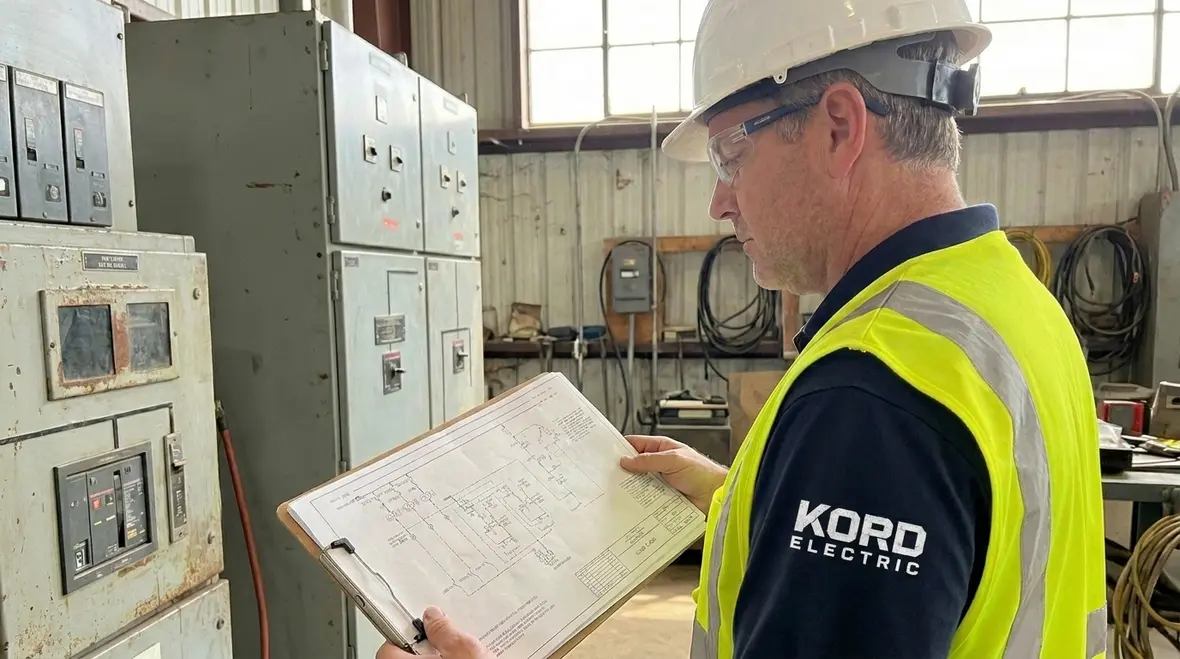
Think of this checklist as the playbook for plant reliability: it identifies the equipment that matters most, the failure modes that actually show up in the field, and the test methods that catch problems early instead of after an outage. Pair it with a disciplined schedule and you get fewer production surprises, calmer outage planning, and a facility team that knows exactly what was checked and why.
Map the electrical risks before anyone touches a tool
Before work starts, our team does what smart facilities do: we identify what can fail, what matters most, and how failure would show up. First, we review one-line diagrams, as built drawings, and last service reports. Then we build an equipment list that matches your operating reality, not just what paperwork says.
Next, we organize assets into priority tiers. For example, switchgear serving life safety, emergency loads, chillers, and critical process equipment usually sits higher than general lighting distribution. After that, we confirm load patterns and operating hours because heat and cycling affect insulation aging, bus bar tension, and contact wear.
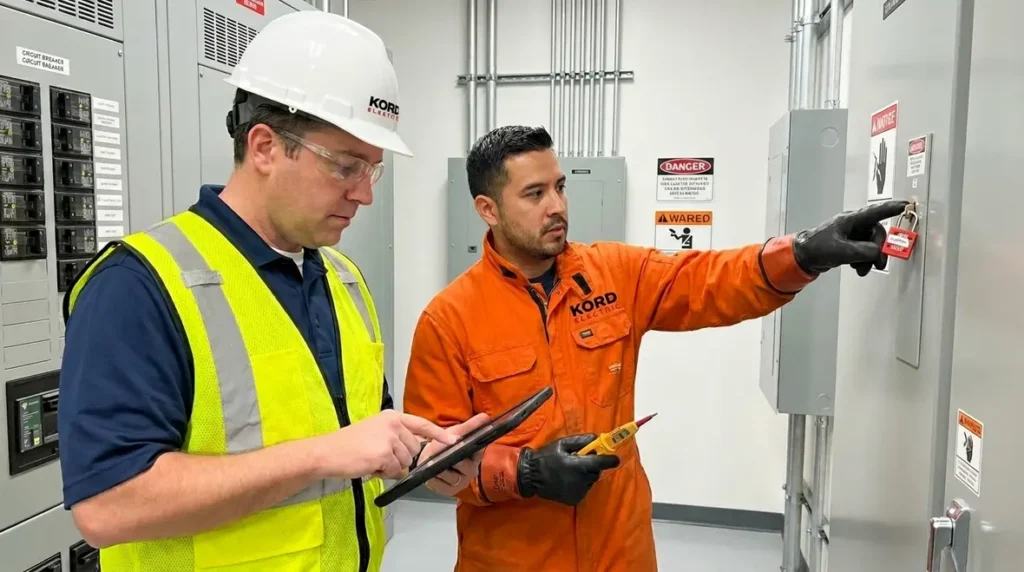
Finally, we align maintenance tasks with safe access and outages. We do not wing it. Our technicians plan work permits, arc-flash boundaries, lockout tagout, and sequencing so the plant stays compliant and calm.
Verify documents: one-line diagrams, panel schedules, labeling accuracy
Build a tier list: critical, important, and noncritical loads
Check operating conditions: load cycles, peak demand times, seasonal heat
Plan safety and downtime: permits, boundaries, lockout steps
During this risk mapping, we also look for any prior signs of voltage instability, nuisance trips, or unexplained shutdowns. When needed, we coordinate with targeted diagnostics such as voltage fluctuation assessments for commercial and industrial facilities so the preventive maintenance plan addresses both visible equipment and the less obvious power quality issues that create long-term stress.
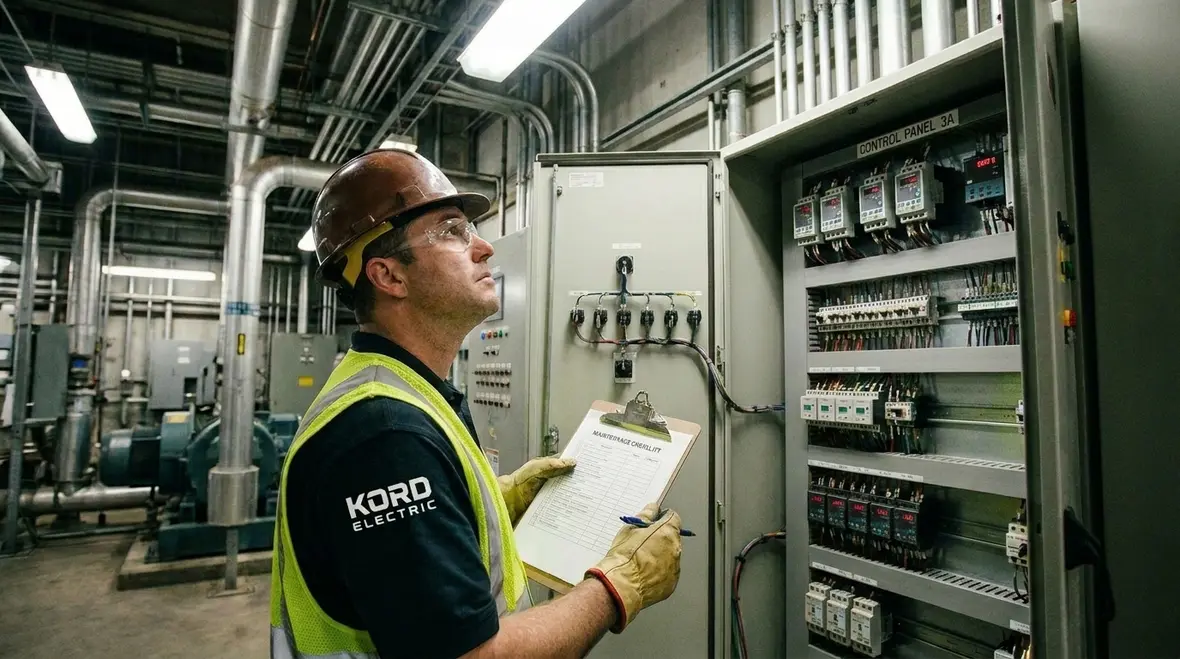
This early planning step sets the tone for everything that follows. Instead of running from panel to panel hoping nothing looks scary, our technicians walk in with a clear map of where critical risks live, what loads are most sensitive, and which areas demand deeper testing and documentation.
Switchgear, breakers, and bus systems: the first line of defense
Switchgear maintenance is where reliability often lives or dies. When our expert service staff inspects these systems, we look beyond the obvious. We confirm mechanical condition, contact integrity, and thermal behavior because electrical faults rarely announce themselves politely.
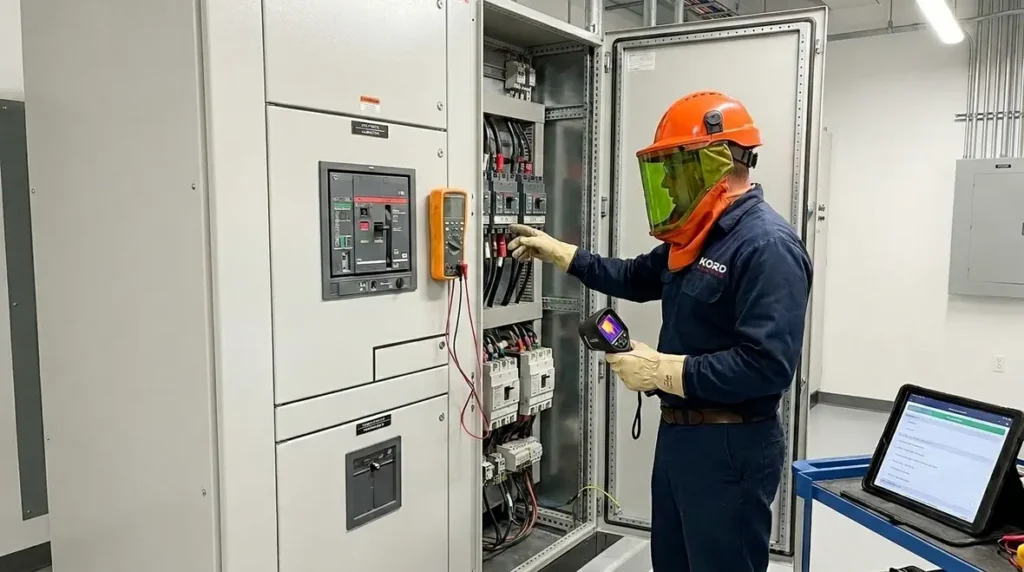
We start with visual inspections for overheating signs, corrosion, loose hardware, and moisture paths. Then we check breaker racking, alignment, and interlocks. After that, we test breaker operation and confirm control power health, including battery condition for protective relays and emergency systems.
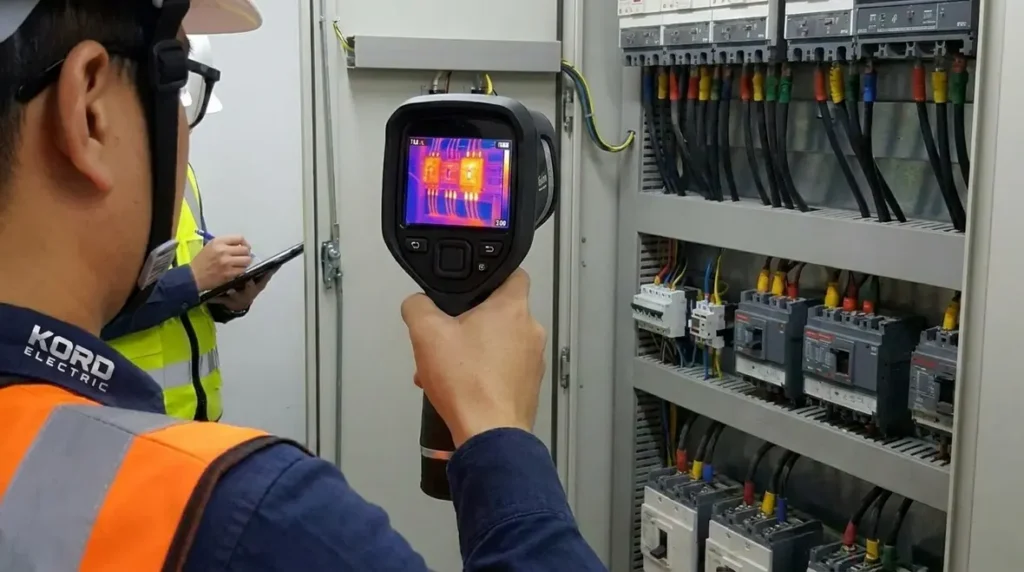
Thermal evidence matters too. Even when nothing fails, small problems create heat, and heat shortens equipment life. Therefore, we review infrared scan results from previous cycles and compare trends, not just one-time readings.
Inspect and tighten: terminations, bus connections, grounding points
Check breaker mechanics: racking smoothness, alignment, interlocks
Validate control power: relay outputs, voltage stability, battery health
Trend thermal imaging: hotspots, phase imbalance, changing patterns
Look, breakers can trip for reasons like age, contamination, or a contact surface that lost its grip. It is like a restaurant trying to serve with a broken door hinge. Everything still looks “mostly open,” until it does not.
For facilities that want their switchgear program to align closely with current guidance, we often reference our NFPA 70B electrical panels and switchgear maintenance article, then fold those ideas into the Preventative Maintenance Checklist Industrial schedule so compliance and reliability work together instead of living in separate binders.
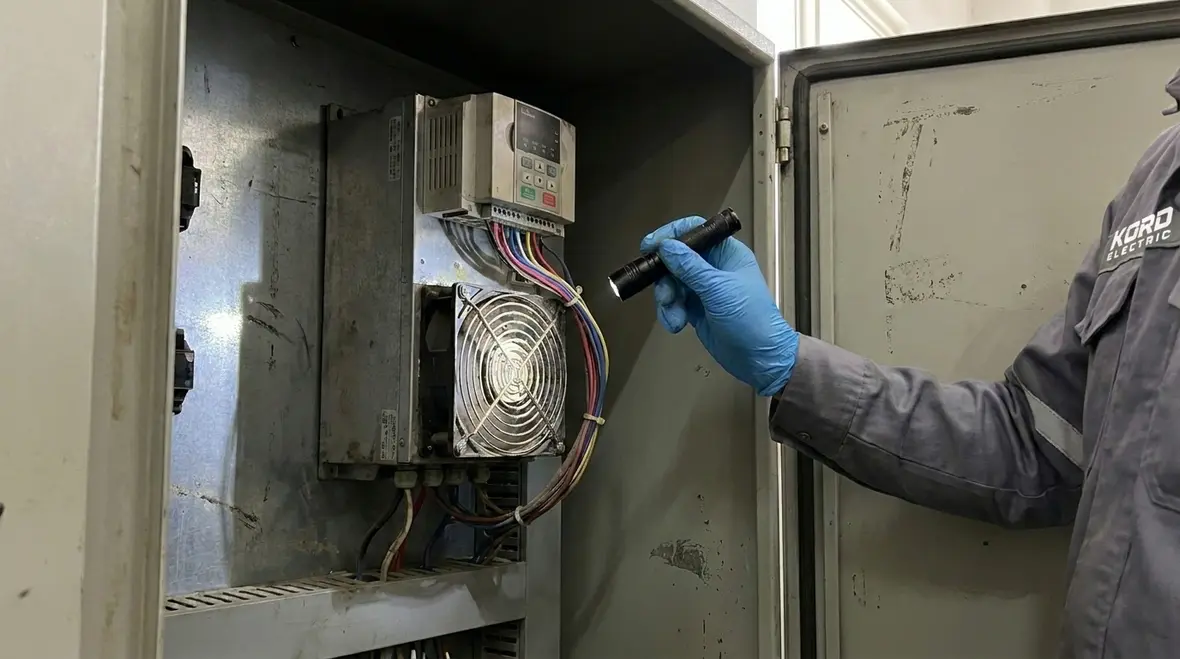
That combination of visual checks, torque verification, functional testing, and thermal data gives facility managers a much clearer picture of how their first line of electrical defense is really performing under load, not just how it looks during a quick walk-through.
Motor control centers and drives: keep torque where it belongs
Motor control centers, starters, and VFDs run the heartbeat of most plants. When we perform preventative electrical maintenance for industrial facilities, we focus on the components that drive performance and protect motors from stress. That means we inspect contactors, overloads, selector switches, and backplane connections.
For drives, we verify ventilation health, filter conditions, and cooling fan performance. Then we check settings and observe for faults that may not halt production but still indicate stress. In addition, we examine output connections and motor leads because insulation degradation often starts where cables enter enclosures.
We also validate motor protection logic. For example, we confirm that overload settings align with the motor nameplate data and actual operating conditions. Incorrect settings can either cause nuisance trips or fail to protect the equipment when you truly need it.
Inspect MCC lineup: labels, wiring condition, terminal tightness
Verify contactor health: contact wear, coil condition, switching behavior
Check overload and protection: calibration fit to motor load
Inspect VFD cooling: fans, filters, airflow paths
Review drive faults: history trends and recurring alarms
And yes, we have seen plants treat a failing fan like it is “just a fan.” Then the drive overheats, the alarms show up, and everyone suddenly becomes an amateur HVAC engineer. We aim to stop that plot twist early.
For sites with high concentrations of motors, this part of the Preventative Maintenance Checklist Industrial program often becomes one of the highest-return investments. Catching a loose termination or misaligned overload setting early is far cheaper than replacing a production-critical motor at the worst possible time.
Grounding, bonding, and power quality: the quiet work that prevents loud failures
Grounding and bonding keep fault current on the path it should travel. When that path gets messy, equipment can behave unpredictably, protective devices may operate inconsistently, and safety risk increases. Therefore, our technicians evaluate bonding continuity, grounding resistance trends, and the condition of ground conductors.
Power quality checks also matter for reliability. Voltage imbalance, harmonics, and transient events can stress motors, electronics, and transformer insulation. As a result, we gather data through testing and compare it to past results. We do not just collect numbers. We translate them into maintenance actions.
In facilities where sensitive controls run alongside heavy loads, we pay close attention to grounding topology and separation of equipment grounds versus protective bonds. Then we verify that surge protection devices remain functional and properly connected.
Confirm bonding points: enclosures, conduit connections, structural bonds
Trend grounding resistance: watch for moisture and corrosion effects
Check power quality: imbalance, harmonics, disturbances
Inspect surge protection: SPD condition and connection integrity
Think of grounding like the seatbelt in a vehicle. Most days it just sits there looking useful. Then one day it saves the day, and everyone suddenly appreciates boring reliability.
Lighting, receptacles, panels, and emergency systems: cover the whole building
Even when a plant focuses on production equipment, distribution health still impacts operations. We include preventative inspection for lighting loads, receptacles, and branch circuits because loose terminations and water intrusion do not care what you used the space for.
For panelboards and branch circuits, our expert service staff checks torque marks, identifies heat discoloration, verifies labeling, and confirms protective device condition. In addition, we inspect conduit routes for mechanical damage and verify that junction boxes stay sealed to reduce condensation and dust entry.
Emergency systems get special attention in commercial and industrial facilities. We test transfer switches, verify battery chargers and test intervals, and confirm proper operation of egress lighting and emergency receptacles where required. Then we document test results in a format your facility team can use without translating hieroglyphics.
Inspect branch circuits: torque, labeling, visible thermal stress
Verify enclosure integrity: gaskets, seals, corrosion control
Test emergency pathways: transfer devices, lighting operation, charging
Review neutral and ground paths: continuity and connection condition
When emergency systems fail, the consequences are immediate. So we treat these tasks like a professional sport: repeatable, tested, and documented, not “we will look at it next quarter.”
Build the full Preventative Maintenance Checklist Industrial schedule and document results
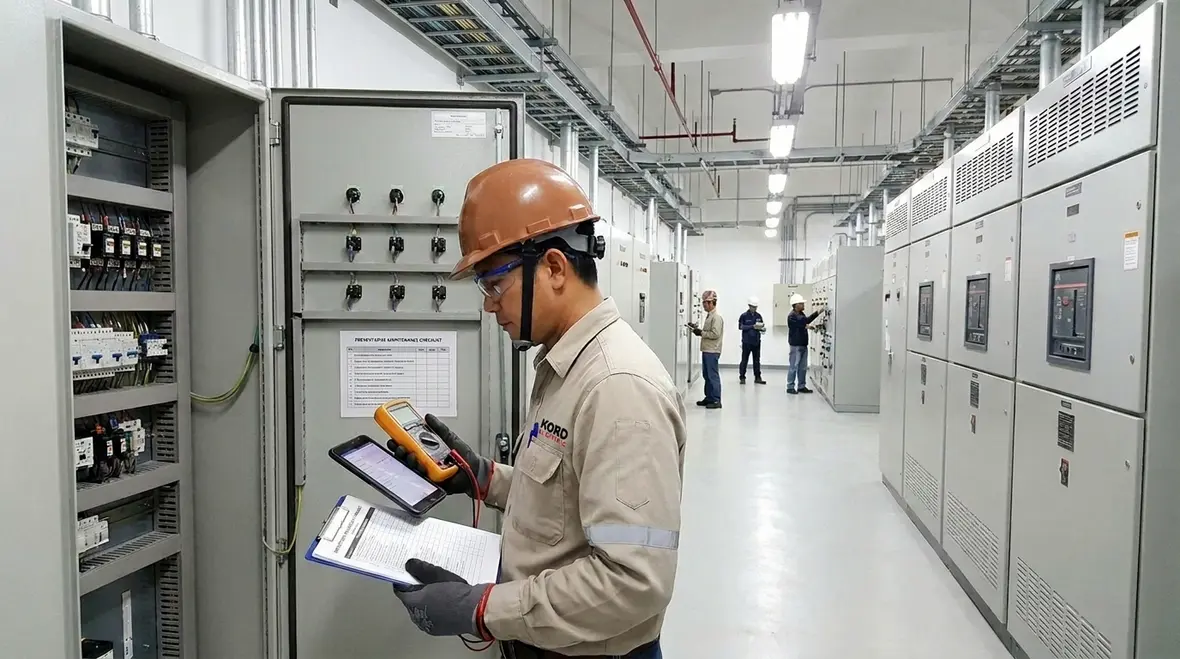
A preventative program only works when it has structure and follow through. We help clients create a schedule that matches equipment risk, operating conditions, and regulatory needs. Then we coordinate tasks so technicians can complete inspections, testing, repairs, and closeout without losing context.
To keep work effective, we use a checklist style workflow that records what we saw, what we measured, and what we recommended. Our technicians explain findings in plain language and connect them to risk. If a task needs repair, we provide priority, estimated impact, and next steps.
Additionally, we schedule based on seasons where relevant. For example, moisture and condensation can increase in colder months. Heat stress can rise in summer. Therefore, we align inspection timing to the conditions that trigger failure.
Set frequencies: annual, semiannual, quarterly, or based on runtime
Define deliverables: inspection reports, test data, repair recommendations
Use trend logic: track changes, not one-off readings
Close the loop: verify fixes after corrective work
In short, we do not treat maintenance like a one-time “check the box” event. We treat it like a system. And for the record, boxes rarely fix themselves. Unlike pop culture heroes, electrical equipment does not get stronger with dramatic speeches.
For organizations that want a broader strategy view beyond this Preventative Maintenance Checklist Industrial, our article on commercial and industrial electrical maintenance plans shows how proactive programs support budgeting, risk management, and long-term system longevity alongside everyday inspections.
FAQ: Preventative electrical maintenance for plants
Get your industrial electrical system ahead of the next outage
If a plant’s electrical reliability feels like guesswork, Kord Electric can bring calm, structure, and measurable maintenance to your operation. We assign expert technicians, follow a clear Preventative Maintenance Checklist Industrial workflow, and document results so your team knows what was checked and what needs attention.
From switchgear, MCCs, and grounding systems to lighting, emergency power, and power quality issues, we help plants turn reactive repairs into a disciplined reliability plan. Our preventive work also connects seamlessly with other services such as electrical preventive maintenance for commercial and industrial facilities and broader strategies for reducing hidden electrical risks in large properties.
If your site is in Southern California and you need support beyond scheduled maintenance, our team can also respond with structured outage support and repair work through our Los Angeles County industrial and commercial electrical services, so one partner helps you prevent problems and resolve them when they do break through.
Contact us to review your switchgear, MCCs, grounding, and emergency systems. Then we build a schedule that fits your facility and protects uptime. Let us handle the boring parts before they become expensive ones.