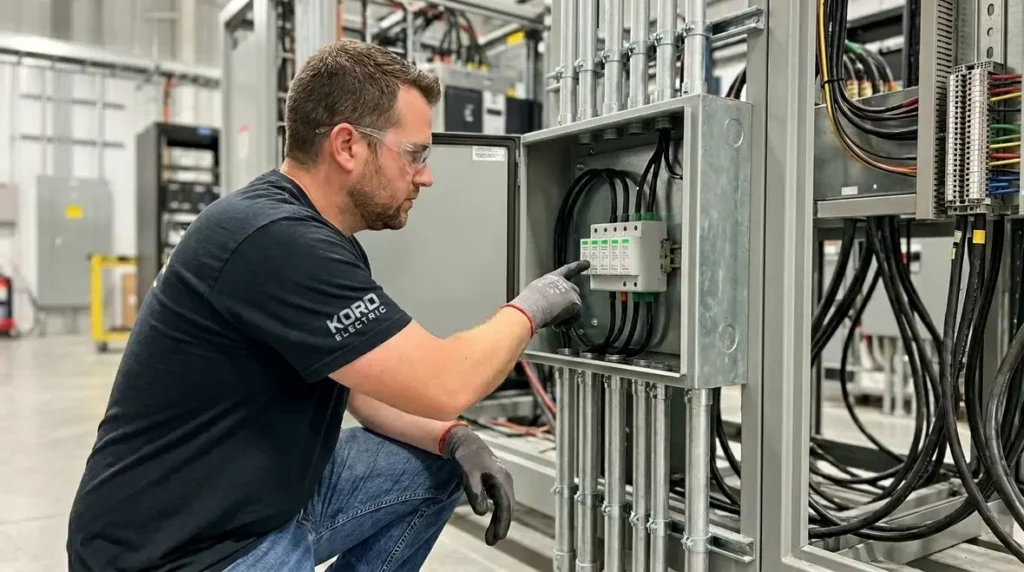
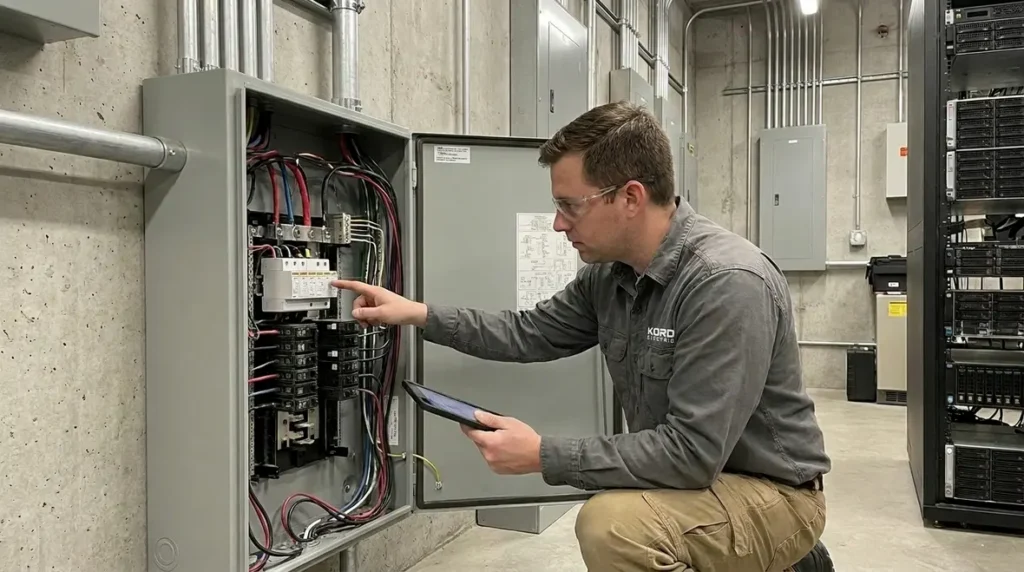
Emergency Electrical Preparedness Plan Guide
At Kord Electric, we build and use an Emergency Electrical Preparedness Plan that helps commercial and industrial facilities keep power where it matters most, when it matters most. We design this plan with people in mind, not just breakers and wires. And yes, even the “this will never happen here” mindset gets respect, right up until the moment it stops being funny.
In the pages that follow, others will see how our technicians guide planning from risk review to testing and training. We also explain the practical details, because a plan you cannot understand is a plan you cannot use. So we move step by step, with calm confidence and real-world logic.
How do we create an Emergency Electrical Preparedness Plan for facilities?
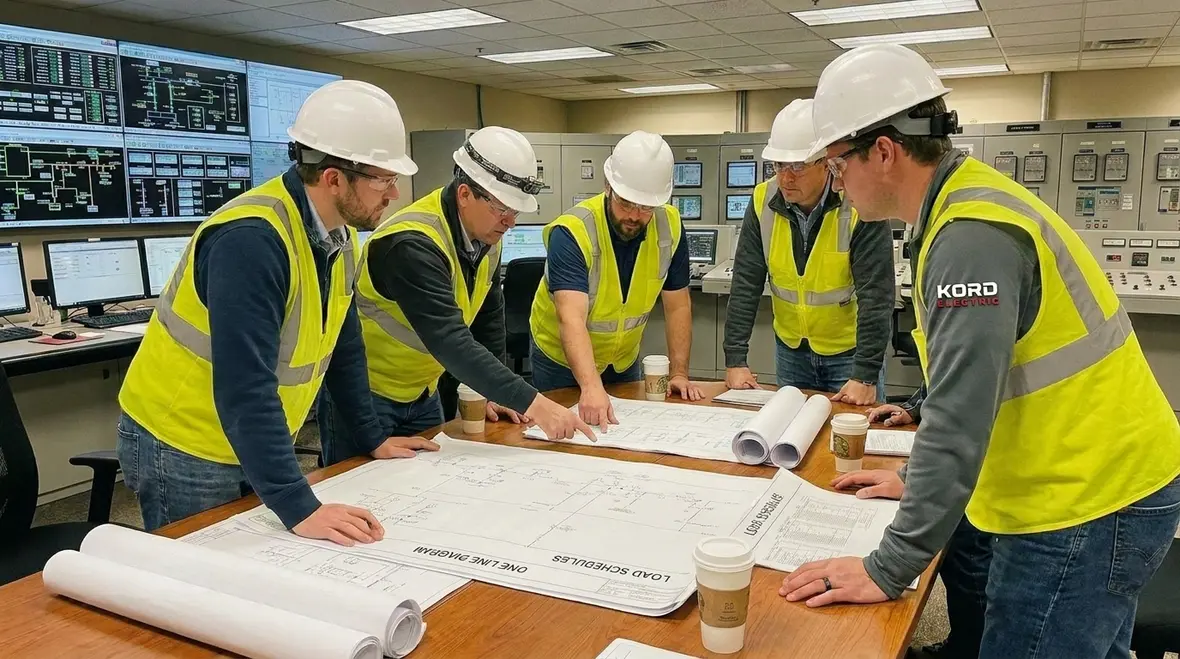
Others usually start with a single question: what fails first, and where will that failure hurt operations? We answer that by building the plan around facility reality. First, our team reviews electrical drawings, one line diagrams, load schedules, and equipment labels. Then we map critical loads like process systems, safety circuits, communication systems, and life safety features that support major property buildings.
Next, we classify loads by priority. For example, some loads must stay online for safe shutdown, others must run to protect inventory or maintain temperature control. Meanwhile, non critical loads get shed intentionally to protect the system. We do not guess. We model and verify based on available generator capacity, ATS switching behavior, and transfer time.
Then we define action paths. People do not need a novel in an emergency; they need a clear order of operations. Our technicians lay out who does what, how it happens, and what “success” looks like at each stage. And because reality loves plot twists, we add contingency steps for equipment that does not behave as expected.
Behind that structure is a simple goal: when power conditions shift, your teams are not improvising. They follow a tested roadmap that protects people, assets, and operations instead of gambling on guesswork.
We also tie this planning directly into ongoing electrical preventive maintenance so facility teams can catch weak points early. For a deeper look at how structured care supports reliability, Kord Electric explores this in their article on commercial and industrial electrical maintenance plans, which aligns closely with the Emergency Electrical Preparedness Plan approach.
What electrical threats should commercial sites plan for?
Facilities face more than one kind of trouble, and our approach covers them like a checklist that actually gets used. Weather and grid disturbances top the list. A storm can cause a utility outage, voltage sag, or a dirty power event. Meanwhile, equipment aging and human error remain steady villains in the story.
We also plan for faults and failures inside the building. A short circuit can stress switchgear, a relay can misoperate, and a motor can draw locked rotor current far longer than anyone wants. Additionally, we consider cyber and control system risks where applicable. Even if the “brain” of the electrical system is intact, the signals can still break.
To make this useful, we connect threats to consequences. If a feeder fails, what operations stop? If the generator starts late, what safety systems depend on it? By linking events to outcomes, others can justify decisions on redundancy, bypass rules, and load shedding logic without turning the budget into a magic trick.
This same mindset shows up whenever Kord Electric helps facilities investigate emergency power failures in commercial buildings. Understanding root causes turns random outages into solvable problems—and directly feeds into a stronger Emergency Electrical Preparedness Plan.

For property managers and facility teams, this threat mapping also supports insurance discussions and long-term capital planning. When everyone can see which failures hurt the most, it becomes easier to justify smart investments instead of rolling the dice on “we’ll deal with it when it breaks.”
How do we design roles, communication, and decision rules during outages?
An electrical plan only works when people can act quickly and consistently. Therefore, we build roles and decision rules into the Emergency Electrical Preparedness Plan so staff know how to move before they panic. Our technicians and expert service staff explain responsibilities in plain terms, then confirm that facility leadership, operations, and maintenance teams understand the steps.
We recommend a command structure with a clear leader, backup leader, and an assigned electrical coordinator. That coordinator directs switching activities, confirms operational status, and escalates issues. Meanwhile, the facility team manages equipment interfaces, production impacts, and customer or tenant communications when a major propertie building includes multiple stakeholders.
We also define decision triggers. For instance, when utility power fails, people should confirm ATS position, check generator start status, and verify critical load pickup within a set time window. If the generator fails to accept load, the rules shift toward manual load shedding or alternative powering methods. By creating decision points ahead of time, we reduce the “let’s all guess together” approach that sometimes sounds brave in training, until it is tested.
Communication matters, so we build a method that survives chaos. We include a call tree, a maintenance contact list, and a simple status update format. We even encourage practice drills with the same cadence that real emergencies use, because familiarity reduces mistakes.
When these elements tie into broader commercial electrical strategies—like those in Kord Electric’s article on hidden electrical risks in commercial buildings—teams gain not only a playbook for emergencies but also a deeper understanding of day-to-day vulnerabilities that can lead to those emergencies in the first place.

How do we verify critical loads, backup power, and protection settings?
Verification is where good plans become reliable plans. Kord Electric typically starts by identifying critical loads and reviewing how they connect to the system: transfer switches, panels, ATS logic, switchgear sections, UPS systems, and any microgrid elements if a facility uses them. Then we confirm that each critical load behaves as intended during utility loss.
We also validate backup power capability. That includes generator sizing, fuel capacity, startup sequence timing, and battery backup for control circuits. However, capacity on paper does not equal capacity in reality. Therefore, our expert service staff supports testing and readiness checks, including inspection of start permissives, breakers, and interlocks.
Protection settings get special attention too. Relays and protective devices must coordinate properly so faults clear without stripping power from critical loads. If settings drift with age or repairs, the plan falls apart under stress. We address this by reviewing coordination, documenting current settings, and aligning them with the facility’s load priorities.
Finally, we confirm that the plan includes practical constraints. For example, some loads cannot share startup surges. So we schedule load pickup order or design staged transfer logic. That is the difference between “the lights came back” and “the facility kept running the way it should.”
These same principles show up in services like electrical preventive maintenance programs, where coordinated testing, documentation, and follow-up help keep both everyday operations and the Emergency Electrical Preparedness Plan aligned with reality.
What should technicians include in testing, drills, and readiness checks?
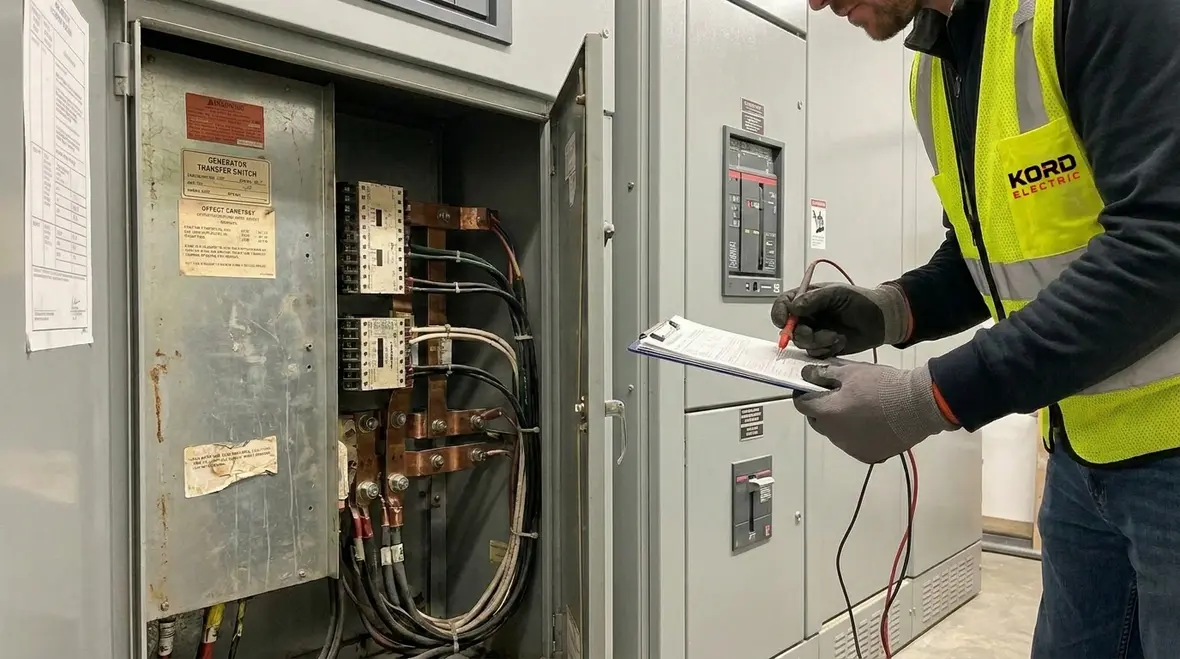
We treat testing and drills as a living part of the Emergency Electrical Preparedness Plan, not a yearly checkbox. Our technicians schedule readiness checks that match equipment risk and usage cycles. For switchgear, this can include inspection of cubicles, contact condition indicators, and breaker operation verification. For generators, it includes checks of fuel systems, alarms, cooling performance, and control functionality.
Then we test operational steps. During drills, the facility team practices switching and status verification using the same roles defined earlier. We also practice communication steps, because a correct action done too late is still the wrong outcome. If someone forgets the manual override location, it will show up during the drill, not during the emergency. And honestly, we would rather embarrass a plan in training than in the middle of a utility outage.
We document results and update the plan based on findings. If a load takes longer than expected to stabilize, we adjust pickup timing rules. If a control interface behaves unexpectedly, we note the workaround and plan for corrective action. This feedback loop keeps the Emergency Electrical Preparedness Plan aligned with the real facility.
Also, we plan for change. New tenants, renovated spaces, and equipment swaps can quietly change electrical behavior. Therefore, we recommend periodic reviews after major projects, ensuring critical load lists remain accurate.
For many commercial properties, these drills pair naturally with broader initiatives like electrical safety compliance for small businesses, where tenant behavior, maintenance practices, and emergency procedures all intersect.
How do we keep the plan current for major property buildings?
Major propertie buildings run on change. New equipment arrives, contractors modify panels, and schedules evolve. So we keep the plan current by building it into normal maintenance and project workflows. When others install new critical loads, the plan updates through a review process that checks load priority, transfer behavior, and protection coordination.
We also maintain documentation that staff can actually use under stress. That means clear labeling, updated one line diagrams, and quick access to contact information and switching instructions. Our approach favors simplicity. A plan that requires decoding is a plan that wastes time.
Training stays current too. Our expert service staff can provide refresher sessions so facility teams understand what changed and what remains the same. In addition, we encourage tabletop scenarios that reflect the facility’s actual operations, such as production shutdown needs, temperature sensitive inventory, or life safety support in complex environments.
Finally, we ensure the plan aligns with any applicable standards and the facility’s internal safety requirements. We do this to reduce confusion and help staff act with confidence, not guesswork.
As properties grow or shift use, many facility leaders also explore broader upgrades with Kord Electric’s Los Angeles County electrical services for commercial and industrial facilities, aligning long-term improvements with the same disciplined thinking that drives their Emergency Electrical Preparedness Plan.
FAQ
Ready to strengthen electrical emergency readiness?
Others can write a plan, but only careful verification and training make it work. If your commercial or industrial facility needs a clear, tested approach, Kord Electric will help build and maintain an Emergency Electrical Preparedness Plan that your teams can use under pressure. Our technicians and expert service staff walk your staff through roles, load priorities, and readiness checks, then update the plan as your facility changes. Call us today to schedule a planning review and next-step testing support.
If your operations also rely on long-term system upgrades, lighting improvements, or dedicated maintenance programs, our team can align your Emergency Electrical Preparedness Plan with services like electrical preventive maintenance so everyday reliability and emergency readiness move in the same direction.
For facility leaders across the region, partnering with Kord Electric’s Los Angeles County electrical services provides a single, integrated path from routine service to emergency planning—helping your team prepare for the outages you can predict and the ones you cannot.