Commercial Electrical Grounding Requirements Guide
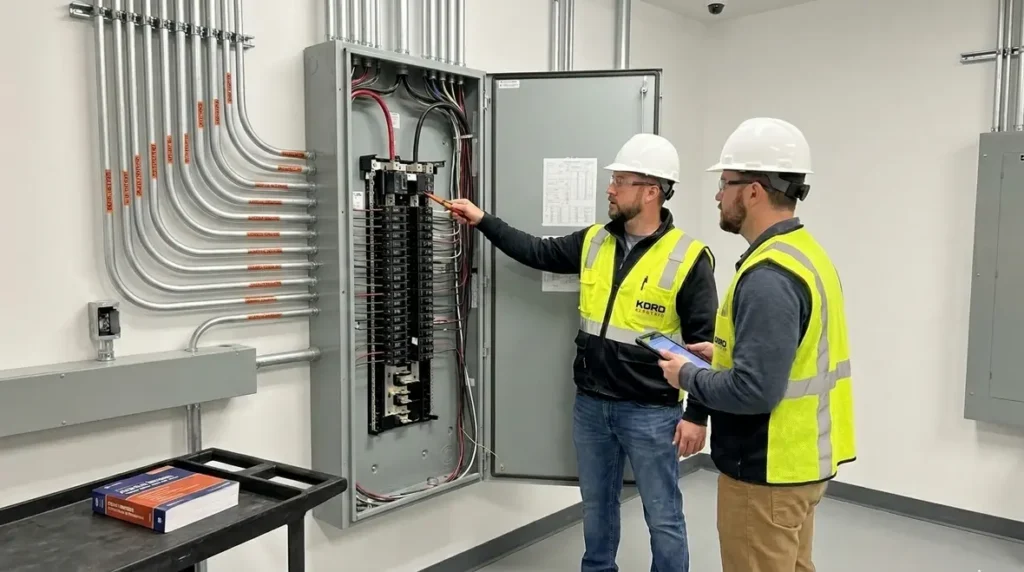
Kord Electric helps commercial and industrial facilities meet code grade safety by following commercial electrical grounding requirements that protect people, equipment, and operations. In the first place, proper grounding reduces shock risk and helps clearing devices trip fast when faults happen. Next, it supports surge control so sensitive systems do not act like they have stage fright during lightning events. Then, it creates a reliable path for fault current so breakers and fuses do their job, instead of quietly failing behind the scenes. Kord Electric technicians also explain these rules in plain language, because vague wording and “trust us” are great for magic tricks, but terrible for electrical safety.
Why commercial grounding requirements matter for real buildings
In commercial and industrial settings, grounding is not a checkbox. It is the backbone of electrical safety. When a conductor becomes energized due to insulation damage, moisture, or mechanical stress, the grounding system gives the fault current a low resistance path. As a result, protective devices clear the fault quickly. That means less heat, less arcing, and less downtime. Meanwhile, equipment stays more stable, and building systems behave like they are supposed to, even when the unexpected shows up.
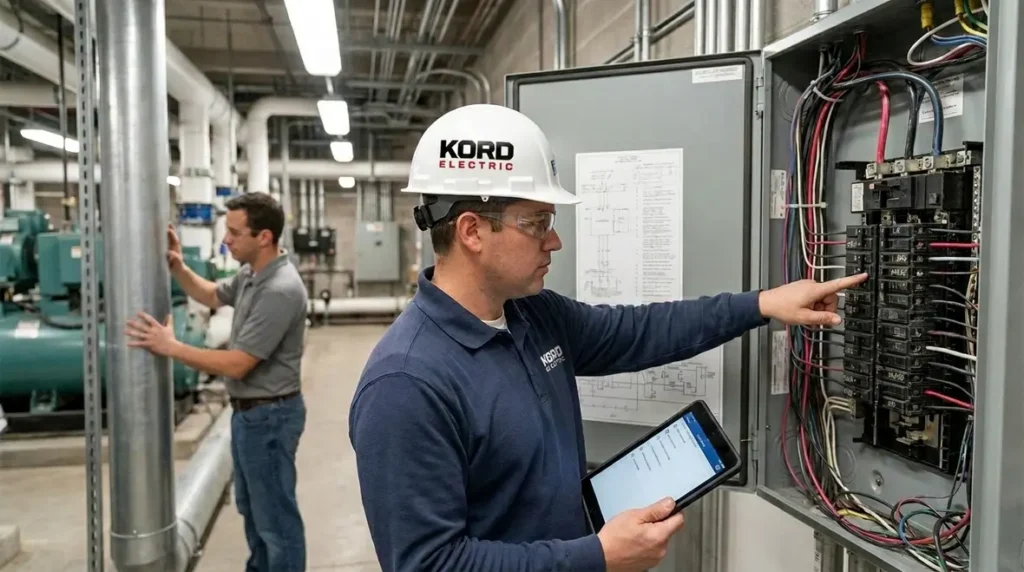
Kord Electric’s expert service staff often tells facility managers the same truth: without a well designed grounding approach, you can pass inspections while still living with hidden risk. So, we review how power feeds connect, how bonding is performed, and how equipment frames tie into the grounding network. We also confirm that grounding conductors handle the actual fault current paths, not just the values on a form.
Grounding vs bonding: the difference that keeps crews safe
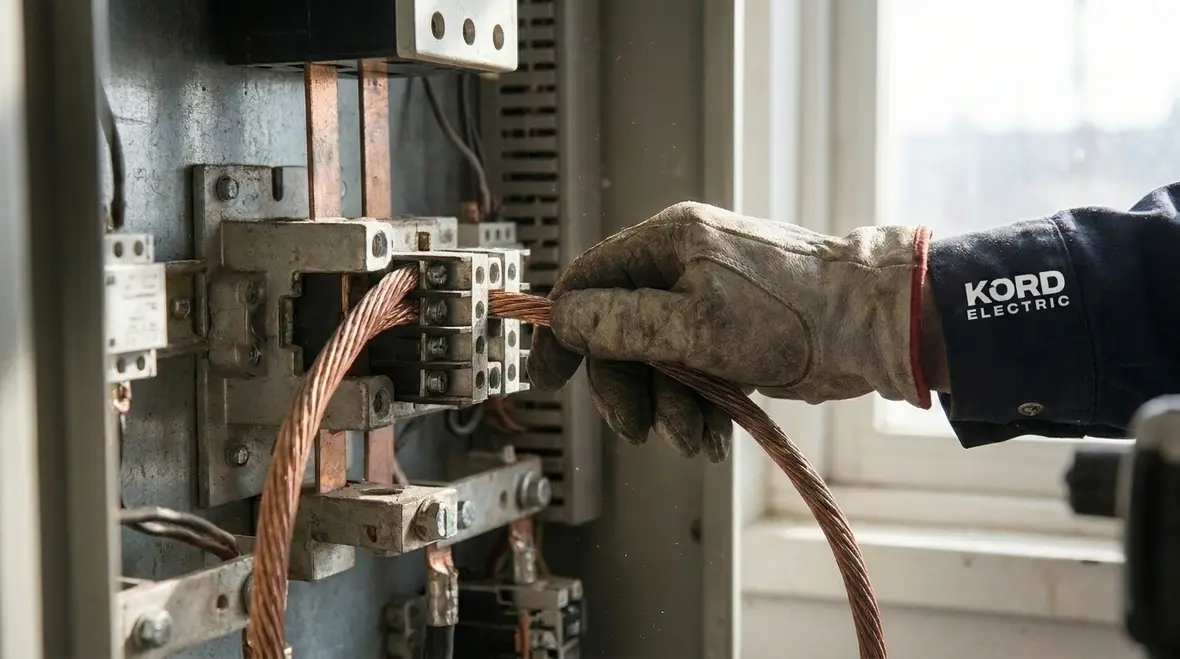
Many people mix up grounding and bonding, and honestly, it happens because the words sound related. However, they do different jobs. Grounding connects an electrical system to the earth or to a grounding electrode system. Bonding connects metal parts together so they maintain the same electrical potential. In other words, bonding reduces differences in voltage between conductive parts.
At Kord Electric, our technicians explain it this way: grounding aims to control where current goes during a fault, while bonding aims to keep metal parts from becoming different “voltage islands.” When bonding gets skipped, a person can unknowingly become the path between two potentials, especially in wet areas or near equipment with multiple metal connections.
To make this real, we look at typical building areas. Switchgear, service equipment, HVAC units, metal raceways, and piping systems often share bonding responsibilities. Then, we verify that fasteners, clamps, and connections remain conductive over time. Corrosion, paint, and loose hardware can undo an otherwise correct design. Therefore, we do not just look at the plan; we inspect the installed workmanship that supports safe commercial electrical grounding requirements.
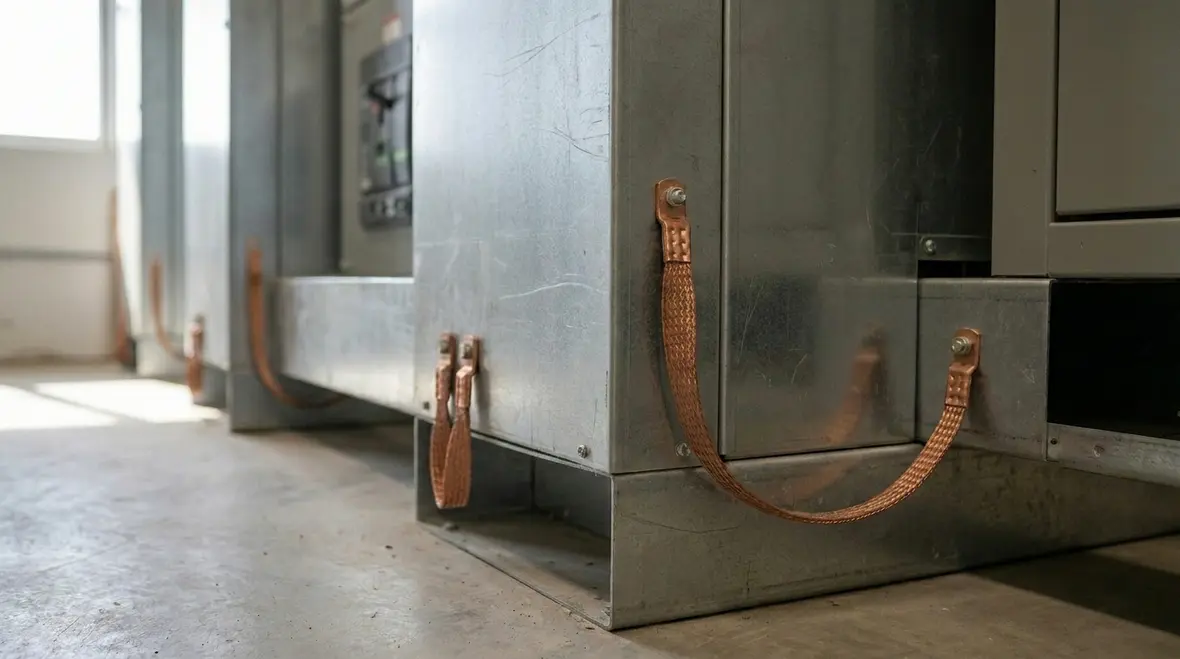
Where the grounding system takes shape
Commercial and industrial facilities use multiple layers of grounding components. The system often includes grounding electrodes, grounding conductors, and bonding jumpers that tie together equipment and metal structures. Additionally, you may see grounding connections that support lightning protection interfaces and surge protective devices. Each layer must coordinate. If not, the weakest connection becomes the weak link, and that is when headaches start.
Kord Electric maps these connections during our field reviews. For example, we look for proper bonding at services, subpanels, feeders, and branch circuits. We also examine how grounding conductors route through conduits and raceways, and whether any splices follow acceptable practices. Next, we check whether the facility’s electrical rooms and equipment pads share a consistent grounding pathway.
In older buildings, we often find that ground connections exist, but they are incomplete or inconsistent across sections. Then the grounding system behaves like a patchwork quilt. It may look fine from a distance, but during a fault event, uneven paths can increase shock hazard and prevent reliable clearing. Our technicians fix that by verifying continuity and proper connection methods, rather than just adding another wire and hoping for the best.
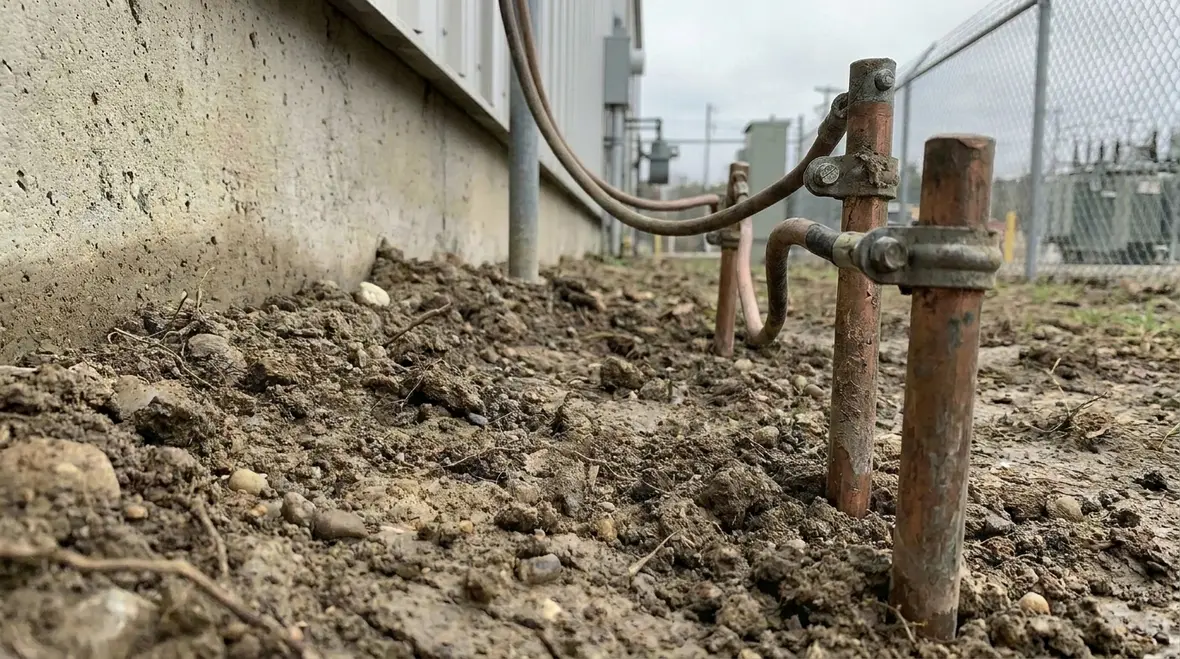
Installations that inspectors and engineers expect
Code compliance in a commercial environment requires more than a “ground wire somewhere.” It requires correct sizing, correct routing, correct connection practices, and correct bonding points. Kord Electric’s expert service staff walks through the reasoning behind these expectations so your team understands what we do and why it matters.
We focus on the details that hold up in the real world. Grounding conductors must remain protected from physical damage and routed in ways that reduce damage risk. Bonding must maintain low impedance paths. Equipment enclosures need secure bonding. Also, metal raceways that act as part of the grounding path must remain continuous as the system extends through the building.
Next, we pay attention to common commercial conditions that affect grounding performance. Moisture in loading docks and mechanical rooms can accelerate corrosion. Vibration from industrial equipment can loosen connections. Renovations can introduce new panels and raceways without restoring bonding continuity. In those cases, we verify and re establish connections so the grounding network stays stable after construction changes.
And yes, we have seen situations where someone “cleaned up” an electrical cabinet by painting over bonding points. It looks tidy. It also breaks conductivity. If that sounds like a sitcom plot, that is because it is. Unfortunately, the punchline is safety risk, not laughter.
Common grounding failures in commercial facilities
Even well run facilities can drift over time. Therefore, Kord Electric helps teams identify risks before they become incidents. One frequent failure involves missing or incorrect bonding at equipment frames. Another involves ground continuity issues created by replacement parts that do not match original connection methods. A third involves corrosion at clamps or connection points, especially in areas with humidity or chemical exposure.
We also see problems after renovations. When contractors add circuits, relocate panels, or extend raceways, they may overlook how metal systems connect. As a result, the grounding network can become segmented. During a fault, segmented paths can increase voltage differences across exposed metal and prolong how long protective devices take to clear.
To prevent those outcomes, our technicians conduct targeted inspections. They verify bonding coverage, confirm grounding conductor integrity, and check that connections remain secure. They also review whether the facility’s grounding system supports surge protective devices and lightning protection interfaces where applicable. When systems coordinate, faults get cleared faster and equipment stays safer.
Testing and documentation that reduce future risk
Grounding performance does not stop when the last cable is pulled. Testing and documentation keep the system trustworthy. Kord Electric supports clients by explaining what tests reveal and how the results connect to day to day safety. We also help teams understand what maintenance should look like after installation.
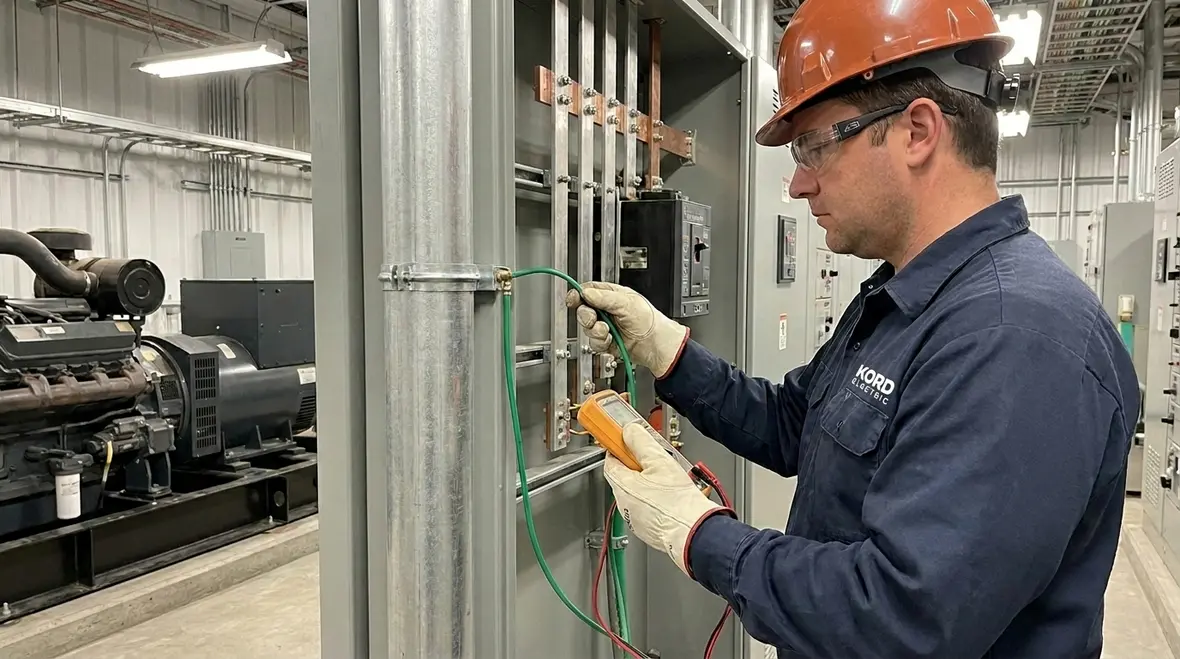
During commissioning or follow up reviews, our expert service staff confirms continuity, verifies connection quality, and checks that grounding paths remain intact through the building. If resistance related checks apply for a specific site condition, we support the evaluation needed to validate performance. Then we produce clear records that help facility staff, engineers, and maintenance teams track the grounding system over time.
That documentation matters because commercial properties evolve. New tenants arrive. Equipment gets replaced. Areas get remodeled. Without records, teams waste time guessing, and guessing costs money. With records, teams can act quickly and safely, which keeps operations stable and reduces surprises.
If your team is also reviewing larger electrical safety expectations, resources such as NFPA 70 code explanations and NFPA 70B electrical equipment maintenance guides from Kord Electric and its partners help connect commercial electrical grounding requirements to the broader safety picture.
For example, guides like the NFPA 70 code overview for 2026 and the NFPA 70B electrical panels and switchgear maintenance article show how grounding, bonding, and maintenance expectations fit together across commercial and industrial facilities.
Maintenance practices that keep the grounding network dependable
Commercial grounding work fails most often due to neglect, not malice. That is why maintenance matters. Kord Electric recommends periodic inspections that focus on bonding points, conductor condition, and connection security. We also suggest that facility staff include grounding checks in routine electrical cabinet reviews, especially after any construction activity.
Technicians pay attention to visible indicators too. Loose hardware, corrosion buildup, damaged insulation, and missing clamps often show up before a fault does. Furthermore, we advise teams to avoid “temporary fixes” that never get converted into code compliant upgrades. Temporary fixes become permanent, and they tend to fail at the worst possible moment. Think of it like leaving a battery in a drawer and expecting it to power a smoke detector. It will, just not reliably.
Kord Electric works with commercial and industrial facilities on maintenance planning that matches their operating schedules. Therefore, we coordinate visits so they do not disrupt production. We also train staff on what to look for so early warning signs get caught sooner. Often, that training pairs naturally with broader commercial and industrial electrical maintenance plans that already include grounding integrity checks alongside panel and switchgear inspections.
FAQ
Call Kord Electric for dependable grounding work
If you manage a commercial or industrial facility, you should not gamble with electrical safety. Kord Electric’s technicians and expert service staff explain the process clearly, then install and verify grounding with the precision your building deserves. We help you meet commercial electrical grounding requirements, protect equipment, and reduce fault risk so operations run smoothly. Contact us today to schedule an assessment, plan upgrades, or review grounding after renovations. You bring the schedule. We bring the calm, code minded execution.
When your team is ready to move from reading to action, related services such as voltage fluctuation diagnosis and repair and broader rewiring cost planning for commercial electrical systems help align grounding, load capacity, and long term reliability across the entire facility.
If you are looking for a direct service path rather than just educational material, Kord Electric’s specialized offerings for issues such as unstable voltage, overloaded panels, or aging distribution gear connect seamlessly with grounding and bonding upgrades so the whole system works as one.
For buildings facing wider power quality issues, the dedicated Voltage Fluctuations in Commercial & Industrial Facilities service page provides a focused path to request diagnostics, corrective design, and installations that often include grounding improvements as part of a complete solution.