Warehouse Lighting Energy Efficiency and ROI
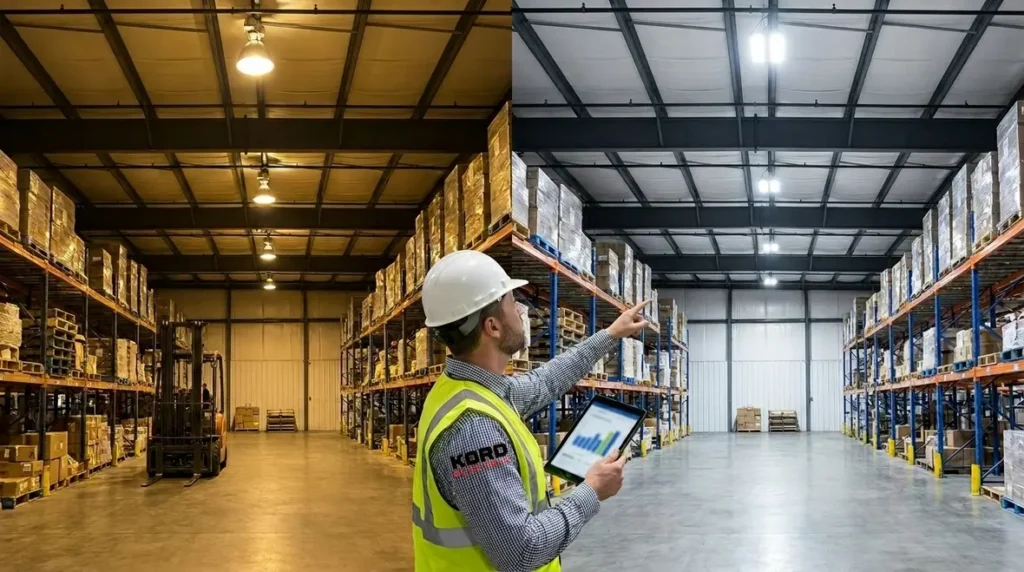
Warehouse Lighting Energy Efficiency is not a buzzword to us at Kord Electric, it is a practical way to cut operating costs without hurting safety or productivity. When we help commercial and industrial facilities upgrade older fixtures, we focus on real results: lower energy use, steadier light levels, fewer maintenance calls, and a faster path to ROI. In other words, we improve the way your facility works, not just the way it looks. And yes, we also make sure the upgrade does not turn into a “surprise party” with unexpected wiring issues. Our expert service staff, and the technicians behind the scenes, explain each step so your team knows what is happening and why.
What drives ROI in warehouse lighting upgrades?
When a facility owner asks about ROI, we look at more than the price on the invoice. We build ROI from several levers that move together. First, energy savings usually come from switching to LEDs and using better controls. Then, maintenance costs drop when lamps last longer and fixtures require less frequent replacement. However, the biggest gains often come from planning the upgrade so the light you get matches the tasks you do.
To put it simply, a warehouse is not one uniform space. Receiving bays need safe, even light. Packing areas need clear visibility for labels and barcodes. A high rack storage zone needs glare control so workers can see without strain. Therefore, if you only replace fixtures without addressing layout and mounting height, you may save energy but still miss performance targets, and that can delay payback.
We also account for how your hours and operating schedules affect savings. Many facilities run long shifts, so small efficiency differences can add up. Meanwhile, good controls like occupancy sensing and time scheduling can reduce energy use during low activity periods. In short, ROI comes from the full system, not a single part.
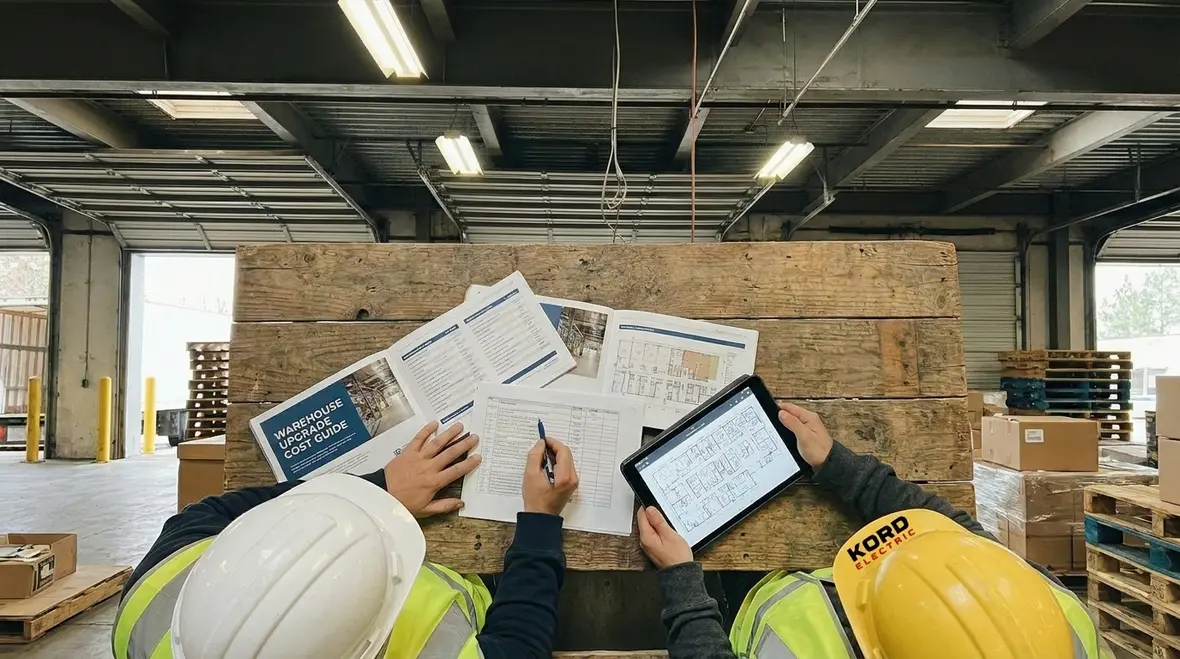
When we plan Warehouse Lighting Energy Efficiency upgrades, we also pay attention to standards and guidance that shape commercial lighting projects across California and beyond. For example, many facility teams review ROI, energy codes, and layout choices together instead of in isolation. Resources like our California Title 24 Lighting Retrofit ROI Guide and our deep dive on industrial lighting layout optimization for efficiency help connect efficiency, compliance, and real world performance into a single, practical conversation about ROI.
How we evaluate your current lighting before we touch a switch
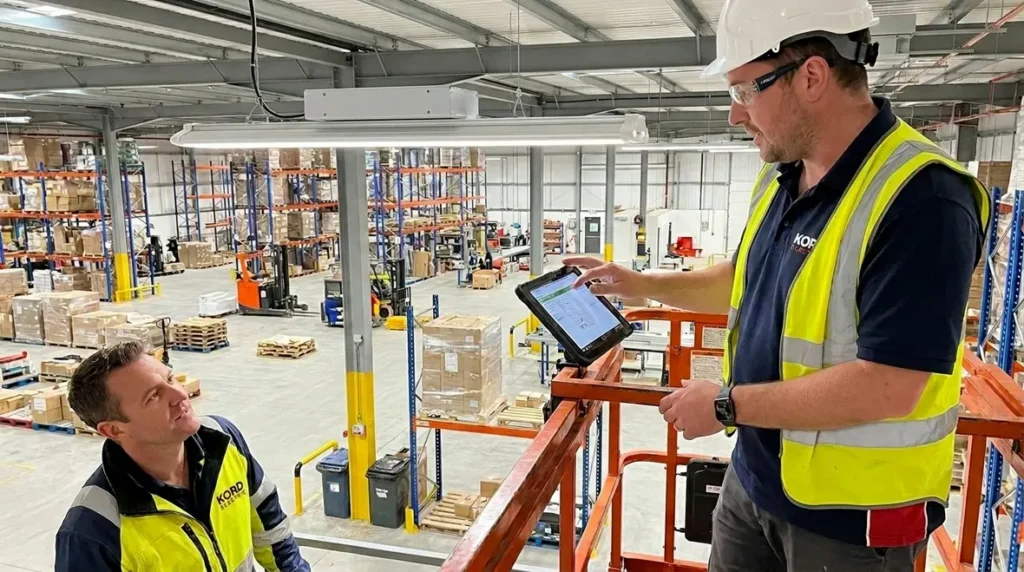
Before we recommend anything, our team audits the existing setup. In practice, this means we map fixture types, wattage, spacing, and driver or ballast age. Additionally, we check for common problems like uneven coverage, flicker, and dark spots that can reduce worker accuracy and safety. Because warehouse accidents are expensive, we treat lighting performance as a safety feature, not a nice-to-have.
We also review controls and wiring. If your current system uses outdated switches, no dimming capability, or inconsistent control zones, then a simple fixture swap may not maximize energy savings. Therefore, our technicians explain what can be improved now versus later, so you can phase the project without wasting money.
At this stage, we set clear targets that matter to commercial and industrial buildings. We focus on maintaining light levels where people work, reducing glare near aisles, and keeping performance stable across seasons. Then, we confirm the upgrade plan aligns with your facility’s workflow. If your crew works at night, or your process requires frequent inspection, we design with that reality in mind.
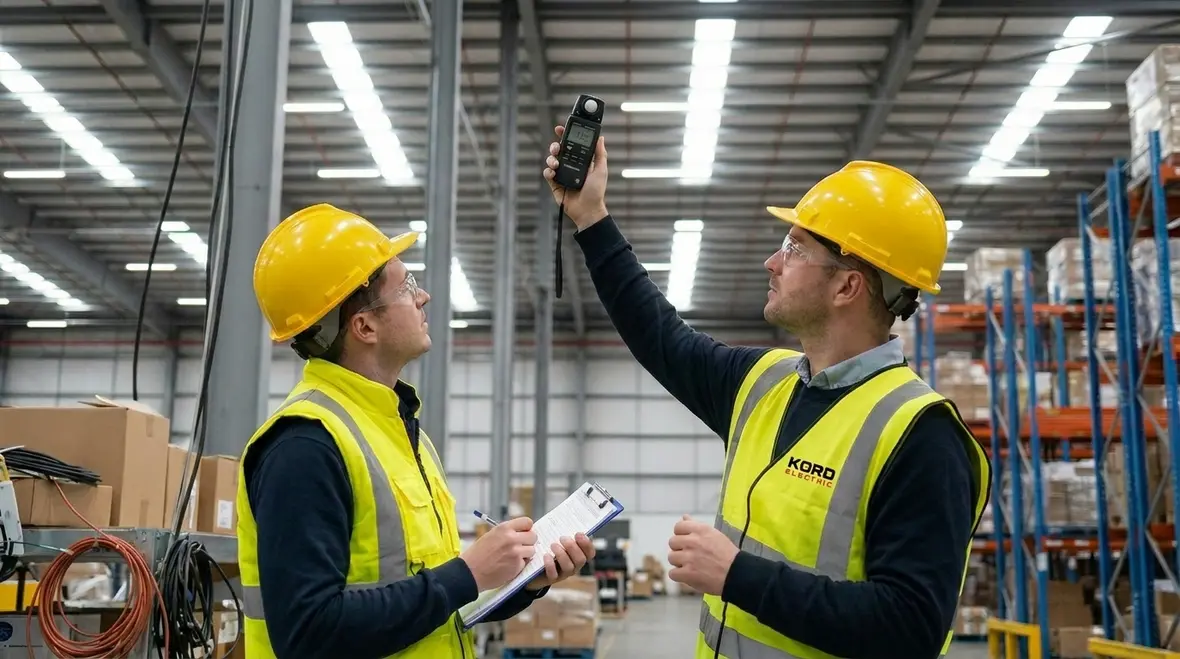
Sometimes, this evaluation uncovers code or documentation gaps that could affect your timeline. When that happens, we connect Warehouse Lighting Energy Efficiency planning with resources like our Lighting Installation Code Compliance Guide and Commercial Lighting Compliance in California. That way, you can see how inspection requirements, controls, and performance standards fit into a single, realistic upgrade roadmap instead of a stack of surprise change orders.
What is the real cost of a lighting upgrade and how do we plan for it?
Cost is where things get tricky, because many vendors lead with fixture pricing and skip the details that control the total budget. We use our commercial lighting upgrade cost guide as a baseline, and we apply it to your facility so it stays accurate. You can view the guide here: Commercial Lighting Upgrade Cost Guide.
In our experience, upgrade costs depend on things like fixture count, electrical work needs, ceiling height, and whether controls or wiring upgrades are required. Some buildings have clean retrofit paths. Others have older panels, mixed fixture types, or wiring that needs updates before the new system can run reliably. Moreover, an upgrade that ignores those conditions can stretch timelines, which hurts ROI. Nobody wants to find out the hard way that “quick and easy” was just a marketing line, like “limited time offer” before your accountant sighs.
To plan well, we break the scope into phases. For instance, we may upgrade high use zones first, then tackle remaining areas once we confirm savings and performance. We also coordinate with facility managers to schedule work during low traffic times so operations keep moving. In this way, your ROI does not wait for the full project to finish.

When facility teams want a broader view of budget planning beyond lighting alone, they often review resources like our Electrician Cost LOS Guide for Commercial Facilities. Pairing that kind of financial context with dedicated Warehouse Lighting Energy Efficiency planning helps keep both capital budgets and operating budgets grounded in reality instead of guesswork.
Which upgrade choices maximize energy use reduction?
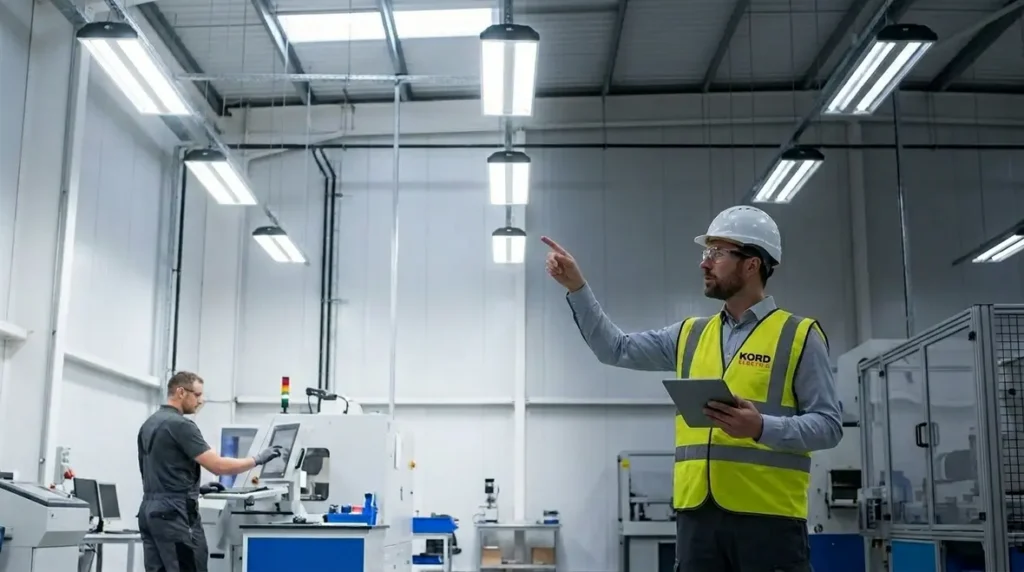
LED fixtures help, but the smartest upgrades stack efficiency. First, we consider lumen output and distribution. If light lands where you need it, your system works harder and waste less energy. Second, we look at color and glare performance. For warehouses, comfortable, uniform lighting improves task speed and reduces eye strain, which can translate into better output and fewer errors.
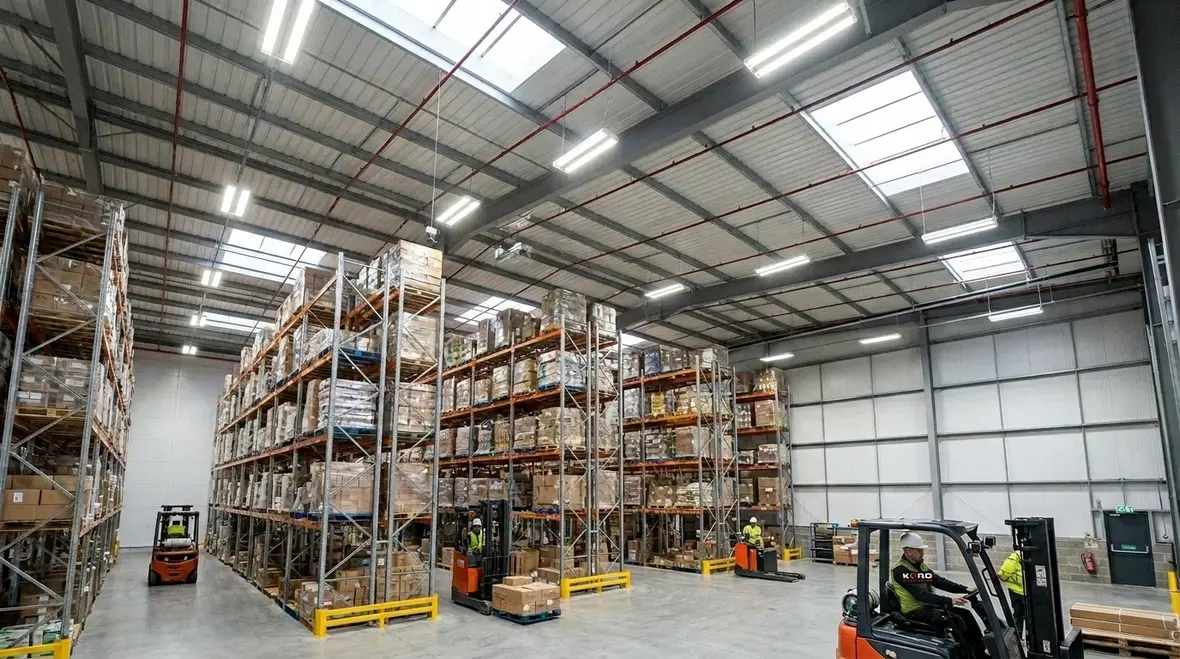
Next, we recommend controls that match real activity. Dimming works especially well in large facilities where usage changes by time of day. Occupancy sensors help in zones where people rarely stay. Additionally, daylight harvesting can reduce run time near skylights or exterior walls. As a result, your energy savings follow your operations, not some generic “one size fits all” idea.
We also design control zones to prevent “lights are on because the system forgot” scenarios. If your layout has long aisles, or your building has multiple temperature zones, controls should align with those areas. That way, your Warehouse Lighting Energy Efficiency goals do not get trapped in the wrong wiring logic.
Finally, we plan for long life and stable performance. LEDs can last for years, but only if drivers and installation match the environment. Dust, heat, and vibration affect performance. Therefore, our technicians select appropriate fixtures and installation methods for industrial conditions. We do not guess. We verify and explain.
In many projects, we also connect Warehouse Lighting Energy Efficiency with broader system performance. For example, facilities exploring airflow or comfort upgrades often review how lighting, fans, and controls interact. Our guide on commercial and industrial ceiling fan installation shows how coordinated planning can support both comfort and energy savings under the same roof.
How experienced technicians reduce downtime and protect ROI
ROI depends on uptime. When a facility loses hours due to electrical problems, rework, or bad install decisions, savings can get delayed. At Kord Electric, our service team focuses on safe installation and clean integration. We review existing circuits, verify compatibility, and then test key parts before the system goes live.
Because warehouses run on schedules, we build a plan that protects operations. We stage materials, confirm access points, and coordinate with your site lead. Then, we install in a way that reduces disruption to traffic routes and staging areas. If a task requires lockout and tagout, we follow it, and we document it. That is not just policy. It is how we keep your upgrade from becoming a “we will start tomorrow” problem.
Our experts also explain what they find during the audit, what they change during install, and how to use the controls after commissioning. That matters because controls can be misused. If your team does not understand how scheduling and dimming work, the system may operate less efficiently than intended. So we keep the learning simple and practical, like walking someone through a streaming app instead of handing them a manual written for engineers.
To keep that uptime focus grounded, we often connect Warehouse Lighting Energy Efficiency projects with broader reliability planning. Articles like our guide to emergency power failures in commercial buildings and our Lighting Installation Services page show how resilient power distribution and well designed lighting systems work together to protect operations.
Best practices for phasing upgrades across a large facility
Many facilities cannot shut down all at once. Therefore, phasing often makes the most sense. We recommend starting with the highest impact areas such as packing, picking, and loading docks, where light quality and task performance matter most. Next, we move into mid impact zones and finish with low activity areas. This approach keeps operational value steady while you capture early savings.
To avoid confusion, we define a clear scope for each phase. That includes what fixtures and controls will change, which circuits will be affected, and how your team should expect the light levels to behave during work hours. Then, we run commissioning checks so you can confirm performance in real conditions.
We also suggest tracking results. After installation, we help clients review energy trends and verify that controls behave as planned. If a sensor triggers more often than expected, we adjust the setup. If dimming schedules do not match shift patterns, we refine the settings. Over time, that fine tuning supports Warehouse Lighting Energy Efficiency and keeps payback on track.
For many properties, phasing is also the perfect time to align Warehouse Lighting Energy Efficiency goals with current codes. Our resources on California Commercial Title 24 Lighting compliance and the California Commercial Lighting Code Guide for 2026 help teams schedule upgrades so each phase moves you closer to full compliance instead of creating a patchwork of old and new requirements.
FAQ
Ready to improve ROI with a smarter lighting plan?
If you want strong ROI, you need more than “replace fixtures and hope.” At Kord Electric, we audit your current system, explain the findings clearly, and install a lighting upgrade that fits how your warehouse actually runs. Then, our technicians help you dial in controls so savings start quickly and stay consistent. If you are ready to cut energy costs, reduce maintenance, and improve safety, contact Kord Electric today and we will help you map the best upgrade path for your facility.
If you want to explore related projects beyond Warehouse Lighting Energy Efficiency, you can review our dedicated Lighting Installation Services page. There, we outline how our commercial and industrial lighting team designs, installs, and commissions systems for warehouses, campuses, factories, and other large scale facilities with long term performance, safety, and efficiency in mind.
For facility managers still weighing upgrade options, pairing this article with our Commercial Lighting Upgrade Cost Guide can help you compare budget, expected savings, and payback across different retrofit strategies before committing to a full site rollout.