Commercial EV Charger Rebates California Guide
Kord Electric often gets asked about commercial ev charger rebates california like it is a single pot of gold at the end of a long parking-lot rainbow. We get it. EV adoption is moving fast, and commercial property owners want to add charging without guessing, hoping, or paying more than they should. In this guide, we walk through how rebates typically work for commercial and industrial facilities and major property buildings across California. Then we explain what owners, facilities managers, and developers must prepare so the process does not turn into a never ending quest like trying to fix Wi Fi in a conference room.
What commercial property owners should know first about rebates
In California, charging incentives often reward businesses that install EV infrastructure at the right sites and with the right level of planning. However, rebates do not exist in a vacuum. They usually depend on utility programs, funding cycles, and charger specs, which means timing matters. Therefore, Kord Electric recommends starting with a site plan before choosing equipment. Our technicians and expert service staff help you map out where chargers go, how many ports you need now, and how you can expand later without ripping up the whole property.
In other words, a rebate is not just a check. It is a structured process. And if the paperwork does not match the installation, you can end up with delays or a denied claim. We make sure the electrical design and documentation align with the incentive requirements.

Which California commercial programs affect EV charging incentives
Because the rules vary by location and utility service area, commercial incentives can come from multiple sources. Often, programs include utility managed rebates, rate based incentives, and sometimes state linked initiatives. Even when the goal stays the same, the requirements can change from one territory to another. Consequently, “one size fits all” advice does not serve commercial and industrial facilities well.
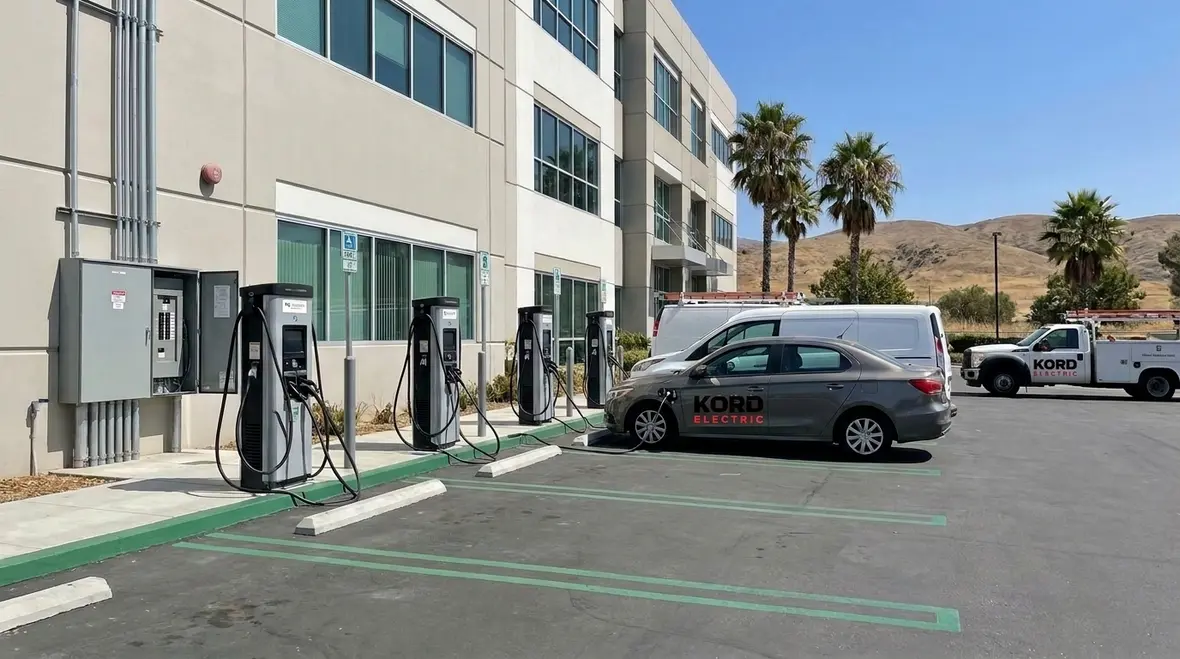
We also see property owners mix up programs that target homes with programs that target businesses. Kord Electric only targets commercial and industrial facilities and major property buildings. So we focus on the application path that fits parking structures, fleets, workplace charging, and multi tenant sites.
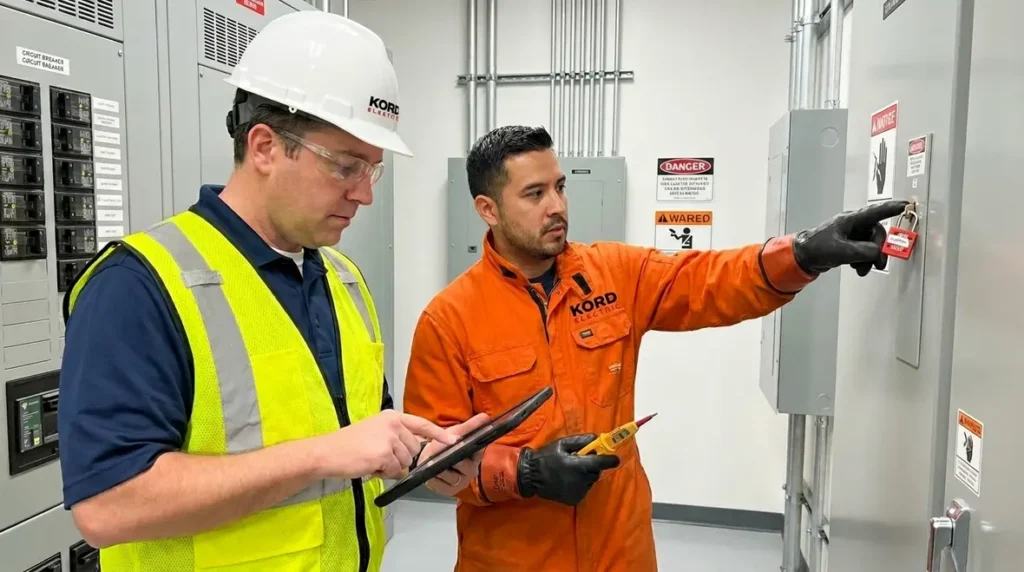
Our expert team typically begins by confirming the service area, reviewing the meter setup, and checking panel capacity. Then we align the charger layout with what the incentive expects. If a program requires specific installation details, we do not leave that to chance.
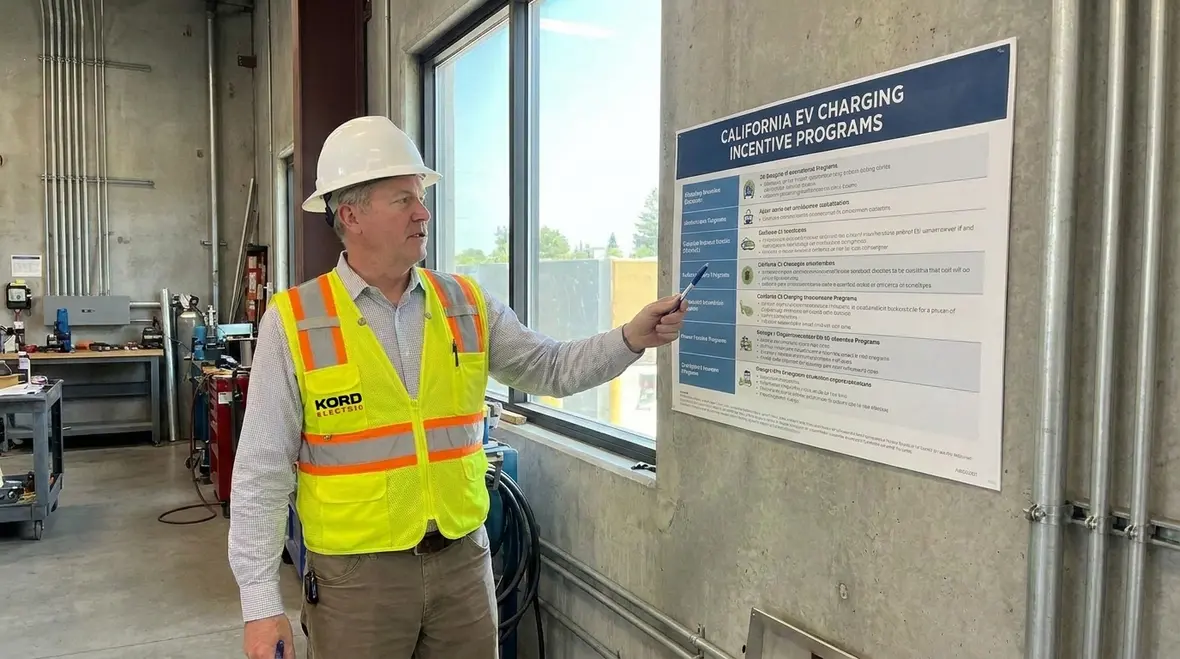
How to choose chargers that match rebate requirements and real demand
Rebates in California usually care about the chargers you install, not just the fact that you installed “something.” Therefore, property owners must choose equipment that meets performance and installation standards. In practice, this means looking at power levels, connector types, uptime goals, and whether the installation supports the site’s current electrical capacity.
Here is the part most people skip, then regret later: load planning. For a commercial property, it is not enough to put chargers in the lot. You must ensure the building can support them day after day. If demand spikes during peak hours, you need enough headroom. Otherwise, your chargers underperform, drivers wait, and your chargers become a parking ornament, which is not a good business strategy.
Kord Electric evaluates your site conditions and designs with growth in mind. Our technicians explain the options clearly, step by step, so your team understands what gets installed, why it fits the electrical system, and how it supports fleet or customer charging. We also help ensure the charger installation method matches typical rebate documentation needs. For a deeper dive into incentive strategy, you can also review Kord Electric’s dedicated guide to EV charger rebates California for commercial properties, which connects planning decisions with real-world incentive timelines.
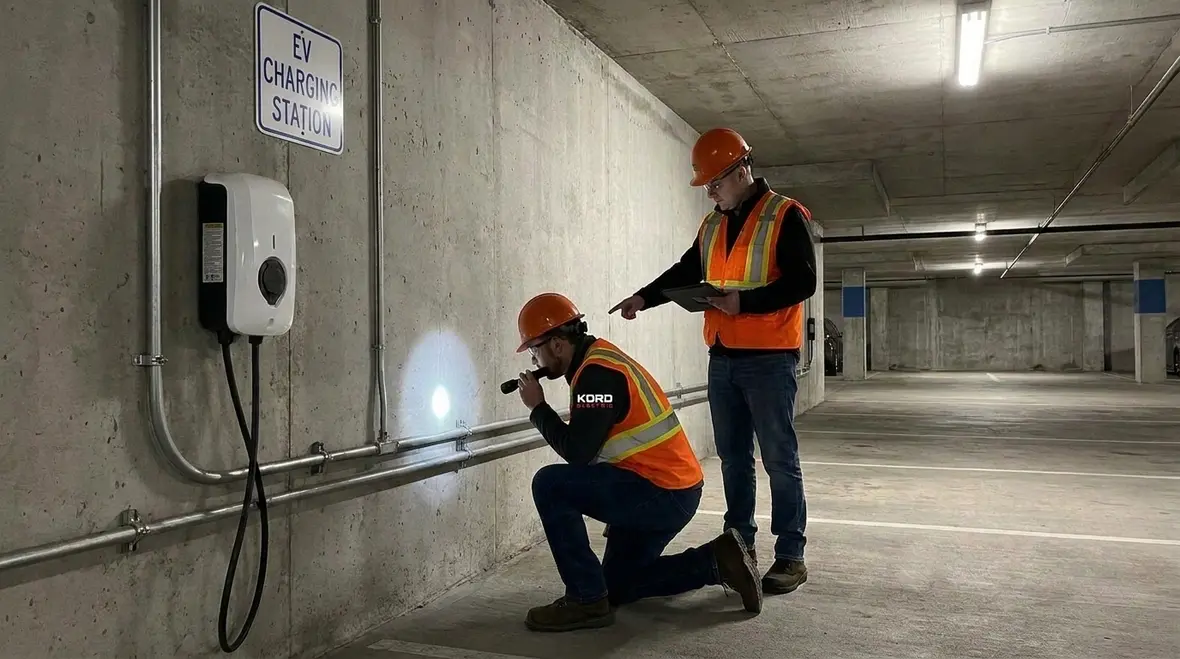
Site readiness checklist for commercial EV chargers in California
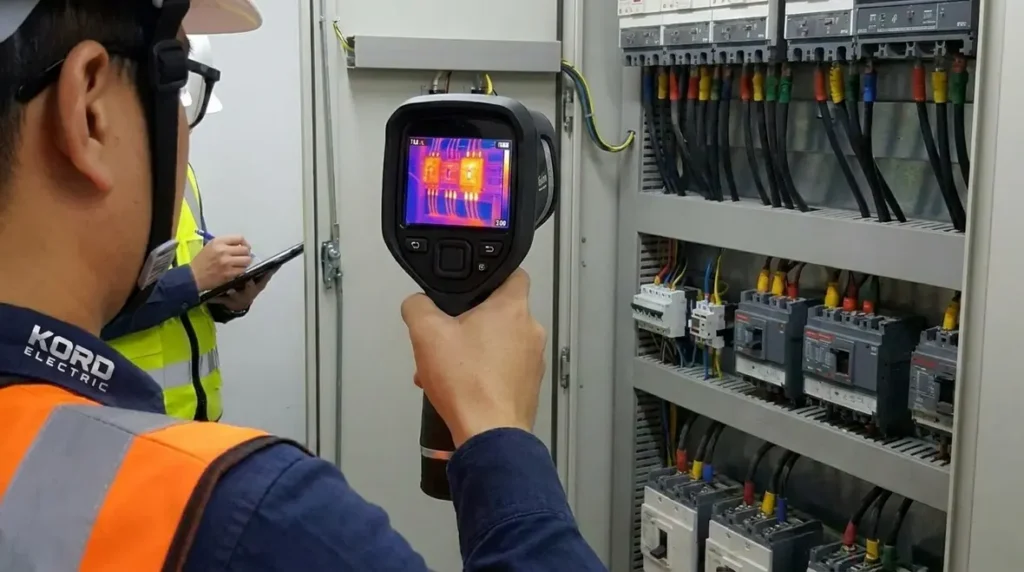
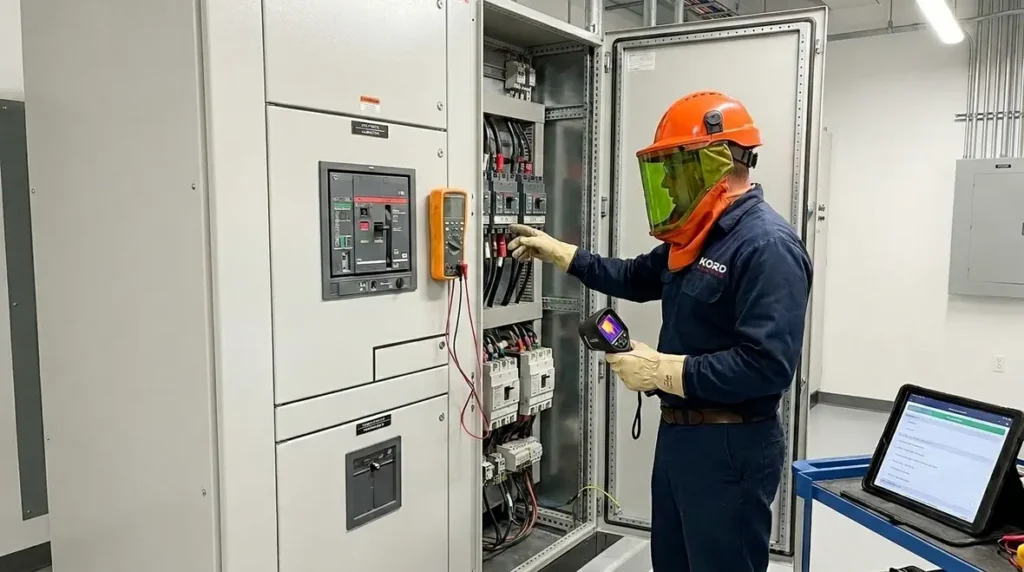
Before applications move forward, the site needs to be ready. That means more than a free parking spot. It includes electrical capacity, conduit routing, grounding, signage, and access for maintenance. Additionally, many incentive workflows require accurate records like equipment details, installation dates, and contractor information.
Our service staff often helps owners gather the right information early. We recommend treating site readiness like a preflight checklist. When you do this, you avoid the delays that come from missing photos, incomplete specs, or installations that require corrections.
Below is a practical checklist Kord Electric commonly uses for commercial and industrial facilities and major property buildings:
- Utility and meter review to confirm available capacity and any service upgrades needed
- Electrical one line and load calculations to prevent surprises during permitting
- Charger location plan including cable routes, bollards, and vehicle access
- Signage and safety requirements aligned with commercial site rules
- Documentation preparation including equipment model numbers and installation records
- Timeline planning to match rebate submission windows
Also, we remind owners that permitting schedules can move slower than people expect. It is like scheduling a blockbuster movie premiere. Everyone wants it on the calendar, yet the building department sets the pace.
What documentation and timelines usually look like
Rebates can reward speed, but only when the work is correct. Commercial incentive workflows generally follow a pattern: application intake, equipment and install approval or verification steps, then submission of final documentation. However, timelines vary based on funding status and utility processes. Consequently, the smartest approach is to plan your installation schedule alongside the application schedule.
Kord Electric supports the process with clear communication from our technicians and expert service staff. We help you keep the paperwork organized, and we make sure key details stay consistent from design through installation. Then, when the project completes, your documentation does not feel like a scavenger hunt where the last clue is hidden in a folder labeled “old stuff.”
How Kord Electric helps commercial and industrial property buildings succeed
We approach these projects with a commercial mindset: fewer surprises, better electrical planning, and a clear path to incentive compliance. First, our team evaluates the electrical system and the layout of the charging locations. Next, we design the installation with safe conduit routing and reliable power delivery. Then, we install with attention to details that matter for both operations and rebate paperwork.
Because this is commercial EV charging in California, drivers, tenants, and fleets need dependable service, not random downtime. Therefore, our expert service staff also focuses on long term practicality. If the chargers require maintenance access, we design for it. If an upgrade path helps you add ports later, we plan for it. We even explain choices in plain language so your stakeholders can make decisions without translating electrical code like it is ancient scripture.
If your team is starting from a blank slate or scaling an existing network, you can also explore Kord Electric’s broader commercial EV charging infrastructure planning guide, which walks through capacity checks, layout design, and long term growth strategy for large properties.
Dual perspective: drivers and tenants vs. property owners
To keep projects truly aligned, we consider both sides. From the driver or tenant perspective, charging should feel simple, consistent, and available when it matters. From the property owner perspective, charging should support revenue goals, fulfill sustainability plans, and meet incentive requirements without creating electrical headaches.
In the real world, those goals overlap more often than people think, especially when commercial EV charger planning starts with load calculations and correct documentation. When it does not, owners end up with a system that looks good on day one and disappoints by day sixty. Nobody wants that, not even the most optimistic movie character who says, “It will work out.”
FAQ: commercial EV charger rebates in California
Commercial EV charging success in California starts with a plan
If your commercial and industrial facility or major property building wants real progress with commercial ev charger rebates california, you should not improvise. Start with site readiness, match charger choices to program expectations, and prepare documentation before the first conduit goes in the ground. Kord Electric works with our expert service staff to plan, install, and support projects built for reliability and incentive alignment. Contact us now for a project assessment, and let’s turn charging from “maybe later” into a measurable business upgrade.
For properties across the region that need broader electrical help, Kord Electric also provides comprehensive Los Angeles County commercial and industrial electrical services, so your EV charging upgrades can move in step with panel work, lighting projects, and other critical power improvements.
When you are ready to move from planning into real hardware on the ground, Kord Electric’s dedicated EV charger installation services connect incentive strategy to field tested builds, from conduit runs and panel work to final commissioning and long term support.
Commercial EV charging is no longer just a “nice to have” amenity. In California, it is a core part of how fleets, tenants, and customers choose where to park, where to work, and where to charge. With the right plan, the right documentation, and a contractor that understands both infrastructure and incentives, your property can turn rebate opportunities into durable, revenue aligned assets instead of one more to do item on a crowded list.