California EV Charger Permit Requirements Guide
California EV Charger Installation Permit Requirements for Businesses: What We See on Job Sites
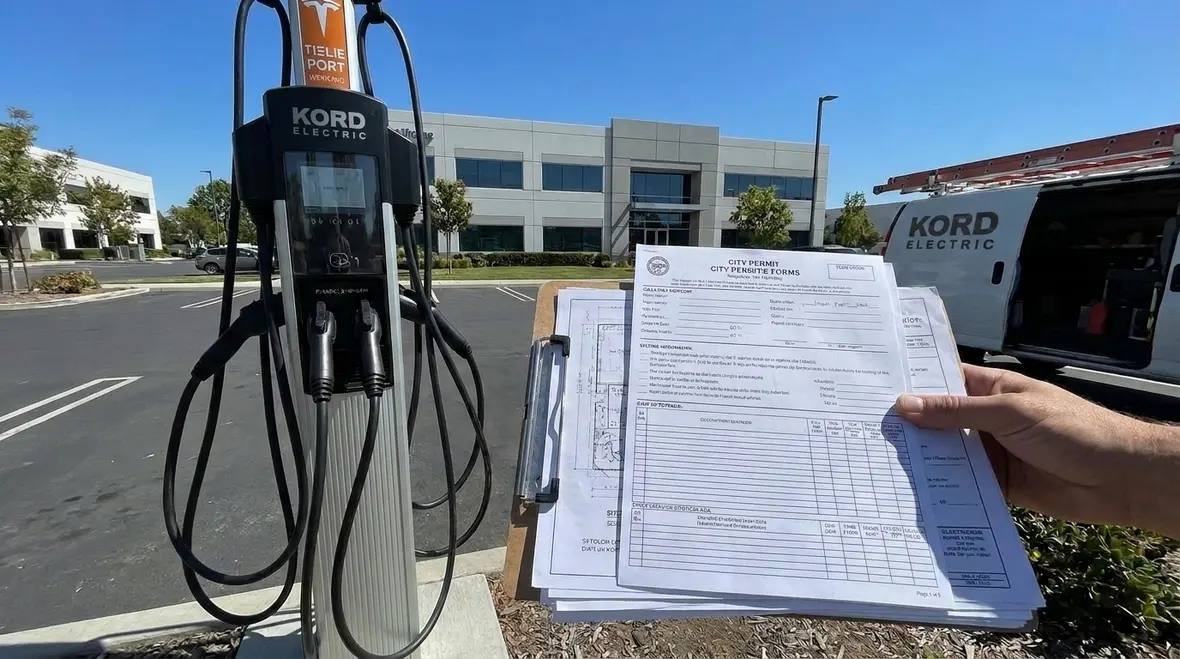
At Kord Electric, when we plan commercial and industrial EV charger work in California, we start with one question, then we turn it into a checklist. Our goal is simple: help businesses understand ev charger installation permit requirements california before they spend money on equipment that might not pass local review. In the first phase, our expert service staff explains what the city or county typically wants, which permits apply, and how to time the process so the charger project does not stall like a movie plot twist you did not ask for. We do this carefully, because electrical code requirements, utility rules, and fire and inspection expectations can vary from one jurisdiction to the next.
Then, we move from “what paperwork” to “how it gets installed,” because permits are only the beginning.
Permits, Authority, and Why the Right Paper Comes First
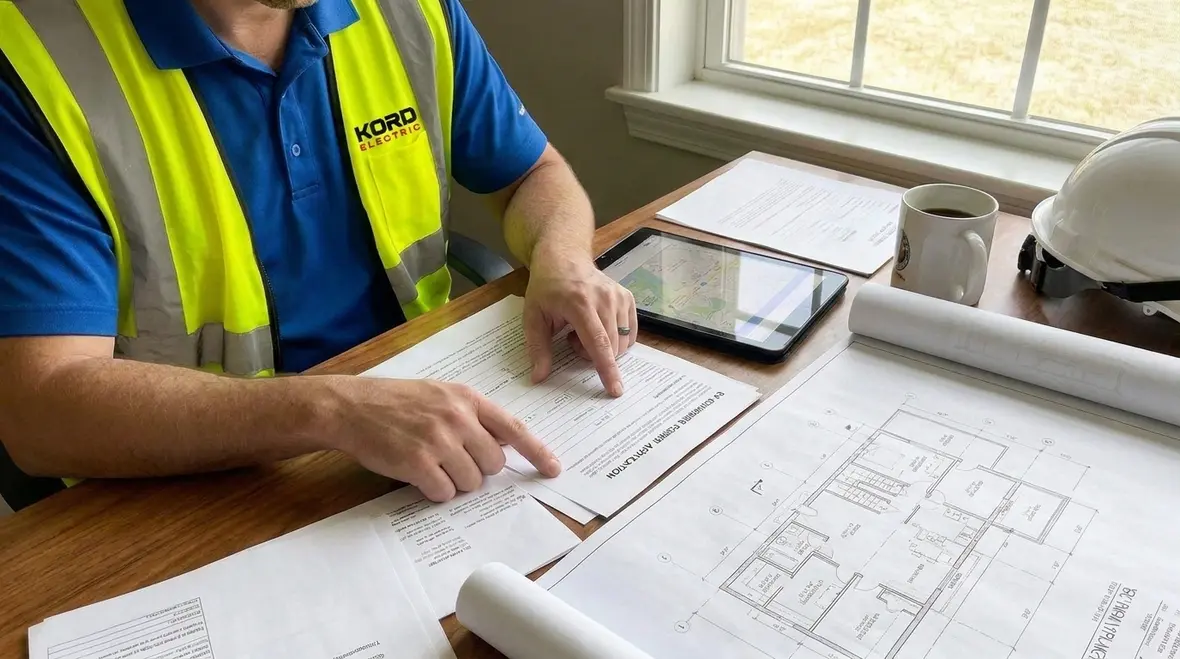
Businesses often assume a charger is like a vending machine: show up, plug in, walk away. However, in commercial settings, we treat an EV charger as a real electrical project tied to loading, safety, and site infrastructure. For that reason, ev charger installation permit requirements california commonly involve multiple approvals.
Here is how we break it down on major property buildings, retail centers, warehouses, and industrial facilities. First, we confirm who has authority. Next, we confirm whether the project is building, electrical, or site work. Finally, we verify whether the charger supports a networked system that may require extra documentation.
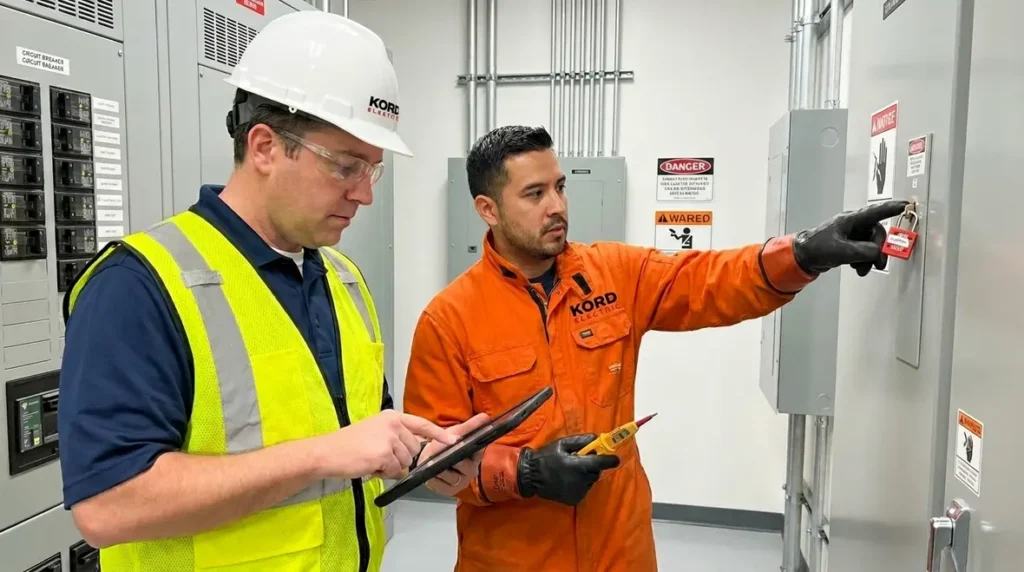
Our technicians do not just “submit and hope.” Instead, we prepare the job so inspectors can follow it. We also explain each step in plain terms, so our clients are not left Googling code language at midnight like it is a competitive sport.
- We confirm the jurisdiction and their review path before any equipment is ordered
- We align electrical scope with the permit type, not just the charger brand
- We document the electrical design clearly, so plan check goes smoother
For facility leaders who like to see how permitting, planning, and long term scalability fit together, it can also help to review Kord Electric’s broader commercial EV charging infrastructure planning approach, which connects early design decisions with future expansion and electrical risk management.
Site Electrical Load Planning for Commercial Properties
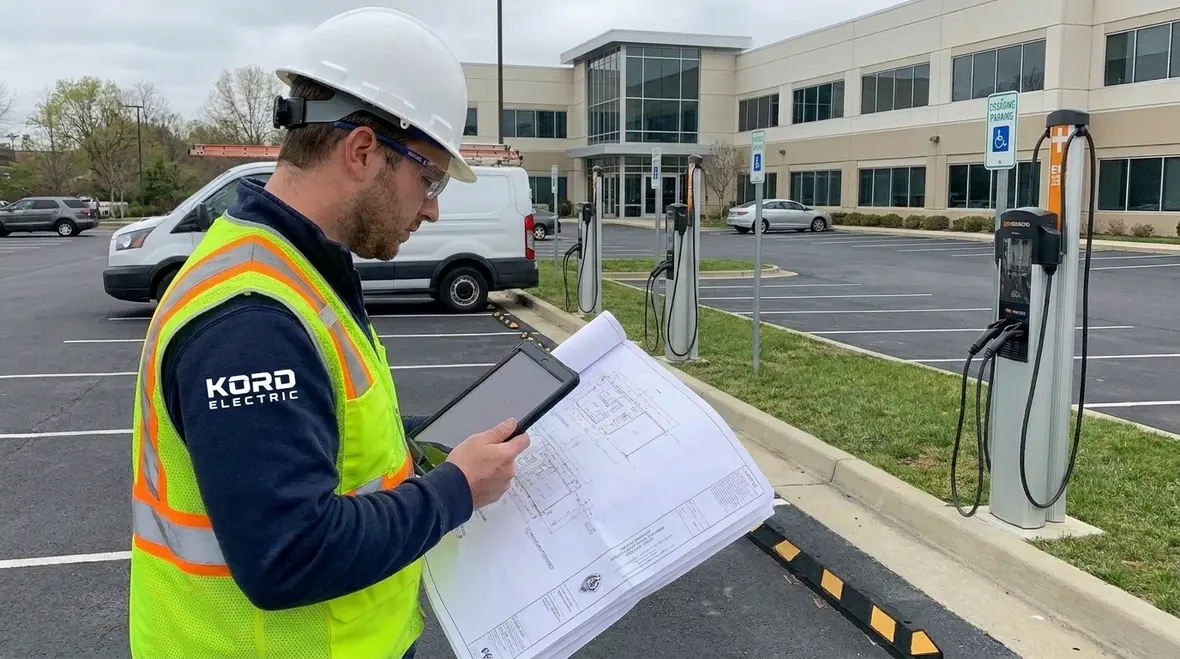
Next, we focus on the electrical reality. Even when a charger sounds small, it changes the load profile. Therefore, we start with load planning, service capacity, and panel space. In commercial and industrial installations, the charger may feed from a main distribution panel, a subpanel, or a dedicated circuit. And if the site is already at or near capacity, we must address upgrades.
We have seen projects delayed because the “charger spec sheet” was used as a substitute for a real power study. A charger installation is not just a device mount, and it is not just a breaker swap. It affects how the building manages demand, and it can influence how utilities require metering and communication.
So we build a plan that answers questions inspectors ask quietly and consistently. For example, can the circuit handle continuous duty? Will the wiring run comply with conduit requirements? Are grounding and bonding done to code? We verify these details early, and our expert team explains what is changing and why, so the design stays aligned from the first drawing through final sign off.
On large projects, that same mindset lines up with our work in commercial EV charging planning, where we tie load studies, phased infrastructure upgrades, and long term demand growth into one calm, dependable roadmap.
Utility Coordination and Metering Steps That Save Weeks
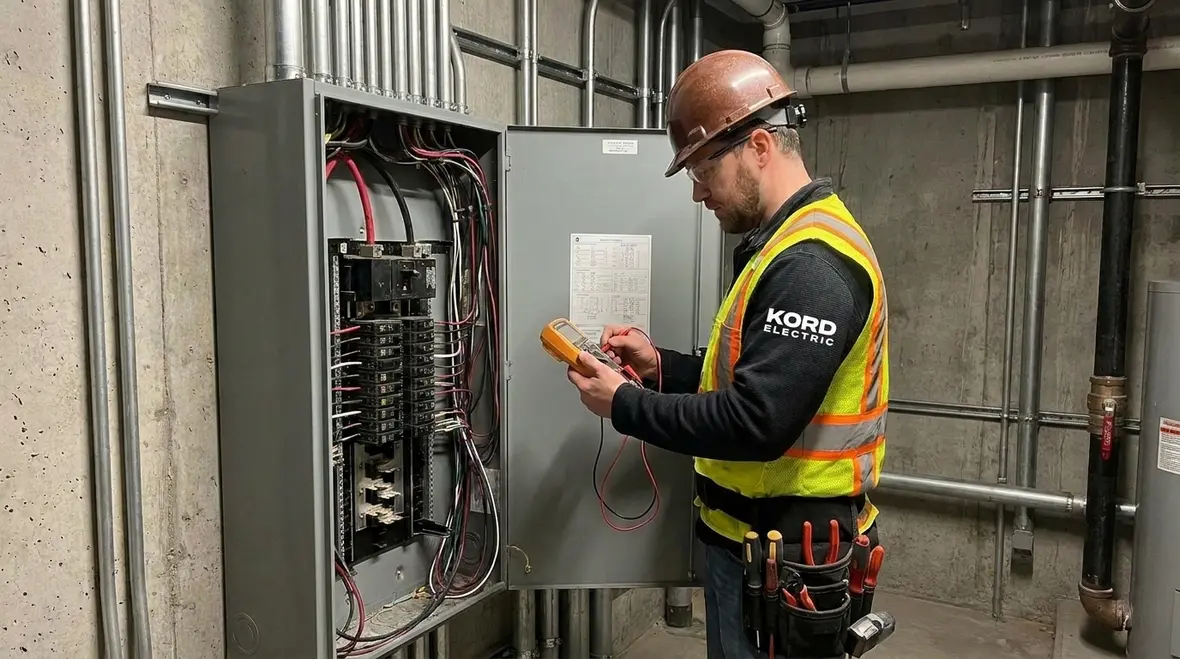
After we confirm the internal electrical plan, we coordinate with the utility. Meanwhile, we remember one key truth: utilities operate on schedules that do not care about your customer’s lease deadline. In commercial facilities, EV charging often triggers utility review for service size, transformer capacity, and sometimes metering requirements.
We also help clients avoid a common mistake. Many businesses pick equipment first and then realize later that the utility expects specific communication or billing setup. Therefore, we confirm the charger operating mode and how it interacts with load management, then we document it so the utility and the city can read the same story.
Our technicians walk through this with you, and they keep the conversation practical. Instead of vague promises, we tell you what needs review, what can be submitted now, and what depends on utility response. That way, the charger installation timeline stays predictable.
- We verify whether service upgrade or metering changes are likely
- We align charger configuration with the site demand profile and load management goals
- We prepare documentation that supports utility and inspection review
Where rebates or “make ready” programs apply, we also coordinate with incentive requirements, similar to the process outlined in Kord Electric’s EV charger rebates California for commercial properties guide, so paperwork and timing work in your favor instead of holding up construction.
Permits, Plans, and Fire Safety Documentation for Industrial Sites
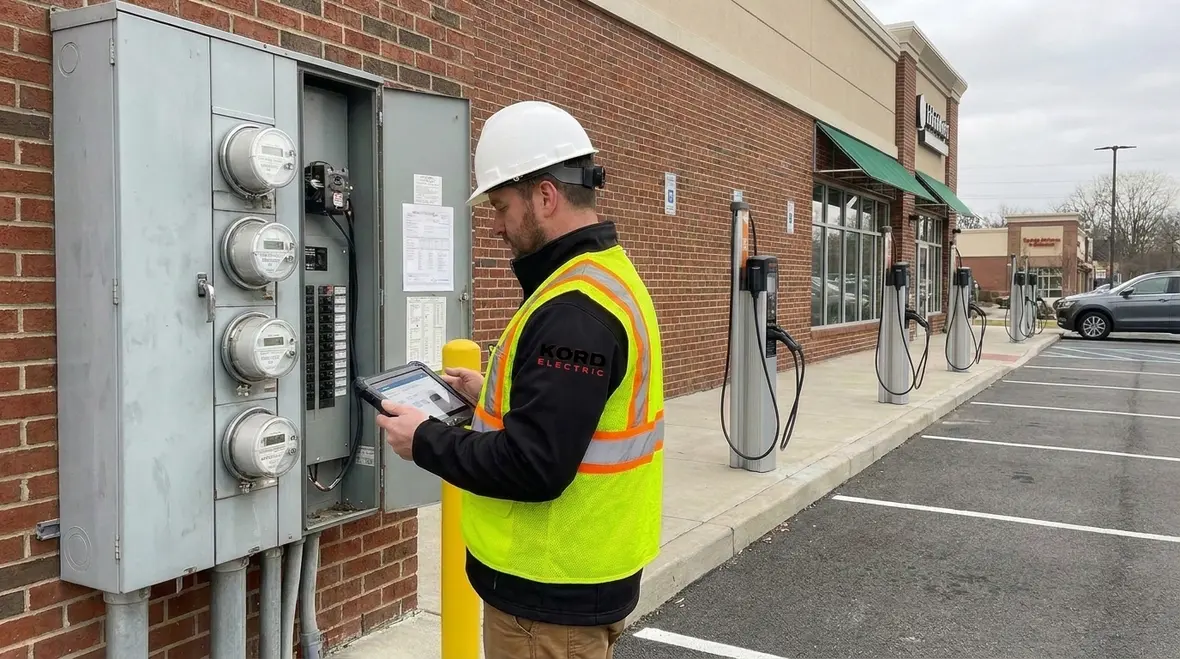
In major property buildings, the permit package usually must show more than “where the charger goes.” Fire safety and site design matter, especially when chargers sit near fire lanes, exits, fuel storage areas, or large electrical rooms. Consequently, our approach includes layout planning, equipment clearances, and cable routing that follows requirements rather than shortcuts.
We also pay attention to the physical installation. Where chargers mount, how they protect against impact, and how the wiring stays protected all influence inspection results. For example, exposed conduit, damaged cable protection, or missing labeling can turn into a “rework” day. And rework days are never fun. They are like discovering your favorite show got canceled after one season. The universe will forgive you, but your schedule will not.
As we prepare the plans, we make sure the drawings match the field installation. Our expert service staff explains the documents we submit and what they support. That way, our clients know what the inspector will check, not just what we hope they will accept.
Industrial facilities that want a deeper dive into how charger projects interact with existing electrical rooms and aging infrastructure can pair this permit guidance with Kord Electric’s EV charging infrastructure planning for commercial sites, which unpacks hidden electrical risks and long term operations planning in more detail.
Dual Column Install Workflow for Smoother Commercial Projects
Because commercial and industrial sites move fast, we follow a disciplined workflow. And yes, it is a little like assembling a flat pack, except nobody gets a missing Allen key at the inspection stage.
What We Do |
Why It Helps |
We review site electrical capacity, panel schedules, and wiring paths |
We prevent late surprises that trigger redesign and resubmission |
We coordinate permit scope with the correct city or county requirements |
We reduce plan check delays caused by incomplete documentation |
We verify grounding, bonding, labeling, and protection details |
We meet inspection expectations for safety and code compliance |
We stage equipment and conduit routing to match the approved plan |
We make field verification faster and limit rework |
We support final inspection closeout and documentation |
We help the business move from “installed” to “operational” smoothly |
This workflow also connects smoothly with Kord Electric’s commercial EV charging installation cost guide, which breaks down how planning, permitting, and sequencing influence total project cost instead of just listing charger hardware prices.
What Happens After Installation: Commissioning, Testing, and Training
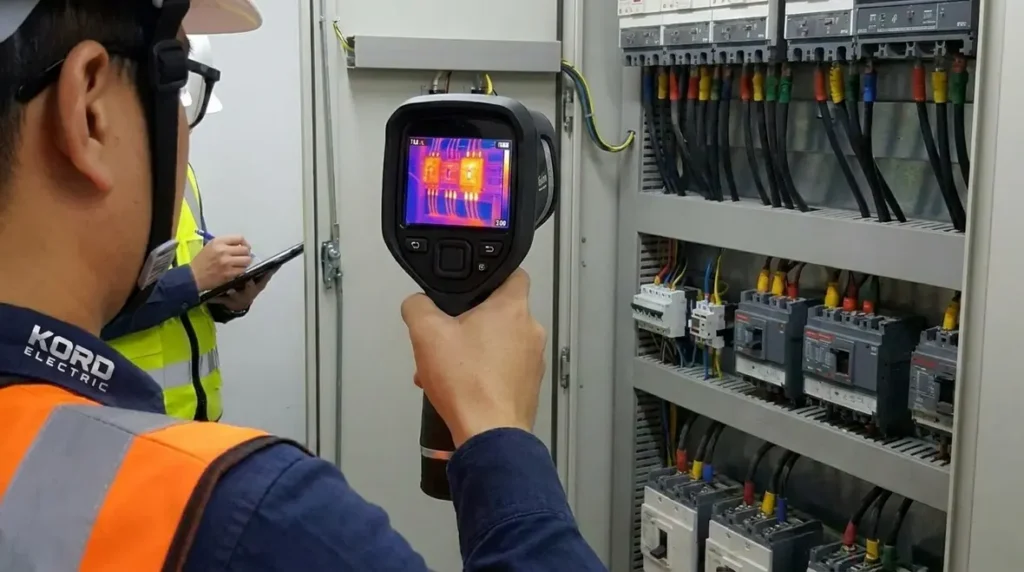
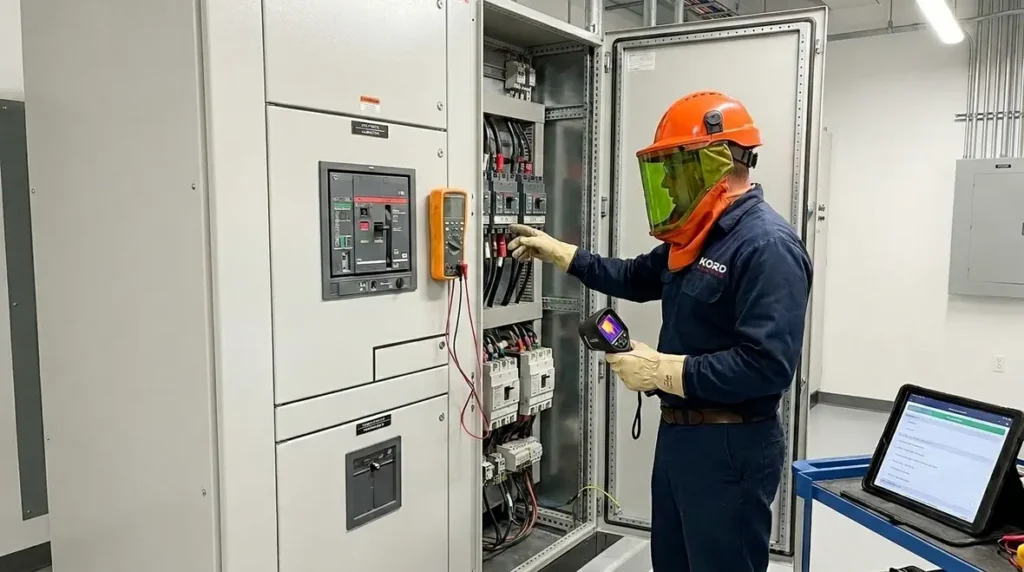
Once the chargers are mounted and wired, the work does not end. Then comes commissioning, testing, and practical training for the facility team. We verify correct operation, safe fault behavior, and load management behavior where applicable. Additionally, we confirm labeling and documentation so operations staff can maintain the system without guessing.
For property managers and industrial site leads, this part matters because the system should run reliably through daily shifts. Therefore, our technicians take the time to explain how the chargers behave, how to interpret simple alerts, and what maintenance items matter most. We also help coordinate next steps if the business needs network features, usage reporting, or ongoing support for a rollout.
And just like any system that serves the public, we treat reliability like a real responsibility, not a marketing line.
For large properties that want to tie EV performance into a broader electrical reliability plan across multiple buildings, Kord Electric’s Los Angeles County electrical services overview shows how charging can integrate with panel upgrades, switchgear maintenance, and troubleshooting instead of living as a one-off project.
FAQ: California Commercial EV Charger Permits and Installation Basics
Schedule Your Commercial EV Charger Install With Kord Electric
If your business or industrial facility plans to add EV charging in California, do it the smart way. We at Kord Electric handle design coordination, permit documentation support, and professional installation focused on commercial and industrial sites. Our expert service staff explains each step in clear language, so you know what is next, what is required, and what could cause delays. Call us to plan your project timeline and get a pathway that leads to inspection success, not a week of avoidable stress.
For teams that want to see how a full installation sequence comes together from the first walkthrough to final commissioning, you can also explore Kord Electric’s dedicated Commercial EV Charger Installation for Industry article, which shows how we build scalable charger infrastructure around real world facility needs.
When you are ready to move from planning into action, our commercial EV charger projects slot naturally into the broader service umbrella you will find on our main Los Angeles County electrical services page, keeping panel upgrades, troubleshooting, and EV work aligned instead of scattered across multiple vendors.