Commercial EV Charging Installation Guide
Kord Electric builds and supports commercial EV charging installation for commercial and industrial facilities, as well as major property buildings. We plan the whole project before we touch a tool, because good charging systems do not show up by accident like a sitcom plot twist. In this guide, we explain how we map power, schedule rollout, and keep your site dependable. We also make sure our clients understand the plan, and yes, our technicians and expert service staff explain things in plain language, not in “trust me, it’s fine” language. If you run a fleet, manage a multi tenant building, or operate a large site, this is the calm, business minded approach you want.
Plan commercial EV charging before you sign anything
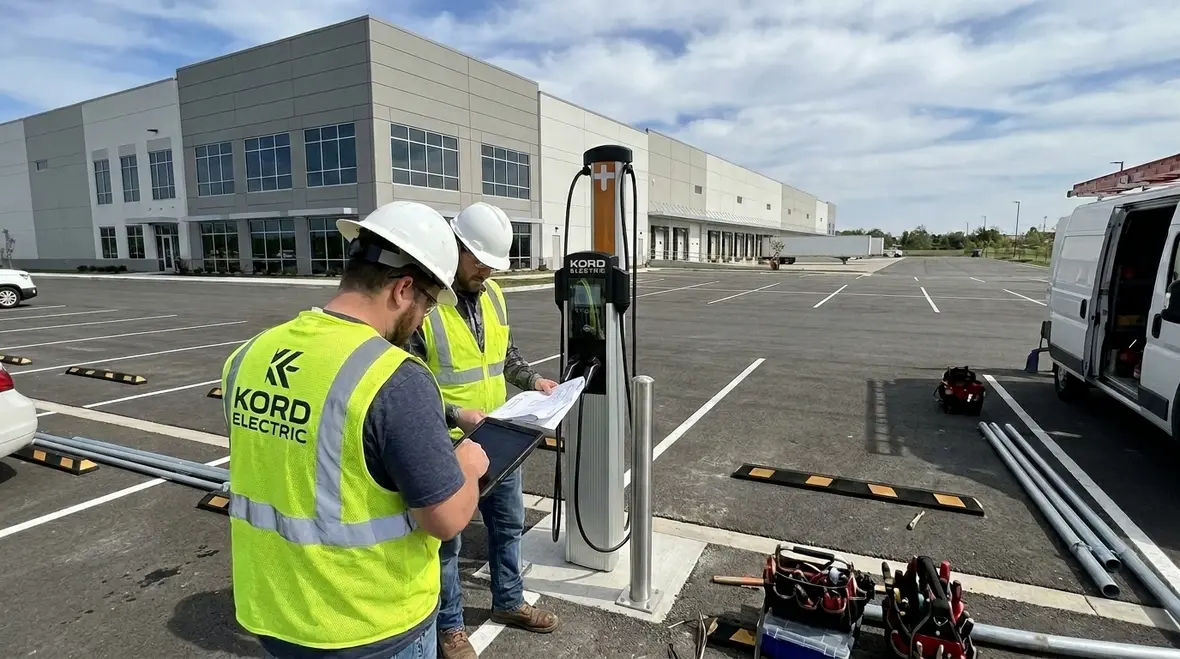
When others start with chargers, we start with strategy. First, we review your facility goals and how people will use charging. Then we translate that into real site needs: power availability, parking layout, expected growth, and service rules that work for your operation. In the end, planning early prevents the classic scenario where everyone agrees on the charger brand, then everyone panics at the switchboard.
Next, we run a commercial focused feasibility check. We do not treat this like a one time electrical job. Instead, we treat it like a long term utility project with uptime goals and safety requirements. Because after the installs, you still need reliability, compliance, and support. And if your tenant mix changes or your fleet grows, you need a system that can scale without a full rebuild.
Our technicians and expert service staff help translate the technical details into practical decisions. For example, we explain how charging loads behave over time, why demand matters, and how smart control can reduce peaks. That way, you make confident choices instead of guessing.
How we size electrical capacity for busy sites
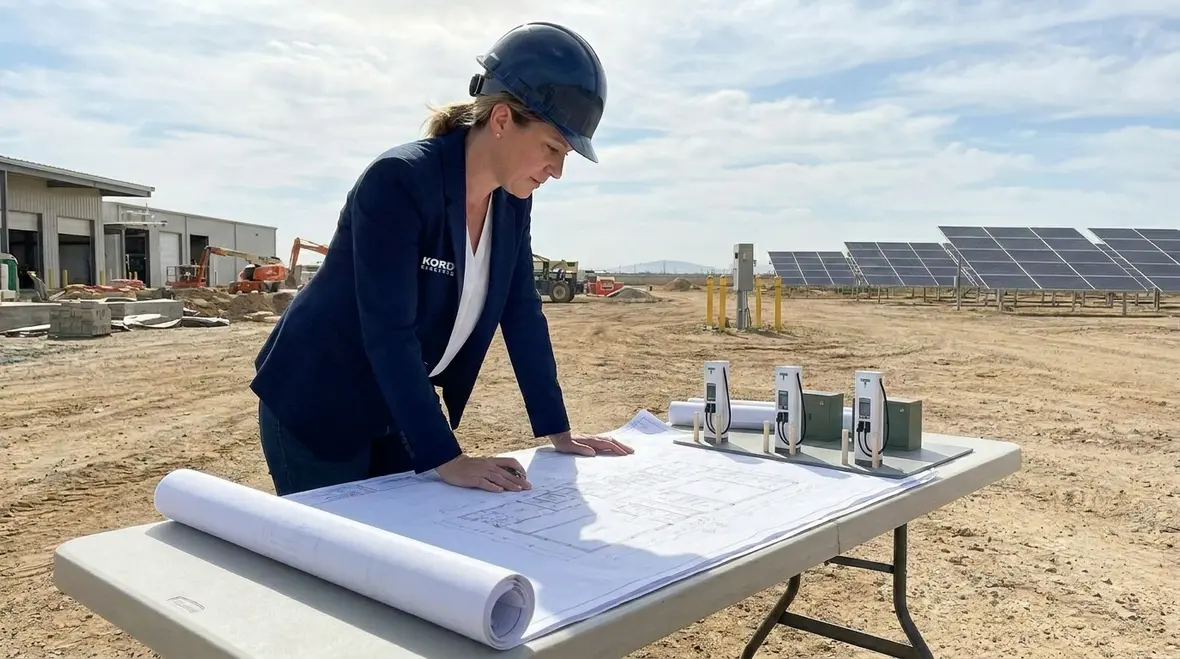
Electrical capacity is where good plans separate from expensive surprises. So we start by assessing service size, feeder capacity, and available space for new equipment. From there, we model charging demand based on your usage patterns. A retail plaza and a logistics yard do not charge the same way, even if they both have “a lot of parking.”
Then we look at the site as an operating system. We review other loads, like HVAC, lighting controls, vehicle charging habits, and any existing process equipment. As a result, the charging plan fits the real day to day power profile, not a best case spreadsheet.
We also design for future growth. Rather than forcing you into a corner with rigid capacity, we recommend architectures that keep expansion simpler. For major property buildings, this planning reduces downtime during tenant changes. For industrial facilities, it helps protect production schedules from electrical constraints.
And yes, we explain the “why” behind each recommendation. Our team describes the limits, the options, and the tradeoffs in a calm, clear tone. We have seen too many teams nod politely and later ask, “Wait, what does that mean for our bill?”

Site layout choices that improve uptime and access
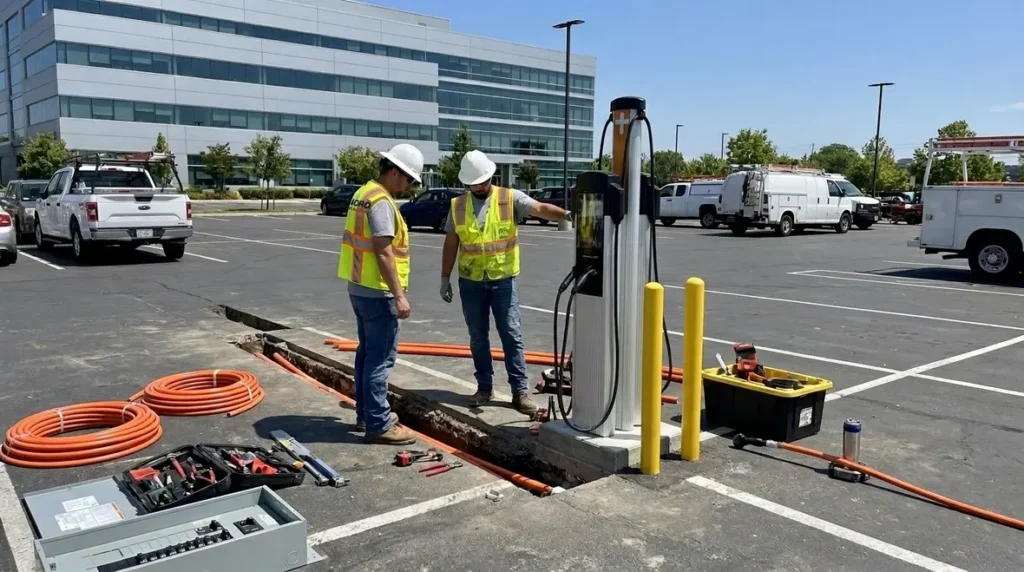
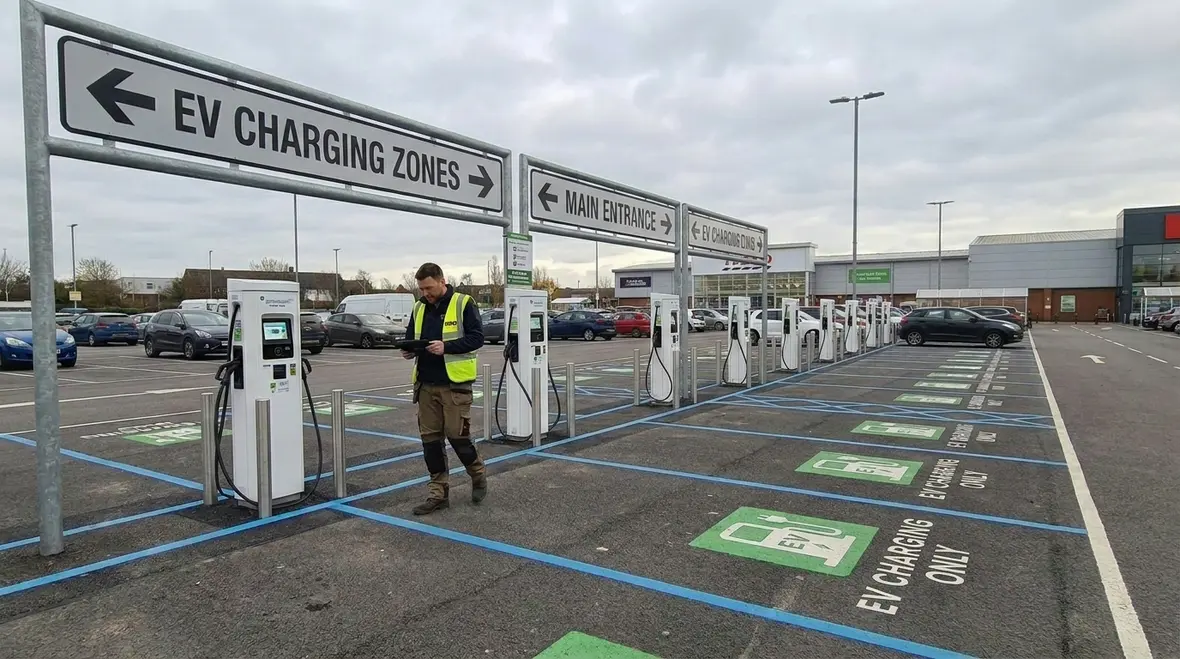
Even the best hardware performs poorly with a bad layout. Therefore, our planning includes how vehicles enter, park, and plug in. We map cable routing, bay placement, and accessibility paths. We also consider snow removal, traffic flow, and wayfinding. Because charging stations are not just hardware on asphalt. They are part of your site experience.
For commercial and industrial sites, we also consider operational safety. For example, we evaluate separation distances, mounting locations, and signage requirements. In warehouses and maintenance areas, we think about how staff and drivers move during shift changes. Meanwhile, for major property buildings, we focus on tenant access rules and queue behavior during peak hours.
Next, we plan installation sequencing. That means we coordinate with site managers so work happens with minimal disruption. If your facility cannot shut down specific services, we schedule around those constraints. In practice, that careful staging prevents the “we need the whole lot off power for an afternoon” moment.
Permits, code compliance, and the paperwork that prevents chaos
Commercial and industrial projects need discipline. So we manage permits and documentation with a structured approach. We help clients understand required steps, including utility coordination where applicable, electrical code expectations, and inspection timelines. As things move forward, we keep communication clear so no one is left wondering where the project stands.
Because compliance is not a box to check, we treat it like a system. We coordinate engineering inputs, labeling, safety features, and equipment selection. Then we align the plan with the realities of your location. That includes site specific conditions and the standards required by local authorities.
Our expert service staff also explains what you need for long term operations. For example, we clarify maintenance responsibilities and how to handle service calls. So when inspectors ask questions, you have real answers, not a guess wrapped in confidence.
And if you are thinking, “Paperwork is the villain,” well, you are correct. But the best way to defeat the villain is to plan early and keep documents tidy. We do both.

Phased rollout strategies that match real budgets and real demand
Not every site can fund a full charger network at once. However, you still want progress, not waiting. That is why we build phased rollout plans. We identify priority locations, then we expand in steps that match your operational needs and power readiness.
First, we determine which chargers deliver value quickly. For fleets, we prioritize depots or return routes. For major property buildings, we often start with resident or tenant access points that create immediate adoption. Then we add chargers where usage justifies the next electrical investment.
Next, we align the rollout schedule with staffing and site readiness. If your team handles parking management or tenant onboarding, we coordinate timing so everyone knows what is coming. As a result, you avoid confusion at launch and you reduce operational interruptions.
We also plan for future charger types and charging profiles. Some clients start with simpler setups, then later add higher power options as demand grows. With a thoughtful design, your next phase fits the foundation instead of fighting it.
For a deeper look at how budgets and infrastructure come together, you can also review our Commercial EV Charging Installation Cost Guide, which walks through power requirements, charger types, and the cost drivers behind large deployments.
Smart monitoring, service plans, and what happens after the install
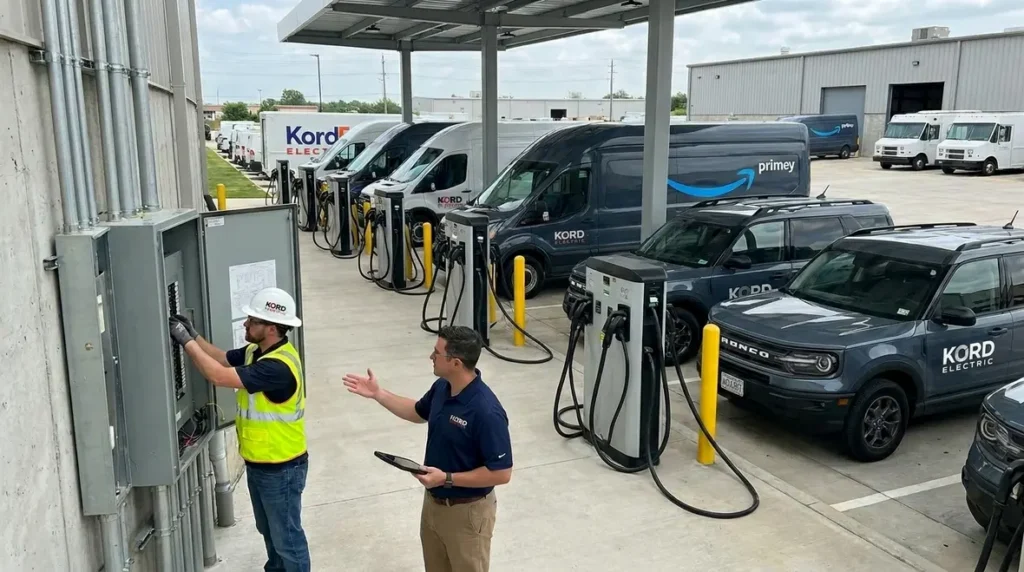
Here is the part everyone forgets to talk about: what happens after the install. Hardware is just the start. So we implement monitoring and service processes that support uptime. We plan how issues will be detected, how quickly we respond, and how we keep your stations running without draining your staff.
Our technicians focus on reliable commissioning, then our expert service staff supports ongoing performance. We explain alerting options and maintenance routines in plain terms. In addition, we guide you on how to handle common operational scenarios, like blocked access, cable wear, or user behavior that affects performance.
Monitoring also supports planning. Because when you see real session data, you can fine tune how many chargers you need next and where. That means you make decisions with facts, not hope. And yes, hope is fine for romance, but for electrical capacity it is usually a bad investor.
We keep the service approach commercial and industrial friendly. That means clear communication, documented work, and practical scheduling. So if your facility runs 24 7, your charging support aligns with how you actually operate.
If you are evaluating long term reliability across your electrical systems, our Commercial and Industrial Electrical Maintenance Plans guide shows how preventive maintenance and EV charging infrastructure can work together to support uptime.
Frequently asked questions about commercial EV charging installation
Conclusion and next steps with Kord Electric
Kord Electric helps commercial and industrial facilities plan charging the right way, from electrical capacity to layout, permits, and long term service. We take the slow, deliberate path because it prevents costly surprises and protects uptime. Next, you can ask for a site review and a phased rollout plan built around your real demand. Contact us to schedule an assessment and get a clear roadmap. Let’s build a charging setup that runs like a well oiled machine, not like a mystery novel.
When you are ready to move from planning into execution, our dedicated EV Charger Installation service team can handle everything from site evaluation and design to commissioning and testing for your commercial EV charging installation. We coordinate the details so your property gets a dependable, future ready charging network with clear communication at every step.