Electrical Equipment Lifecycle Management Guide
Lifecycle Management for Critical Electrical Distribution Assets, Explained by the People Who Actually Touch the Switchgear
At Kord Electric, we practice electrical equipment lifecycle management for critical electrical distribution assets, so your commercial and industrial power systems stay reliable from day one through end of service. We handle the whole journey, including planning, inspection, testing, upgrades, and safe retirement. Others may treat maintenance like a calendar event. We treat it like a risk control system that quietly does its job in the background, like the best stage crew you never notice because everything just works.
In this article, our expert service staff breaks down how we manage transformers, switchgear, breakers, protective relays, bus systems, and cables without turning your operation into a power outage improv show.
Why assets fail when nobody is watching, and how we stop it
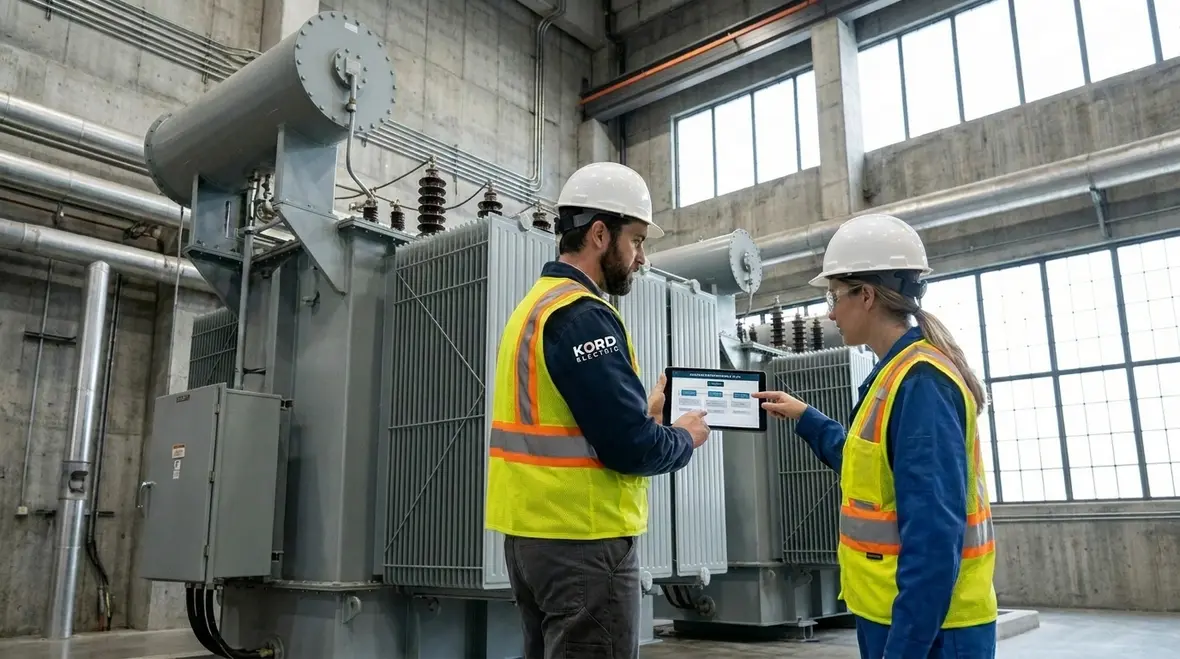
Electrical distribution gear does not fail all at once. Instead, it drifts. That drift can show up as heat stress, insulation aging, contact wear, moisture intrusion, or settings that slowly drift out of ideal. Consequently, the biggest danger for commercial and industrial facilities is not just the failure itself, but the moment you find out it is coming.
Our technicians approach failure the way a seasoned mechanic studies an engine noise. First, we locate the real cause signals, such as abnormal temperature rise, inconsistent breaker timing, relay miscoordination, or signs of partial discharge. Then, we compare what we see to what the equipment design expects. As a result, we turn “it acted weird once” into a clear lifecycle story with measurable steps.
And yes, electrical faults can feel like pop culture villains. They show up dramatically right when your critical process is running. The difference is that our electrical equipment lifecycle management focuses on catching the plot long before the finale.
If you want to see how those early warning signs look in the field, our article on hidden electrical risks in commercial buildings walks through real world examples of issues that quietly grow behind panels and in switchgear rooms.
How lifecycle planning fits real schedules in commercial and industrial sites
Many teams create a plan that looks good on paper. However, the real world has production windows, tenant operations, safety rules, and staffing limits. Therefore, our approach begins with your site reality, not a generic checklist.
Our engineers and technicians gather baseline data, then build a lifecycle plan that aligns with your operating rhythm. For example, we schedule deeper inspections during low demand periods, we coordinate outages with facility leadership, and we structure replacement timing to reduce risk while protecting continuity of service.
We also document the plan in a way that helps others keep it alive. In other words, your lifecycle management does not vanish when one person changes roles. Instead, your team can track asset condition, maintenance outcomes, and upgrade decisions across years.
For facilities that want a broader structure around those schedules, Kord Electric’s approach to commercial and industrial electrical maintenance plans shows how routine inspections, infrared scanning, and breaker testing all fit into a long range view of system longevity.
Inspection and condition testing that does not guess
When people hear “inspection,” they sometimes picture a quick look and a sticker that says “looks fine.” We do more than that, and our expert service staff explains the why behind every step while they perform it.
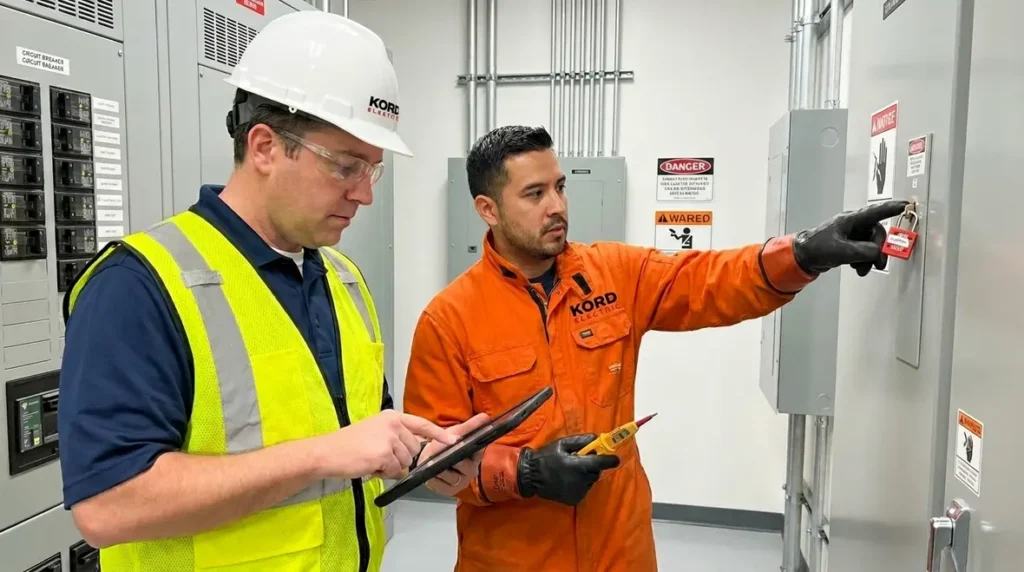
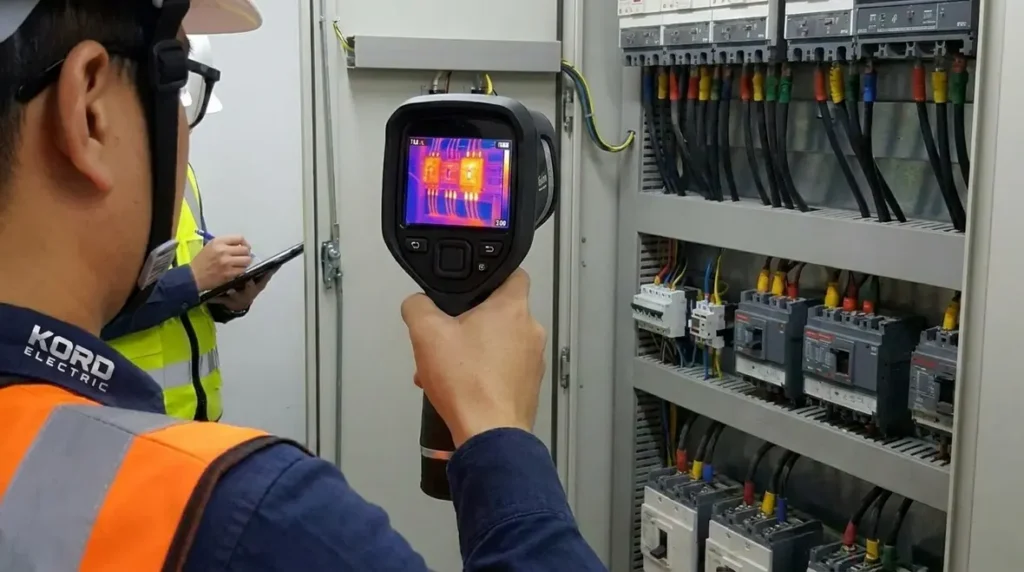
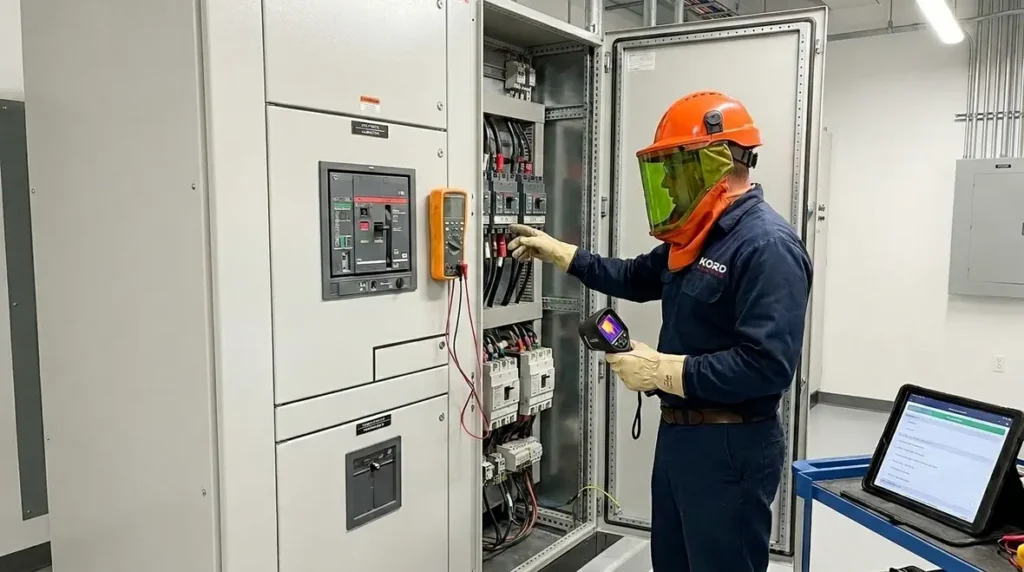
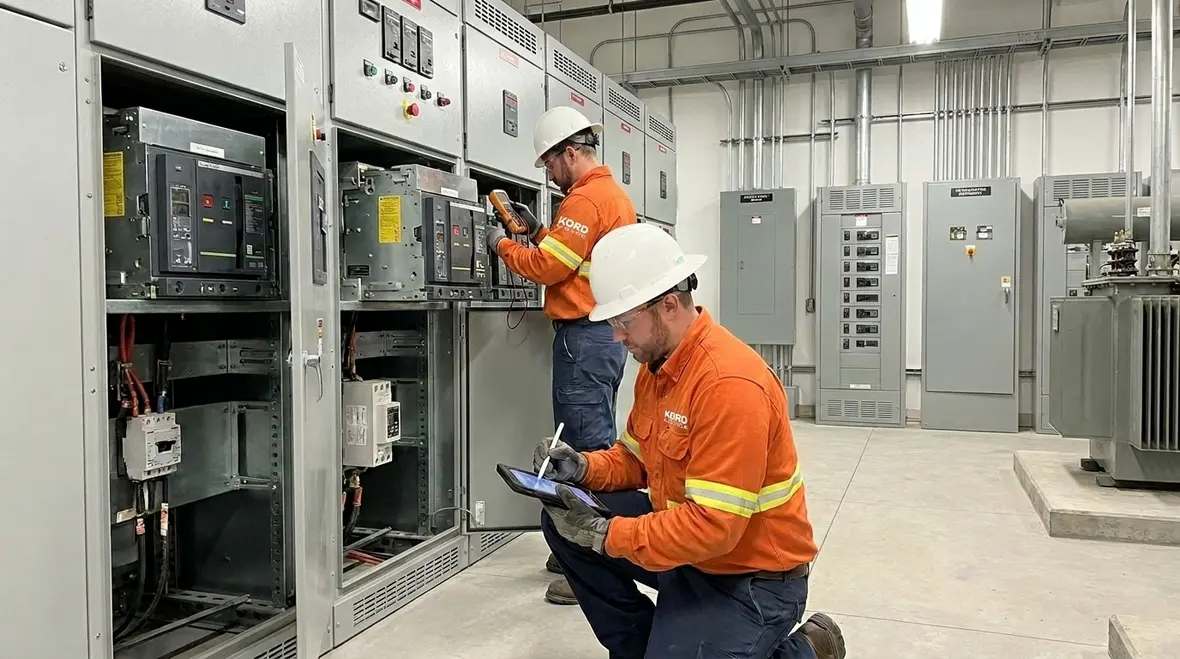
Typically, our condition process includes visual inspection of switchgear and distribution gear, torque checks, thermal imaging where appropriate, and targeted electrical testing. We also evaluate protective devices and control components because a relay that “works” but operates outside expected behavior can create hidden stress during abnormal conditions.
In addition, we look for trends. One event can be noise, but a pattern becomes a signal. So we interpret results in context, then we recommend actions that fit the asset’s current state and future risk. That is the core of electrical equipment lifecycle management: we do not just record condition, we guide next steps.
And if you are thinking, “Okay, but how do we keep this from becoming a never ending testing buffet?” We set priorities. We test what matters most to your critical distribution paths first, then we expand based on findings and operating constraints.
In higher stakes environments, those inspections connect directly to formal standards. Our work on NFPA 70B electrical panels and switchgear maintenance shows how condition data feeds into risk based decisions that align with modern electrical maintenance expectations.
Maintenance strategies that extend service life without risking reliability
Maintenance should not be a ritual performed for the sake of feeling busy. Instead, we aim for maintenance that extends service life while reducing the chance of unplanned downtime. Consequently, we focus on correct intervals, correct methods, and correct scope.
For example, we treat breaker maintenance and contact system health as lifecycle drivers. We evaluate whether lubrication, cleaning, or mechanical adjustments actually reduce risk and improve performance. We also verify protective device behavior because proper coordination and correct settings help reduce stress across the distribution system.
When we recommend upgrades, we do it with reasoning. We explain whether modernization reduces failure modes, improves availability, or enhances safety for commercial and industrial facilities. Also, we coordinate work so you can keep critical loads stable as much as possible.
Here is the playful truth: maintenance that is not based on condition is like watching movies in the dark. Sure, you can pretend you know what is happening, but you miss the details that matter most.
For many teams, the most practical way to keep that condition based mindset alive is through structured commercial and industrial electrical maintenance plans that bundle inspections, testing, and corrective work into a repeatable program instead of scattered one off visits.
Engineering upgrades, replacement planning, and safe asset retirement
At some point, every asset reaches a point where the lifecycle math shifts. That is when replacement planning becomes more than a purchase order. We help you decide when to repair, modernize, or retire based on risk, remaining life, and system needs.
Our technicians and engineers review asset health, historical performance, and protective system interaction. Then we evaluate options such as refurbishing components where it makes technical sense, upgrading protection where settings or design limitations create exposure, or replacing entire sections to maintain coherent performance across the distribution network.
We also plan safe retirement, because taking gear out of service requires more than disconnecting power. We manage documentation, labeling, arc flash safety steps, and integration considerations so the new configuration supports your facility goals.
Instead of treating retirement like a cliff, we treat it like a bridge. You transition with control, and your electrical distribution continues to serve the loads that keep your business running.
For facilities upgrading distribution in data center or high density environments, our perspective on data center electrical distribution design for reliability shows how replacement decisions can improve uptime, scalability, and long term resilience.
Keeping records and transferring knowledge so reliability stays owned
Lifecycle management fails when knowledge disappears. So we build documentation that supports continuity. Our records include testing outcomes, inspection notes, maintenance actions, and recommendations. Additionally, we capture how equipment behaved over time so future teams can see what changed and why.
Just as important, our expert service staff explains findings in plain terms that facility leaders can use. That means your team understands what the data indicates, what the risk level likely is, and what action reduces that risk.
As sites change through expansions, new loads, and operational shifts, records help you adjust lifecycle strategies. Therefore, your facility does not just “maintain.” It manages.
This level of documentation also supports compliance expectations and internal reviews, especially when paired with standards guided programs such as NFPA 70B electrical equipment maintenance, where records are part of proving that conditions are being tracked and addressed over time.
What does electrical equipment lifecycle management include for distribution gear?
Electrical equipment lifecycle management for critical distribution assets typically includes these steps across the full journey.
- Planning: Define asset criticality, operating constraints, and inspection testing priorities.
- Condition assessment: Use visual inspection, thermal checks, and targeted electrical tests to find real issues.
- Maintenance actions: Apply correct intervals and methods that reduce failure risk and extend service life.
- Protection and control verification: Ensure relays and controls operate as intended and stay coordinated.
- Upgrade decisions: Replace or modernize components when risk and performance justify it.
- Documentation: Maintain records so knowledge transfers across teams and years.
- Retirement and transition: Retire safely and integrate new gear with controlled commissioning.
Each of these steps connects to the everyday realities of large properties and industrial facilities. From coastal buildings that battle corrosion, as covered in our Santa Monica electrical safety for coastal properties guide, to mission critical data centers, lifecycle work adapts to the environment while keeping the same clear structure.
FAQ
In a sentence: We align actions with real condition, so your distribution assets do not “survive by luck.”
Final call to action: build your lifecycle plan with Kord Electric
If your commercial or industrial facility relies on critical electrical distribution, you deserve lifecycle management that is calm, thorough, and built around measurable condition, not vibes. Kord Electric can evaluate key assets, explain findings through our expert service staff, and map a practical plan for inspection, maintenance, upgrades, and safe retirement. Contact us today to schedule a site review and turn electrical risk into a managed, scheduled process you can trust. Let’s keep the lights steady and the surprises rare.
When you are ready to move from theory to action, pairing this lifecycle approach with Kord Electric’s dedicated commercial and industrial electrical maintenance plans gives your team a clear, service based path to keep equipment reliable year after year.
For facilities that need deeper design and upgrade support as part of electrical equipment lifecycle management, Kord Electric’s data center electrical distribution design for reliability article shows how thoughtful engineering and coordinated protection work together to support long term uptime, not just day one commissioning.
If you want a service focused next step, Kord Electric’s electrical preventive maintenance and inspection services provide a direct way to schedule NFPA 70B aligned testing, switchgear and panel maintenance, and distribution reviews that fit your operating schedule. Your electrical equipment lifecycle management does not have to be theoretical. It can be the everyday way your facility stays safe, stable, and ready for what comes next.