Intelligent Warehouse Lighting Controls ROI
Maximizing ROI With Intelligent Warehouse Lighting Controls
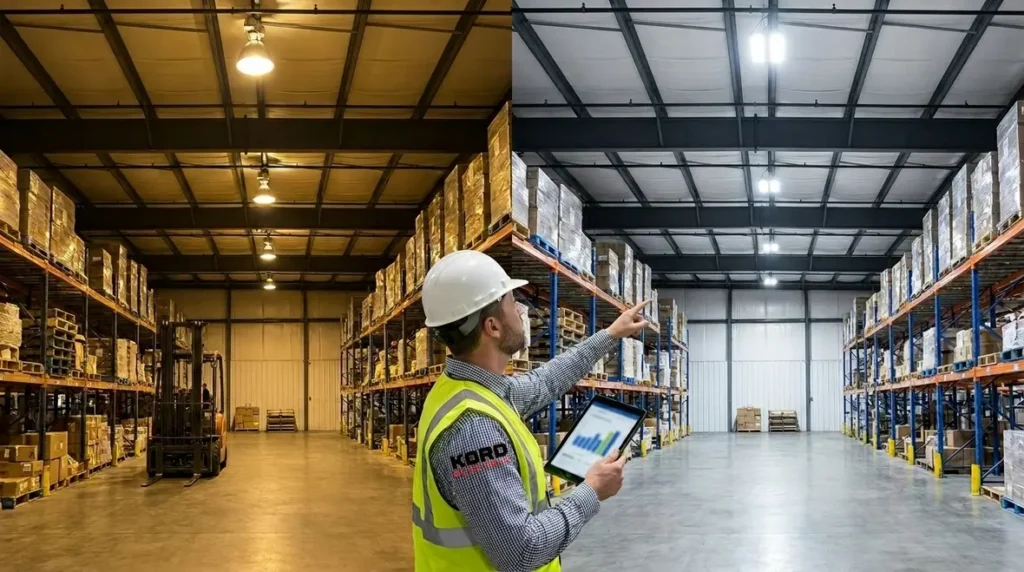
At Kord Electric, we help commercial and industrial facilities unlock warehouse lighting automation benefits that improve energy use, reduce maintenance headaches, and keep workers safer. We install smarter control layers so lights respond to reality, not just a fixed schedule that ignores occupancy. In turn, others stop paying for brightness nobody needs. And yes, your utility bill can stop doing pushups every month.
In this guide, a third person voice explains how our team thinks, what our technicians check, and why intelligent controls often pay back faster than many building managers expect. Then, we connect it to our electrical preventive maintenance approach so your system stays reliable, not just “installed and forgotten.”
How smart controls increase savings without hurting productivity
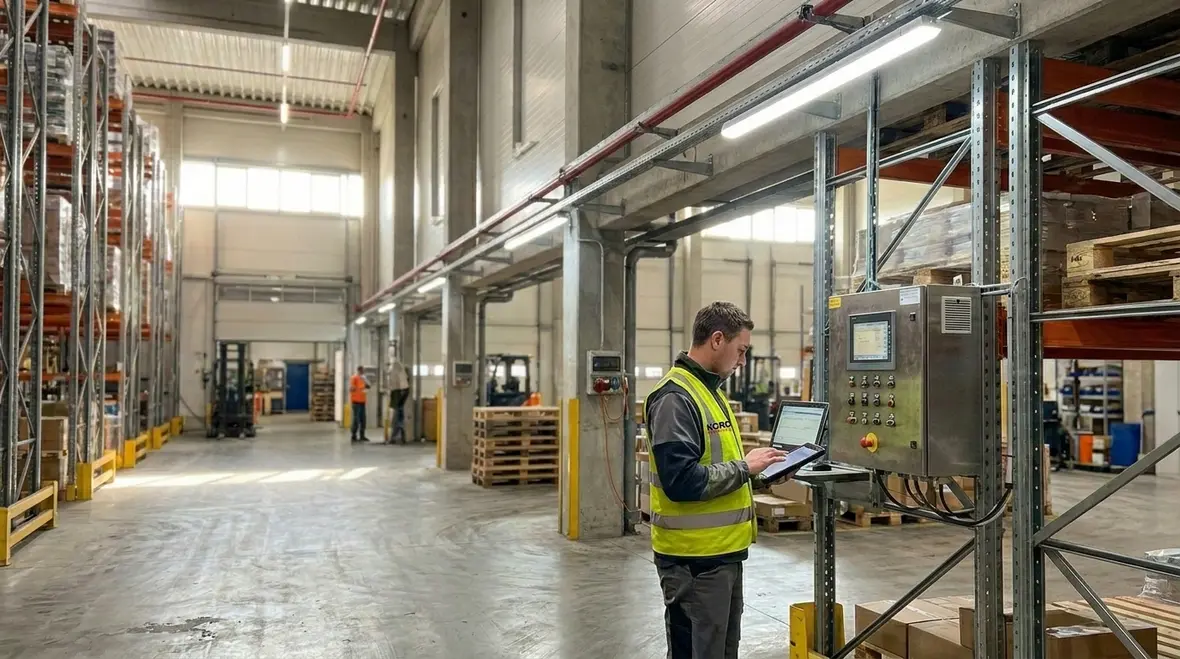
For commercial warehouses, ROI does not come from turning lights off like a cheap magic trick. Instead, it comes from right lighting across zones, tasks, and shift patterns. Intelligent warehouse lighting controls use sensors and scheduling logic to match light output to actual activity. As a result, employees keep good visibility while energy use drops. Meanwhile, the building runs steadier because you reduce harsh on off cycling and avoid overexposure in low traffic areas.
In practice, we commonly see three ROI drivers. First, we control lighting by zone. Rather than lighting the whole facility at full power, we dim or switch off sections that sit idle. Second, we use occupancy awareness. When motion disappears, lights can ramp down smoothly. Third, we add daylight response when skylights, dock doors, or exterior loading areas create natural light. So, savings build over time, not just during one test day.
And if you are wondering whether this impacts workflow, we design for it. For example, dimming curves can protect foot candle targets near picking areas, and staging logic can keep aisle lighting stable during transitions. Nobody wants a warehouse that feels like a haunted set from a 90s sitcom.
Where the ROI really hides inside the building
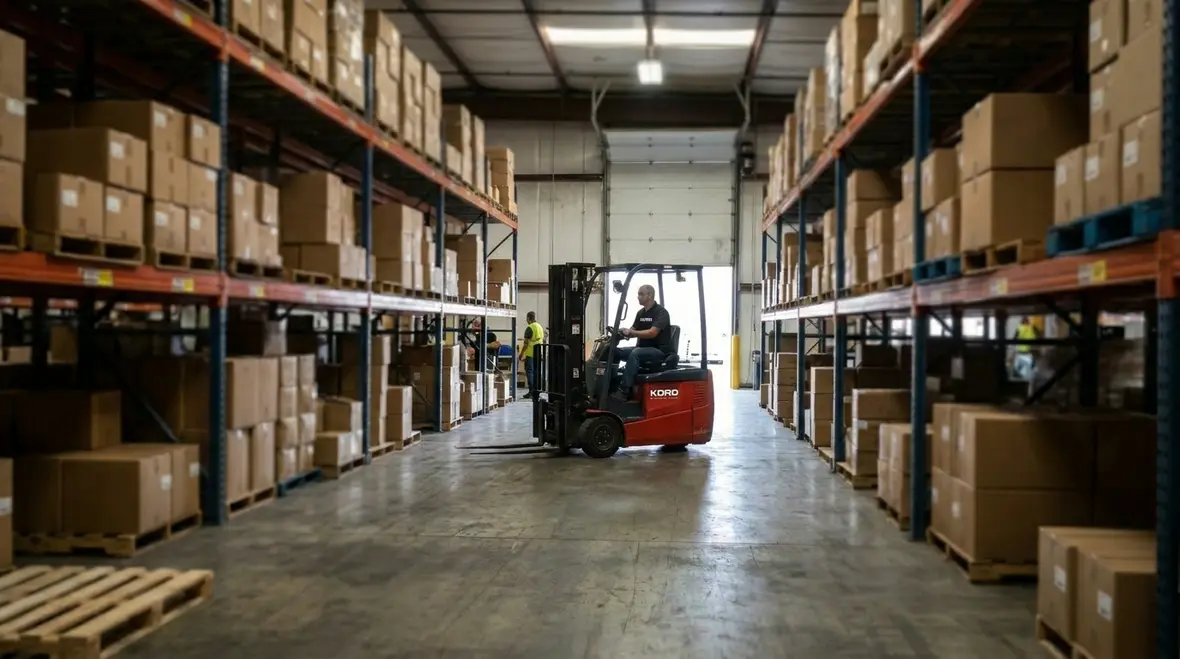
Most teams focus on the utility meter, and yes, that matters. However, ROI in warehouse lighting automation benefits also comes from other costs that do not show up in big spreadsheets. For instance, labor time spent on lamp changes and troubleshooting can quietly drain budgets. Plus, premature component failure creates downtime during busy shipping windows.
Kord Electric evaluates the whole lighting lifecycle. Then we look at how controls can reduce wear. When systems avoid unnecessary full power cycling and keep drivers within safe operating patterns, components last longer. Also, smart controls speed up fault detection because a properly configured system can flag issues by zone rather than leaving staff to hunt for the one aisle that “feels dim.”
Additionally, controls can support compliance and reporting. Many commercial and industrial facilities must prove they manage energy and keep systems safe. When you track runtime, events, and schedules, you can show progress without relying on guesswork. The building starts to behave like a managed asset, not an expensive mystery box.
For facilities that want a deeper look at how lighting ties into broader electrical health, Kord Electric also shares insight in their California Title 24 Lighting Retrofit ROI guide for warehouse projects, which connects code compliant lighting upgrades with long term performance.
What our technicians check during an intelligent control rollout
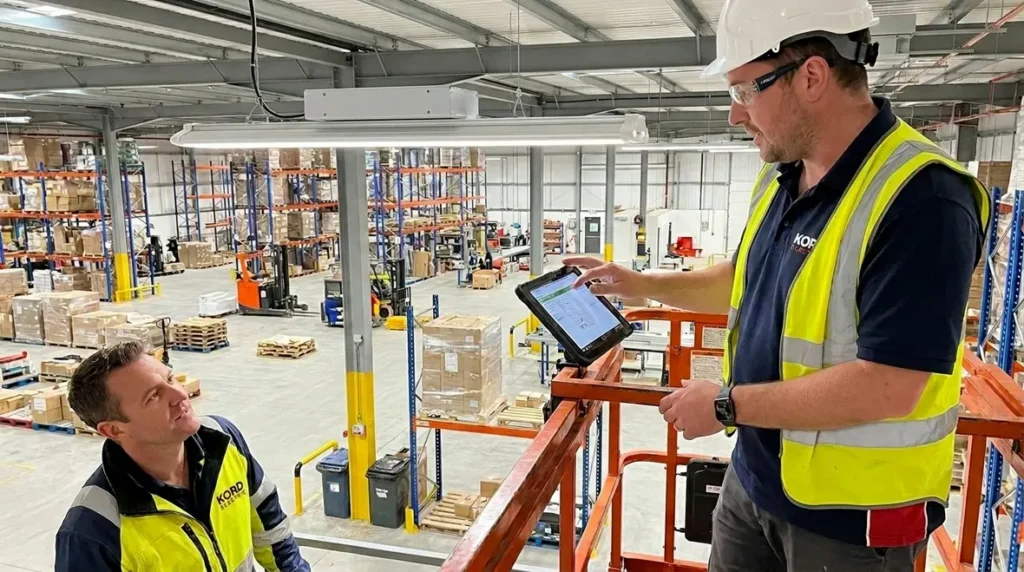
Our service philosophy stays simple: we plan carefully, we install cleanly, and we verify operation with real warehouse conditions. Kord Electric technicians and expert service staff explain the system in plain terms, because “trust us” is not a strategy. We walk facility teams through what each sensor sees, how zoning is mapped, and how override options work during special operations.
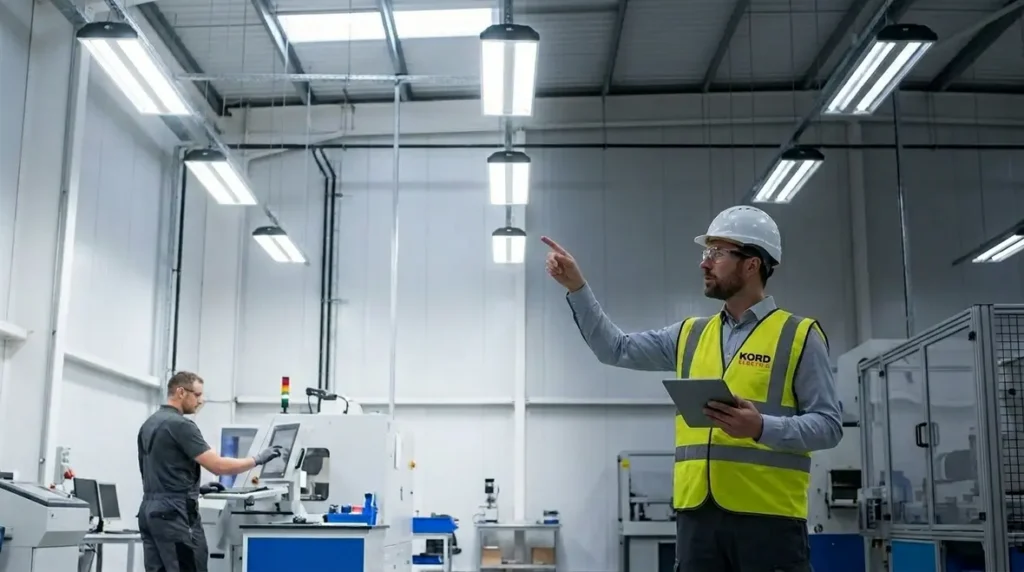
During rollout, we typically verify three things before we sign off. First, we confirm coverage. That means we place sensors so they detect occupancy correctly around racking, loading docks, and equipment islands. If you have forklifts that block sight lines, we account for that. Second, we confirm power and control wiring integrity. Third, we set commissioning thresholds so the system dims smoothly instead of flipping like a light switch in a comedy sketch.
Then, we involve facility leadership. Our technicians explain how staff can manually override controls, how maintenance staff can change settings, and how the system behaves during alarms. If a warehouse wants to run extended hours during peak season, we configure the control logic to support that. In other words, we build the system for your operations, not for a brochure.
For large properties that want lighting controls integrated into a broader strategy, Kord Electric’s approach aligns naturally with structured plans like their commercial and industrial electrical maintenance plans, which keep critical systems steady across busy seasons.
Preventive maintenance keeps controls from turning into headaches
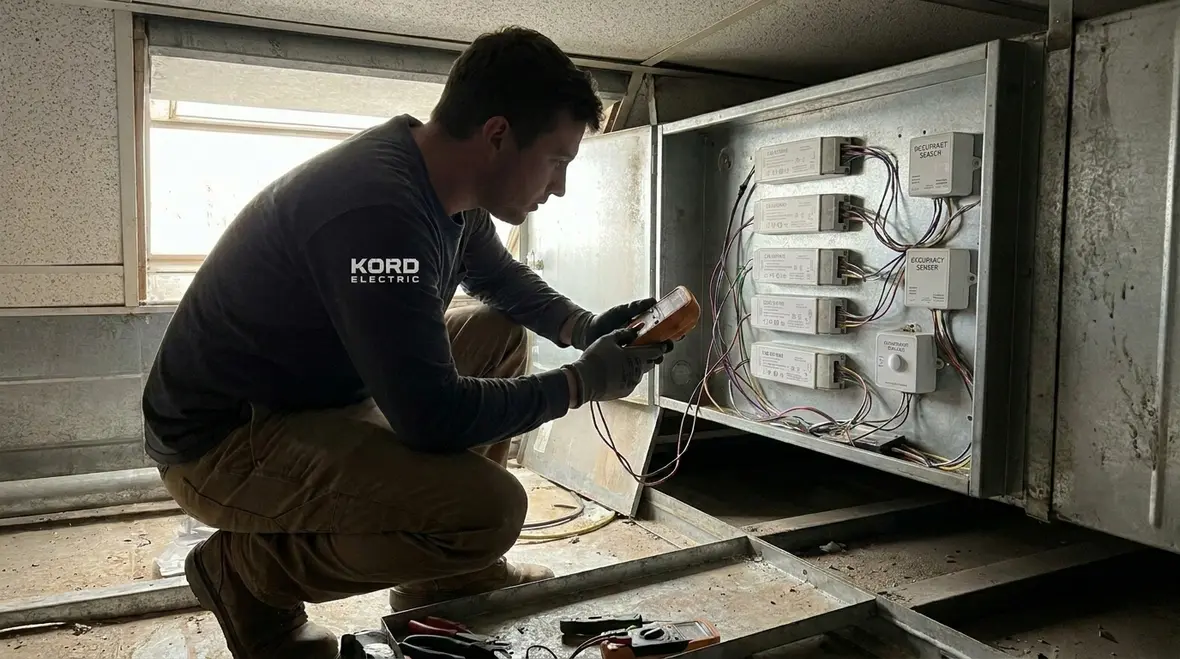
Intelligent lighting can deliver steady returns, but only when the system stays tuned. Over time, sensors can drift, schedules get outdated, and components fail. That is where our electrical preventive maintenance program matters. Kord Electric aligns lighting control performance with a broader maintenance routine so your controls do not slowly lose accuracy.
We reference our preventive maintenance approach outlined on our site, because the goal stays consistent: catch issues early, maintain safe operation, and extend equipment life. Over time, that reduces unplanned downtime and avoids expensive emergency repairs. If you have ever dealt with “it worked last quarter” logic, you know the pain. Preventive work is the antidote.
Here is how maintenance supports ROI for warehouse lighting automation benefits. First, we inspect and test control devices and connections. Second, we confirm firmware settings and verify that energy schedules align with current staffing patterns. Third, we check that lighting levels still meet your functional needs in high activity areas. As a result, the building continues delivering the savings you budgeted for, not the savings you hoped for.
And yes, sometimes a simple adjustment fixes a zone that looks dim because a sensor moved slightly or a setting changed during another project. It happens. Warehouses stay busy. Our job is to keep the system from slipping quietly out of spec.
For teams that want a structured, documented way to keep electrical infrastructure reliable, Kord Electric offers dedicated electrical preventive maintenance services designed specifically for commercial and industrial properties.
How to plan zoning and scheduling for real warehouse traffic
Zoning and scheduling should reflect how a warehouse actually moves. A single “one size fits all” schedule can waste energy on idle aisles and fail to support late shift work. Instead, we map lighting zones to functional areas like receiving, storage rows, packing stations, and shipping lanes. Then we set different behavior profiles based on activity patterns.
For example, we often use occupancy driven control for areas with variable movement, such as staging spaces and corridors near workstation changes. Meanwhile, we can use daylight harvesting logic near dock doors and skylithed sections, because solar conditions shift across the year. Then, for packing and inspection zones, we set stable minimum levels so workers maintain consistent visibility.
Next, we set schedules that match shift hours and peak seasons. When a facility runs overtime, you do not want the lights to drop like your patience during a warehouse audit. Controls can support holiday calendars and temporary events, and we train staff on how overrides work. That way, the system supports operations rather than fighting them.
Finally, we validate outcomes. We measure performance and walk the building so we can fine tune thresholds. This step improves comfort and protects ROI. It also prevents complaints, which are expensive in both time and morale. Nobody wants to hear “why is this aisle dim again?” across a busy shift.
For warehouses operating in California, these control strategies often overlap with code focused work described in Kord Electric’s California commercial lighting code guide, where zoning, occupancy sensing, and daylight response all contribute to compliance as well as savings.
Case style outcomes: what facilities typically gain
While every project varies, commercial and industrial facilities usually see a pattern of benefits when we deploy intelligent control strategies. Energy reduction often lands quickly when zoning and occupancy logic remove constant full power usage. Yet savings keep improving as maintenance keeps settings current.
In addition, staff benefits show up in day to day operations. Lighting feels more consistent for workers because the system targets the areas that matter. Safety improves because key pathways do not drop too far during active movement. Then, maintenance teams gain time by locating issues by zone and not by guesswork.
Of course, some teams worry about complexity. That is why we explain the system through training and clear documentation. Our technicians and expert service staff make sure your facility understands how to operate, how to override, and how to request service. In other words, we do not just install hardware. We help you run it like a reliable system.
And if someone says, “Automation sounds great, but we do not have time,” we usually reply, “Fair point.” Then we show them how preventive maintenance reduces time spent chasing problems, so the facility keeps running while the lighting stays under control.
FAQ
Ready to improve ROI with smart lighting controls?
If you manage a commercial or industrial warehouse, you already know lighting affects cost, safety, and maintenance time. Now it is time to turn that reality into measurable savings. Kord Electric helps you plan intelligent warehouse lighting controls, commission zones for real traffic, and protect performance through electrical preventive maintenance. Our technicians and expert service staff explain every step, so your team feels confident after installation. Contact Kord Electric today to review your facility and build a control plan that delivers ROI, reliably.
If your facility is also struggling with power quality issues that affect lighting and equipment, Kord Electric’s dedicated voltage fluctuation repair services for commercial and industrial buildings can be paired with lighting controls and preventive maintenance to stabilize performance across the whole electrical system.
To keep those warehouse lighting automation benefits predictable year after year, many property teams choose to fold smart lighting into a larger program built around electrical preventive maintenance. That combination gives you better visibility into system health, clearer documentation, and a straightforward way to prove that your lighting controls are doing exactly what you paid for.