NEC 2026 Updates for Commercial Electrical Systems
NEC 2026 updates commercial electrical systems: what changes actually matter
At Kord Electric, we stay close to NEC 2026 updates commercial electrical so our commercial and industrial clients do not get surprised during inspections, tenant buildouts, or major upgrades. In the next few years, the NEC continues to tighten expectations around safety, labeling, wiring methods, grounding, and how systems perform under real-world loads. And yes, that means more work for the people who think electrical code is a suggestion written on a sticky note. Our expert service staff explains what the changes mean in plain language, and our technicians verify the details in the field so your building keeps running when it counts.
In this article, we walk through the updates that affect commercial electrical systems, how they show up in daily project decisions, and what facility teams should ask before work starts.
How the NEC 2026 updates affect commercial electrical design and inspections
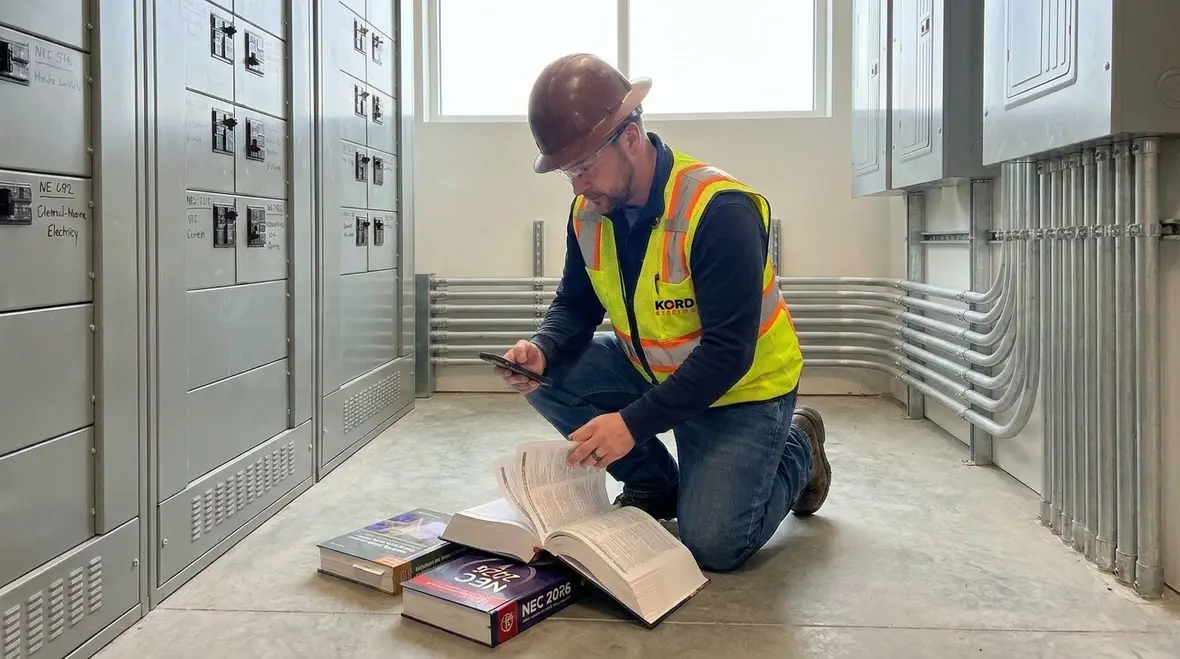
When code changes land, they do not just shift paperwork. They reshape the entire build process: design choices, equipment submittals, installation methods, and the way inspectors evaluate compliance. NEC 2026 updates commercial electrical requirements often show up at the intersection of load calculations, service grounding, feeder protection, and the way circuits get grouped and identified. Therefore, a plan that “usually passes” in one cycle may need more clarity in the next.
Our team has found that the biggest delays come from mismatches between drawings and field conditions. So, we advise clients to treat this as a coordination project, not just an electrical one. In addition, our technicians take time to document what they install, because good documentation turns a stressful inspection into a calm conversation.
And if you are wondering whether this feels a little like pop culture “mystery box” logic, you are right. The inspector opens the box, checks the contents, and decides whether you brought the right things. We simply make sure you do.
If you want to see how this plays out in real projects, our recent piece on electrical system documentation best practices for commercial facilities walks through how records and labeling support smoother inspections under newer code expectations.
Service, grounding, and bonding: safety improvements that show up early
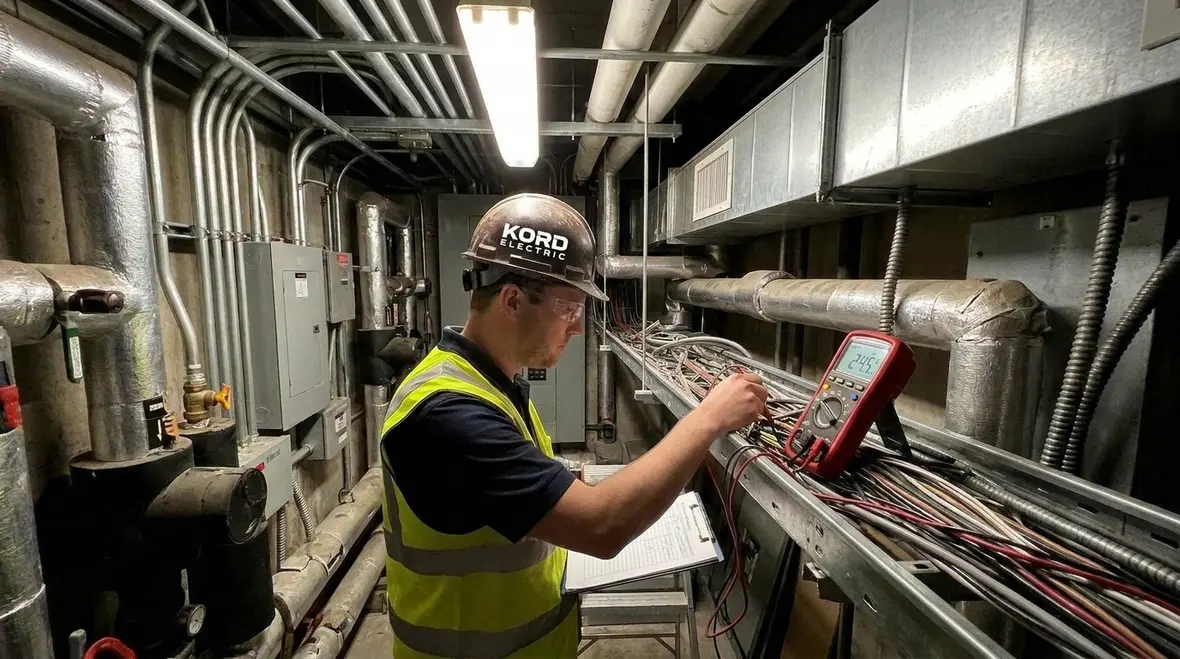
Commercial and industrial facilities depend on stable grounding and bonding because they host sensitive controls, HVAC drives, automation systems, and large motor loads. As NEC 2026 updates commercial electrical requirements evolve, the emphasis on how systems reference ground increases. That affects service equipment selection, bonding paths, and how contractors confirm continuity and termination quality.
From our experience, grounding details matter most when facilities share power systems across buildings, or when a campus adds generators, switchgear, or solar tie-ins. Therefore, Kord Electric plans bonding and grounding like we plan fireproofing: early, measured, and verified.
Our expert service staff also explains the “why” behind these requirements. In simple terms, solid bonding helps fault currents behave as expected, and it keeps touch voltages lower when something goes wrong. It does not stop faults, but it reduces the damage and helps protection devices act properly. That is the part that keeps people safe and keeps downtime shorter.
Where grounding and bonding collide with real projects
On paper, service, grounding, and bonding can look like a handful of diagrams and notes. In the field, they show up as extra conductors that someone is tempted to omit, terminations that need cleaning and torque verification, and bonding jumpers that must bridge metallic paths across equipment. Under NEC 2026 updates commercial electrical usage patterns, facilities with more electronics and sensitive controls rely even more on these unseen details.
We often see issues when a campus or multi-building site grows in stages. First, one building gets a new service, then another gains a generator, then a third adds solar or battery storage. Unless someone steps back and evaluates how all of those systems reference ground and tie together, fault currents and step voltages can behave in ways that surprise both owners and inspectors. Our job is to keep those surprises from showing up on your project.
Wiring methods and ampacity: where field reality meets the code
In commercial electrical installations, wiring methods and ampacity rules can drive material choices. For example, conduit fill, temperature ratings, and derating assumptions all affect whether your design can truly handle the loads it claims. With NEC 2026 updates commercial electrical trends continuing toward clearer expectations, crews must document conditions like ambient temperature, conductor insulation ratings, and installation spacing.
We see this in real projects: a spec sheet might assume one environment, but a utility room runs hotter, or a run gets placed near steam lines, or cable trays get loaded differently than planned. Then, the “safe” design becomes questionable. Consequently, we make sure our technicians confirm routing and separation distances during rough-in, not after the fact.
To keep things smooth, we often use a quick pre-install review. Then we coordinate with general contractors and mechanical teams so wiring routes match the space they actually build. It is boring in the best way. It prevents the kind of rework that makes project managers age ten years in a week.
Why ampacity is not just a table lookup anymore
The more complex a commercial project becomes, the more ampacity turns into a moving target. Adding insulation to improve energy performance, changing how mechanical ducts route through ceilings, or stacking additional circuits in shared pathways all influence conductor temperatures and allowable loads. Under NEC 2026 updates commercial electrical usage, ampacity assumptions must match reality, not wishful thinking.
We encourage facility teams to treat ampacity as a living constraint that should be revisited when layouts shift. If a project adds more circuits to an existing tray, or if mechanical teams change equipment locations, that is the right time to pause and confirm the numbers. It is far easier to adjust conduit sizes or conductor counts on paper than to tear out newly installed runs after the first inspection.
Overcurrent protection and circuit identification: faster fault finding, fewer surprises
Faults still happen. The difference is whether the facility can find the problem quickly and restore service without a long outage. NEC 2026 updates commercial electrical expectations place stronger focus on how circuits get protected and identified. That includes the proper rating and application of overcurrent devices, along with consistent labeling that matches the as-built wiring.
When circuit identification stays messy, troubleshooting becomes guesswork. And guesswork is expensive, especially in industrial facilities where production schedules do not pause for “electrical detective work.” Therefore, Kord Electric treats labeling as a core deliverable, not an afterthought.
Our technicians verify panel schedules, directory names, and field labels. Then we match them to actual circuit paths. In many cases, our expert service staff also helps facility teams plan a maintenance-friendly structure. As a result, operators and electricians can isolate a problem faster and reduce downtime.
Yes, we still joke that your building should not require a decoder ring. But the truth is, clear identification is how you keep the lights on and the team moving.
Labeling and overcurrent protection as part of preventive strategy
Consistent labeling and correctly applied overcurrent devices do more than help after something fails. They also make it easier to plan upgrades, add circuits, or redistribute loads without creating new hazards. When directories and panel schedules line up with reality, a facility manager can see which spaces still have capacity and which panels are approaching their limits.
That is why we often pair labeling improvements with broader reviews like an electrical service panel capacity evaluation. NEC 2026 updates commercial electrical usage patterns, and as buildings add more electronics, EV infrastructure, and automation, clear panel data becomes the foundation for safe growth.
Emergency power, backup systems, and life safety continuity
Commercial and industrial properties use emergency power to protect people, processes, and critical equipment. As code expectations evolve in NEC 2026 updates, the requirements around emergency systems, transfer equipment coordination, and installation practices become more specific. That matters for hospitals, manufacturing plants, data and telecom spaces, and major property buildings with life safety loads.
Our approach is to coordinate emergency and legally required standby systems with the facility’s operational needs. First, we review what loads the building must carry. Then we verify that wiring, protective devices, and transfer pathways match the design intent. Finally, we test and document the results so the system operates as intended under real switch conditions.
Because downtime costs money, we plan outages like we plan the work. We schedule shutdowns, communicate clearly with site leadership, and use staged installation when possible. Thus, your operations keep moving while we complete compliant upgrades.
In a way, emergency systems are the building’s “backup singer.” When they perform well, nobody notices. When they do not, everyone hears it immediately.
Coordinating redundancy and emergency readiness
Modern commercial and industrial sites lean heavily on redundant power paths, whether through generators, UPS systems, or dual utility feeds. NEC 2026 updates commercial electrical usage in these environments by clarifying how life safety, legally required standby, and optional standby systems should coexist. Coordination between breakers, transfer switches, and distribution panels becomes a design problem and a commissioning problem.
For facilities where uptime is critical, we often combine this work with lessons from projects focused on data center power redundancy. The same principles—clear priorities, defined failure modes, and documented test results—translate directly into better emergency readiness for offices, manufacturing floors, and major property buildings.
Real compliance strategy for commercial and industrial teams
Code updates can feel broad, but compliance becomes manageable when teams follow a repeatable plan. For commercial and industrial facilities, we recommend four steps that reduce risk and speed approvals.
- Review the project early: our technicians and estimators help interpret how the latest NEC 2026 updates commercial electrical expectations affect your specific scope, not a generic scenario.
- Confirm equipment and ratings: we check switchgear, transformers, breakers, grounding components, and cable types against the application, temperature, and installation method.
- Coordinate routes and environments: we align electrical routing with mechanical, structural, and process needs so ampacity and wiring conditions stay valid.
- Document everything: our service staff emphasizes clear as-built notes, labeling, and test results that match drawings.
Additionally, Kord Electric supports ongoing facilities by helping teams plan upgrade paths. Instead of doing everything at once, we can stage improvements around maintenance windows and budget cycles. That keeps compliance work from becoming a constant disruption.
Connecting NEC 2026 planning to long-term infrastructure upgrades
Treating NEC 2026 updates commercial electrical usage as a one-time hurdle misses the bigger opportunity. Each code cycle is a chance to align your electrical backbone with how the business actually operates today—and how it plans to grow. That is why we often combine code-driven work with structured planning efforts similar to our electrical infrastructure upgrade planning guide. When you look at loads, equipment age, and compliance together, your projects stop feeling like emergencies and start feeling like strategy.
Where to focus first inside your commercial electrical system
If you are not sure where to begin, start with three areas:
- Incoming service equipment and main distribution, where NEC 2026 updates commercial electrical usage will likely drive changes to protection, labeling, and grounding.
- Panels feeding life safety, critical process, and IT loads, where even short outages can cause outsized impact.
- Spaces with high ambient temperatures or dense wiring, where ampacity and derating assumptions may no longer line up with real conditions.
From there, you can build a roadmap that folds in preventive maintenance, capacity reviews, and targeted upgrades, rather than waiting for an inspection comment to set the agenda.
FAQ: NEC 2026 changes for commercial electrical systems
Facility teams ask similar questions as they prepare for new code cycles. Below, we collect the most common ones and answer them in plain language.
|
Potential inspection focus
|
How Kord Electric helps
|
Ready for NEC 2026 compliance with less stress and better results?
If you manage a commercial, industrial, or major property building, now is the time to align your electrical plans with the latest NEC direction. Kord Electric brings trained technicians and an expert service staff that explains changes clearly and installs with field realities in mind. We help you plan upgrades, avoid rework, and support smooth inspections through documentation and verification. Call Kord Electric today, and let us make your next project feel less like a plot twist and more like a well-run production.
For owners who need to understand how compliance intersects with design fundamentals, the article on electrical codes in commercial buildings connects code language to day-to-day project decisions. When you pair that perspective with a structured approach to NEC 2026 updates commercial electrical usage, you get fewer surprises and more predictable approvals.
If your facility is in Southern California and you need a partner to carry these plans into real projects, explore our dedicated Los Angeles County commercial and industrial electrical services. We align design, installation, and maintenance with the way your building actually operates, so code compliance and uptime move together instead of fighting each other.
When you are ready to move from ideas to a specific project, our broader commercial service offerings—spanning capacity evaluations, preventive maintenance, and infrastructure upgrades—provide the structure needed to turn NEC 2026 requirements into clear scopes of work. That is how inspections become checkpoints, not cliffhangers.