
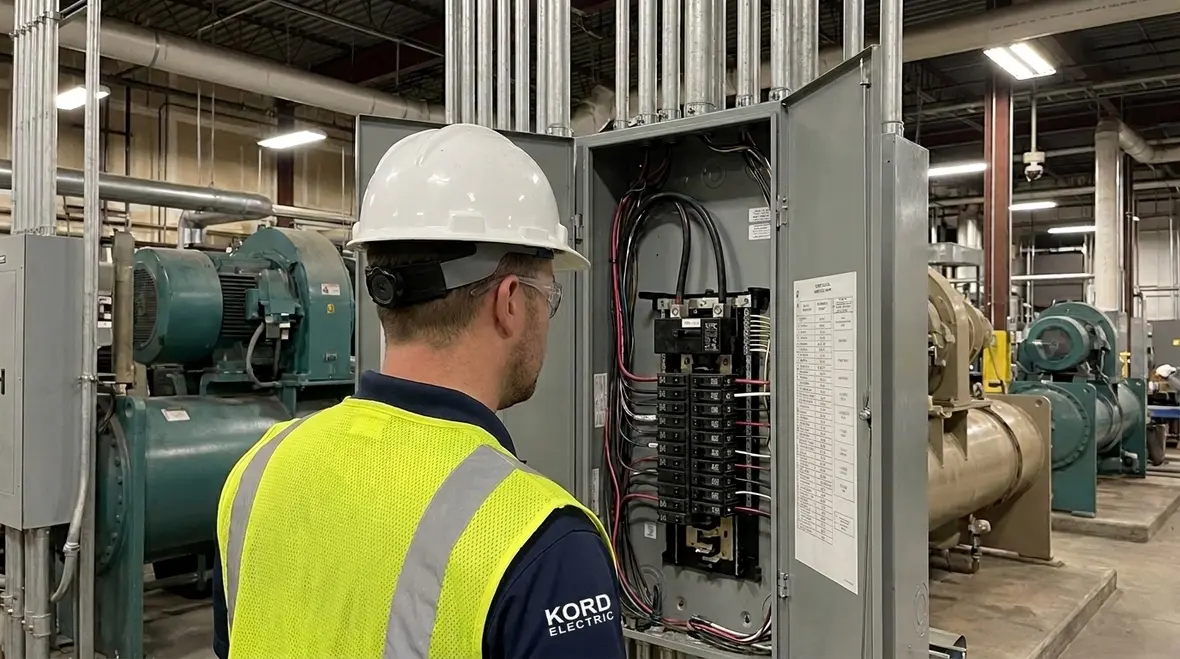
NFPA 70 NEC 210.24 Branch Circuit Summary Guide
NFPA 70 Section 210.24 sets the tone for how branch circuits get handled in real buildings. In our NEC 210.24 branch circuit summary table, you will see a clear approach to circuit sizing, wiring rules, and the basic expectations for what a branch circuit must do. We use that NEC 210.24 branch circuit summary as a starting point, not as a blindfold, because commercial and industrial facilities live and die by dependable power. And yes, that includes the stuff that never looks glamorous until it fails. In this article, a team at Kord Electric explains how the rules work, why they matter, and how we help facilities meet them the right way. Our technicians break the details down in plain language, so your electricians, facilities staff, and inspectors stay aligned.
Why NEC 210.24 branch circuit rules matter in commercial buildings
Commercial and industrial power systems do not behave like home systems. They run motors, serve process loads, support life safety needs, and keep operations steady through normal use and peak demand. Therefore, when branch circuits get designed poorly, the result often shows up as nuisance trips, overheating conditions, voltage drops, and equipment downtime. Furthermore, when the design contradicts the code, you do not just risk performance. You risk inspections, rework, and delay.
At Kord Electric, we follow the NEC 210.24 branch circuit summary as part of a bigger plan. We treat it as a checklist that supports engineering judgment. In other words, we use the table to guide the “what,” and we use design calculations to confirm the “how.” Our expert service staff also explains what the table expects so your project team understands the logic, not just the rule.
And if you are thinking, “We will figure it out later,” we hear that a lot. Later is where sparks, angry emails, and late-night calls live. We prefer earlier, calmer, and cleaner.
What the Section 210.24 branch circuit summary table is really doing

NEC Section 210.24 works as a guardrail for branch circuits across common system types. The summary table helps designers and electricians understand how to apply rules without searching through every corner of the NEC every time they size a circuit. In practice, it supports consistent decisions for things like conductor selection, circuit ratings, and permitted uses.
To put it simply, the table organizes the expectations so the installation does not become a guess. It also reduces the chance that a field team improvises. Improvising is fun in movies, but in electrical systems it usually becomes a “learning experience” that costs money.
Our technicians walk your site through the intent behind the table. For example, if a facility has mixed loads, we explain how the branch circuit requirements change based on equipment type and operating conditions. Then we show how that affects panel schedules, labeling, and field installation. That way, the design matches the real-world equipment you operate.
If you want a deeper foundation before you live inside the details of Section 210.24, you can also review our broader resource, Understanding NFPA 70: The National Electrical Code Explained for 2026, which connects the big-picture NEC structure to the branch circuit chapters your team works with daily.
How we apply NEC rules during design and field planning

When we work with major property buildings, we do not only read the rule. We translate it into installation steps that crews can follow. First, we review the electrical one-line, equipment data, and load list. Next, we map those loads to branch circuit paths that align with NEC requirements. After that, we confirm conductor sizing and terminations, and we coordinate with other systems so the power layout stays realistic.
Then, during pre-install planning, our expert service staff explains what will happen and why. We also discuss common failure points we see in the field. Some teams forget to match circuit protection to the actual load profile. Others underestimate how continuous operation affects performance. In addition, field changes can break the original circuit logic. For commercial and industrial facilities, we make sure those changes do not quietly turn into code problems.
In short, we help teams stay on track from design intent to final connections. That reduces downtime and helps your electrical system pass inspection with fewer surprises.
If you are still getting comfortable reading the code itself, our article on How to Read NFPA 70: A Practical Guide to the National Electrical Code pairs well with this NEC 210.24 branch circuit summary, giving your team a roadmap through the chapters you reference most often.
Typical branch circuit scenarios in industrial and major property buildings

Every facility has its own “usual suspects.” Even so, the patterns are consistent. A manufacturing site often runs motors and control circuits that demand careful handling of conductor temperature limits and proper circuit protection. A distribution facility may need reliable power for lighting, receptacles, and process equipment. A major property building might include mixed tenant loads and extensive lighting circuits across multiple levels.
Because branch circuits serve different roles, we treat each scenario with its own planning approach. For instance, when circuits serve equipment that runs for long periods, we account for operational reality, not just nameplate values. Likewise, we consider how the facility will expand. If you plan upgrades, we design so future changes do not force costly rewiring that also creates compliance risk.
And yes, we see sarcasm often hidden inside project timelines. Someone says, “It is basically the same as before.” Then the equipment list changes. The load list changes. The code expectations stay. That moment is where our technicians step in and explain the differences clearly, so your project team can act with confidence.
For facilities with more specialized branch circuit needs, such as data centers or process-heavy industrial plants, we also connect this NEC 210.24 branch circuit summary to focused planning insights from resources like our guide on NEC Electrical Code for Data Centers Explained, so your branch circuits support the way your operation actually runs, not just the way it looks on paper.
Coordination, labeling, and inspection readiness that actually work
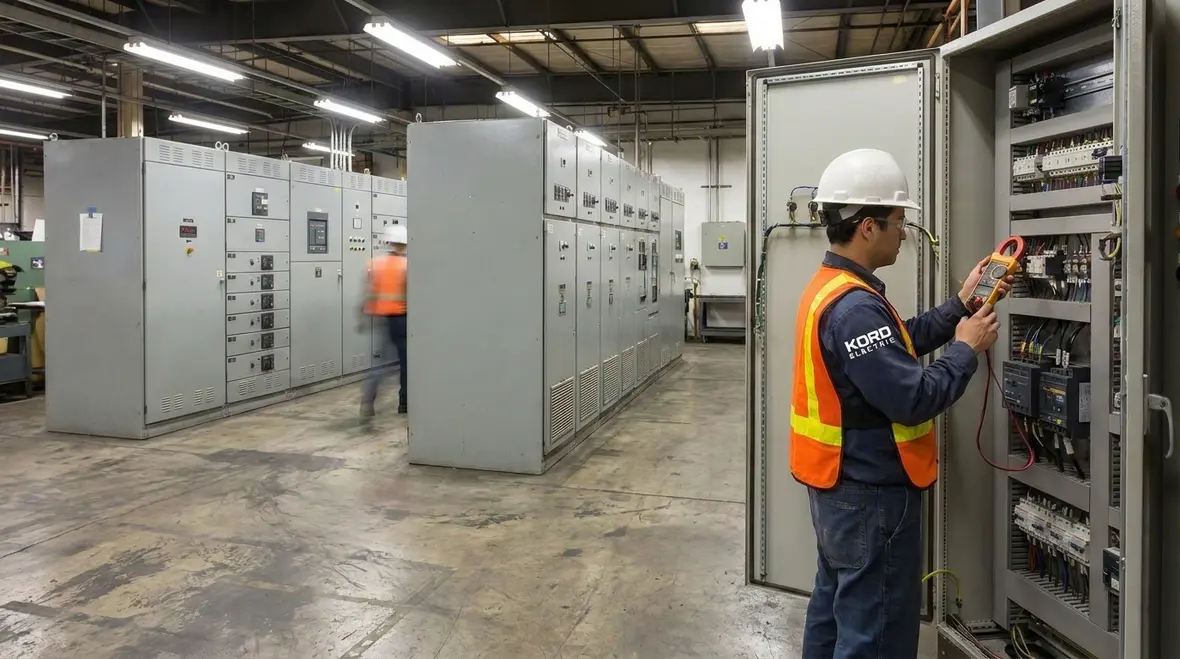
Even a solid electrical design can stumble in execution. Therefore, we focus on coordination and documentation. We help ensure that panel schedules match the branch circuit summary requirements, that labeling supports field verification, and that wiring paths remain consistent with the design.
During installation support, our technicians also verify that terminations are correct and that conductors connect to the right devices. That matters because many inspection issues come from mismatches rather than math errors. In addition, we check that the install follows the intended circuit grouping and that routing supports heat management and safe access.
We then prepare your team for inspection with clear guidance. When the inspector asks for proof, you want your records to align with what the field installed. Kord Electric supports that alignment so your facility does not waste time chasing paperwork.
If your branch circuits are part of a larger renovation or upgrade, this work also connects naturally to our broader electrical code upgrade consulting and Los Angeles market support, including services outlined in our Los Angeles County electrical services overview, where we help teams plan, permit, and pass inspections without turning every change order into a crisis.
Common mistakes we prevent before they become downtime
We have learned where projects tend to slip. First, teams sometimes misinterpret branch circuit sizing assumptions, especially when equipment schedules change midstream. Second, they may ignore the importance of matching circuit ratings to actual load behavior. Third, poor planning creates problems at the panel, like crowded spaces, confusing labels, and hard-to-follow circuits.
Furthermore, installation teams sometimes connect circuits without fully understanding how the design intended them to operate together. Then the system works until it does not, and the failure looks random. Of course it never feels random to the downtime manager. It always feels personal. We prevent that by making sure the electrical intent stays visible throughout the work.
Our expert service staff explains those risks to your project team in plain language. We do not just say “be careful.” We show the real outcomes that follow when branch circuit logic gets skipped. That clarity makes field decisions faster and safer.
We also connect these lessons to related NEC sections that shape branch circuit behavior, such as NEC 110.1 general safety scope and NEC 210.6 branch circuit voltage limitations, so your NEC 210.24 branch circuit summary does not live alone on an island. Instead, it becomes part of a code-aware framework that keeps conductors, protection, labeling, and voltage choices pulling in the same direction.
FAQ about NFPA 70 and branch circuit requirements
Next steps with Kord Electric for compliant branch circuit planning
If you want branch circuits that support dependable operations and smoother inspections, we can help. Kord Electric brings experienced technicians and an expert service staff mindset to design coordination, installation support, and compliance readiness for commercial and industrial facilities. Tell us what equipment you run, how the building operates, and what phase you are in. Then we will map the electrical intent to practical field steps so the NEC expectations stay clear. Contact us today to schedule a review and keep your project moving, not stumbling.
For facility leaders planning broader upgrades beyond branch circuits alone, this same approach connects naturally to our regional service work through offerings like our Los Angeles County commercial and industrial electrical services. There, we pair NEC-informed planning with field-tested execution so your boards, feeders, and branch circuits all tell the same story when the inspector walks in and when your operations ramp up to full load.
And if you want a code companion that lives next to your NEC 210.24 branch circuit summary on the bookshelf, consider bookmarking both our 2026 National Electrical Code overview and our branch circuit scope guide, so your team can jump from “what does the code say?” to “what do we do next?” in a single calm, well-planned step.


