
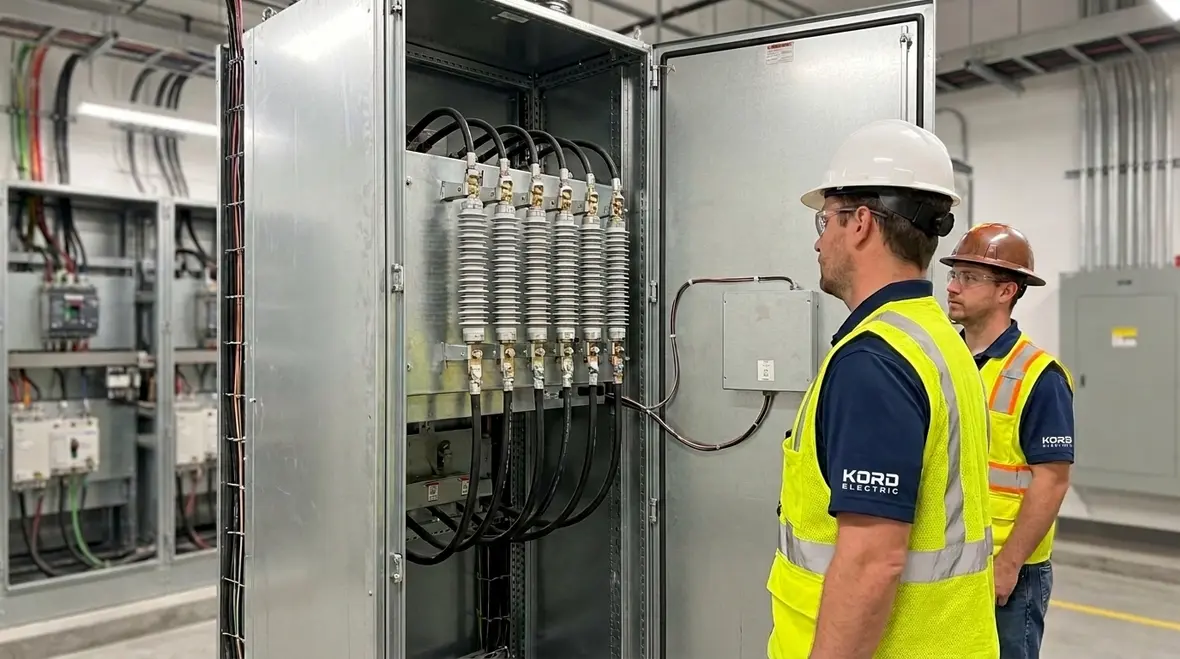
NFPA 70 Section 268.29 NEC Surge Arresters High Voltage
NFPA 70 Section 268.29 and why NEC surge arresters high voltage matter
At Kord Electric, we see it every day on commercial and industrial job sites. A lightning event, a switching surge, or even a fault somewhere upstream can send voltage spikes where they do not belong. That is why NEC surge arresters high voltage are built into the safety thinking behind NFPA 70 and Section 268.29, especially for services above 2 kV. And yes, we know, “surge arrester” sounds like something you install and then forget about. Yet if you do not plan it right, that same device can become the difference between a controlled event and expensive downtime.
In this article, we explain what Section 268.29 requires, how it connects to practical protection for major property buildings, and how our technicians guide teams through planning, selection, and field verification. We keep it calm, clear, and usable, because electrical protection should not feel like a boss fight with no save point.
What Section 268.29 requires for services over 2 kV
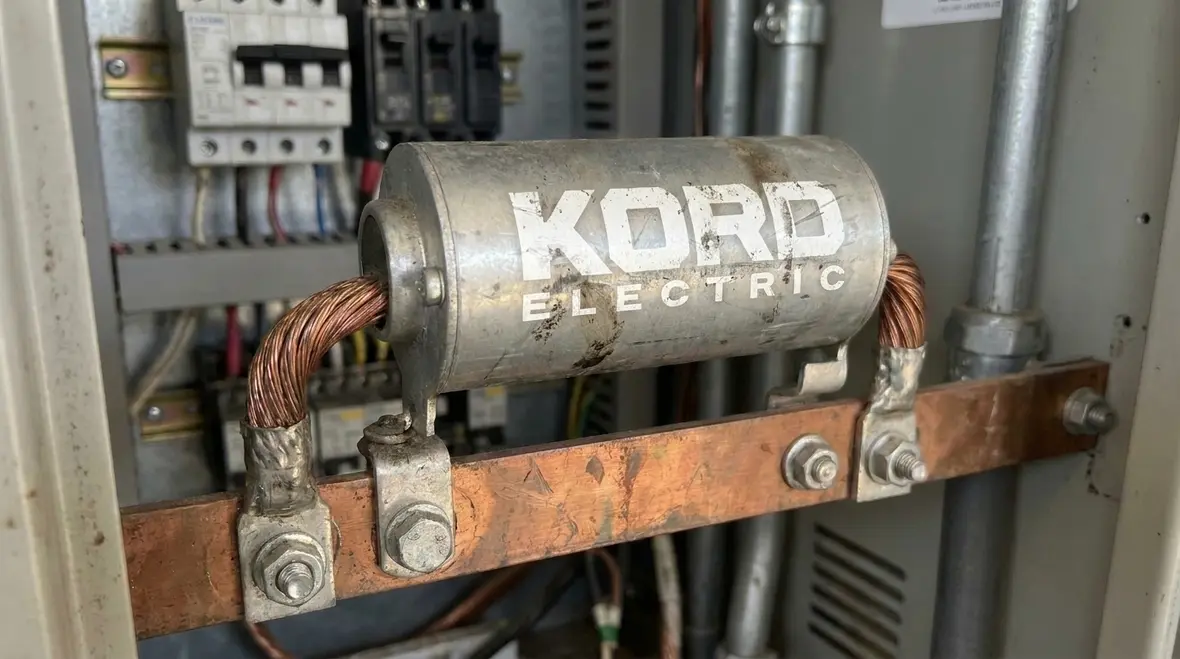
Section 268.29 addresses surge arresters for services over 2 kV. In plain terms, when the electrical service voltage crosses that threshold, the code expects you to protect equipment from transient overvoltage. Therefore, we treat these requirements as a design and risk control step, not a late add-on.
To stay on the right side of compliance and reliability, our expert service staff typically supports these decisions with a few key actions. First, they confirm the service voltage level and the one line diagram used for the facility. Next, they identify the points where surges enter the building system, including utility interface locations and service equipment. After that, they align the arrester specification with the application so it actually performs under real electrical conditions.
In addition, we also remind facility owners that surge protection is not “one size fits all.” Conditions like utility characteristics, grounding approach, conductor routing, and equipment sensitivity all affect how well the arresters do their job. So, if anyone tells you “just install the box,” we politely disagree. The box is only smart if it is installed and matched correctly.
How surge arresters protect equipment during real disturbances

When a surge hits, the goal is simple. We want the excess energy to move away from sensitive insulation systems and electronics, without turning the protection device into the event that causes the outage. So, NEC surge arresters high voltage work by providing a controlled path for surge current when the voltage exceeds safe limits. Meanwhile, during normal operation, they remain in a low stress state.
However, the performance of these protective devices depends on more than the name on the datasheet. Therefore, our technicians look at the whole picture, including
- Coordination between the arrester and downstream equipment, so protective action happens where you expect
- Electrical clearances and installation layout, because long leads can reduce effectiveness
- Grounding and bonding, since surge current needs a low impedance path
- System configuration, including phase, switching style, and how the service is arranged
Moreover, disturbances are not always lightning. Switching surges can come from capacitor bank switching, motor starts, transformer operations, or utility system reconfiguration. Even if your building has solid maintenance, electrical transients can still show up like uninvited guests who somehow know your schedule.
Where the design choices live in commercial and industrial buildings
Commercial and industrial facilities rarely share the same electrical story. A major property building might have multiple transformers, feeders that run long distances, and sensitive loads like process controls, elevators, building management systems, and data networks. As a result, the surge risk profile is shaped by the facility layout and operating patterns.
So when we support design teams and facility managers, we connect Section 268.29 to practical placement and coordination. First, we help define the entry point for surge energy at the service level. Then we support decisions for how the protection system interfaces with the switchboard, service disconnect, and grounding system. After that, we align the selected device parameters with the actual conditions of the installation.
Our approach also stays consistent with how NEC guidance is commonly explained for 2026 updates, including the broader intent to reduce damage and improve system performance. Furthermore, we emphasize that compliance is not only about installing surge protection. It also includes ensuring the installation respects the code’s requirements for safe operation, correct application, and field reality.
If your facility team wants background on how the broader code fits together, resources like our 2026 NEC application requirements guide and NFPA 70 scope pair well with this surge protection focus, and they connect neatly to our deep dive on Understanding NFPA 70: The National Electrical Code Explained for 2026 so your team sees both the big picture and the high voltage details.
Installation and testing: what our technicians verify on site
At Kord Electric, we do not treat surge protection like a checkbox item. We treat it like a protection system that must work when it matters. Therefore, our technicians document the key steps and verify the installation details that influence performance.
Typically, we focus on these practical checks
- Proper device selection for the facility’s service conditions and the required voltage class
- Correct mounting and routing, because physical layout affects electrical performance
- Ground connection quality with attention to bonding and connection resistance
- Clearances and insulation integrity, so the system remains safe under normal and fault conditions
- Labeling and documentation, so future maintenance does not turn into mystery theater
And yes, we occasionally hear a joke like “once it is installed, it is done.” Yet surges do not ask permission. They arrive, they stress insulation, and they test your assumptions. That is why we often recommend periodic inspection and maintenance practices aligned with the facility’s risk profile and the protection equipment’s service life.
Common mistakes that create compliance and reliability problems
Even strong teams can stumble in the surge arrester high voltage conversation. That is normal. Electrical protection is technical, and field work introduces variables. Still, we see repeating issues that compromise performance, and we want facility decision makers to avoid them.
Here are the problems we watch for most often
- Choosing the device without confirming system details, so the device does not match the actual service conditions
- Underestimating grounding and bonding, which can increase surge voltage at equipment terminals
- Installing with poor routing, which adds impedance and reduces the surge path effectiveness
- Skipping coordination, leading to mismatch between upstream and downstream protection actions
- Treating documentation as optional, so troubleshooting later becomes slow and costly
To keep your facility protected, we recommend a methodical review of the single line diagram, equipment list, and grounding approach before procurement. Then we validate during installation. Finally, we confirm the system matches the plan. In other words, we prefer a plan, not a prayer. Lightning loves prayers, and equipment does not.
Frequently asked questions about NFPA 70 Section 268.29
Because NEC surge arresters high voltage requirements tend to raise the same questions across commercial and industrial projects, we pull the key points into a simple reference.
| Question | Quick answer |
| What does NFPA 70 Section 268.29 cover? | It addresses surge arresters for electrical services over 2 kV, aiming to reduce damage from transient overvoltage. |
| Do NEC surge arresters high voltage apply to commercial buildings? | Yes, they often apply to major property buildings and industrial facilities with service voltage above 2 kV. |
| Do we need surge protection if the facility already has good maintenance? | Yes, because surges can come from switching and utility events, not only from poor internal maintenance. |
| What affects how well surge protection performs? | Device selection, grounding quality, installation layout, and coordination with equipment all matter. |
| Who should handle design and installation? | Qualified electrical professionals with field experience, like our technicians at Kord Electric. |
FAQ
For facility teams who like to scan straight to the bottom line, here are more direct answers on Section 268.29 and surge protection strategy.
Why Kord Electric is the steady partner for NEC surge protection
When your facility depends on uptime, we treat surge protection as part of your reliability strategy, not a last minute add-on. Our technicians explain the requirements, support correct design choices for major property buildings, and verify installation details that impact real-world performance. If you want NEC surge arresters high voltage handled with care and clarity, we are ready to help. Contact Kord Electric for an assessment, and let us build a protection plan that stands up to the next surge without drama. Others chase problems after they happen; we prevent them before they do.
If your team is also mapping broader system upgrades or panel work, our guides on topics like electrical infrastructure upgrade planning and commercial electrical systems for modern buildings show how surge protection fits into a larger reliability roadmap instead of sitting alone on a shelf.
For owners and managers across Southern California who want one team to handle code-conscious design, NEC surge arresters high voltage planning, and field-ready execution, our Los Angeles County electrical services bring everything together so your operations can focus on production, not power problems.
Explore more code context through resources like Kord Electric’s blog and the KordFire code education library, and remember: compliance is easier when the work is done with experts from day one.
Plan your next surge protection step
Whether you are updating existing high voltage service equipment, planning a new major property building, or trying to align your facility with the latest NFPA 70 expectations, Kord Electric can help turn NEC surge arresters high voltage from a line item into a well coordinated protection strategy. A short conversation now can prevent long outages later.


