
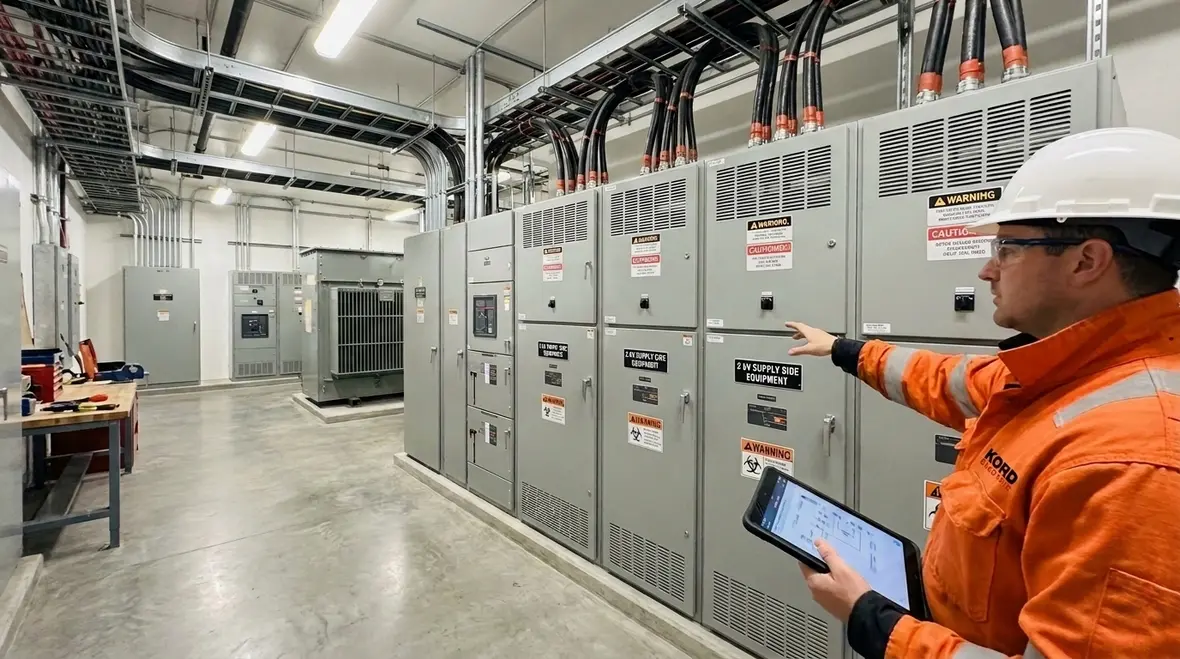
NFPA 70 Section 268.82 NEC Supply Side Equipment 2 kV
NFPA 70 Section 268.82 and NEC supply-side planning for 2 kV services
When a commercial or industrial facility upgrades high voltage service, the details matter, and they matter early. At Kord Electric, we focus on exactly that. In this guide, we explain NFPA 70 Section 268.82 through the lens of modern NEC supply-side needs, including NEC supply side equipment 2 kV used for reliable power delivery to large buildings and mission critical systems. Meanwhile, our technicians and expert service staff walk clients through the rules in plain language, because no one wants to “figure it out” during a power outage. If you want the short version, we plan the supply side so the rest of the electrical system can do its job. The longer version, of course, is why you called professionals in the first place.
How Section 268.82 shapes supply-side equipment for high voltage services

Section 268.82 addresses supply-side equipment for high voltage services. In plain terms, it helps set guardrails for how equipment gets designed, installed, protected, and maintained so the service stays safe and dependable. More than that, it supports coordination between the utility interface and the building electrical distribution.
First, this section looks at the service pathway as a whole. Then, it pushes for clear boundaries around who owns what, what the equipment must handle, and how protection should work under normal and abnormal conditions. As a result, engineers and contractors avoid assumptions that later turn into costly rework.
Our team works with facilities such as commercial campuses, industrial plants, and major property buildings. In those environments, failure is not a “learning opportunity.” It becomes downtime, loss of production, and sometimes a very loud incident report. So, we treat the supply side like the foundation of the whole power story.
What “supply side equipment” means in real projects
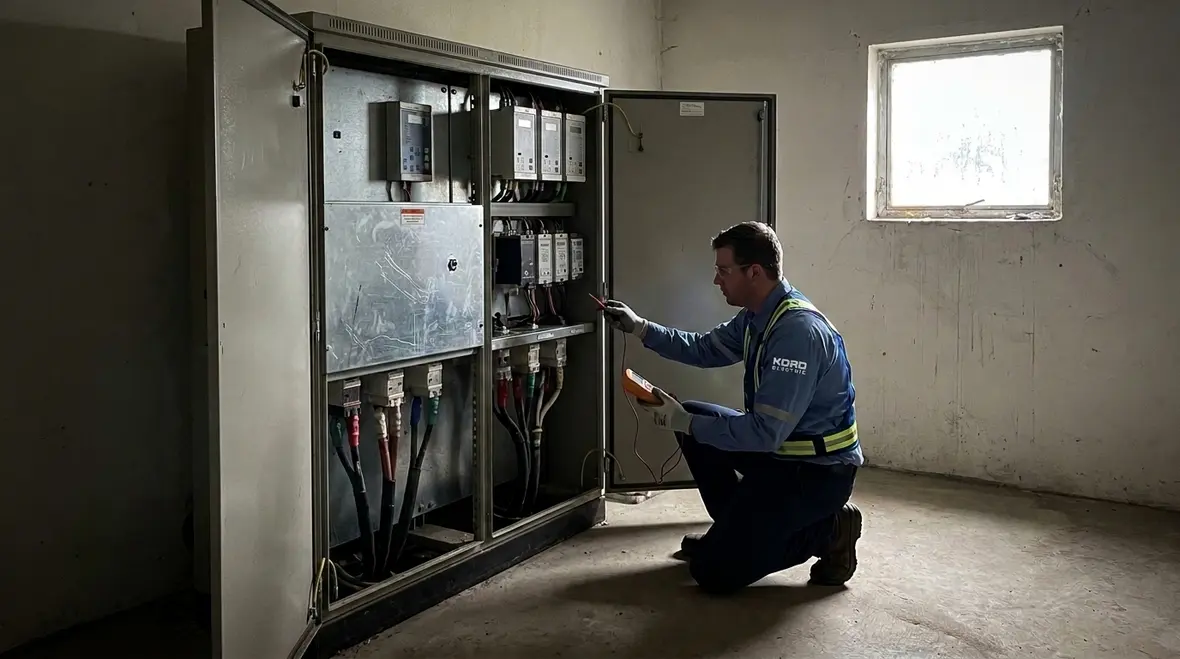
People sometimes hear the phrase and imagine a single box. Yet in practice, supply side equipment includes the parts that stand between the incoming high voltage source and the rest of the electrical system. It can include switchgear, protective devices, metering interfaces, disconnecting means, and the assemblies that route power while maintaining safe clearances and proper insulation performance.
Additionally, facilities often require documentation that shows compliance and supports inspections. Therefore, our technicians do more than install hardware. They also explain how the pieces connect, why the protection scheme matters, and how the configuration supports code intent for high voltage services.
To keep things calm, we also translate the “code language” into “field reality.” In other words, we show others what inspectors look for, how labels and diagrams support traceability, and where common mistakes hide. Yes, they hide. Electrical errors are like pop quiz questions, except the pop quiz ruins your afternoon.
Supply-side boundaries and responsibilities
On real projects, the first question we answer is “Where does the utility stop and the facility start?” Section 268.82 style thinking reinforces clear demarcation points for ownership, switching responsibility, and protection obligations. That means documenting where service conductors terminate, how disconnecting means are arranged, and which party maintains specific components over the life of the system.
For facility teams, this clarity turns into faster troubleshooting and fewer awkward debates when something needs to be de-energized for work. It also supports smooth inspections, since the drawings and labels reinforce the same story the code expects.
Using NEC supply side equipment 2 kV in commercial and industrial systems

In many high voltage building services, NEC supply side equipment 2 kV plays a central role. Moreover, it supports environments where load density is high and the electrical distribution must stay stable across day to night demand swings. When we design around a 2 kV supply-side approach, we coordinate the service equipment layout, protection settings, and physical installation details so the system can operate safely and efficiently.
Next, we connect the practical needs to the rules. For example, supply-side components must handle expected fault currents and maintain protection coordination. Also, the installation must support safe access, proper grounding and bonding, and routing that does not undermine insulation integrity.
We also help others plan for future changes. Many facilities expand, reconfigure, or add new production lines. Therefore, our expert service staff focuses on how current configuration affects later upgrades, such as additional feeders, updated metering, or revised protective device settings.
Planning 2 kV services with future expansion in mind
For commercial campuses and industrial plants, 2 kV service often becomes the backbone for everything that follows. That is why we design with growth in mind: space for additional cubicles, margin in bus ratings, and pathways for future feeders. We also coordinate with utility and authority having jurisdiction requirements so that later changes do not trigger a full redesign of the service entrance.
When clients want a broader primer on how NFPA 70 shapes their choices, we often point them to our resource on Understanding NFPA 70: The National Electrical Code Explained for 2026, then connect those big picture concepts back to the very specific demands of 2 kV supply-side design.
Protection, coordination, and why technicians explain it before it breaks
One of the most important outcomes of Section 268.82 style planning is protection coordination. If protection works well, the system clears faults fast and limits the area impacted by an incident. If protection is poorly coordinated, equipment can suffer damage, and the facility may face longer outages.
Because of that, our approach includes clear documentation and hands-on explanation. First, our technicians walk clients through the protection concept before commissioning. Then, we confirm that the protective devices match the expected short circuit conditions and that the intended operating sequence makes sense for the facility.
We also keep the conversation practical. Instead of vague statements, we outline what should happen during a fault, which sections should isolate, and how the remaining loads should stay online. Think of it like a good security team. They do not just lock the door. They also know which alarm triggers matter and how fast to respond.
Coordination studies for real-world operations
For 2 kV supply-side designs, coordination studies are not just a checkbox. They influence where we place relays, how we set time-current curves, and how we sequence isolation points. Our technicians and engineers review those studies with facility teams so everyone understands which breaker trips first and why. That way, when an event occurs, the response looks like the plan, not a surprise.
We pair this with clear one-line diagrams, labeling standards, and operational notes, so that staff performing switching, maintenance, or emergency response can move confidently instead of guessing.
Installation details that impact compliance and ongoing service
Compliance is not only about the equipment you choose. It is also about how others install it. In supply-side high voltage service, details include spacing, accessibility, labeling, and the integrity of terminations. Furthermore, proper sealing, cable management, and correct grounding and bonding help prevent issues that can show up later as nuisance alarms or, worse, dangerous conditions.
Additionally, we address how maintenance works in the real world. Commercial and industrial facilities cannot always shut down for long periods. So, our expert service staff helps plan maintenance windows and supports strategies that reduce downtime risk.
When we deliver service for major property buildings, we also consider how the electrical room functions day to day. Ventilation, access routes, and clear labeling matter. And yes, people will thank you later when they can find the right disconnect on the first try. No one enjoys “electrical scavenger hunts,” and that includes us.
Designing for maintainability and safe access
High voltage rooms that meet code but ignore human behavior tend to age poorly. We prioritize working clearances, logical equipment arrangement, and lighting levels that support safe work. We also think about how test equipment, infrared inspections, and routine visual checks will happen in tight schedules. A compliant system that is easy to maintain will typically stay safer and more reliable across its life.
For building owners who want to understand how these decisions fit into broader code navigation, resources like our guide on how to read NFPA 70 help connect day-to-day tasks with the bigger rulebook.
Plan ahead: inspections, documentation, and the supply chain
Large projects involve more than code knowledge. They involve schedule pressure, procurement lead times, and coordination between multiple parties. As a result, our team supports planning that keeps compliance on track without delaying the facility.
First, we help others prepare inspection friendly documentation. Then, we coordinate installation steps so field work aligns with what inspectors and engineers require. Also, we keep an eye on how equipment specifications match the intended 2 kV supply-side goals and protection coordination needs.
We also respect that utilities and service entrance requirements can differ. So, we align the building design with the utility interface early, not after the equipment arrives. If the supply side does not match the service plan, it does not matter how good the rest of the distribution looks. The foundation still has to fit.
Integrating supply planning with electrical design
Because long lead items and specialized 2 kV components can affect commissioning dates, we fold supply chain planning into the same conversations as coordination and layout. Tools similar to those we use in our electrical supply planning for construction projects help us track what is ordered, when it arrives, and how it lines up with field activity.
By treating documentation, inspections, and procurement as part of the same story, we help keep supply-side work from becoming the bottleneck that delays the rest of the electrical distribution.
Where Section 268.82 meets real facility priorities
When facility leaders read code sections like 268.82, they see technical language. When our technicians read it, they also see uptime targets, safety responsibilities, and future projects that will tie into today’s decisions. That is why we connect every requirement back to three priorities: keeping people safe, keeping operations running, and keeping options open for the next phase.
In environments like data centers, process plants, and large commercial campuses, a well-designed supply-side system supports emergency power strategies, redundancy plans, and future upgrades. For example, when we design emergency power for business continuity, we often start at the same supply-side conversations highlighted here. If the source and interface are not stable, no amount of downstream backup gear will feel truly reliable.
Connecting code intent with business continuity
Code intent, especially in NFPA 70, is not just to pass inspections. It is to reduce predictable risks. Section 268.82’s focus on supply-side equipment complements strategies for surge protection, redundancy, and testing routines. Together, they help facility owners treat high voltage service not as a mystery, but as a controllable, documented system that lines up with budgets and operational goals.
For facilities across the region, our Los Angeles County electrical services team brings the same combination of code literacy and practical experience, so that Section 268.82 planning does not live only on paper. It shows up in real equipment rooms, real commissioning steps, and real uptime statistics.
FAQ
Conclusion
Section 268.82 is not just a line in a book. It is a roadmap for how supply-side equipment should support safe, dependable high voltage service for commercial and industrial facilities. At Kord Electric, our technicians and expert service staff explain the rules, then we apply them with planning, documentation, and protection coordination. If you are building, upgrading, or modernizing a major property electrical service, reach out to us. We will help you design a supply side that performs when it counts.
Whether your next step is clarifying NFPA 70 requirements, mapping a 2 kV service, or aligning emergency power with supply-side realities, our team is ready to help translate code into calm, reliable operation. From early concept sketches to final commissioning, we keep the focus on safety, uptime, and future flexibility, so your electrical system behaves like the quiet, dependable backbone it was meant to be.
To explore how these concepts apply to your facility, you can start with our broader NEC overview resources or connect directly with our regional field team for a project-specific review. Either way, you do not have to navigate Section 268.82 alone.


