
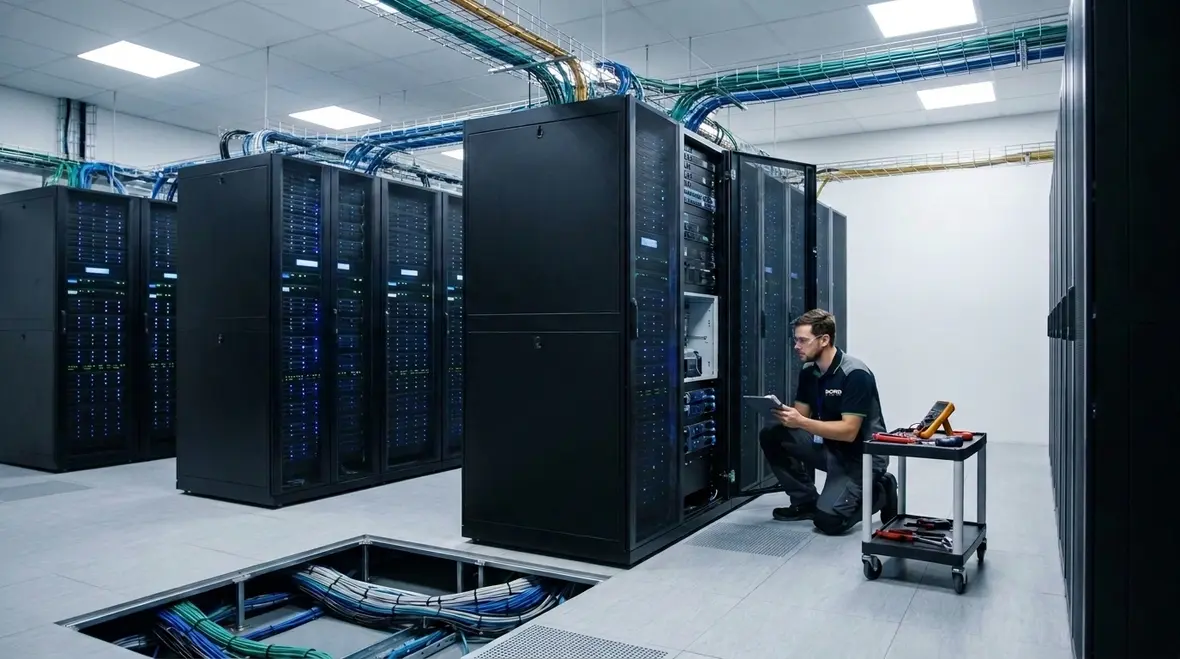
NFPA 70 Section 646.1 IT Room Scope Explained
NFPA 70 Section 646.1 IT room scope, explained for commercial and industrial buildings
In the real world, commercial and industrial owners do not get to “hope” their power systems behave. They need them to behave, especially in an IT room scope that covers how equipment and wiring get installed, protected, and managed. In NFPA 70 Section 646.1, we focus on the rules that apply to an IT room, which helps define how sensitive electronics get served safely and reliably.
At Kord Electric, our technicians and expert service staff walk through this with you in plain language, because code language can sound like a legal thriller where every character is a number. And yes, we have jokes ready. Still, we treat the work with the calm precision it deserves.
What the NEC aims to do for real power in IT rooms
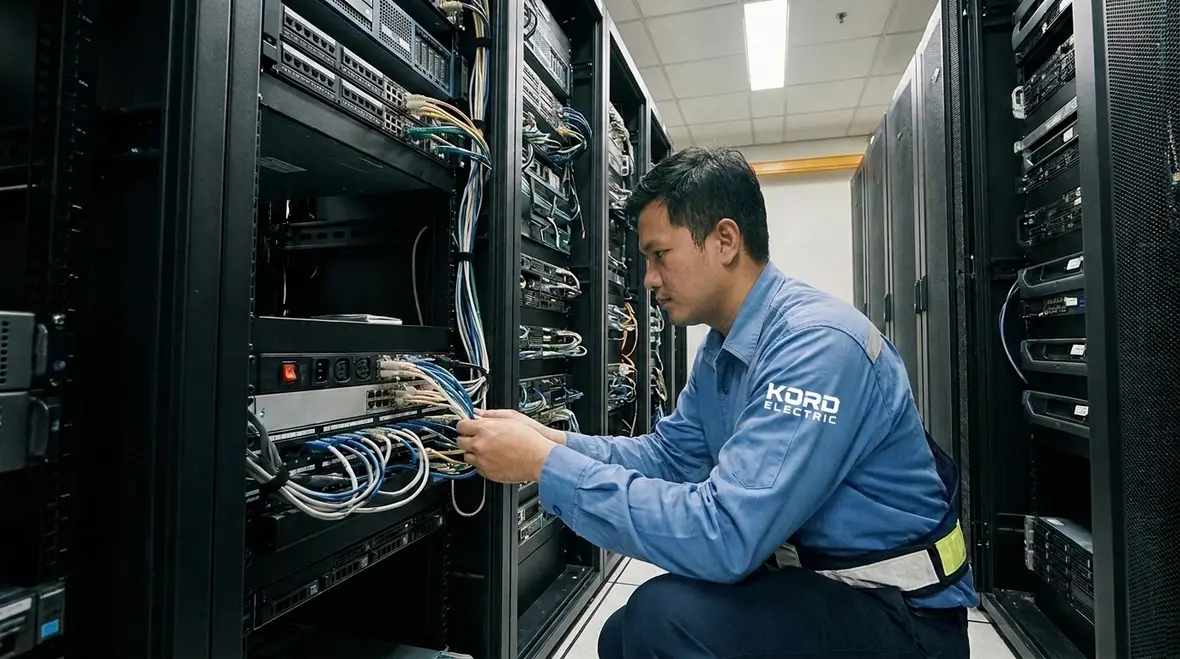
NFPA 70, also known as the National Electrical Code (NEC), sets practical safety standards for electrical installations. However, the goal is not paperwork. The goal is to reduce shock and fire risk, and to keep critical systems functioning when conditions get stressful.
IT rooms earn extra attention because they host equipment that cannot tolerate careless wiring, poor bonding, or incorrect support methods. Therefore, we explain the NEC as a chain of cause and effect. When installers follow the rules, you reduce failures that disrupt operations and trigger costly downtime.
Our technicians at Kord Electric often see the same pattern: a facility designs for business needs, but the electrical details get patched later. Then, when the building adds servers, storage, or network upgrades, the original decisions stop matching reality. Consequently, compliance must grow with the facility, not trail behind it like a late intern chasing a checklist.
For facility leaders who want a broader perspective on how the NEC shapes real projects beyond the IT room, our guide to Understanding NFPA 70: The National Electrical Code Explained for 2026 connects the code’s big-picture goals with everyday design and installation choices.
NFPA 70 Section 646.1: IT room scope requirements in plain terms

NFPA 70 Section 646.1 establishes the IT room scope for the specific environment where information technology equipment is installed. It sets the boundary for when the rules in that Article apply, and that matters because those conditions differ from typical office wiring.
In practical terms, we guide clients through the “why” of the scope so that design, installation, and inspection align. For example, an IT room often includes dedicated circuits, specific equipment placement, and a focus on proper grounding and bonding. Also, the routing and protection methods can differ from general wiring paths, especially where reliability matters.
When our expert service staff explains these requirements, we translate the code sections into jobsite actions: how teams should plan conductor routing, how they should handle equipment grounding, and how they should keep clearances and support details correct. This prevents the classic problem where everything looks fine during the walkthrough, but it fails under load, maintenance work, or later additions.
While teams may point to the NEC as a single source, others also rely on related fire and safety resources. That is why we stay aligned with the guidance found across NFPA 70 focused materials and trade resources, such as the approach described on Kord Fire’s NFPA 70 overview and coordinated safety communities, because safe building systems work as a team.
How modern facilities handle power quality, grounding, and protection
After you define the IT room scope, you must make the power behave. Therefore, the next layer includes grounding, bonding, overcurrent protection, and how equipment receives power without noisy faults or unsafe paths.
We help commercial and industrial facilities treat these topics as systems, not isolated parts. For instance, if a facility improves equipment grounding but neglects bonding paths at metallic systems, you can still get unpredictable behavior. Likewise, protection devices must coordinate so that the right device clears the fault while critical circuits stay stable.
Our technicians often use a “walk down the electrons” approach. First, we map where power originates. Next, we trace how it reaches the IT equipment. Then, we confirm how the system handles abnormal conditions. This is not slow for the sake of being slow. It is the fastest way to avoid rework after the inspection, and rework costs real money.
And yes, power quality issues can feel like ghost stories. Everything works perfectly until one day it does not. Still, with proper design choices, those ghosts stay in their own universe.
For facilities working on a broader code and reliability roadmap, resources such as our articles on NFPA 70 and NEC basics for ungrounded conductor overcurrent and the 2026 NEC application requirements and NFPA 70 scope can complement NFPA 70 Section 646.1 IT room scope decisions.
Planning installation so the code matches the equipment life cycle
Commercial and industrial buildings do not freeze. They expand. They reconfigure. They add racks, replace servers, and update cooling plans. Because of that, the electrical system must support a life cycle, not just a snapshot.
We recommend facilities plan the IT room like a living space. For example, teams should consider physical layout and cable routing early, because after walls go up, adding capacity becomes painful. Furthermore, they should plan for how maintenance gets done without damaging existing circuits or disturbing grounding points.
Our expert service staff also works with operations teams on practical constraints. They ask questions like how many outages the business can tolerate and how quickly the team needs to restore service. Then, they align electrical choices with those realities.
For our commercial and industrial clients, this includes coordinating installation schedules with other building trades, verifying correct termination practices, and ensuring that labeling supports future work. It is boring. It is also how you avoid the moment when a future technician stands there, holding a label that does not match anything. We have all seen that. We try to prevent it.
If your renovation or expansion goes beyond the IT room, our article on electrical code upgrade consulting for renovations walks through how NFPA 70 planning can keep the rest of the facility aligned with the same calm, structured approach you expect in IT spaces.
Testing, documentation, and inspection readiness for IT room scope
Even the best design can fail if the installation does not get verified. As a result, Kord Electric focuses on testing and documentation that support both safety and long term reliability.
Our team helps you prepare for inspection by building a clear paper trail and a clear field process. We confirm installation details, verify grounding continuity where applicable, and check that protection devices match the circuit design. Then, we document what was verified so that future maintenance teams do not start from guesswork.
This is where our technicians earn trust. They do not just complete a task. They explain what they did and what it means. They also point out items that may look acceptable but can create problems later. In other words, we treat inspection readiness as a daily habit, not an event you scramble for at the end.
Moreover, when clients use related safety resources and coordinated building safety planning, they reduce gaps between electrical work and fire safety expectations. That coordination fits the broader safety perspective reflected across NFPA 70 education efforts from partners like Kord Fire and major safety communities.
How Kord Electric supports commercial and industrial facilities
We serve commercial and industrial facilities and major property buildings. We do not treat this work like a weekend side project. Our approach stays consistent: understand your building goals, confirm how the IT room scope applies in your project, and build an electrical system that keeps critical equipment stable.
Our technicians and expert service staff help clients from design coordination through install support and service follow up. Therefore, you get consistent messaging, clear answers, and fewer surprises. We also align our process with code expectations and practical safety planning that keeps systems reliable.
If you are upgrading an existing IT room, we can help evaluate how the electrical system performs today and how changes should happen to support new equipment. If you are building or reconfiguring, we help plan the electrical details early so the job stays clean and predictable.
We also keep the tone calm and the work precise. Because while some people treat electrical code like a maze, our team treats it like a map.
For facilities across Southern California that need more than IT room support, our Los Angeles County electrical services team can extend the same NFPA 70 Section 646.1 IT room scope mindset to panels, feeders, emergency power, and other critical distribution infrastructure.
FAQ: quick answers about NEC and IT room scope
Conclusion and call to action
If your facility has an IT room, you should not leave the details to chance. Kord Electric helps commercial and industrial teams understand NFPA 70 Section 646.1 IT room scope, plan grounding and protection correctly, and verify the installation so inspections feel straightforward. Our technicians explain the “why,” not just the “what,” and we support you through upgrades and service needs. Contact us today to schedule an assessment and build an electrical plan your operations team can trust.


