Redundant Data Center Power Design N Plus One 2N Fault Tolerance
Redundant Data Center Power Design: the calm plan that keeps lights on
In commercial and industrial facilities, a power event should never turn into a full production drama. That is why we build with Redundant Data Center Power Design: N+1, 2N & Fault Tolerance right at the start. We use N+1 to keep one path available even when a unit needs repair. We use 2N to keep full independence when the risk level calls for it. Then we apply fault tolerance so a single failure does not grow into a cascading outage. Our process feels steady, because our technicians explain each step in plain language, and they verify every claim with testing. Think of it like backup dancers for your electrical system. They may not look exciting on day one, but on show night, they save the performance.
How we choose N+1 for real site risk, not theory
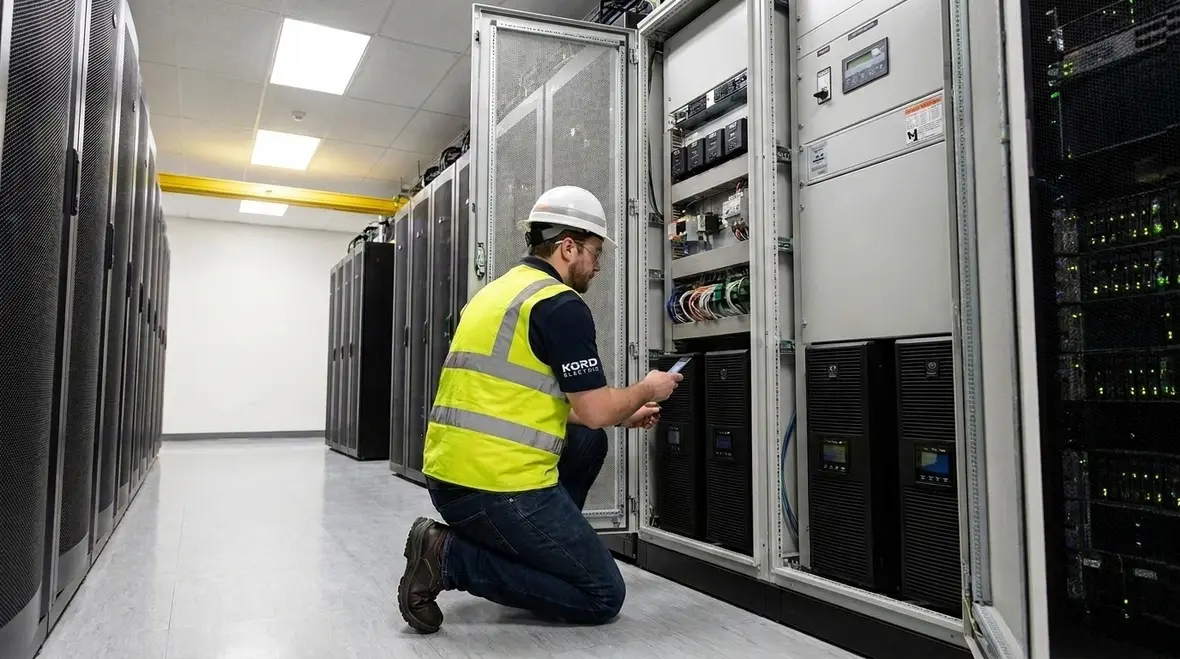
When people hear redundancy, they often picture a big checklist. However, our teams at Kord Electric look at what actually happens when something fails. First, we review utility reliability, generator fuel strategy, switchgear health, and how your critical loads behave under short interruptions. Then we map the outage timeline into practical impacts, like shutdown of HVAC equipment, loss of process control, or server reboot cycles. Only after that do we recommend Redundant Data Center Power Design: N+1, 2N & Fault Tolerance elements that match your risk profile.
In an N+1 approach, we still keep a spare capacity unit ready so the system stays within limits during a component outage. Yet we do not treat all loads the same. We separate critical racks, life safety circuits, process control, and mechanical loads that have different ride through needs. As a result, the electrical topology stays efficient while still meeting uptime goals. In other words, we do not overspend just because redundancy sounds good in a sales meeting. We do it because your operation cannot afford downtime, and our experts explain the tradeoffs before anything is installed.
And yes, there is always a temptation to “save” money by reducing spare capacity. That is like removing seatbelts because you trust your driving. Others might call it cost control. We call it preventable risk.
For facility teams who want a deeper dive into risk-based planning, Kord Electric also shares practical field lessons in our Data Center Power Redundancy Strategies Guide, where we walk through how real-world operations shape redundancy choices instead of leaving them to theory.
When 2N becomes the right answer for mission critical uptime
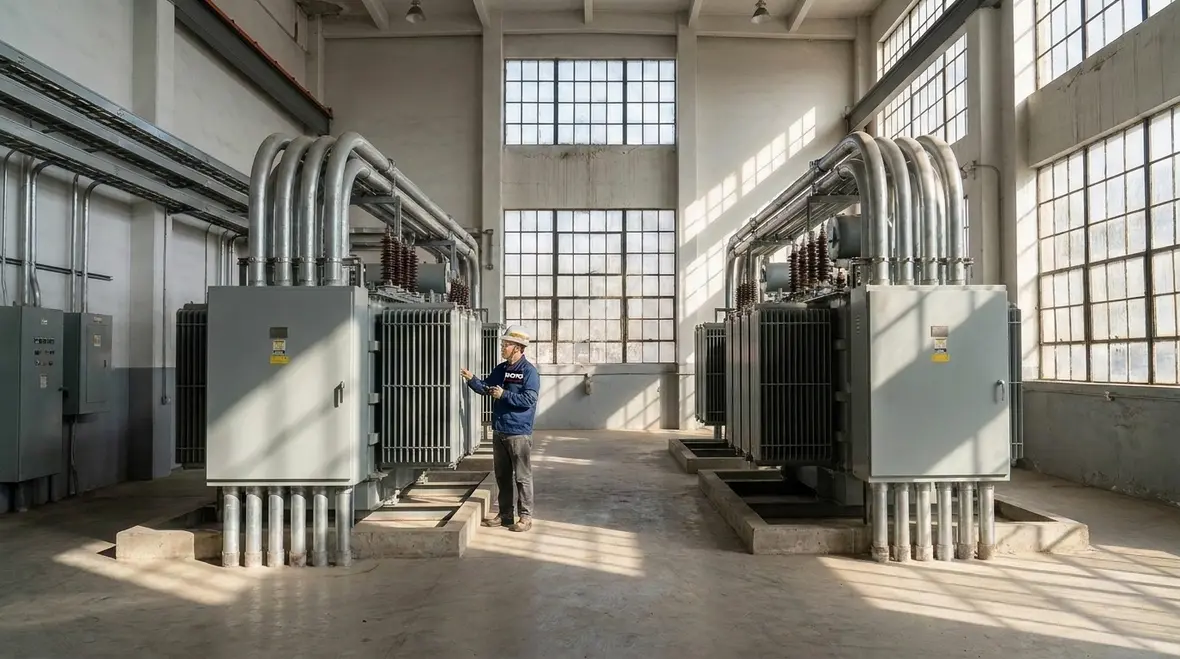
Some buildings, especially major property assets with dense critical infrastructure, require full separation. When the job demands it, we design for 2N. That means two independent power paths so a failure on one path does not affect the other. This design style supports higher fault tolerance and reduces the chance that a single event knocks out the entire critical load chain.
Our technicians evaluate where common failure points tend to hide. For example, we look at shared routing paths, shared battery strings, common control power sources, and dependency between switchgear sections. Then we address these items with independent controls, independent feeds, and clear isolation boundaries. Consequently, the redundancy you pay for actually exists at the system level, not just on a one line diagram.
Also, we plan for maintenance without surprise outages. With 2N, we can isolate one power train while the other remains in service. Therefore, service work happens safely and on schedule instead of turning into emergency heroics. In practice, that reduces risk during routine tasks like transfers, breaker maintenance, and UPS service. It is not flashy, but it is effective. Like a good belt on a uniform. Nobody claps, but you notice the difference when it is missing.
This 2N mindset connects directly to the calm, high-availability approach we outline in our Data Center Power Redundancy for High Availability guide, where we show how independent paths protect uptime during both planned work and surprise events.
Fault tolerance: where the design holds when something breaks
Fault tolerance is not a single device. Instead, it is how devices behave together when stress shows up. We design around failure modes, such as a UPS malfunction, a switchgear compartment fault, a bypass transfer issue, a battery problem, or a generator control fault. Then we set up protections and controls so the system responds predictably.
Our team focuses on four areas that typically decide whether resilience succeeds or fails. First, we use appropriate protection coordination so faults clear fast and locally. Second, we ensure transfer logic does not create unwanted backfeed paths or control conflicts. Third, we design monitoring and alarms so faults surface early. And fourth, we validate that the system can ride through brief events without dropping critical loads.
Even when our clients think they already have redundancy, we often find gaps. For instance, a facility may have enough equipment on paper, yet control power may still share a single point of failure. Or the bypass sequence may not match the operational intent during maintenance. Therefore, we treat fault tolerance as a system behavior plan. We ask, we test, and we confirm with commissioning and load scenarios.
Our technicians also explain what you can expect during transfers and failures. They talk through the signals you will see, the delays you might notice, and the actions required during alarms. As a result, your facilities and operations teams understand the “why” and not just the “what.” That calm clarity matters when the real world gets loud.
If you want to see how this plays out over an entire critical power chain, our Zero Downtime Data Center Power Strategies article pairs fault tolerance with practical switching and maintenance routines designed to avoid “surprise outage theater.”
What our experts include in the redundant power build
Below is how Kord Electric approaches redundant power for commercial and industrial facilities. We keep the scope focused on what major property buildings and mission critical sites need, and we build for long term reliability.
Phase 1: Discovery and load understanding
We identify critical load tiers, including IT, process equipment, life safety, and mechanical support. Then we align the electrical architecture with actual operating priorities.
Phase 2: Architecture and redundancy mapping
We define the power paths, transfer scheme, and device roles. We then verify which sites require N plus one support and which sites need full 2N separation.
Phase 3: Protection, controls, and monitoring
We coordinate protective devices and transfer logic. We also set up alarms and event logging so faults show up clearly.
Phase 4: Testing, commissioning, and staff training
We test transfers and verify ride through behavior. Then we train operators with our technicians walking through procedures, so response time improves during actual events.
To keep this structured and readable, we sometimes use a dual column review during design walk throughs. It helps stakeholders see design intent next to test evidence without hunting through spreadsheets. Think of it as the difference between watching a movie and getting the full script in advance. Nobody wants plot twists at 2 AM.
For leaders planning new builds or major upgrades, this phased approach lines up naturally with our deeper reference on Data Center Power Redundancy for Maximum Uptime, which expands on how architecture, redundancy, and commissioning work together in large commercial and industrial environments.
Maintenance and testing that keep redundancy real
Many facilities design redundancy and then neglect the upkeep. Yet the electrical system does not care about intentions. It cares about conditions. Therefore, we build maintenance strategy into our recommendations from day one, especially for clients in commercial and industrial settings with high uptime requirements.
Our technicians focus on predictable testing cycles, such as transfer tests, UPS runtime checks, battery health evaluations, and generator control verification. We also inspect switchgear components that can drift out of spec over time, including contact wear and insulation concerns. Then we align the maintenance plan to the operating calendar so critical loads keep running during most service windows.
Additionally, we review alarm history and operational events. If a system experienced a nuisance alarm or a slow transfer during past conditions, we treat it as a clue, not as noise. Then we update procedures, settings, or sequences so the next event behaves more smoothly.
In short, maintenance keeps your system honest. Without it, the design becomes a museum exhibit. With it, the redundancy stays ready. And the best part is that our expert service staff explains each step in human terms so your team can make quick decisions instead of guessing.
Teams who want a broader reliability roadmap can connect this maintenance mindset with Kord Electric’s wider commercial support, including our Los Angeles County electrical services for commercial and industrial facilities, so redundant power, distribution work, and preventive care move in step instead of in separate silos.
FAQ for redundant power in commercial data and critical facilities
Why Kord Electric builds redundancy you can trust
If your facility cannot pause, then your power system cannot be “almost ready.” At Kord Electric, we plan redundant power with the right capacity, the right separation, and the right fault tolerant behavior. We bring in our expert service staff and technicians to explain the design clearly, test what matters, and support your team with procedures that feel calm during stressful moments. If you are planning upgrades or evaluating an existing setup, contact us for a site focused review and a practical path to higher uptime.
For readers working on large data halls or interconnected portfolios, our deeper technical coverage like the California Data Center Power Redundancy Systems guide and the Data Center Power Redundancy for 99.999 Uptime article can help you connect this Redundant Data Center Power Design: N+1, 2N & Fault Tolerance approach with broader reliability planning and long-term infrastructure strategy.
And when your plans move from paper to field work, Kord Electric’s regional crews and our Los Angeles County electrical services team can bring the same calm, disciplined mindset to installation, commissioning, and maintenance, so your redundancy stays real long after the first energization.