Smart Lighting Control Solutions for Offices
Modernizing Workspace Lighting With Smart Lighting Control Solutions for Offices
At Kord Electric, we modernize open office lighting using smart lighting control solutions for offices that help buildings run smoother and use energy more wisely. In the real world, those long rows of desks and shared walkways can feel like a bright, constant spotlight, even when people only need light in certain zones. That is where our control systems come in. They let lighting respond to time, occupancy, daylight, and even scheduled tasks, so the office feels better for employees and easier for facility teams.
And yes, we have heard the jokes. Someone always says the lights are “on Netflix mode,” meaning they never truly turn off. We handle that, calmly and professionally, with planning that fits commercial and industrial facilities and major property buildings.
Why open offices burn budgets instead of saving them

Open offices look simple on paper, yet lighting problems pile up fast. First, glare and uneven brightness lead people to complain, reposition monitors, or request desk lamps. Then, those manual adjustments spread across departments, and your “one setting for everyone” plan turns into a patchwork. Meanwhile, utilities keep charging as if every workstation needs full brightness all day.
Because the layout changes over time, older lighting systems struggle to keep pace. When tenants move, departments grow, or new meeting spaces appear, the lighting plan still behaves like it was designed for a static factory floor from another decade. As a result, you pay for illumination where it is not needed and you still miss the areas where it matters most. Kord Electric approaches this with controls that can be tuned by zone, schedule, and sensor input rather than by guesswork.

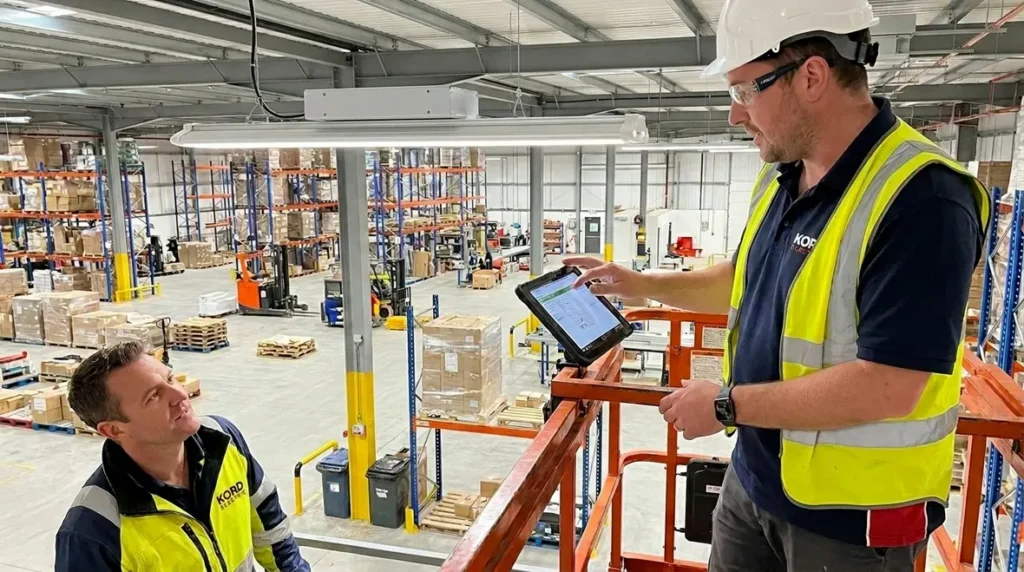
For many properties, one of the most revealing moments comes during a lighting inspection or retrofit walk-through. When fixtures stay at full output over empty seating areas or under skylights that already provide plenty of daylight, that is your budget quietly leaking away hour after hour. Pairing smart lighting control solutions for offices with code-aware planning helps avoid those blind spots. For example, aligning your strategy with guidance similar to the California Commercial Lighting Code Guide for 2026 keeps energy performance and comfort moving in the same direction.
Control layers that actually fix the lighting experience
We design modern lighting systems in layers. This way, you do not replace everything at once, and you gain control without creating a science project for your maintenance staff. Our team explains each step clearly, and our technicians walk facility managers through what they are seeing in the field, not just what the brochure promises.
Here are the core control layers we commonly integrate for commercial and industrial facilities and major property buildings:
- Occupancy and vacancy sensing: Lights respond to people entering, moving, and leaving. When the room goes quiet, the lighting eases off.
- Daylight harvesting: Exterior light contributes to task needs, so indoor brightness does not stay fixed when the sun is doing part of the work.
- Scheduling and time-based scenes: Morning ramp, mid day productivity, evening cleanup, and after hours behavior each get their own reliable pattern.
- Zone control: We break large spaces into controllable segments so you can treat walkways, shared bays, and focus zones differently.
- Dim-to-off and smooth transitions: People notice flicker and abrupt jumps, so we focus on steady response curves.
In practice, these layers work together. Therefore, your office becomes easier to manage, your staff spends less time overriding switches, and your lighting stays aligned with how the building actually operates. And honestly, nobody enjoys fighting the lights like they are a stubborn vending machine.
When these layers are designed with code compliance in mind, they do more than just improve comfort. They also support smoother inspections and long term reliability. Many property managers pair these upgrades with broader lighting installation code compliance planning so that every new sensor, dimmer, and schedule also advances safety and regulatory goals.
Open office control strategies for today’s fast changing floorplans
Today’s teams collaborate, spread out, and regroup. Accordingly, lighting should adjust with that reality. We help property owners and engineering teams plan controls for open offices with the expectation that the floor may change. Instead of locking you into one layout forever, we focus on zoning logic that can be reconfigured and mapped during commissioning.
One strategy we often recommend uses zone groups tied to architectural boundaries like columns, window bands, and core service areas. That means daylight zones get daylight-based tuning, while internal zones follow occupancy and schedule logic. Another approach supports “task plus ambient” behavior. In other words, we aim for consistent general light levels while allowing fine control for areas like training tables, project benches, or hot desks.
Because many open offices include classrooms, interview pods, and team huddle corners, we also consider how controls behave at the edges. When someone enters a meeting pod inside a larger open area, the system should not brighten the entire floor like a stadium. Instead, it should prioritize the area where attention is needed, then normalize after the space becomes vacant. Kord Electric plans those transitions so your building feels responsive, not random.
These strategies fit well alongside broader modernization projects like LED retrofits. When teams are already reviewing fixture layouts and panel capacity, as explored in the Commercial Lighting Upgrade Cost Guide, it becomes the ideal moment to align smart lighting control solutions for offices with future floorplan flexibility.
How sensors, dimming, and scenes reduce waste
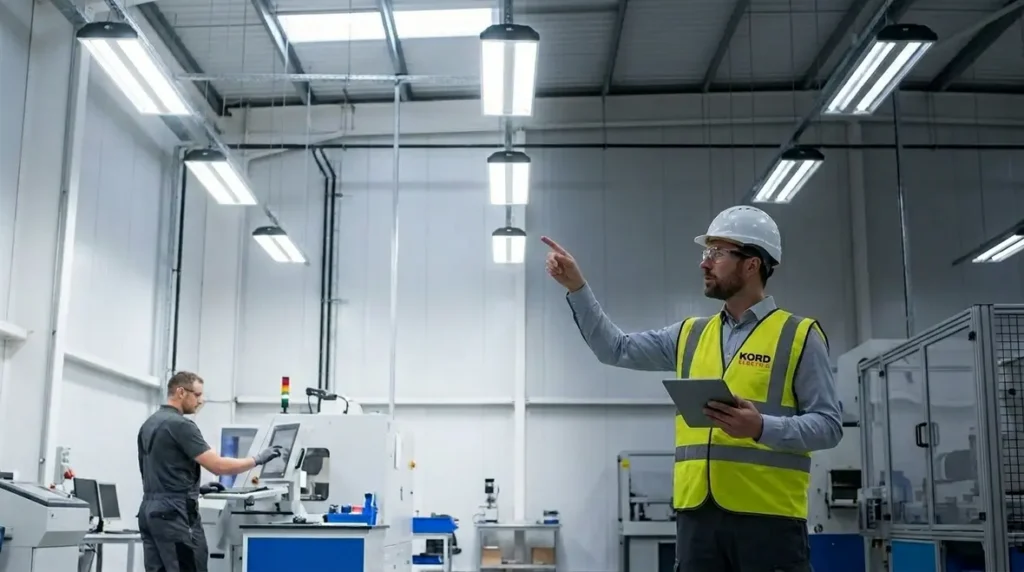
Sensors do not simply turn lights on and off. When designed correctly, they shape the whole behavior of the lighting system across the day. We place sensors and choose settings with care, so they detect occupancy without creating annoyance. For example, we aim to prevent “ghost activity,” where moving shadows or camera-like reflections trigger changes at the wrong times. Our technicians verify coverage during commissioning and adjust sensitivity so the system matches real human movement.
Dimming also matters. Full on is the default setting for systems that lack control intelligence. However, dimming makes it possible to deliver comfortable light with less power. When paired with daylight harvesting, dimming becomes even smarter. If the sun provides part of the needed brightness, the system reduces artificial output. Then, when clouds roll in or blinds close, the lighting fills the gap again.
Finally, scenes help teams by giving repeatable lighting patterns. A “focus” scene supports lower glare and stable brightness for deep work. A “collaboration” scene lifts ambient levels for group tasks. A “reset” scene at the end of the day reduces lingering brightness after occupancy drops. Most importantly, we set these scenes so facility teams can manage them confidently. We also show them how to adjust schedules safely, so you are not calling us every time someone wants a meeting room to feel right.
And if your staff thinks this sounds too fancy, we remind them: a good control system is like a good conductor. It keeps the orchestra steady, so nobody has to guess the tempo.
Integration and commissioning for commercial buildings
Modern lighting controls do not live alone. Therefore, we plan integration with the systems that already manage your building. Depending on your infrastructure, controls may integrate with building management systems, schedule management, and network monitoring. This matters for commercial and industrial facilities and major property buildings because you want one operational view, not ten separate knobs and apps.
Commissioning is where many projects succeed or fail. We do not treat commissioning like a last minute checkbox. Instead, our expert service staff calibrates zones, validates sensor behavior, checks dimming response, and confirms schedules under real conditions. In addition, we document the logic so the facility team understands how the system behaves.
During training, we explain what we did and why. We show staff how to interpret faults, how to verify sensor coverage, and how to adjust scenes without breaking the plan. Because we work with our customers in building environments, we also account for after hours operations, security needs, and cleaning schedules. The goal is not just “turn on the lights.” The goal is to create a system that keeps working even when people and usage patterns change.
If you ever inherited a lighting panel that looks like a museum exhibit, you know what we mean. We bring order to the chaos, and we do it with calm, professional guidance.
Operational benefits: comfort, safety, and measurable performance
When lighting responds to reality, employees feel it right away. Comfort improves because brightness becomes more consistent and glare drops where it matters. Safety improves because spaces remain reliably lit for movement, stairs, and transitions, while still avoiding waste in unoccupied areas.
For owners and facility leaders, performance matters just as much as comfort. Control systems can reduce energy use by lowering output when full brightness is unnecessary. They can also support better maintenance planning by tracking equipment behavior and reducing unnecessary lamp or driver stress through smarter dimming schedules. As a result, you spend less time troubleshooting “why does this area keep changing” and more time managing the building.
Additionally, better lighting control often improves the experience of shared amenities. When people enter lounges, collaboration rooms, or reception areas, the lighting can shift smoothly to welcome them. Then, after the space becomes vacant, the system returns to an efficient baseline. This supports tenant satisfaction in major property buildings without forcing your team into constant manual adjustments.
Dual column overview: control decisions we help you make
| Decision area | What we recommend |
| Zone layout | Match zones to architectural features like window bands and work bays, so daylight harvesting and occupancy logic behave correctly. |
| Sensor placement | Verify coverage during commissioning and tune sensitivity to real movement, so the system avoids nuisance switching. |
| Scheduling | Use time based scenes for office rhythms, including ramp up, normal work, and after hours behavior. |
| Dimming behavior | Choose smooth transitions to avoid abrupt changes that people notice immediately. |
| Integration | Connect controls to existing building systems when possible, then document logic for easy facility operation. |
FAQ: lighting control for open offices
Ready to modernize your workspace lighting?
When your open office lighting wastes energy and frustrates staff, it is time to upgrade with a plan that fits your building, not a generic template. Kord Electric delivers smart lighting control solutions for offices with thoughtful zoning, reliable sensors, and clear commissioning, built for commercial and industrial facilities and major property buildings. Our technicians and expert service staff explain everything in plain language and support your team through training and operation.
If you are exploring a larger lighting upgrade that includes LED retrofits, code compliance, and integrated controls, our broader commercial services can help you budget and phase the work intelligently while staying ahead of evolving standards. However you choose to start, the goal is simple: help your lighting finally behave like it has a job to do.
To take the next step toward a more efficient, responsive workplace, connect with our commercial lighting team and find out how a tailored control strategy can support your tenants, your maintenance staff, and your long term operating costs.
For offices that are ready to move from concept to implementation, be sure to explore our dedicated commercial lighting and controls services for a deeper look at how design, installation, and commissioning all work together across your portfolio.
When your facility is ready to put smart lighting control solutions for offices to work, our commercial and industrial services team is here to guide you from first walkthrough to final commissioning and beyond.