Title 24 Commercial Lighting Compliance Guide
Facility managers: use our Title 24 commercial lighting compliance guide to stay ready
Every time a facility manager schedules a lighting update, the real work starts after the shopping for fixtures ends. First comes the paperwork, then comes the inspections, and finally comes that quiet moment when everyone asks, “Did we meet the rules?” That is why we built our Title 24 commercial lighting compliance guide at Kord Electric. We use it as a practical roadmap so teams can plan upgrades, document design choices, and reduce the risk of rework. In the sections ahead, we walk through what you need to check, how our experienced service staff explains the details without the drama, and how our technicians help you keep operations steady while compliance work moves forward.
Know the compliance path before anyone buys a single fixture
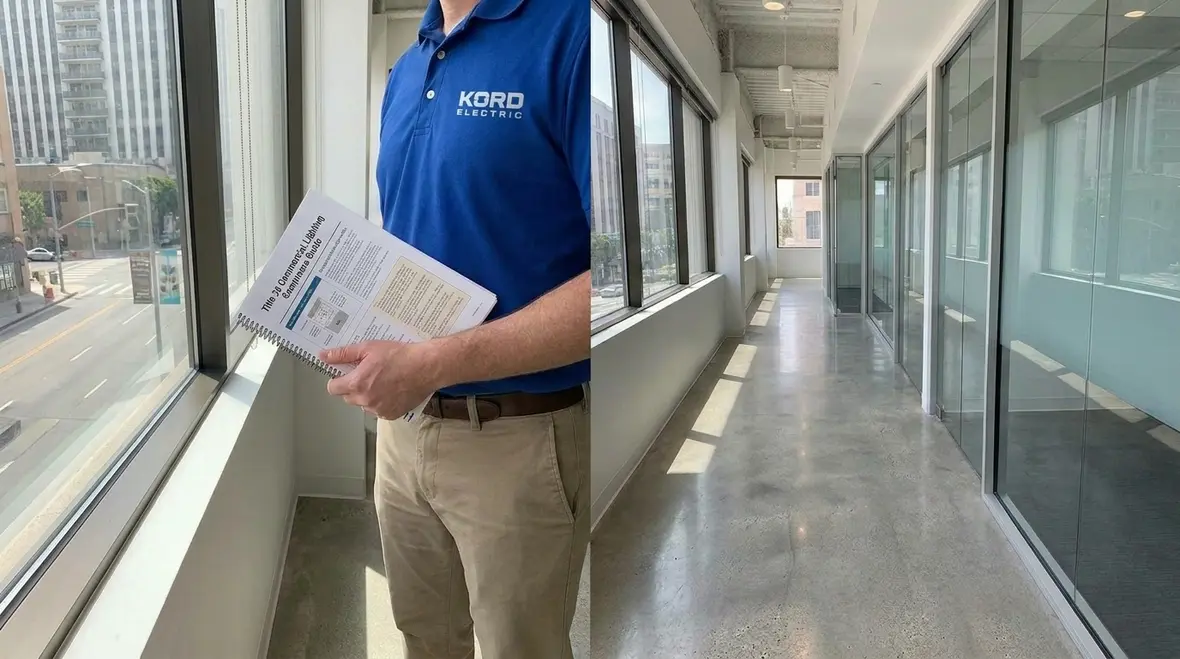
When others jump straight into product selection, the project often gets stuck later. However, a facility manager can prevent that by mapping the compliance path up front. We recommend you confirm the applicable version of California Title 24, because lighting requirements can change and the project rules depend on the specific compliance cycle.
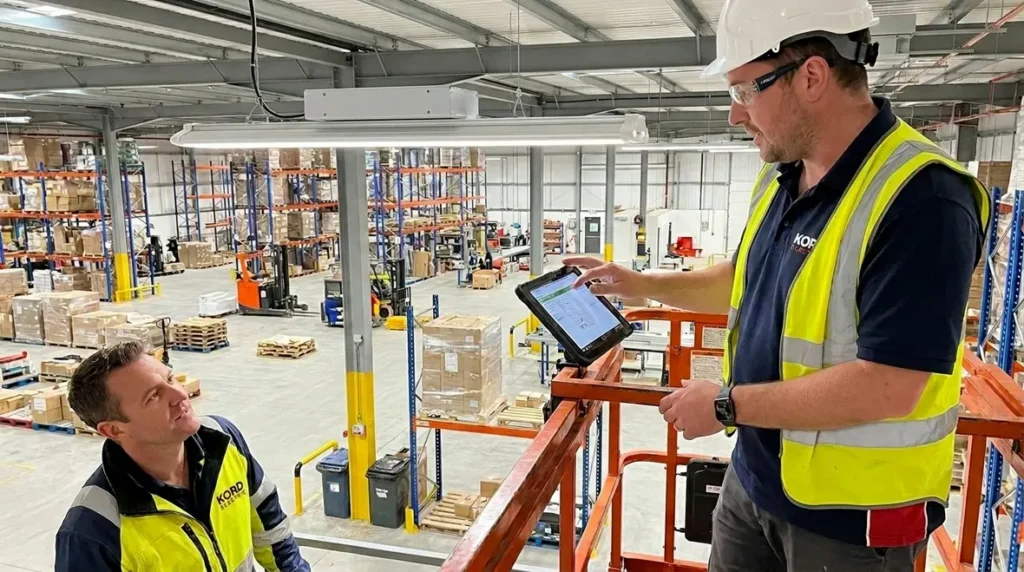
Next, we help you identify the exact project type. For example, new construction, tenant improvements, and major retrofits each involve different documentation and approval steps. In practice, our technicians look at the building’s lighting zones, the control strategy, and the expected operating schedules. Then we translate that into steps your team can plan around.
One more thing, because compliance without context is like calling a sitcom plot twist “plot development.” You still need the setup. So we review how the building performs today, where energy is wasted, and which spaces must follow stricter rules based on function and use. For deeper background on how statewide codes shape these decisions, many facility teams also pair this guide with our California Commercial Lighting Code Guide for 2026, which expands on how Title 24 and related requirements show up in real projects.

How the rules affect commercial and industrial lighting decisions
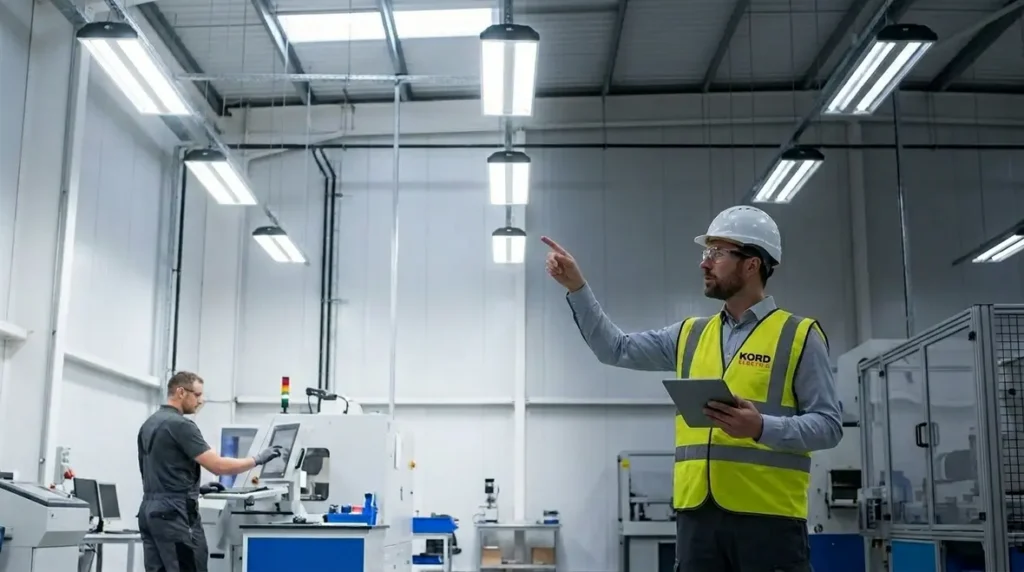
For commercial and industrial facilities, lighting compliance usually comes down to three big areas: lighting power, controls, and lighting efficiency. We guide facility managers to treat these as linked decisions, not separate checkboxes.
Lighting power means the permitted wattage for the installed system relative to the space and the design. If you replace fixtures, you still have to ensure the overall design stays within the allowed values. Controls often matter just as much, because the building needs the right behavior for occupancy, time schedules, and daylighting where required. And lighting efficiency ties back to how effectively the system produces light for the energy used.
To keep this understandable, we rely on plain explanations from our expert service staff. They break down the “why” behind the requirements, so your team can communicate clearly with tenants, operations, and leadership. And when questions get stuck, our technicians walk through real examples from similar major property buildings, because experience beats guessing every time.
If you want to see how those decisions translate directly into inspections and field checks, our Lighting Installation Code Compliance Guide walks through what inspectors actually look for once plans become real fixtures, wiring, and controls.
Controls and schedules: the part people forget until the last day
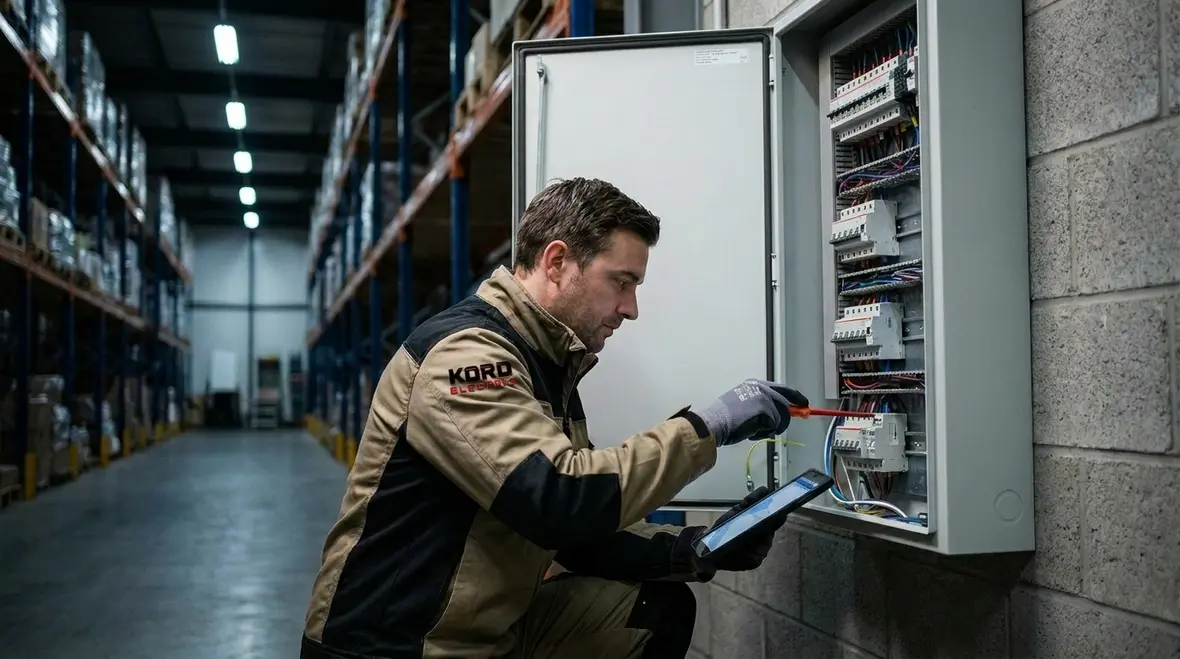
Controls are where projects win or lose. Yes, fixtures matter. But compliance frequently rides on how lights turn on, dim, and turn off. Therefore, we urge facility managers to verify the control intent early, not after installation begins.
In many commercial environments, you need strategies that match how people actually use the space. For example, spaces with variable occupancy benefit from occupancy sensing and automatic shutoff. Areas with stable daytime use may require daylight-responsive control, depending on the design and configuration. And wherever code calls for multi-level switching or dimming behavior, we help you document it correctly.
We also recommend that facilities coordinate lighting schedules with building automation systems. When the scheduling approach is inconsistent between systems, it can create unexpected runtime, and then compliance gets complicated. Our technicians help you align the lighting control plan with the way the building runs day to day, so nobody has to “fix it later” with a coffee-fueled scramble.
Plan, document, and verify: what our process looks like on real projects
Most facility teams do not need a lecture. They need a reliable sequence. So we use a clear process that keeps the work moving and the documentation organized for major property buildings and industrial sites.
First, we start with a field review and baseline assessment. Our technicians look at current fixtures, the existing wiring and control components, and the layout of lighting zones. Next, we help develop the upgrade approach so it aligns with the Title 24 commercial lighting compliance guide logic, including power targets and control intent.
Then, we focus on documentation. We make sure the details needed for plan review and compliance records are captured in a way your team can use. After installation, we verify function and settings. That last step matters because controls can be correct on paper and wrong in the field if settings drift or if schedules do not match the approved plan.
Finally, we keep communication clean. We update facility stakeholders with practical notes, not confusing jargon. And when others ask “Why does it need to be set like that?” our expert service staff explains in business casual terms. Picture it like teaching a new hire to drive: calm guidance, clear steps, and fewer near misses.

On many projects, that process pairs naturally with a broader maintenance and reliability strategy. If your facility is also working through recurring inspections and testing, our Electrical Preventive Maintenance programs include Title 24 lighting compliance support as part of a long-term plan, not just a one-time scramble.
Common pitfalls in commercial lighting compliance and how we prevent them
We see the same problems show up across many major propertie buildings. Not constantly, but often enough that facility managers can prepare ahead of time. Here are the most common pitfalls, and how we handle them with less stress and more accuracy.
Pitfall 1: swapping fixtures without updating the compliance design
When teams replace fixtures “like for like,” they often overlook wattage, efficacy, optics, and control compatibility. As a result, the installed system may not match the allowed design assumptions. We prevent this by confirming performance specs early and coordinating the final selections with the compliance intent.
Pitfall 2: controls installed correctly but programmed incorrectly
Controls can physically exist, yet still fail because schedules, sensitivity settings, or dimming levels do not reflect the plan. We verify after installation and help align settings so operations follow the approved behavior.
Pitfall 3: daylighting and zoning assumptions that do not match reality
In practice, sunlight patterns and occupant layout change. Therefore, facility managers must ensure the design zones reflect the actual building use and the control strategy matches the space. Our technicians check layout details and confirm the control setup supports the intended zones.
Pitfall 4: last-minute requests from tenants and contractors
Last-minute changes can derail documentation and delay verification. We reduce that risk by keeping project communication structured and by explaining the impact of changes early. Think of it as project parenting: firm rules, gentle guidance, and fewer tantrums.
For facility leaders comparing upgrade options, it is also helpful to look at the budget side of the equation. Our Commercial Lighting Upgrade Cost Guide breaks down how LED retrofits and control upgrades affect cost per square foot, long-term savings, and total project value while still staying inside Title 24 boundaries.
FAQ: Title 24 lighting rules for facility managers
Ready to keep your lighting upgrades compliant and calm?
If you manage commercial or industrial facilities, you already know that compliance work should not feel like a mystery box. At Kord Electric, we help you navigate the Title 24 commercial lighting compliance guide with practical planning, expert explanations from our service staff, and verification by our technicians in the real world. Contact us before the fixtures get ordered and schedules get locked. We will help you protect your timeline, reduce rework, and keep your building running smoothly.
When you are ready to turn plans into installed, code-compliant systems, our dedicated Lighting Installation Services team handles large-scale commercial and industrial lighting projects from evaluation through commissioning, so your Title 24 requirements, safety needs, and operations all move in the same direction.