Title 24 Commercial Lighting Upgrades California
Title 24 Energy Code Requirements for Commercial Lighting Upgrades in California: What Teams Must Know
When a property team tackles upgrades, the rules can feel like they were written during a lightning storm and never revised. Still, we help commercial and industrial facilities stay compliant. In this guide, we explain title 24 commercial lighting upgrades california so your project moves forward instead of getting stuck in plan review purgatory. Even when others in the industry “think it’s probably fine,” our expert service staff walks them through what the code actually requires.
As we explain throughout, the goal is clear: efficient lighting that meets California standards, with proper documentation and verified performance. And yes, we do occasionally joke that Title 24 has the patience of a landlord waiting for an overdue rent check. But we keep it professional, because your business needs lighting that works, not drama.
How Title 24 Shapes Lighting Projects for Commercial and Industrial Sites

Title 24 in California sets energy efficiency requirements for building systems, and lighting is one of the biggest levers. For commercial and industrial facilities, these requirements influence fixture choices, control strategies, and how designs get approved. Kord Electric does not treat compliance as an afterthought. Instead, our technicians review the scope early so the selected lighting upgrades fit the code pathway from the start.
To make this practical, our expert service staff explains the process in plain terms. First, we identify the building type, the upgrade category, and the areas affected. Next, we plan the lighting strategy based on control needs and expected usage. Then, we coordinate documentation so the project can pass inspection without last minute scramble.
For facility teams that want an even deeper breakdown of statewide rules, Kord Electric’s California Commercial Lighting Code Guide for 2026 walks through how Title 24 shapes lighting power limits, controls, and area-by-area code expectations in everyday language.
Which Upgrade Scopes Trigger Title 24 Compliance
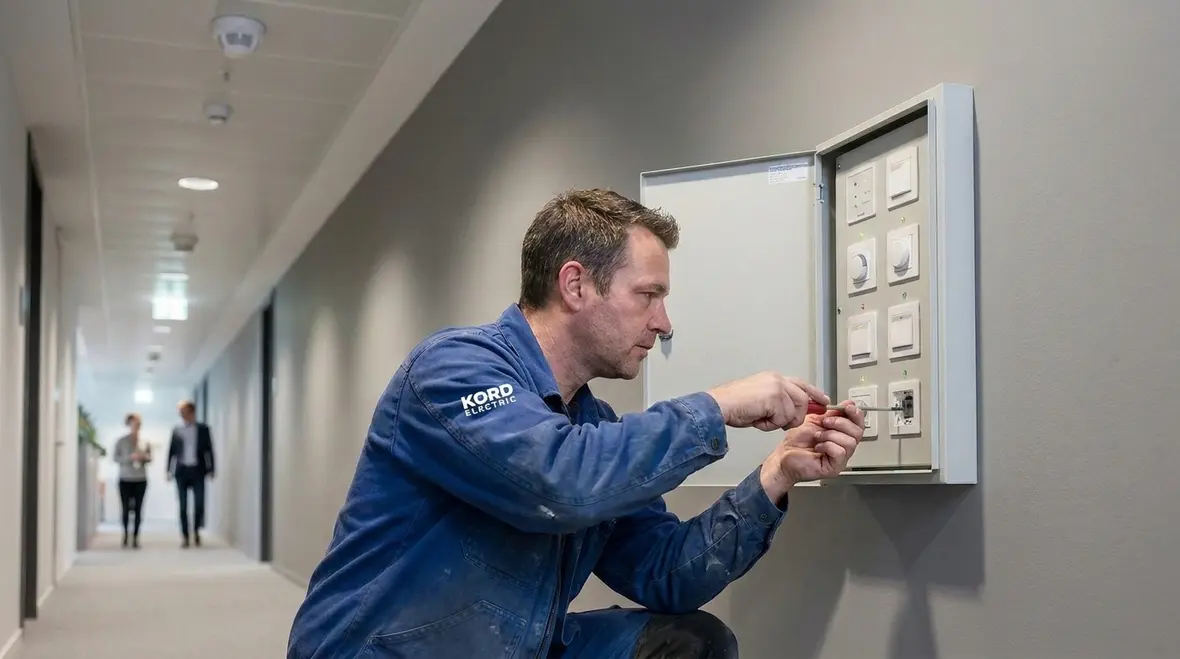
Not every lighting touch requires the same level of compliance. However, many commercial lighting upgrade projects do trigger Title 24 requirements, especially when you replace lighting systems or modify controls. In practice, we see triggers such as fixture replacement, modernization of lighting layouts, and changes to lighting control equipment.
Additionally, your existing system influences the outcome. If your facility updates lamps, drivers, or ballasts, we evaluate whether the project now falls under a compliance pathway that demands modeling and documentation. Our technicians explain it clearly: the more you change, the more the code expects the new lighting to perform efficiently, and the more details you must prove.
We also factor in how spaces operate. Warehouses, offices, parking areas, and process spaces all have different schedules and occupancy patterns. Therefore, compliance often depends on matching lighting controls to real use.
If your team is starting with broader questions like, “Does our building even meet today’s lighting code?”, Kord Electric’s commercial lighting compliance in California guide helps you benchmark where you stand before the first fixture even comes down.
Core Requirements We Verify for Lighting Controls and Efficiency

When our team handles commercial work, we focus on the parts that typically decide whether a project passes. That means we pay close attention to lighting controls and system efficiency. Since Title 24 rules often reward smart control and efficient design, we treat these elements like the backbone of the whole upgrade.
Our technicians help your project meet expectations by verifying these fundamentals:
Automatic shutoff and time based controls where required, so lighting does not run when spaces sit empty
Occupancy sensing in appropriate areas, so lights react to people instead of pretending rooms are always in use
Daylight interaction where applicable, so windows do some of the heavy lifting during daylight hours
Dimming controls for zones that benefit from gradual reductions, especially in multi use spaces
Correct lighting levels with efficient lamps and fixtures, so design targets and compliance align
Then, we confirm installation details. Because even great equipment can fail to meet requirements if it gets wired, configured, or commissioned incorrectly. We guide teams through proper setting of sensors and schedules, so the control behavior matches what your compliance documents describe.
To tie performance back to long term payback, Kord Electric’s California Title 24 Lighting Retrofit ROI Guide explains how efficient controls, run hours, and code compliant design come together in real savings instead of just theory.
Documentation, Modeling, and Approval Steps That Keep Projects Moving
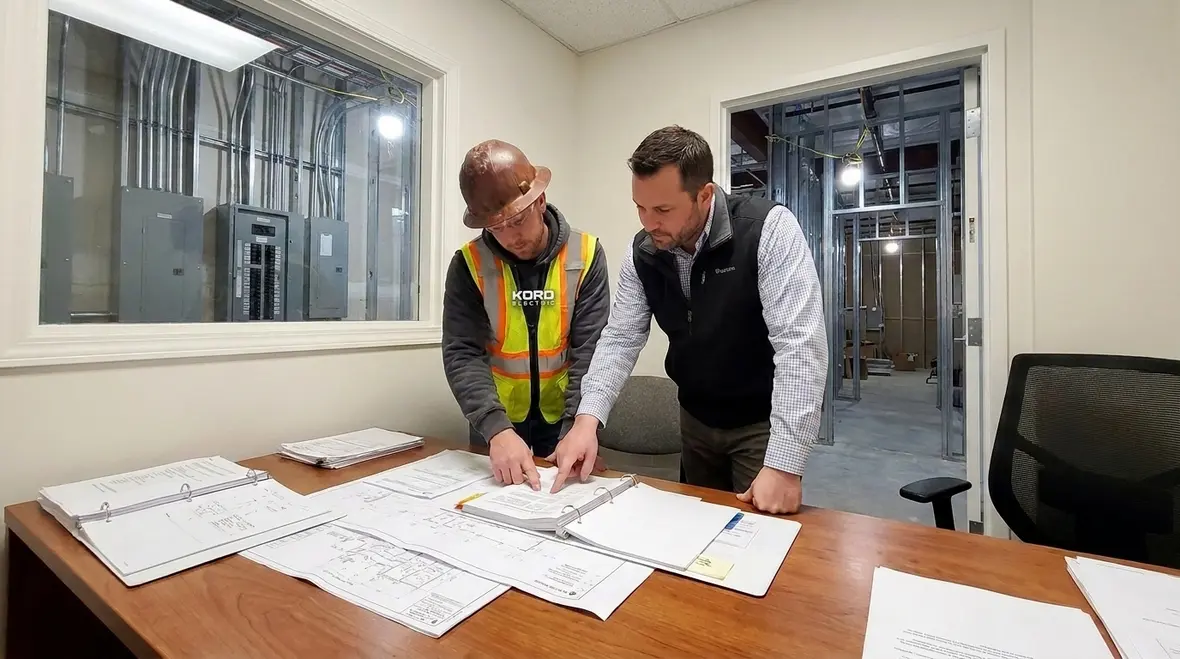
If you only think about hardware, you miss half the job. For most commercial lighting upgrades, you need design documentation and the right pathway for showing compliance. That often includes lighting calculations and, depending on the project, submittals that support your design choices.
Here is where our expert service staff earns their paycheck. We coordinate with your design team and handle practical installation planning so the lighting in the field aligns with the assumptions in the submittals. In other words, we do not let reality freestyle while paperwork follows a strict script. That is how delays happen, and it is how budgets get stressed.
Also, we focus on the commissioning and verification step. Title 24 compliance works best when controls operate as intended. So we help ensure the installed system performs the way the design expects, which reduces rework later.
If you want a broader playbook for keeping documentation and field conditions aligned, the California Title 24 Lighting Compliance Guide and the California Commercial Title 24 Lighting Compliance Guide on Kord Electric’s blog connect code expectations with the way real projects actually move from proposal to closeout.
Planning for Common Commercial Lighting Upgrade Scenarios
Every facility has its own quirks, and we respect that. Yet certain upgrade scenarios repeat across commercial and industrial properties. We address them with planning that considers schedules, duty cycles, and occupant needs.
Below, we map how our technicians approach real world work so teams can avoid surprises.
Scenario
Typical challenge
How we respond
Office or tenant buildout
Meeting lighting targets while adding controls that make sense for mixed occupancy
We align fixture placement and control zones to how people actually use space
Warehouse or distribution areas
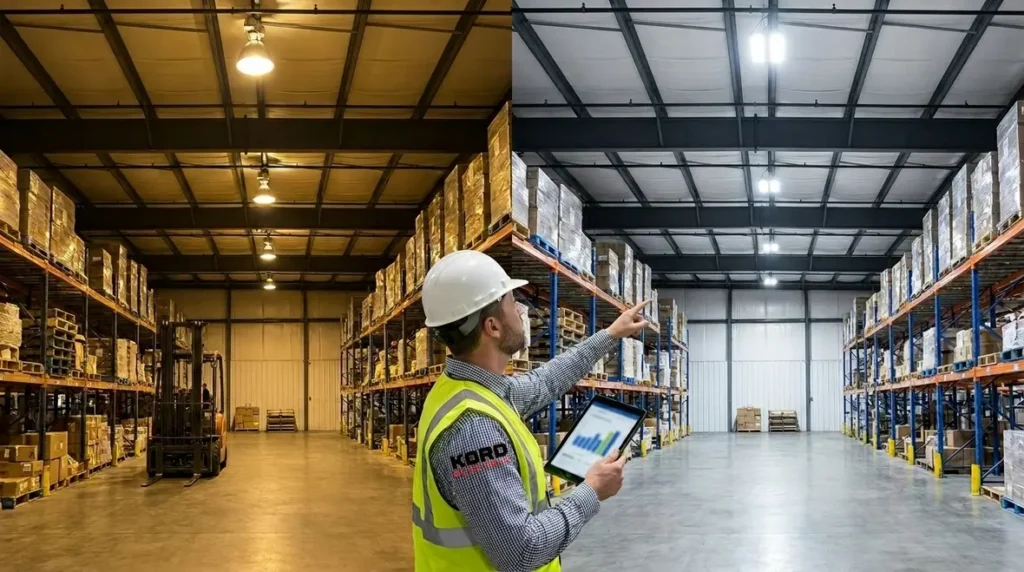
Efficient lighting that does not waste energy during low activity periods
We implement control strategies that match activity patterns and height requirements
Parking lots and outdoor areas
Balancing glare control, coverage, and compliance for energy use
We select efficient outdoor luminaires and configure controls for time based operation
Of course, none of this is just about passing a checklist. We build lighting systems that reduce long term energy costs and improve reliability. And for the record, we promise not to treat your facility like a movie set. We install, we test, and we document like professionals.
When upgrades connect to a broader strategy across Los Angeles County, many teams also review Kord Electric’s Los Angeles County electrical services so lighting improvements, panel work, and future projects move under one coordinated plan instead of scattered one-offs.
FAQ: Title 24 Commercial Lighting Upgrades for California Facilities
Next Steps With Kord Electric for Confident Compliance
When you plan title 24 commercial lighting upgrades california, you need more than good intentions. You need a field team that understands how design meets wiring, programming meets sensors, and paperwork meets reality. At Kord Electric, our technicians and expert service staff focus on commercial and industrial facilities, so your project gets the attention it deserves. Contact us for an on site review and a clear compliance plan. Let us help you light the way without stepping on compliance landmines.
If you are mapping upgrades across multiple offices, warehouses, or specialized spaces, it can also help to connect this guide with Kord Electric’s broader insights, such as the Title 24 Lighting Compliance Guide for Commercial. Together, these resources give your team a practical roadmap from early scoping to final inspection so you can treat Title 24 as a predictable process instead of a moving target.
For facilities that want lighting upgrades to dovetail with panel work, preventive maintenance, and future projects across Southern California, Kord Electric’s dedicated Los Angeles County electrical services help keep everything under one dependable umbrella instead of a patchwork of vendors and half-documented changes.
Whether you are upgrading a single tenant floor or rethinking lighting across a portfolio of properties, the goal remains the same: efficient, code compliant systems that your team can operate comfortably day after day. Title 24 may set the rules, but with the right partner, your project can play the game calmly and confidently.