Business Electrical Disaster Recovery Plan
When the lights go out, the real cost is not the outage itself. It is the time it takes to recover, the data you lose, the work you interrupt, and the risk you keep carrying. That is why business electrical disaster recovery matters for commercial and industrial facilities and major property buildings. At Kord Electric, we help others plan for the worst while preparing for the practical realities of the best day they can still have. And yes, we say “worst” on purpose, because a plan you do not test is just a bedtime story for your switchgear. In this article, we lay out a clear path for building an electrical recovery plan, and we explain the key steps in plain terms, backed by our technicians and expert service staff who have seen what “surprise failure” looks like in the real world.
Why a recovery plan beats improvising during outages
In commercial and industrial environments, you do not get extra time just because the storm rolled in early or the transformer decided it is done with life. Therefore, others need a plan that covers power continuity, safe shutdown, and fast restoration. When we build a recovery plan, we treat it like an operating system for your electrical infrastructure, not a thick binder that gathers dust.
First, we map the actual business impact. A hospital wing is not the same as a distribution center, and a high rise does not behave like a warehouse. Next, we identify which loads must run first, which loads can wait, and which loads should never be re-energized until inspected. This thinking reduces downtime, limits equipment damage, and improves compliance.
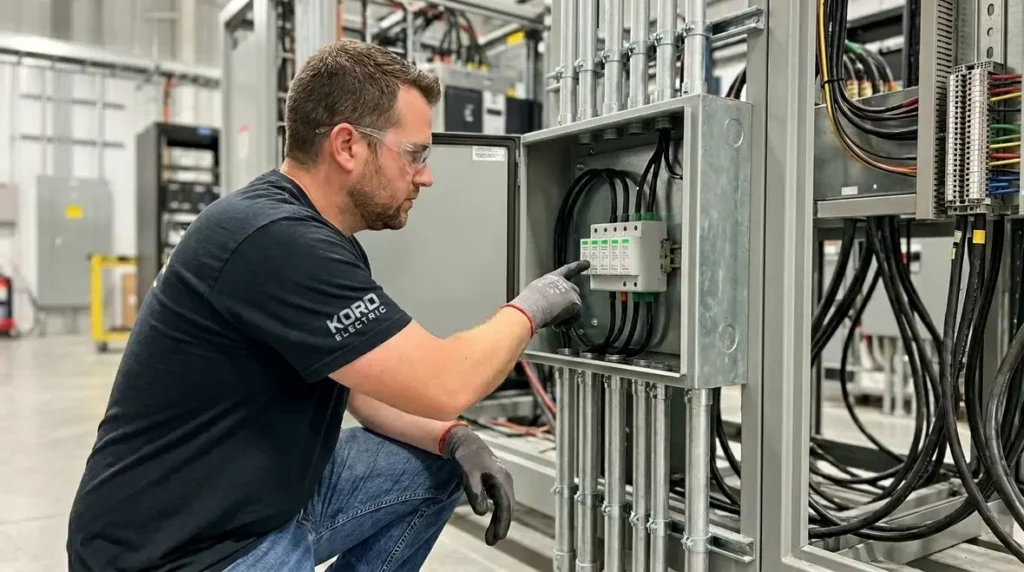
Then we get honest about what people do under stress. During an outage, teams often chase the wrong problem. Someone flips a breaker without checking upstream conditions. Someone else assumes “the utility will fix it.” Meanwhile, critical circuits stay dark and noncritical circuits keep adding risk. Our technicians step in with disciplined checklists, and they explain each step so your staff understands why we do it. No mystery. No magic. Just repeatable actions.
Start with critical loads and a realistic power path
A strong business electrical disaster recovery program begins with one question: what must stay alive to protect people, operations, and money? We build this by prioritizing critical loads and linking them to how power actually travels through your system.
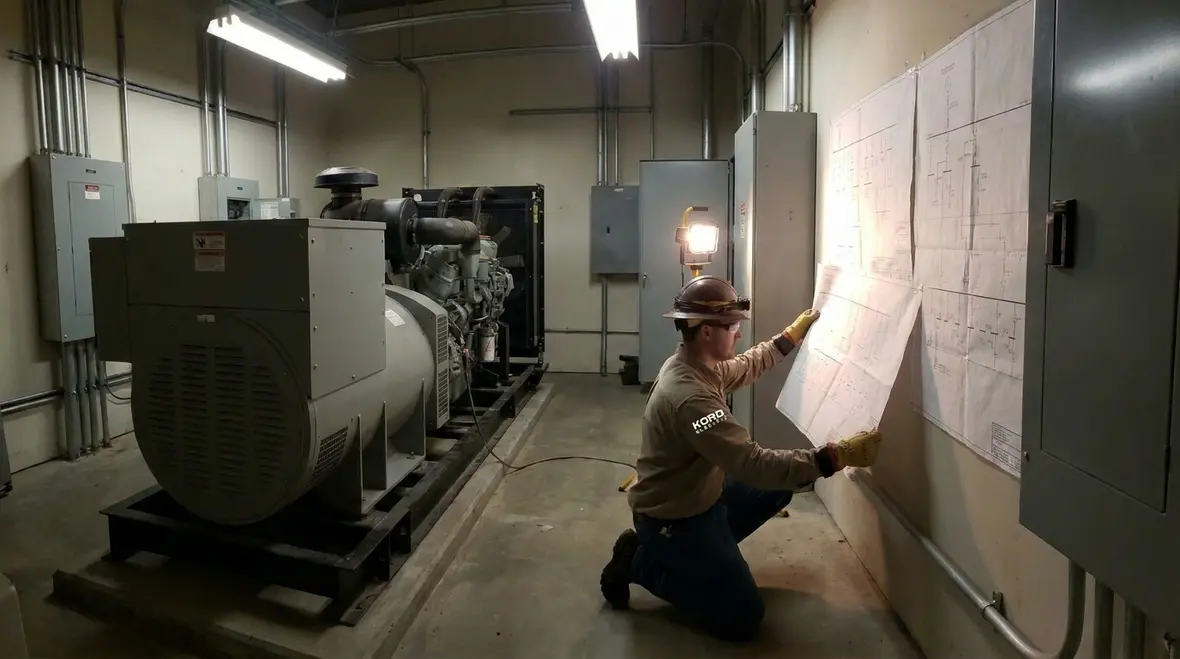
To do this well, we gather electrical one line diagrams, panel schedules, generator and transfer switch data, UPS runtime, and basic operating procedures. After that, we identify common failure points such as feeders, bus sections, protective devices, and any controls that might be dependent on communication networks.
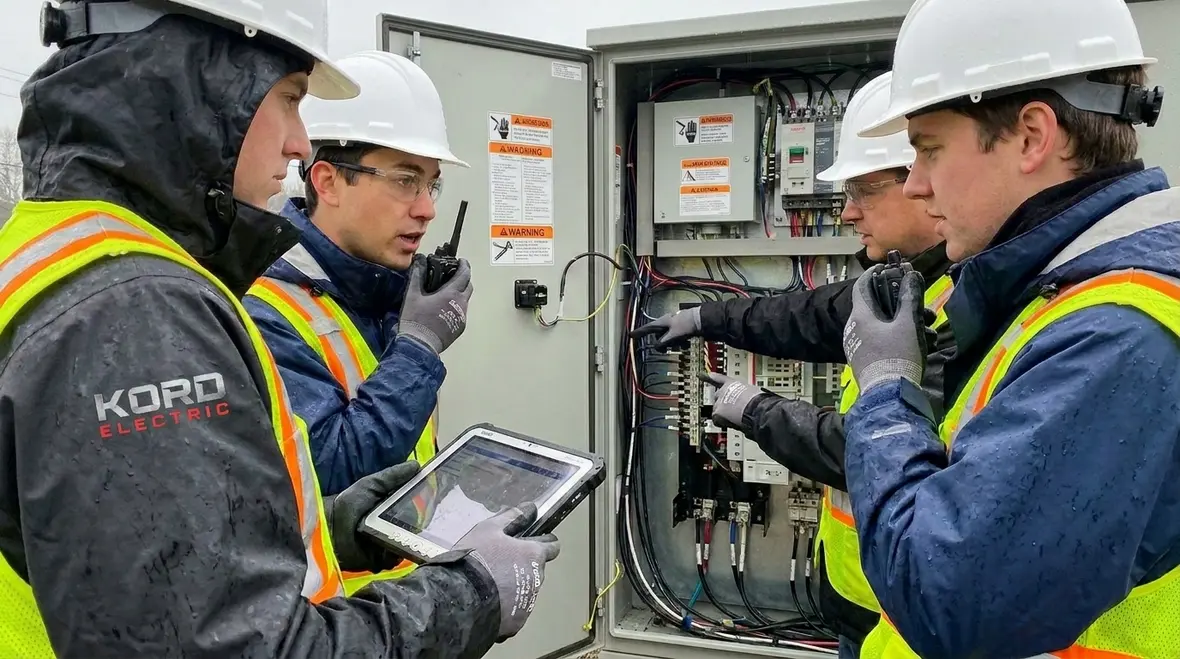
Next, we confirm your power path options. For example, if your main service fails, does your facility have an alternate feed, sectionalizing strategy, or a generator configuration that supports the required loads? If your UPS only supports certain critical circuits for a short time, we define the exact target duration. As the clock ticks, priorities must shift. We help others build those shifts into the plan so recovery stays orderly.
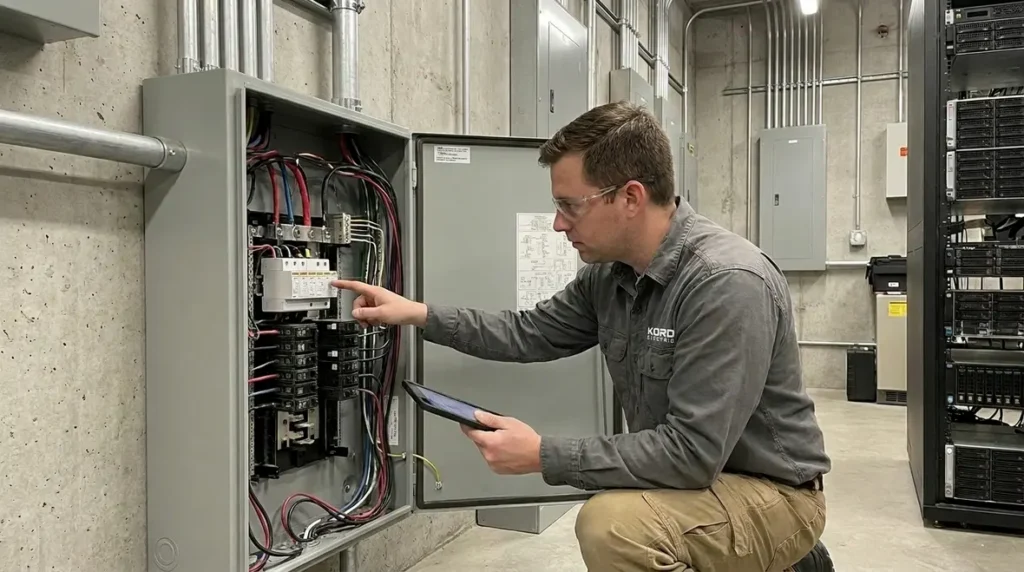
Finally, we validate isolation boundaries. If you run a cable tray and multiple panels from one distribution section, your plan must specify what gets de-energized first, what remains energized, and how technicians verify the absence of voltage. Our expert service staff explains these boundaries in straightforward terms, because clarity prevents dangerous “everyone try something” moments.
For facility managers who want to go deeper on system behavior and long term planning, resources like Kord Electric’s article on commercial and industrial electrical maintenance plans help connect everyday maintenance with outage recovery and reliability.
Build the plan around hazards, safety, and code expectations
Electrical recovery is not just about speed. It is about safe power restoration that aligns with electrical code requirements and your facility’s policies. And because emergencies feel like chaos, safety planning has to feel simple, direct, and enforceable.
We help others document hazards such as backfeed risks, damaged conductors, water intrusion, generator fuel contamination, and unresolved utility outages. After that, we establish a clear approval process for re-energizing equipment. This includes who can authorize energization, what inspection steps must happen first, and which tests verify readiness.
We also include safe shutdown procedures. Sometimes, the best move during a disaster is to stop power to prevent further damage. For instance, if protective devices show evidence of internal faults, attempting restoration may turn a local failure into a facility wide problem. Therefore, the plan should include inspection checkpoints and decision criteria.
To keep staff aligned, we train teams using plain language scenarios: what to do when a transfer switch fails to operate, what to do when a generator starts but loads do not pick up, and what to do when a breaker trips repeatedly. Our technicians walk through the “why,” not just the “what,” and they ensure others know which checks happen before any switch flipping.
This kind of structured approach ties in well with Kord Electric’s dedicated electrical preventive maintenance services, where inspections, testing, and documentation all work together to keep recovery safer and more predictable.
Design roles, communications, and decision rules for fast restoration
A recovery plan fails when people cannot coordinate. So we build a structure that tells teams who does what, who calls whom, and what gets decided at each stage. During an outage, minutes matter, but confusion costs even more.
We recommend naming a clear incident lead, an electrical safety lead, and a power restoration lead. Then we define responsibilities for operations staff, engineering staff, and field electricians. We also assign responsibilities for staging equipment, verifying spare parts, and coordinating with the utility, elevator contractor, and critical systems vendors.
Next, we build a communications map. We specify primary and backup contact methods, plus a short message template others can send without rewriting everything under pressure. Then we define what gets communicated: expected restoration timing, current risks, and the next update schedule.
Decision rules prevent endless debates. For example, if a transformer overheats or a breaker indicates a fault, the plan should specify whether restoration waits for a test, a visual inspection, or a specific diagnostic procedure. When those rules exist, teams move forward with confidence.
Finally, we practice handoffs. Our technicians and expert service staff help others rehearse roles so your team knows how to transition from emergency mode to assessment mode to restoration mode. And yes, we keep the practice scenario realistic. Not Hollywood realistic. More “your comms system is down and everyone is holding a flashlight like it is a sequel.”
For organizations that have already experienced emergency power failures, Kord Electric’s insights in their article on emergency power failures in commercial buildings provide real world context that pairs naturally with a structured recovery plan.
Test, document, and keep your electrical disaster recovery current
Planning is not a one time event. Therefore, we keep the program alive through documentation, audits, and recurring tests. Others often test generators and stop there, but recovery includes far more than start up.
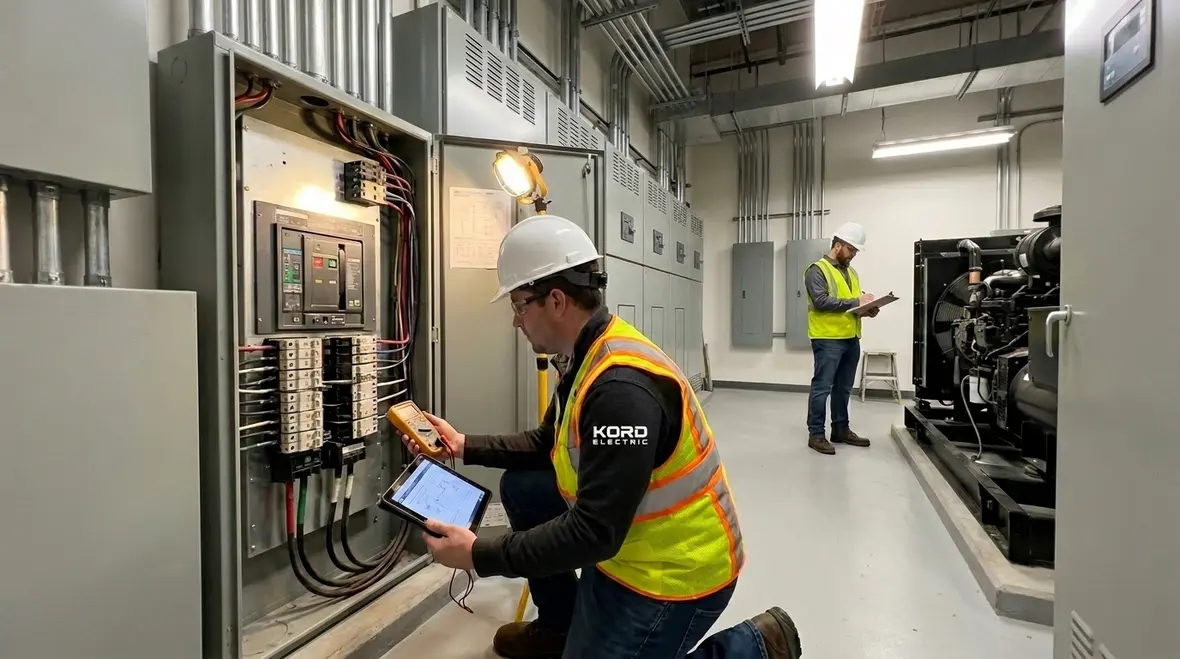
We help others build a testing calendar that includes transfer switch operation, UPS behavior, load shedding sequences, and safe isolation checks. We also test operational procedures with the actual teams who will run them. During these exercises, our technicians explain what they expect to see, what “normal” looks like, and what alarms or readings suggest the plan needs updates.
Documentation must be accurate and easy to use. We recommend a quick reference sheet that lists critical loads, target restoration order, and the key verification steps. Meanwhile, the detailed documents remain stored in a secure location that is still accessible when systems are disrupted.
To keep business electrical disaster recovery relevant, we update it when anything changes. That includes new HVAC equipment, tenant fit outs in major property buildings, panel upgrades, generator servicing, control system changes, or changes in operating hours. If your building footprint evolves, your recovery plan should evolve too.
We also include spare parts planning for common components such as fuses, breaker parts that support safe replacement, transfer switch critical wear items, and test equipment needs. When your recovery plan includes what to stage, restoration moves faster and stays safer.
If your operations include data centers, critical control rooms, or other high demand systems, pairing your recovery plan with thoughtful data center electrical distribution design for reliability helps make sure the underlying infrastructure can support both everyday loads and unexpected events.
Dual column recovery checklist for commercial power events
Below is a practical guide others can adapt for commercial and industrial facilities and major property buildings. We use formats like this so teams do not miss critical steps during stress.
| During the event | After power restoration |
|
|
Frequently asked questions
Final CTA: Let us help you plan like professionals
When outages happen, you want calm leadership, safe power restoration, and predictable timelines. Kord Electric helps commercial and industrial facilities build a practical electrical disaster recovery plan that covers critical loads, safety steps, roles, communications, and testing. If you want a plan your teams can actually use, we will review your electrical system, identify gaps, and build a recovery process that reduces downtime.
For multi-site portfolios and major properties across the region, Kord Electric’s broader Los Angeles County electrical services support everything from emergency response to long term upgrades, so your recovery plan connects seamlessly with real world service.
Contact us today to schedule a planning session and turn “we will figure it out” into a real strategy backed by tested procedures, trained teams, and infrastructure that is ready for the next storm, surge, or surprise shutdown.