
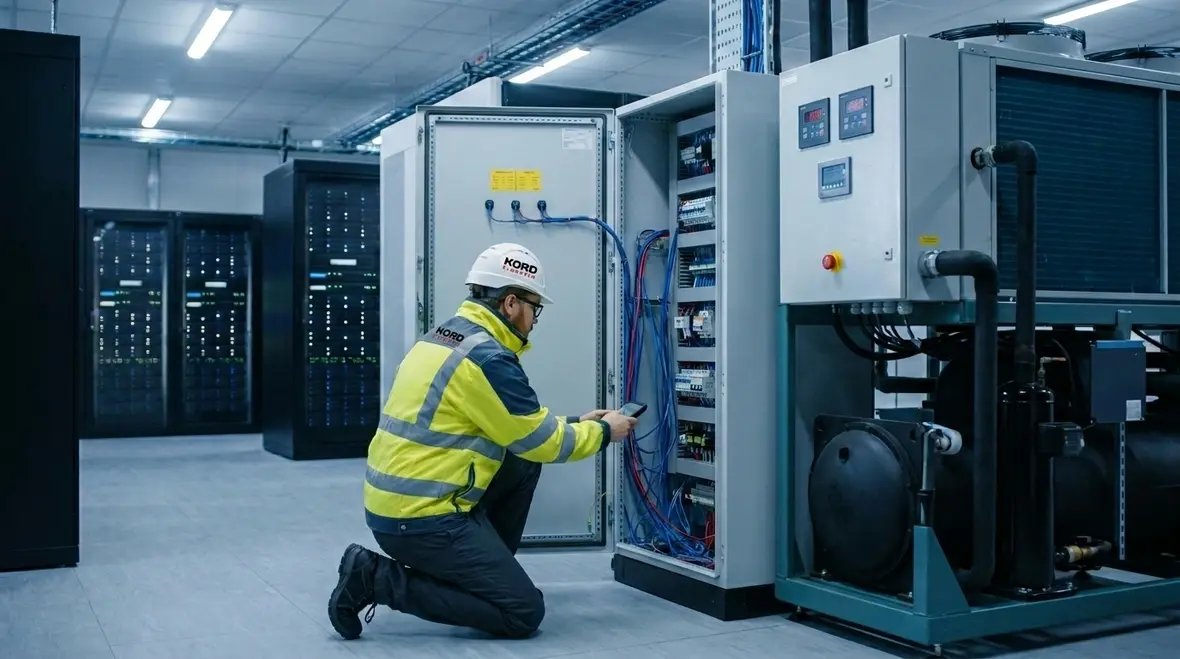
Data Center Cooling Electrical and NFPA 70B
Modern data centers depend on precision cooling, and that is where data center cooling electrical quietly does its real work. In the first stages of design and then throughout daily operations, the electrical system must support chillers, pumps, air handlers, controls, and the fans that keep the whole facility in the safe temperature window. At Kord Electric, we see that many cooling problems begin long before anyone checks airflow, because the root cause often sits in power distribution, protection, and maintenance routines. In this article, our team explains the key electrical requirements that keep cooling infrastructure steady, compliant, and ready for today’s load demands, and yes, we will keep it calm even if the breakers start acting like they have stage fright.
What electrical systems power modern cooling in a data center?
Third party teams sometimes treat cooling as a separate world from the rest of the facility. However, in real deployments, cooling power ties directly into the same reliability goals that people apply to servers and storage. First, cooling equipment pulls both steady and surge loads. Then, controls add their own needs, including sensors, VFDs, and supervisory monitoring. As a result, the data center cooling electrical system must coordinate feeders, distribution panels, branch circuits, and the control power that keeps everything responsive.
At Kord Electric, our expert service staff walk clients through how power flows in commercial and industrial facilities. We start with the cooling heat path, not just the wiring path. That means we map how the chiller plant, CRAH and CRAC units, pumps, and airside equipment connect to electrical supplies. Next, we identify which loads are constant, which are intermittent, and which behave like a drum solo when a VFD ramps up.
We also remind operators that cooling systems often share space with other critical infrastructure such as UPS rooms, switchgear areas, and fire alarm panels. Therefore, separation, labeling, and routing discipline matter because one sloppy layout can turn a simple maintenance visit into a scavenger hunt. And nobody wants that, especially in a facility where every minute counts.
How do we size feeders, panels, and protective devices for cooling loads?

When engineers size electrical gear for cooling, they must plan for more than nameplate amperage. In practice, we see demand patterns that change by season, by operating mode, and by what redundancy strategy the facility uses. Consequently, feeder sizing, panel ratings, and overcurrent protection must reflect actual duty cycles and expected starting currents, not just a spreadsheet assumption.
Our technicians often begin by reviewing the cooling one line diagram alongside the mechanical design. Then we confirm load categories. For example, pumps may start sequentially or together based on control logic. Also, fans and compressors can have inrush that stresses the upstream protection. If the building uses N+1 or 2N cooling design, the electrical layout must preserve selective coordination during both normal and degraded operation.
We typically help clients verify:
- Continuous versus intermittent loads for correct thermal planning
- Starting current impact for motors and VFD controlled drives
- Voltage drop limits across longer branch runs
- Selective coordination so the right breaker clears first
Now, here is the calming truth. A properly sized and coordinated protection system reduces nuisance trips and protects equipment during faults. It also gives maintenance teams confidence. And confidence is cheaper than downtime. Like in a sitcom, where the laugh track arrives after the problem is solved, not before.

NFPA 70B switchgear and panel maintenance: what we insist on
Electrical systems do not fail on day one. They fail after dust, heat, vibration, moisture, and time do what time always does. That is why Kord Electric aligns our approach with NFPA 70B electrical panels and switchgear maintenance practices, especially for facilities that depend on dependable cooling power. Our team refers clients to structured inspection, testing, and preventive tasks rather than random checkups that happen when someone finally notices a smell.
As our expert service staff explain, maintenance must cover both visible and hidden risks. First, terminals and connections can loosen over time due to thermal cycling. Next, insulation systems can age. Also, switchgear compartments can accumulate contaminants in ways that raise operating stress. Therefore, we follow a maintenance rhythm that supports safe operation and helps avoid unexpected clearing events.
From our experience, clients benefit when we break maintenance into clear stages:
- Visual inspection for signs of overheating, corrosion, or abnormal conditions
- Torque and connection checks at defined intervals
- Targeted testing based on equipment type and operating history
- Thermal scans when cooling loads and ambient conditions are realistic
Additionally, we help teams document findings and actions in a way that makes audits easier and maintenance trends visible. Then, when cooling gear draws load during peak summer operations, the electrical system performs like it has a plan. Because it does.
For teams that want a deeper dive into structured maintenance, Kord Electric shares a dedicated look at NFPA 70B electrical panels and switchgear maintenance, showing how a consistent program supports safer, calmer operation in real facilities.

Why reliability depends on control power, grounding, and labeling
Cooling infrastructure uses more than motors and compressors. It relies on control circuits that orchestrate sequence timing, status monitoring, and safe shutdown behavior. Accordingly, control power quality and reliable grounding shape whether the system runs smoothly or behaves like a rumor that keeps changing.
In many commercial and industrial facilities, we see control power fed through small transformers, control panels, and distribution blocks. These elements need correct protection and clean installation practice. When we review drawings, we confirm that the control circuits connect to the proper sources, that the protective devices match expected load, and that wiring routes keep separation from high noise environments.
We also stress grounding and bonding. In a data center environment, grounding supports fault clearing, helps reduce electrical noise, and supports proper operation of sensors and monitoring devices. If grounding is inconsistent, control signals can drift, and alarms can misreport. Then operators chase problems that never needed to become a full time hobby.
Finally, labeling and identification matter more than people think. When technicians face a tight layout during a maintenance window, they need accurate circuit identification. As our technicians explain, clear labeling reduces troubleshooting time. It also lowers the chance of pulling the wrong control feed and causing a “temporary” outage that lasts longer than the maintenance crew’s lunch break.
For a closer look at how labeling supports safer work during outages and planned shutdowns, Kord Electric offers an electrical panel labeling best practices guide, turning label discipline into part of your uptime strategy, not an afterthought.
How do we prevent nuisance trips and overheating during peak cooling?
Peak operation pushes systems to the edge of their comfort zone. Meanwhile, cooling cycles can create rapid load changes across electrical panels and feeders. Because of that, nuisance trips and overheating often show up during the hottest weeks, when everyone is already stressed and the schedule is tighter than a server rack at capacity.
Kord Electric focuses on practical prevention. First, we verify breaker sizing and coordination settings so upstream devices do not overreact to normal motor starting behavior. Next, we confirm that protective devices have correct ratings for the load type, including VFD fed motors. Also, we check for loose connections, corrosion, and insulation wear that can develop in equipment exposed to humidity or high ambient heat.
We also look at installation quality. Cable routing, termination methods, and ventilation clearances can change how heat leaves electrical gear. Therefore, we encourage proper spacing around panels and switchgear compartments and we help clients understand how cooling airflow in electrical rooms affects temperature rise.
When we conduct service, our team explains findings in plain language. We do not hide behind jargon. Instead, we connect electrical observations to cooling operations. Then clients see why a specific adjustment improves stability when compressors cycle or when pumps move into steady flow.
If your facility wants to tie those observations into a bigger picture, Kord Electric’s data center electrical maintenance checklist walks through practical inspection and testing tasks that support uptime, not just compliance.
Should facilities use redundancy for cooling power, and how do we wire it?
Redundancy is not just a mechanical idea. It is an electrical requirement when cooling must keep running through failures. Many major property buildings use N plus 1 or 2N strategies to protect uptime. However, the electrical wiring must support the chosen approach with the right transfer logic, safe isolation, and fault tolerance.
Our technicians help define how redundant power feeds cooling equipment and how panels and switchgear separate load sources. Then we confirm the system includes transfer schemes that avoid unsafe backfeed paths. We also verify that control logic preserves proper sequencing when one source fails or when equipment maintenance requires bypass steps.
At the same time, we avoid making redundancy a marketing slogan. Redundancy must remain maintainable. So we support commercial and industrial facilities with practical designs that allow staff to test and service equipment without disabling the whole cooling plant. It is like having two parachutes, but both should be packed and ready, not just promised.
In environments where data center cooling electrical usage keeps climbing, Kord Electric’s data center electrical requirements for uptime guide shows how redundancy, coordination, and maintenance planning all tie together to protect critical cooling loads.
FAQ
Take the next step with Kord Electric
If your cooling plant depends on stable power, we should meet before the next peak season meets you. Kord Electric can review your cooling electrical one line, confirm feeder and protection strategy, and align maintenance with best practices for panels and switchgear. Our technicians explain findings clearly, so your team can plan repairs with confidence. Reach out to us for an assessment for your commercial or industrial facility, and let us help your cooling infrastructure run like it should, without the surprise drama.
For facilities building a broader reliability strategy around cooling, power, and data center cooling electrical usage, it can also help to review Kord Electric’s resources on commercial and industrial electrical maintenance plans and dedicated electrical preventive maintenance services, so your team is not relying on luck when the temperature and load both climb.
If you manage facilities across the region and need support beyond a single site, Kord Electric also provides comprehensive Los Angeles County electrical services for commercial and industrial properties that depend on reliable power and cooling.


