Emergency Power System Testing for Facilities
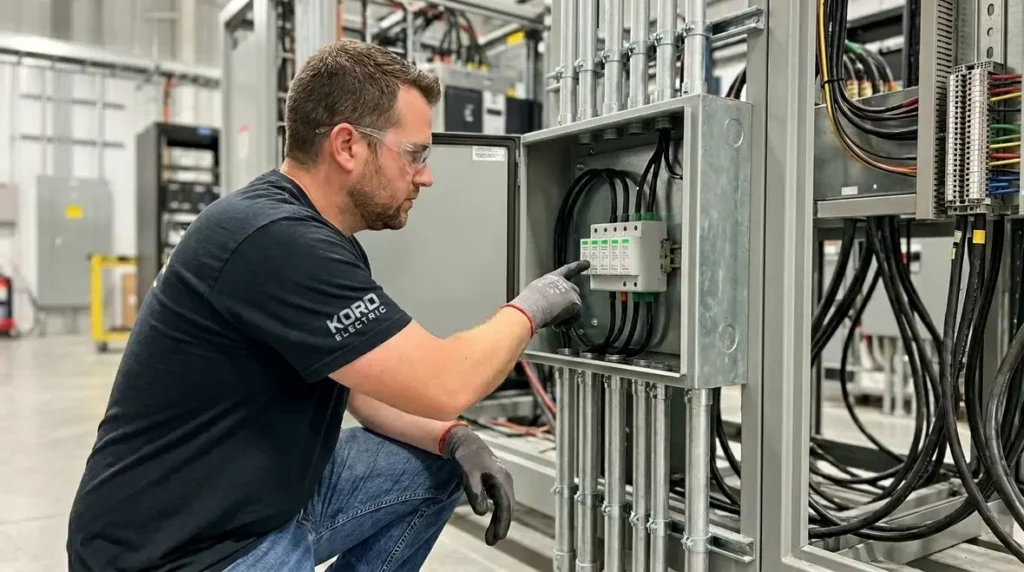
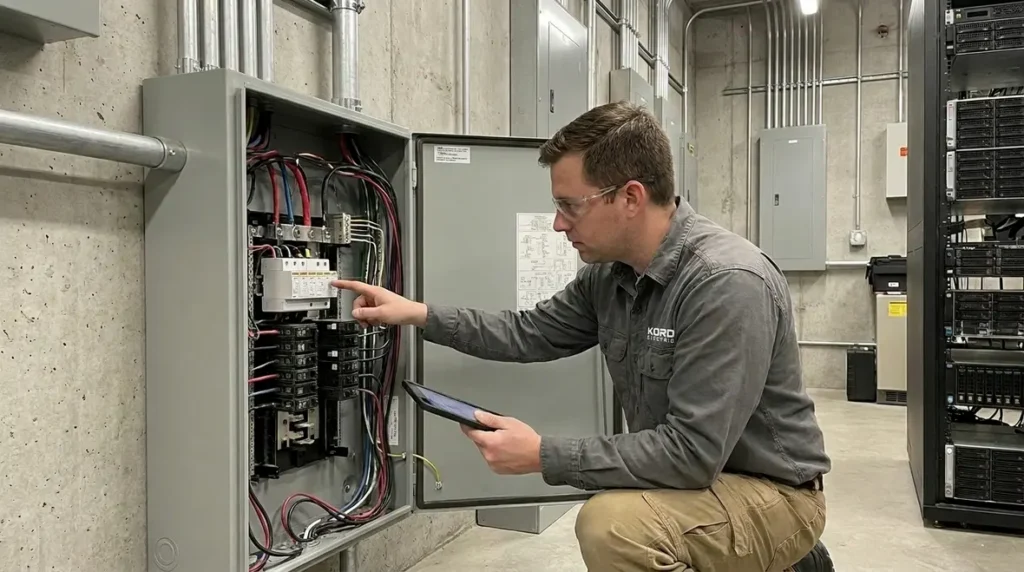
At Kord Electric, we treat emergency power system testing like a safety ritual, not a paperwork chore. We help commercial and industrial facilities and major property buildings keep standby and emergency power ready for the moment it matters most. Our technicians and expert service staff walk through essential checks that confirm batteries, generators, ATS equipment, switchgear, transfer paths, and controls behave exactly as designed. And yes, we do it with calm confidence, because a real outage is not the time for guesswork or “we think it should work.”
Why emergency power system testing is non negotiable
When a critical load loses normal utility power, emergency systems must pick up quickly, in the right order, and with stable voltage and frequency. However, many facilities only notice problems after a failure, which is like finding out your fire extinguisher is empty when the smoke alarm is already doing its job. That is why we focus on testing routines that reveal hidden issues long before an outage.
Our approach starts with understanding the life cycle of the equipment. Over time, components drift due to temperature swings, vibration, fuel aging, corrosion, and even minor control board changes. Therefore, testing must do more than “start the generator.” It must confirm the whole chain, from detection to transfer to load carry, plus safety interlocks that prevent unsafe backfeed. Our expert service staff explains what they see in plain language, so facility managers know what is healthy, what is trending, and what needs action.
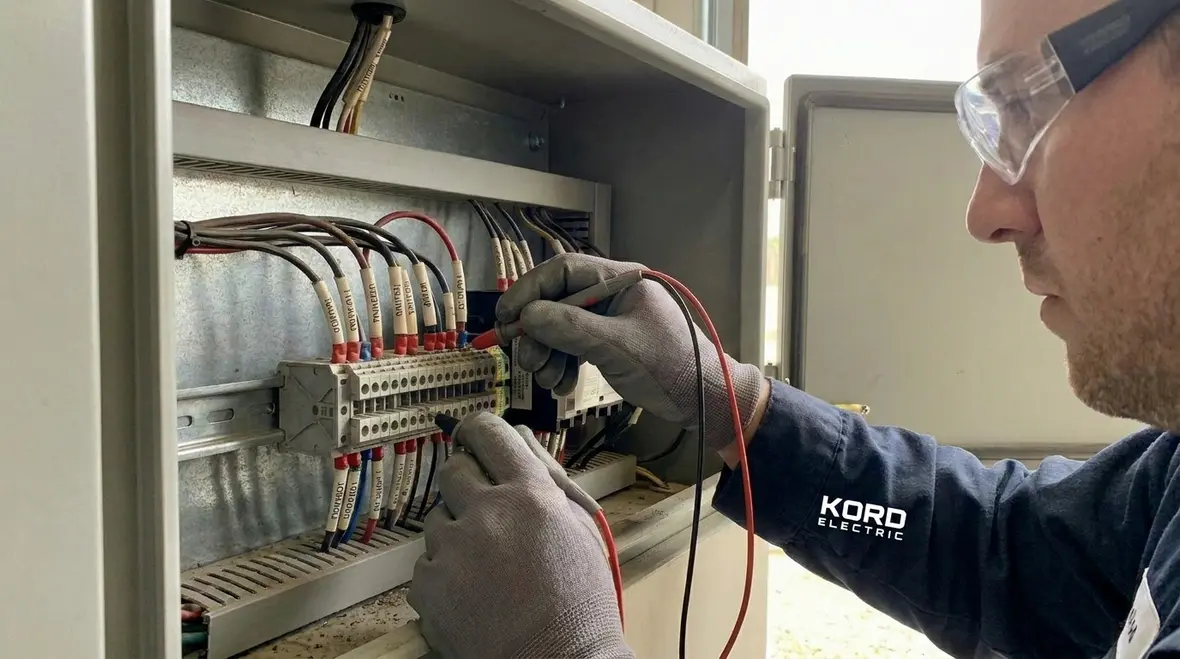
Many facility teams first think about emergency power testing only after an incident. Pairing proactive testing with services like electrical preventive maintenance for commercial and industrial facilities helps keep those “surprises” from turning into outages that disrupt operations and damage equipment.
Planning the test program for real world performance
Good testing begins with a plan that matches the building’s risk and operating model. First, our technicians review the one line diagram, the control philosophy, and the load priorities. Then we confirm what loads actually matter for your facility, such as life safety circuits, emergency lighting, critical HVAC components, data rooms, and any process loads tied to production continuity.
Next, we define the test boundaries to protect operations. For commercial and industrial facilities, we coordinate with your team so sensitive areas stay safe. We verify sequence timing targets, such as transfer within code requirements, and we document expected behavior at each step. This is where many generic programs fail, because they test a device in isolation, not the system in the field.
Finally, we decide what to test during each service visit. For example, we balance run load tests with available capacity and schedules, so we collect meaningful data without disrupting business. And if someone in management asks, “Can we skip the detailed checks?” our answer is usually, “You can, but the equipment will still be the one paying the price later.”
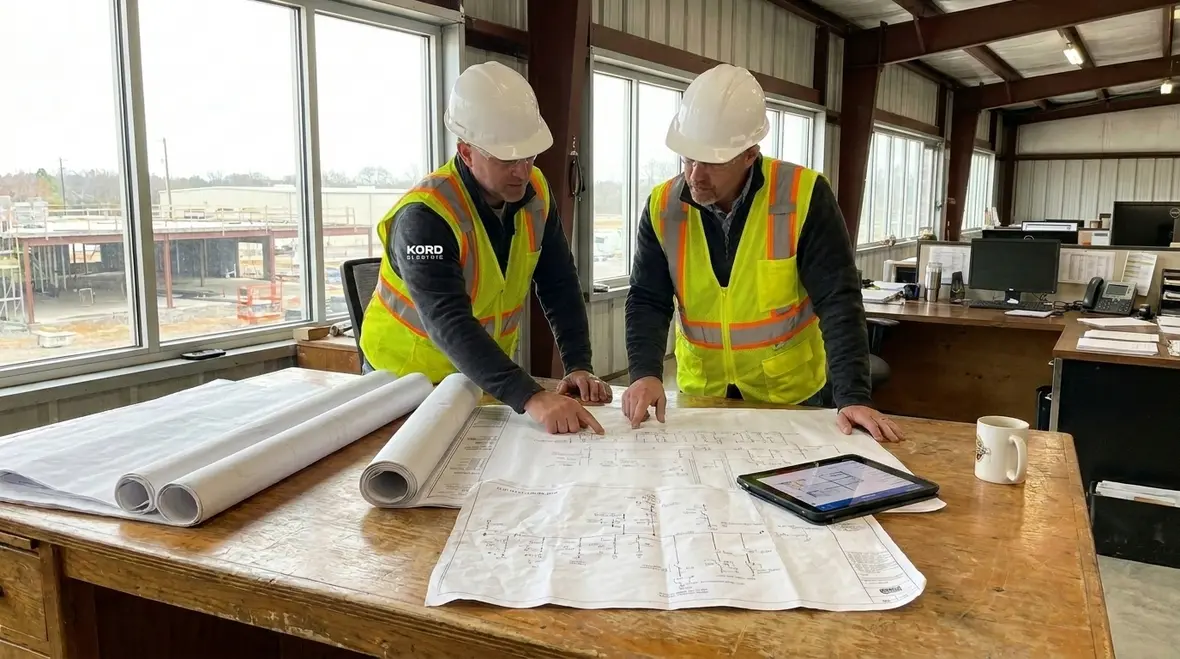
In many properties, a well planned emergency power test program also becomes the backbone of broader reliability work. When testing reveals aging infrastructure, our team can connect findings to solutions like mitigating emergency power failures in commercial buildings so each inspection leads to tangible improvements instead of just another binder on a shelf.
Essential checks for transfer, sensing, and control logic
The transfer process usually determines whether emergency power system performance feels smooth or stressful. Our expert service staff examines sensing circuits, time delays, and control logic that detects loss of utility power and commands transfer. During maintenance visits, we look for signs of nuisance operation, unstable thresholds, and control wiring issues that can hide for months.
We also verify the ATS or transfer switch settings, including engine start signals, permissive contacts, and break before make behavior when required. In addition, we inspect interlocks that prevent the normal and emergency sources from connecting at the same time. That safety step matters, because backfeed can damage equipment and create dangerous conditions.
Then we check control panel status points. We confirm battery health, charger operation, and alarm thresholds. After that, we run controlled simulations that reflect how the system reacts during real outages. Our technicians explain each result as they record it, so your team understands what the control system is actually doing, not just what it claims to be doing.
When these checks connect with upstream and downstream equipment, they form a full reliability picture. Many facilities pair transfer and control testing with voltage fluctuation diagnostics in commercial and industrial facilities to catch both control logic issues and power quality problems that can cause unexpected trips or nuisance alarms.
Generator run tests and load behavior under stress
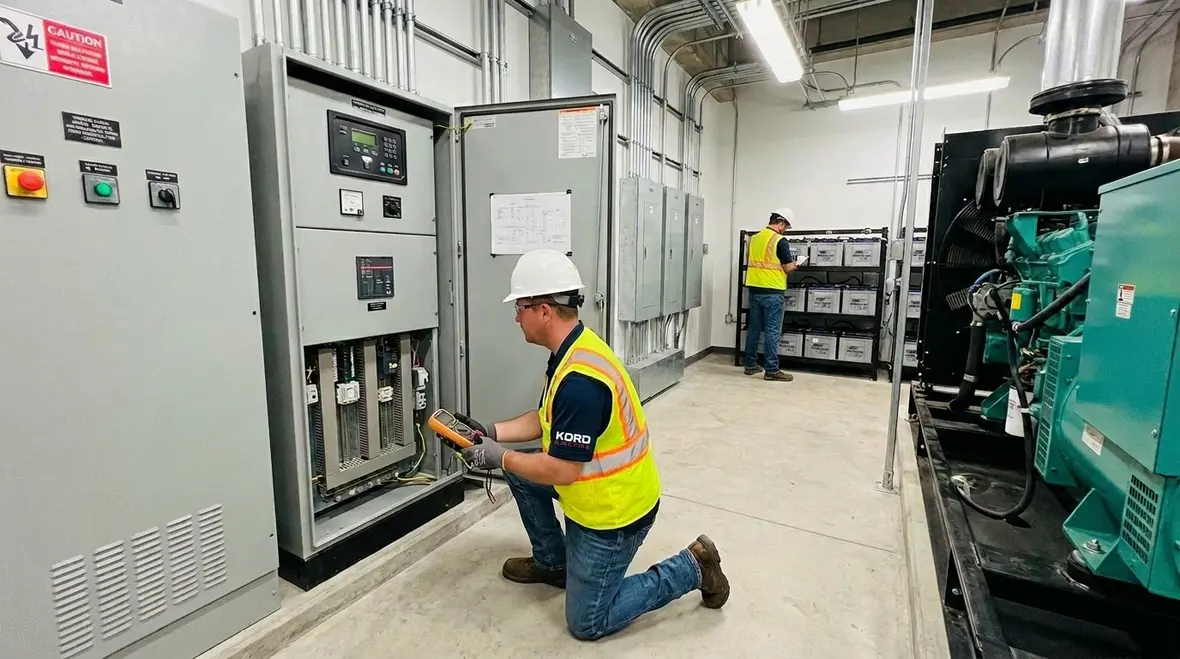
Starting a generator is simple. Keeping it stable while carrying critical loads is the hard part. Therefore, we perform generator run tests that evaluate voltage regulation, frequency stability, engine speed control, and transient response. We observe outputs under steady conditions and watch for signs that the generator cannot hold performance when load changes.
Where facility conditions allow, we include load testing using appropriate methods for commercial and industrial environments. This may involve resistive or managed load configurations, always aligned with the facility’s design and code requirements. We confirm that the generator can reach proper speed, sustain voltage, and manage power factor without overheating or abnormal engine behavior.
Additionally, we check fuel system readiness, especially for longer events. We inspect and evaluate fuel quality, check filters, and confirm no air intrusion in the supply path. Even a small restriction can cause the system to stumble when the runtime extends beyond the “short test window.” As our service staff likes to say, “A generator that runs for five minutes is cute. One that runs when it counts is the goal.”
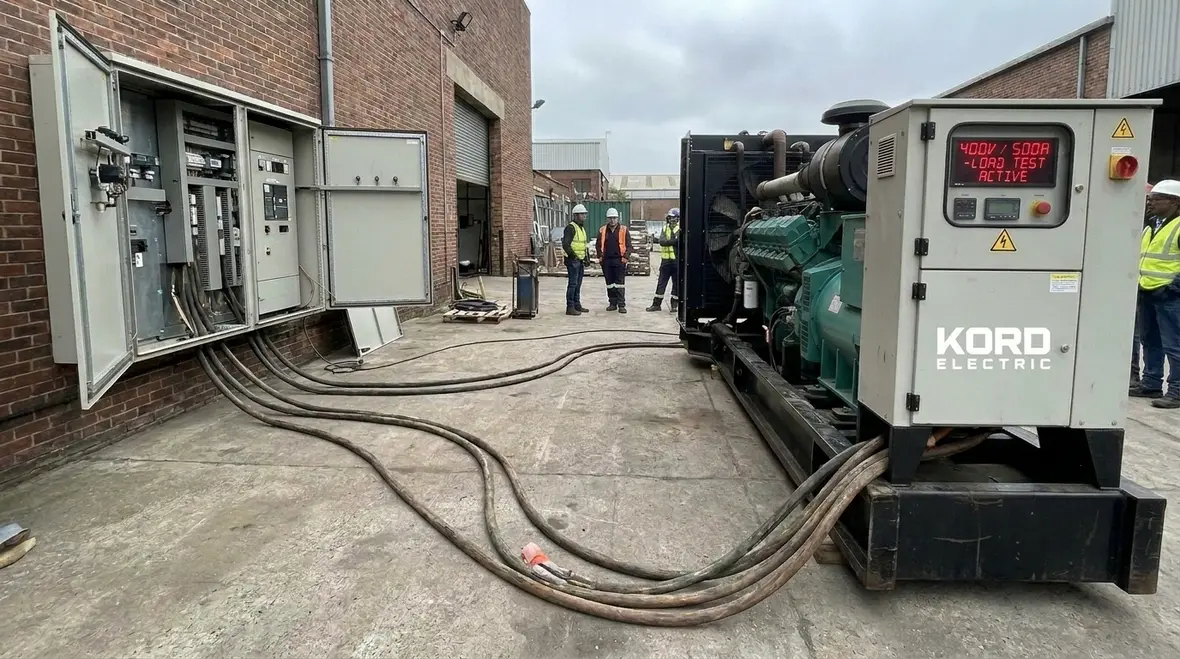
These generator run tests often reveal whether your standby power strategy can actually support real downtime scenarios. When combined with structured maintenance plans and 24/7 emergency electrical services for Los Angeles facilities, they form a layered defense against both unexpected outages and equipment failures during an event.
Battery and charger verification with real acceptance criteria
In many emergency power system setups, batteries provide reliable starting power and control stability. So battery testing cannot be treated like a casual glance. We check battery capacity, voltage under load conditions, internal resistance where applicable, and charger output stability. Then we confirm that the charger returns the batteries to a healthy state after any discharge.
We also verify alarm functionality. If the system should alert for low battery voltage, it must alert at the right point, not earlier or later than intended. Our technicians examine wiring terminations and cleanliness of connections, because corrosion can turn a solid battery into a “maybe it will start” situation.
To keep things grounded, we record baseline readings and compare them to prior data. Over time, we spot gradual decline, which helps your team schedule service before the system fails when it is stressed. This is the kind of trend tracking that facility owners appreciate, because it supports budgets and avoids emergency fixes that arrive after a calendar gets ugly.
Battery and charger verification also ties directly into broader safety and compliance expectations. Facilities that align emergency power system testing with NFPA 70 electrical safety requirements give their teams clear evidence that life safety systems, controls, and standby power meet modern code expectations instead of relying on outdated assumptions.
Switchgear, distribution, and safety interlock integrity
Emergency power rarely fails because one component goes completely silent. More often, it fails because the distribution path, breaker behavior, or interlocks do not align with design. Therefore, we inspect and test switchgear and distribution components that connect emergency sources to loads.
Our service staff verifies breaker and contact operation, confirm proper mechanical alignment, and check that control circuits respond correctly. We also validate that protective devices behave as expected, so fault conditions do not cascade into a broader outage. In other words, the emergency system should deliver power without turning into a fireworks show.
We also check labeling, wiring accuracy, and that programmed load shedding or priority logic functions properly. For large property buildings, those priorities matter because not every load can pick up instantly. Our technicians test sequences that match the facility’s operational plan so critical systems stabilize first, and non critical circuits follow in a safe order.
Often, this is where small discrepancies—mislabelled breakers, undocumented tie-ins, or forgotten temporary feeds—show up. Pairing emergency power system testing with best practices from guides like the electrical panel labeling best practices guide helps ensure that what labels say and what conductors actually do remain in sync when every minute counts.
Documentation, reporting, and how others use our findings
After testing, we produce clear documentation that helps your stakeholders make decisions quickly. We list what we tested, the measured values, and what the results mean. Then we explain recommendations in plain terms, including what needs corrective action and what can be scheduled during the next maintenance window.
Our reporting supports compliance expectations and internal audits for commercial and industrial facilities. It also helps other parties, like building engineers, facility managers, and operations leadership, interpret trends over time. If a generator shows rising temperature under load or if transfer timing drifts, your team sees it in writing, not in a vague verbal update.
Importantly, we do not just report numbers. Our expert service staff ties the findings to system behavior. If a control parameter increases the time to transfer, we explain what it could cause during an actual outage. That helps others avoid the classic trap of treating test results like a trophy instead of a roadmap.
Over time, this documentation becomes a powerful planning tool. Many property teams use it alongside resources like commercial and industrial electrical maintenance plans to align budget cycles, capital improvements, and future emergency power system testing with the real conditions inside their infrastructure.
FAQ
Book Kord Electric for a calm, documented testing plan
If you manage a commercial or industrial facility, you already know that outages ruin production and disrupt people. Kord Electric helps you stay ready with thorough, documented emergency power system testing and careful checks across controls, transfer, generator operation, batteries, and distribution. Our technicians and expert service staff explain results in a way your team can act on, without vague surprises. Contact Kord Electric today to schedule an assessment and build a testing plan that keeps your emergency power reliable when real life stops cooperating.
For organizations across the region, comprehensive test programs often pair well with broader offerings like Los Angeles County electrical services for commercial and industrial facilities, ensuring that everyday projects, upgrades, and emergency support all align with the same reliability standards that protect your critical systems.
Whether you are refining an existing maintenance plan or starting from scratch, our team is ready to help you integrate testing, documentation, and response into one cohesive strategy. When outages do happen, you will not be guessing—you will be relying on a system that has already proven itself under careful, consistent emergency power system testing.