Factory Lighting Efficiency Upgrades with LED ROI
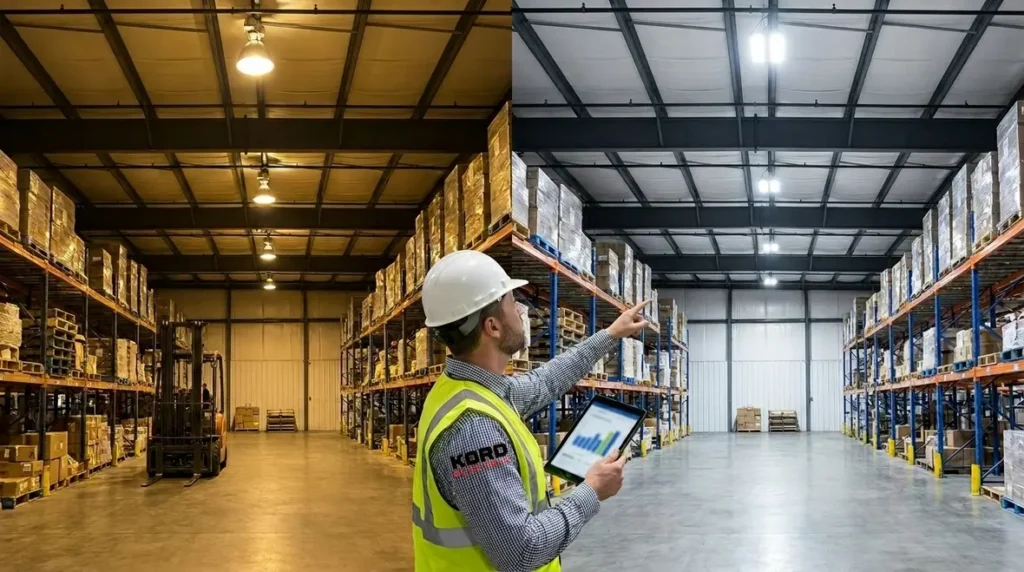
At Kord Electric, we see it every day in commercial and industrial facilities: older fixtures waste money, and factory lighting efficiency upgrades help stop the leak fast. We help property owners and operators upgrade to LED with designs that cut energy use, stabilize maintenance costs, and improve the light where work actually happens. And yes, we know lighting can sound as exciting as watching paint dry. Still, when your power bill shows up like a bill collector, LED upgrades start to look pretty thrilling. Our technicians and expert service staff explain every step in plain language, so teams know what is changing, why it matters, and how the return on investment shows up in real numbers.
Why LED upgrades deliver ROI that factories can feel
In a factory, lighting is not a “nice to have.” It is a day long operating system. When we shift from high heat, high power sources to LED, the ROI often comes from three places at once. First, energy drops. Second, maintenance hours drop. Third, steadier light helps reduce rework and safety issues tied to poor visibility.
However, not every LED job delivers the same outcome. Some projects treat lighting like a simple swap, and others treat it like an engineered improvement. We lean toward engineering because it protects the ROI you expect. Our technicians review current fixture type, mounting height, beam angle, and the layout of each space. Then we help others choose LED solutions that match real tasks, not just marketing photos.

What drives payback: watts, downtime, and labor
Let’s talk in terms that plant managers understand: dollars tied to energy and dollars tied to downtime. When older luminaires run inefficiently, the plant pays more per hour. With factory lighting efficiency upgrades, the LED system uses less power for the same usable light. Yet the payback is not only about watts.
Downtime matters. In many facilities, maintaining lighting means climbing ladders, replacing failed components, and interrupting production. LEDs typically last longer, and that length reduces the frequency of work orders. Meanwhile, better lighting quality can improve task accuracy. If your team can see defects and labels clearly, you reduce the chance of producing the wrong part and paying for it twice.
Now, a quick joke because we like morale: the only thing that should “burn out” in your plant is a spare work boot, not your lighting system. We plan upgrades so replacements do not become a recurring surprise.

How our lighting assessment protects the ROI
When others chase ROI without a real assessment, they often miss the hidden cost drivers. For example, one area may be bright enough while another is dim, which leads to uneven illumination and glare. Uneven light also causes unnecessary adjustments in work practices. Also, some facilities have zones with different usage patterns, like warehouse aisles versus packaging lines. In those cases, controls can add a second layer of savings.
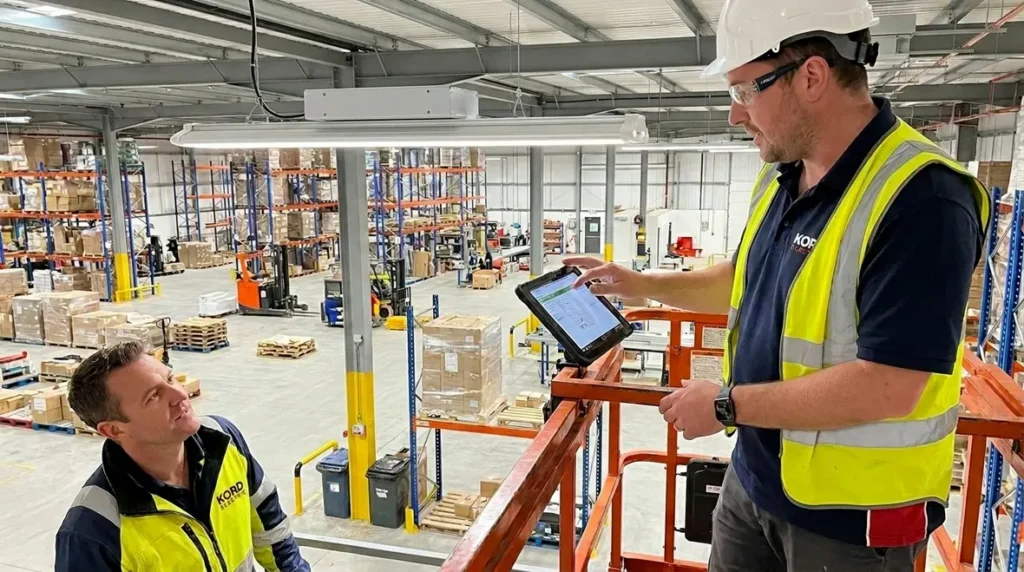
At Kord Electric, our technicians and expert service staff explain how we evaluate your facility. We look at:
- Fixture condition and remaining lifespan of current equipment
- Ceiling height, beam spread, and reflectance of surfaces
- Task type and typical work distance
- Operating schedule and dimming needs by zone
- Compliance needs for commercial and industrial settings
Then we map upgrade choices to outcomes. That is how we support a clean ROI story instead of a vague promise.
If you want to explore how layout and fixture placement add even more value on top of factory lighting efficiency upgrades, Kord Electric has an in-depth breakdown in their guide to industrial lighting layout optimization for efficiency. It shows how fixture spacing, glare control, and task coverage work together to support production, not slow it down.

What LED upgrades improve beyond energy savings
Energy savings are often the headline, but factories rarely live on headlines alone. They live on quality and safety. When we design LED replacements properly, you get more than lower bills. You get lighting that supports focus.
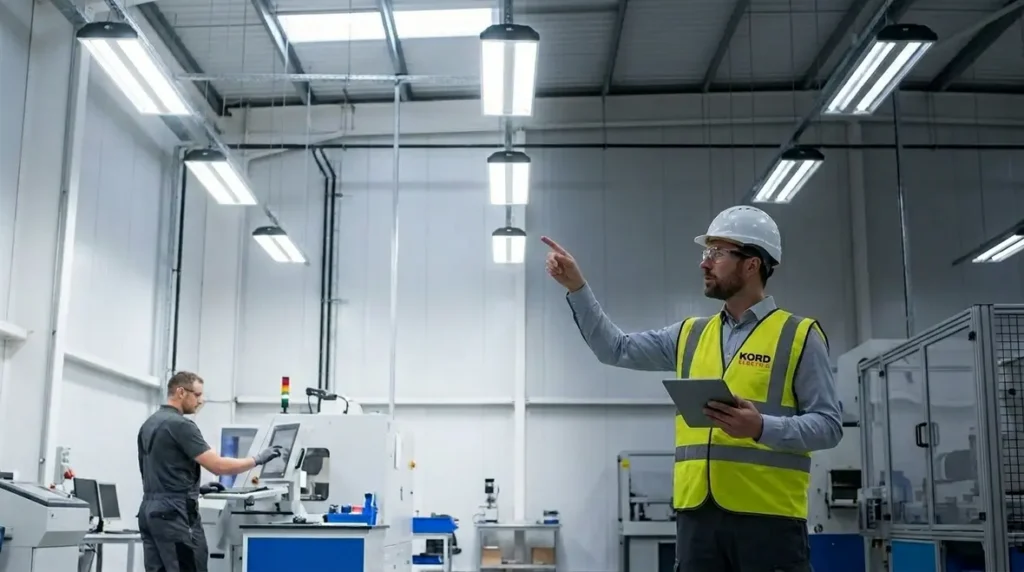
First, LEDs can improve light distribution. This reduces hot spots and shadows that hide hazards or slow inspection. Second, LEDs help stabilize color and brightness across time. That means a space does not drift into “good enough” lighting that later turns into “we should fix this” lighting. Third, controls can reduce output when full brightness is not needed. For example, a loading area during low traffic hours does not need the same output as it does during peak receiving.
And if you think controls are only for offices, consider this: the warehouse aisle is basically an office for forklifts. Without the right visibility, everyone acts like they are in a low budget action movie, except the stunt is performed by your maintenance team.
For facility leaders focused on safety, it can help to pair LED ROI planning with an honest look at existing risks. Kord Electric’s article on workplace lighting safety hazards that hurt productivity walks through how dim zones, glare, and flicker quietly chip away at both uptime and morale.

Where controls and system design multiply savings
Factory lighting efficiency upgrades do not have to be only about swapping fixtures. When we add smart controls, savings can stack. Sensors and schedules let lights respond to occupancy and daylight conditions. So the system does not light an empty floor at full power. Additionally, dimming can extend usable life and keep performance stable.
Our approach stays practical. We help others avoid “overautomation” that nobody uses. Instead, we recommend control strategies tied to how the plant actually runs. For instance, manufacturing cells may need steady brightness. Warehouses may benefit from occupancy sensing in offices and break rooms, plus timed or zoned dimming in aisle areas. Exterior or yard-adjacent lighting, where relevant for a major property building, can also follow dusk to dawn logic with adaptive output.
We explain these choices clearly to facility leaders so the team understands what changes, what remains, and how they can verify results.
Controls do more than squeeze extra savings from LEDs; they also support compliance in states with strict energy rules. If your facility sits in a jurisdiction with evolving standards, Kord Electric’s resources on commercial lighting compliance in California and their California commercial lighting code guide for 2026 show how occupancy sensors, daylight harvesting, and demand response connect directly to code and ROI.
Getting the upgrade right: common pitfalls we help you avoid
We have seen projects stumble in predictable ways. When others rush the job or skip planning, the LED replacement can underperform. The most common pitfalls include choosing the wrong beam angle, assuming one light level fits every task, and ignoring glare and mounting constraints. Another issue is selecting components without considering maintenance access. If a fixture blocks access or requires special equipment to service, the installation becomes expensive later.
Also, some teams focus only on the fixtures and ignore the surrounding system. A high efficiency fixture cannot compensate for dark walls and ceilings with poor reflectance. In some plants, targeted improvements to the lighting layout combined with fixture selection deliver better overall results than simply increasing brightness.
That is why we keep our process grounded. Our expert service staff helps teams plan installation to reduce operational disruption. Then our technicians coordinate practical timelines so the plant stays productive.
If you are comparing quotes or planning the budget side of your project, Kord Electric’s commercial lighting upgrade cost guide breaks down how fixture types, ceiling height, and controls shape total spend and payback windows. Pairing that with factory lighting efficiency upgrades helps you build a clearer ROI picture from the start.
FAQ
Ready to fund better lighting with less waste?
If your facility runs on long hours and tight margins, you deserve lighting that pays you back, not lighting that drains your budget. Kord Electric works with commercial and industrial facilities and major property buildings to plan factory lighting efficiency upgrades that cut energy use, reduce maintenance, and improve visibility where work really happens. Our technicians and expert service staff explain every decision in plain language. Contact us now, and let us map a practical upgrade plan with a clear ROI path for your site.
When you are ready to move from planning to action, Kord Electric’s dedicated lighting installation services team handles everything from LED retrofit upgrades to industrial and commercial lighting layouts. Factory lighting efficiency upgrades become smoother when the same experts design, install, and fine tune the system that will support your operations for years.