How Kord Electric Improves Warehouse Lighting Performance
Energy-Efficient Lighting Systems for Large Warehouses save money, cut wasted energy, and help teams work safer and faster. At Kord Electric, we design lighting upgrades for commercial and industrial facilities, plus major property buildings where downtime costs real money. Our approach stays practical: we look at your storage layout, your work patterns, your ceiling height, and your operating schedule, then we build a plan that reduces energy use without dimming your world into a detective novel.
In this guide, third person means we describe what others can expect from our team. Yet make no mistake, our technicians do the work, and our expert service staff explains each step clearly, so nobody feels like they are reading a transformer manual in the dark. And if that sounds funny, it is. But it is also the point.
Why warehouses waste energy even with bright lights
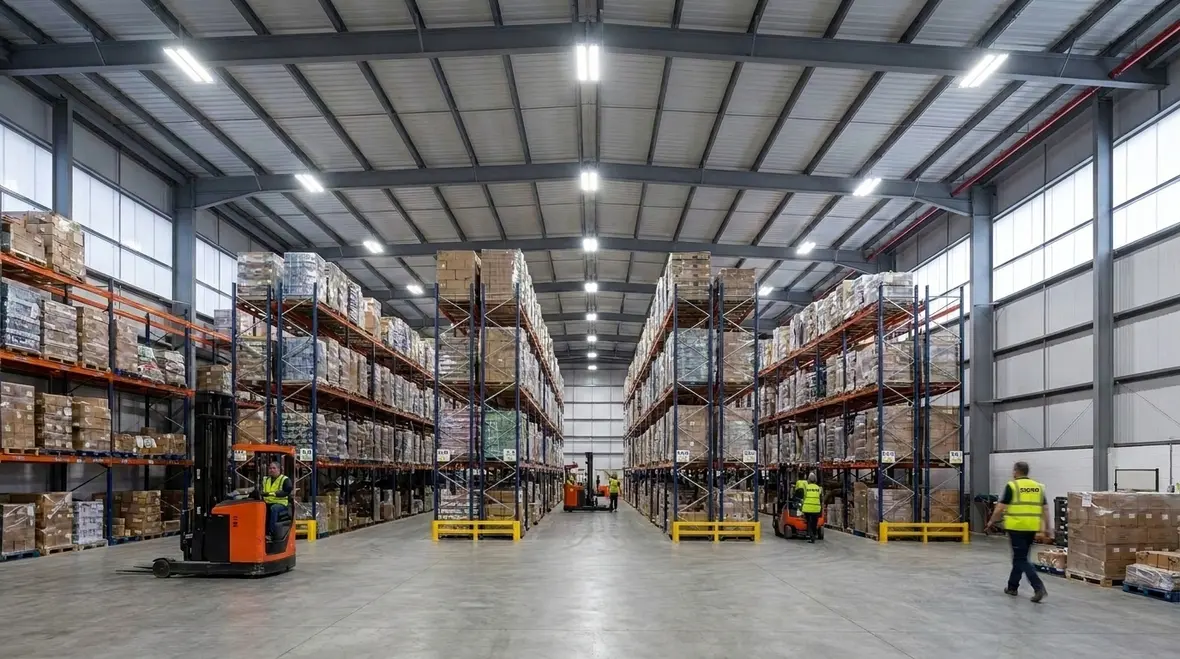
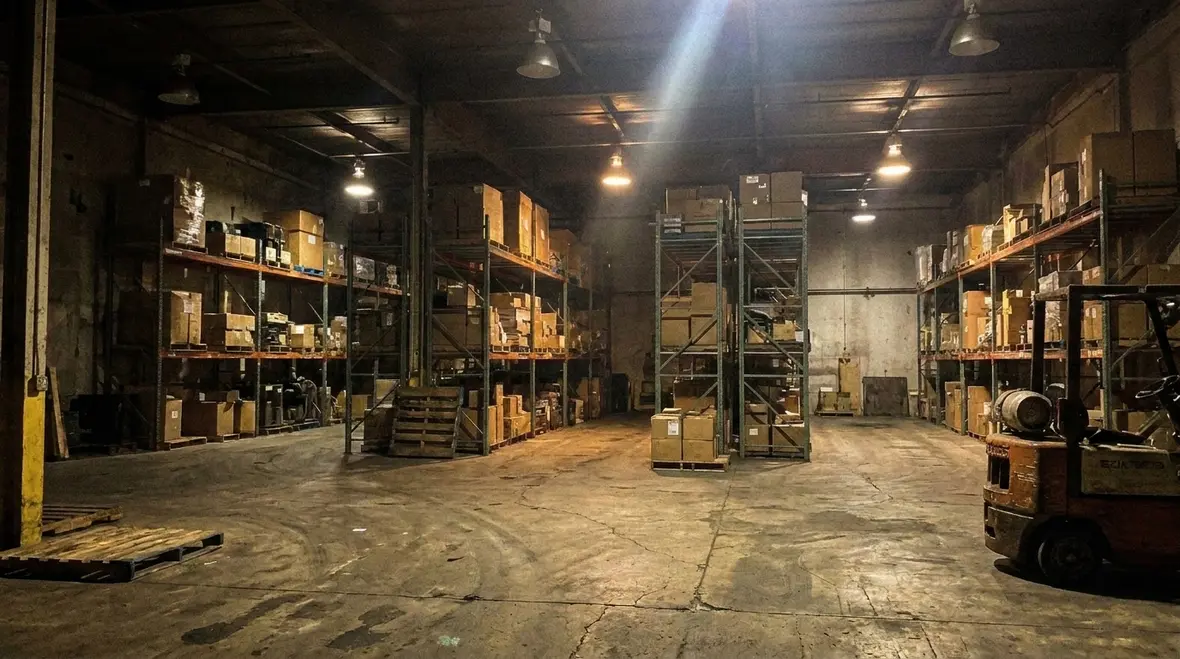
Large warehouse lighting often wastes energy in ways that stay hidden. Over time, fixtures lose output, lamps age, and controls fail to match real occupancy. As a result, warehouses burn power during low traffic hours, and they illuminate areas that no one even uses. Furthermore, many older systems spread light unevenly, so managers compensate with higher brightness instead of fixing the source.
When Kord Electric evaluates a site, we do not guess. We measure, compare, and map lighting levels against your rack layout and walkway paths. Then we focus on the gaps: dark zones, hot spots, and glare that makes operators squint. We also consider how fast goods move through the space. In short, a warehouse is not a static office. Lighting must adapt to how people and equipment actually move.
Some people treat lighting like a “set it and forget it” appliance. That is adorable. Warehouses do not stay still, and neither should lighting.
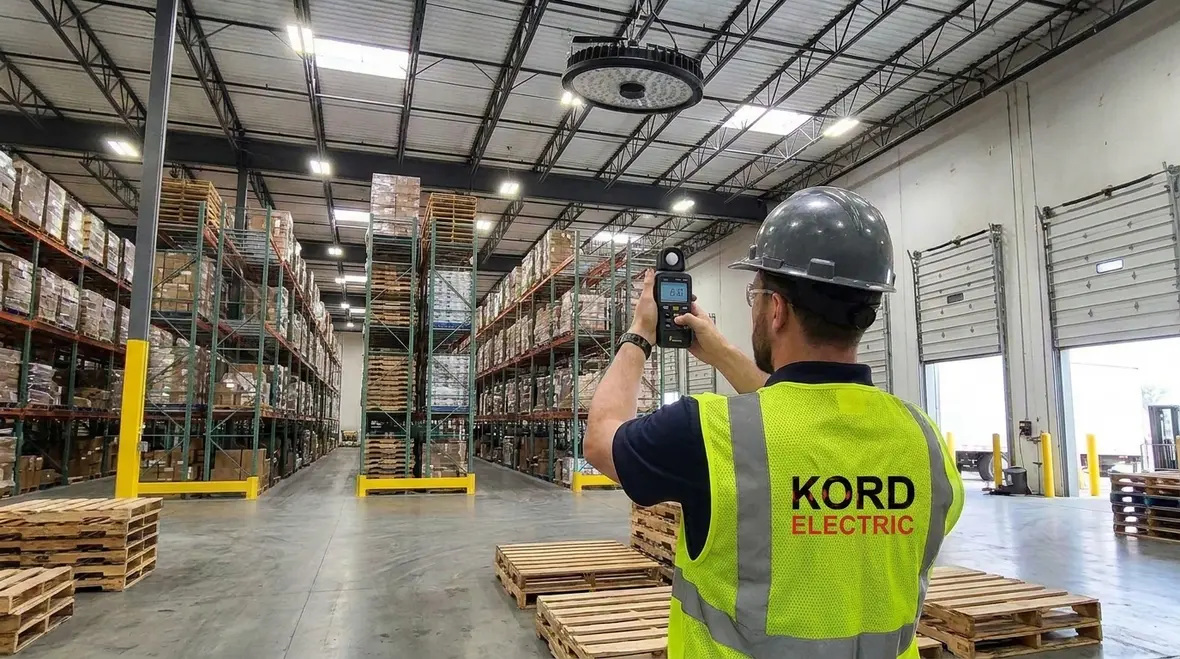
Well-designed warehouse lighting also supports broader electrical performance. If you want to see how Kord Electric approaches power and lighting together, you can explore the Warehouse Lighting Automation Efficiency Guide, which shows how automation, zoning, and controls work alongside efficient fixtures to reduce waste without slowing operations.
What modern efficiency looks like in a warehouse
Energy efficiency in a warehouse is not one magic bulb. It is a system made of choices that work together. In many upgrades, we replace older high wattage fixtures with efficient LEDs, then we add controls that match occupancy and daylight. Moreover, we tune the design so the light meets task needs at the right angles, which reduces wasted spill light.
To keep things stable, we also aim for consistent color quality where it matters, like picking areas and inspection zones. This can reduce errors and rework, since workers can see details without strain. Meanwhile, in remote aisles and low activity zones, we set lower light levels and rely on sensors and schedules to bring brightness up only when activity returns.
During planning, our expert service staff explains the “why” behind each decision. So the client can understand how the building will perform, not just how it will look. That matters because a warehouse manager needs predictable outcomes, not surprise bills.
If your lighting upgrades will tie into broader facility changes, Kord Electric also offers guidance on how lighting retrofits interact with electrical systems, as outlined in the Energy Efficient Commercial Lighting Retrofit guide. Together, these approaches keep Energy-Efficient Lighting Systems for Large Warehouses aligned with real-world infrastructure, not just fixture catalogs.
Which control strategies reduce costs without disrupting work
Controls help warehouses stop paying for brightness when nobody needs it. First, scheduling and time clocks align lighting to shift changes, breaks, and weekends. Next, occupancy sensors reduce light in areas that stay empty between deliveries. Then, daylight harvesting can dim fixtures near skylights or large entrances, where natural light helps most.
However, controls should not fight operations. For example, if a forklift rarely enters one aisle, the system should not keep that aisle at full brightness all night. Instead, it should respond quickly when motion returns. Therefore, Kord Electric designs control zones carefully based on traffic patterns, sensor placement, and mounting heights.
Our technicians also plan for reliable behavior during power events and building cycles. Many warehouses experience frequent switching from electrical rooms and panels. So we test the control response and ensure the system holds steady under real conditions. In other words, we do not build a lighting setup that works only on a spreadsheet.
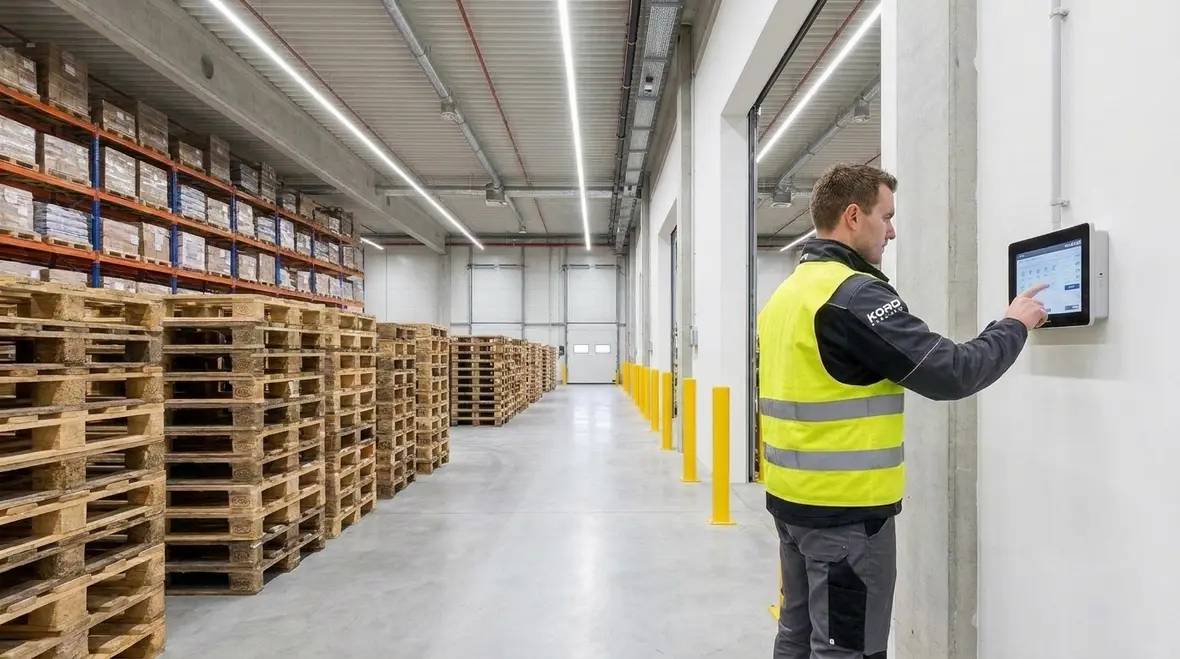
For facilities that want to go deeper on control logic, the Warehouse LED Lighting Controls Optimization article shows how smart zoning, response times, and sensor placement keep lighting responsive without creating a light show every time someone walks by.
How we design layouts that avoid glare, shadows, and wasted spill
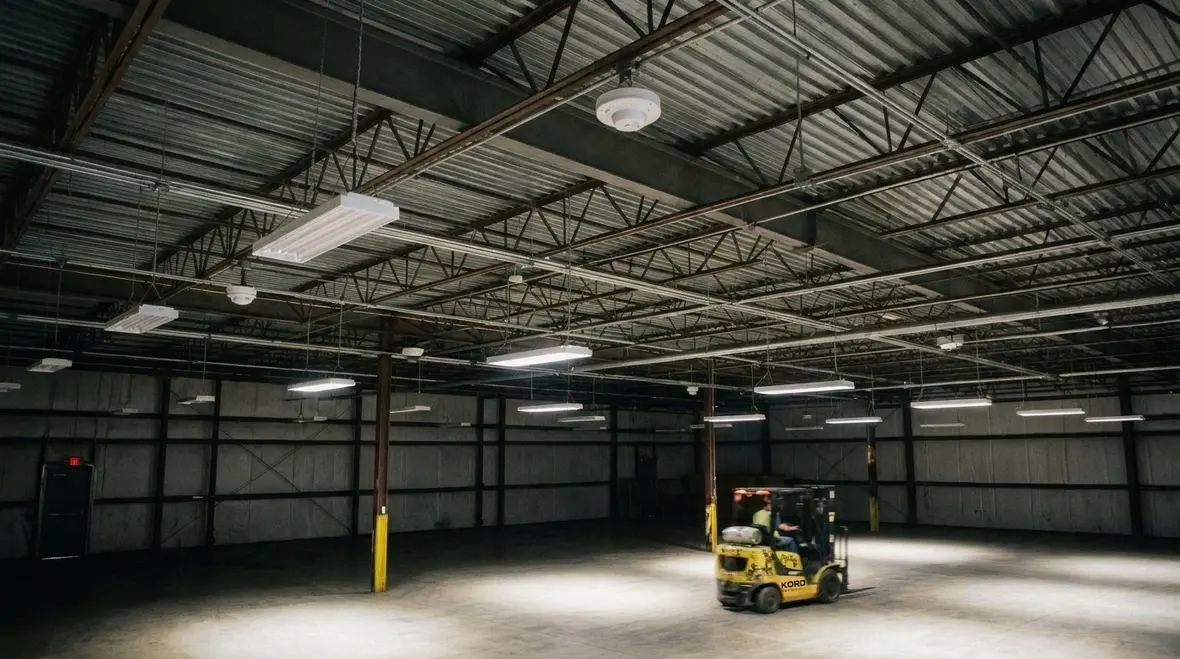
Lighting design affects comfort, productivity, and energy use. Poor placement creates glare, which can slow down picking and raise safety risks. In addition, shadows form when fixtures sit too far apart or when racks block light paths. To solve this, we design around your storage system, including rack height and aisle width.
We also consider mounting location and aiming angles. As a result, workers see more clearly without needing higher brightness. We choose beam spreads that fit the aisle geometry, so light goes where it helps. Then we verify the distribution so the system does not blast light into high ceiling zones that add nothing to the work.
And yes, we do the unglamorous part too. We check for uniformity, not just averages. Two warehouses can share the same average lux level, yet one can feel dim because of uneven hotspots and dark corners. Our team pays attention to these details because real people operate real equipment.
At the end of the design phase, our expert service staff walks the client through the plan in plain terms. They explain how the new lighting will behave, and they outline what changes during commissioning so nothing feels like a prank. Unless you count the old lighting wasting energy like it is paid per hour. That joke writes itself.
Lighting that works with your electrical system
Every warehouse lighting design still connects back to panels, circuits, and protection. Kord Electric plans layouts with the same care we bring to advanced power distribution for warehouse efficiency, so fixtures, controls, and wiring all operate within safe, code-aware limits. That way the light on the floor matches the reliability behind the walls.
Commissioning and maintenance that keep savings alive
Energy savings vanish when systems drift out of calibration or controls fail quietly. That is why commissioning matters. After installation, we verify performance against targets, then we document settings so the building team can maintain them. If your facility adds new racks or shifts workflows, we plan for re-tuning so the lighting stays aligned.
Maintenance affects long term output too. LEDs last, but drivers, optics, and control components still require attention. Our technicians provide service for commercial and industrial facilities, focusing on fast response and clear guidance. They also educate clients on what to watch for, like unexpected flicker, sensor misreads, or reduced coverage after construction changes.
In many major property buildings, teams want predictable schedules. So we coordinate work windows to limit disruption during receiving and picking hours. We treat downtime like a cost center, because it is.
Keeping performance aligned with codes and standards
As systems age, code requirements and safety expectations keep moving. Kord Electric supports long term lighting performance with the same mindset used in our California Commercial Lighting Code Guide for 2026 and Lighting Installation Code Compliance Guide. We check that your warehouse lighting still meets modern standards, keeps staff safe, and uses energy responsibly as equipment and operations evolve.
Energy audits and project planning for warehouse upgrades
Before we propose solutions, Kord Electric performs an audit and planning step that fits the facility. We review existing fixture types, wiring and controls, ceiling height, and energy usage patterns. Then we estimate savings in a realistic way, based on actual operating hours and measured performance where possible.
We also consider how the project connects to the building’s electrical system. Some warehouses have panel constraints, aging controls, or complicated lighting circuits. Therefore, we design upgrades to fit the existing infrastructure or to modernize it where necessary. We avoid “swap and hope” strategies.
To keep stakeholders aligned, we communicate timelines and milestones clearly. That includes installation, testing, and final verification. And our expert service staff explains documentation so facility managers can track warranties, fixture details, and control settings.
At this stage, we sometimes hear the fear that efficient lighting will make tasks harder. That concern is understandable, because old upgrades sometimes changed light quality without warning. We address it with a real plan, targeted brightness levels, and careful distribution modeling.
Planning beyond lighting alone
For larger facilities, warehouse lighting projects often overlap with broader electrical upgrades. The same thinking that guides our Industrial Facility Electrical Power Distribution Upgrades applies here: measure existing conditions, model upgrades, then phase work so operations stay calm instead of chaotic.
FAQ
Energy-Efficient Lighting Systems for Large Warehouses: the next step with Kord Electric
Kord Electric helps commercial and industrial facilities upgrade warehouse lighting with smarter design, clean control strategy, and dependable commissioning. We send technicians to measure, plan, and install with minimal disruption, and our expert service staff explains every step in business friendly terms. If your warehouse lighting wastes energy, creates shadows, or costs too much to run, we will map the fixes and deliver a plan that fits your operations. Reach out today and let us set your facility up for lower costs and steadier performance.
If your operations extend across Los Angeles County and surrounding areas, you can also explore our broader Los Angeles County electrical services to see how warehouse lighting upgrades fit alongside power distribution, code compliance, and other commercial projects.
For facility teams that want to dive deeper into how lighting affects energy and workflow, the Warehouse Lighting Automation Efficiency Guide connects well with everything outlined here, especially if you are planning a full control strategy alongside fixture upgrades.