
NFPA 70 Section 242.13 for NEC Type 1 SPD
NFPA 70 Section 242.13 sets the rules for Type 1 surge protective devices, and at Kord Electric the focus starts with making it simple for facility decision makers. Their NEC Type 1 SPD programs are built for commercial and industrial electrical systems where surges can enter from the utility side, not just from inside a building. In plain terms, when lightning, switching events, or grid disturbances try to sneak into your power, they help stop that energy from damaging sensitive equipment. And yes, they explain it slowly, because even the best technology deserves a calm briefing.
Third person, first principles, and field-tested clarity guide the discussion below. Kord Electric technicians and expert service staff walk clients through what NFPA 70 Section 242.13 means, why Type 1 protection matters for major property buildings, and how to select, install, and maintain surge protection that actually holds up.
What Section 242.13 means for Type 1 surge protection
NFPA 70 Section 242.13 describes Type 1 surge protective devices, which serve systems where surges can be expected to come from the supply side. In many commercial and industrial facilities, this supply path runs through service equipment, switchgear, and service conductors before it ever reaches the loads. Consequently, Type 1 devices act as the first line of defense in that chain.
In practice, Section 242.13 does not just label a device. It frames how the device needs to be built and how it should perform under surge conditions. As a result, the device must handle high surge current and specific test behavior, rather than relying on “it seems strong enough” logic.
Kord Electric technicians emphasize one point early: Type 1 protection focuses on big surges at the source path. It does not replace the need for downstream protection where equipment is more sensitive. Instead, it supports a layered approach across the electrical system.
Where Type 1 SPD fits in a commercial power path

To place an NEC Type 1 SPD correctly, a facility team studies the electrical one line and traces the energy travel route. First, the device connection point matters. Then, the grounding and conductor routing matter. After that, coordination with other surge protective devices matters.
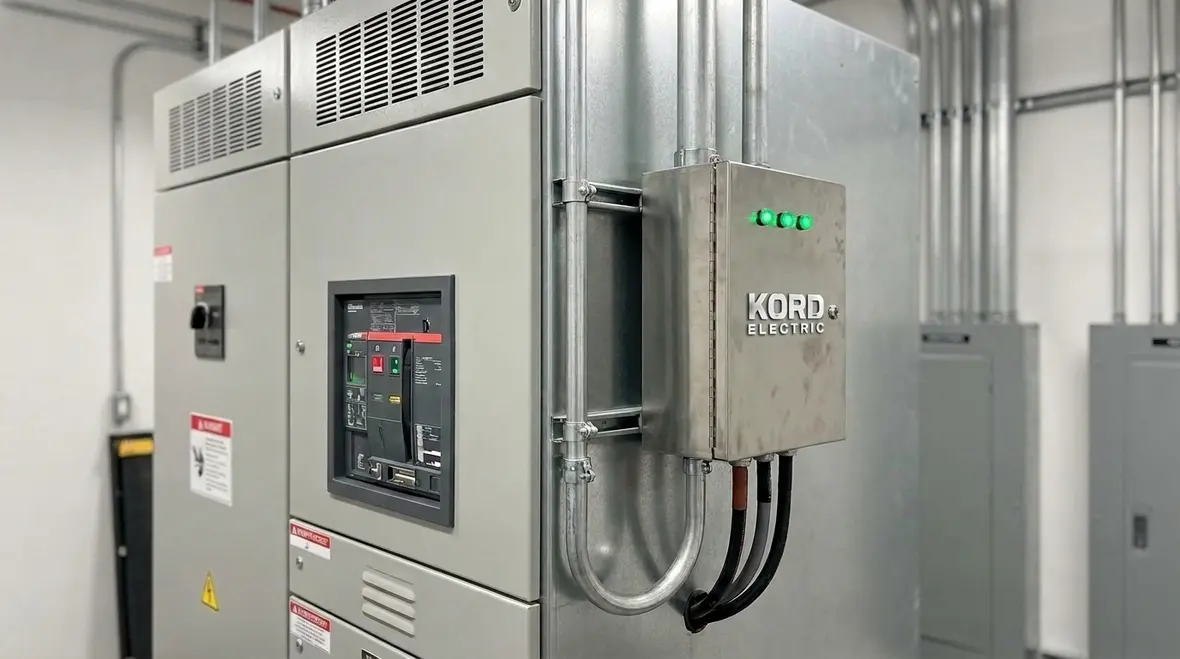
Typically, a Type 1 device connects at the service entrance or at switchgear feeding the building. Meanwhile, the loads that need fine protection sit downstream at distribution panels, motor control centers, branch circuits, and equipment panels. Therefore, Type 1 addresses the initial surge energy, while other surge components handle the residual effects as the power moves closer to critical electronics.
Their expert service staff often says, with a smile that says “we have seen this movie,” that installing a surge device in the wrong spot is like putting a smoke alarm in the kitchen while the fire starts in the attic. It may still beep, but it will not stop the damage the team is trying to avoid.
So, Kord Electric works through the actual facility design for commercial and industrial sites. They do not treat “service entrance” as a generic label. They confirm the available connection points, the grounding scheme, and the expected surge environment for the building.
For facility leaders who want to see how this connects with the broader National Electrical Code, Kord Electric’s guide Understanding NFPA 70: The National Electrical Code Explained for 2026 helps bridge surge protection planning with overall code strategy across the site.
NFPA testing expectations that drive better Type 1 performance

Because surges are not gentle, Type 1 requirements exist for a reason. Surge protective devices must withstand and limit surges according to performance expectations created through standardized tests and ratings. When a device meets the requirements tied to Section 242.13, it can handle the current and voltage stress that the utility side can produce.
Moreover, the device’s ability to clamp surges matters. In a real facility, the goal is not to make the surge disappear. The goal is to keep the surge voltage and energy within levels that the insulation systems, protective devices, and connected equipment can tolerate.
Technicians explain this with a practical analogy during walkdowns. They describe it as taking the edge off a sudden shove. If the shove still hits too hard, expensive devices feel it. If the clamp behavior and ratings line up, the devices survive and the building keeps running.
In major property buildings, the stakes rise because downtime costs compound fast. Therefore, Kord Electric helps clients select surge protection that aligns with the electrical design, rather than picking devices based on price alone. This often ties directly into broader reliability strategies described in their resources on preventing commercial power outages and fire risk, where surge protection is one of several tools used to keep power steady.
Installation details that actually prevent failure
Even when a Type 1 device meets the right standard, the installation can make or break performance. In the field, short conductor runs and correct routing help the surge protective device respond effectively. Meanwhile, improper lead length, poor connections, or mismatched grounding paths can reduce performance and increase stress on equipment.
Kord Electric focuses on installation details that reduce hidden risk. First, they confirm how the NEC Type 1 SPD bonds to the system grounding. Then, they verify that conductors route cleanly and avoid unnecessary loops. Next, they coordinate with existing electrical protection and select compatible components.
Here is the part many people gloss over: surge protection performance relies on the whole path, not just the device label. When that path has more impedance, the surge control action becomes less effective. Consequently, the downstream equipment may see higher transient stress.
Their expert service staff also checks for physical and operational fit. The enclosure environment, service conditions, and maintenance access all matter for commercial and industrial installations where crews need to work safely and efficiently. This mindset aligns closely with workmanship expectations explained in their guidance on NFPA 70 Section 110.7 wiring integrity workmanship standards, where clean routing and solid terminations show up as everyday safety habits, not extras.
Common pitfalls in Type 1 SPD planning
Surge protective device planning can go sideways quickly. Kord Electric sees recurring issues that affect real-world protection. And yes, some of these errors happen even when people “read the brochure.”
Here are the pitfalls their technicians correct most often.
Using a generic approach: Some teams choose a device without mapping the actual electrical system path. Section 242.13 concepts require a fit to the installation.
Skipping coordination: A Type 1 device must work with downstream surge protective devices to manage residual surges and reduce stress at sensitive loads.
Ignoring conductor and bonding quality: Long, loose, or poorly routed conductors reduce how well the NEC Type 1 SPD clamps surges.
Assuming “installed means done”: Protection needs monitoring, documentation, and service attention so the facility knows what it has and how it performs over time.
To keep the process calm and controlled, Kord Electric helps clients build a protection plan that supports commercial and industrial operations. That means documenting key choices, confirming the connection design, and setting expectations for performance and maintenance.
How maintenance and verification support long service life
Surge protection does not “wear out like a light switch,” but it does live a hard life. Surges can accumulate energy, and device indicators or monitoring features can show when protective performance needs attention. As a result, verification is not optional for major property buildings that rely on uninterrupted operation.
Technicians recommend that facility teams plan inspection schedules and maintain service records. When a surge event happens, the building owner should know whether the device operated and whether any replacement or servicing is needed. Therefore, the service plan should include device status review, connection checks, and coordination confirmation with the broader electrical protection system.
Kord Electric also supports clients who require clear documentation for internal compliance, insurance discussions, or capital planning. In other words, they help make the information usable, not just archived.
For organizations that work with related standards and code-driven guidance, Kord Fire and regional fire service resources can offer additional context on how life safety planning connects with power reliability. Their overview NFPA 70: All About the National Electrical Code (NEC) 2026 explains how NEC direction shapes projects, while resources such as firepumps.org give operational perspectives on how electrical reliability supports critical fire protection systems like pumps and controllers.
A quick dual view: planning vs. execution
Facility teams often plan correctly on paper, then lose effectiveness in the field. To keep that from happening, Kord Electric aligns planning with execution so the protection strategy in the drawing set becomes real performance in switchgear rooms and service spaces.
Planning
Confirm supply path and surge entry points
Match device ratings to the installation
Plan layered protection coordination
Set maintenance expectations
Execution
Route and bond conductors correctly
Verify fit within service gear
Test connections where possible
Document results for future checks
This dual view also supports broader electrical system work. When facilities approach code upgrades or renovations, it pairs naturally with guidance like Kord Electric’s electrical code upgrade consulting for renovations, where planning, documentation, and field execution must all line up to keep projects on schedule and in compliance.
FAQ: NEC Type 1 SPD and NFPA 70 Section 242.13
Call Kord Electric for a Type 1 surge protection plan
When surges target a facility, the protection has to hold up under real conditions, not just on a nameplate. Kord Electric helps commercial and industrial teams plan, install, and maintain NEC Type 1 SPD solutions that align with NFPA 70 Section 242.13. Their technicians and expert service staff explain decisions clearly, verify installation details, and document what matters for long term reliability. If a building depends on uptime, it is worth scheduling a review and turning “maybe it will be fine” into “we planned for it.”
For organizations in Southern California and nearby regions, that surge protection plan typically connects with broader electrical reliability and code strategies. Kord Electric’s Los Angeles County electrical services support service entrance upgrades, panel work, and commercial system improvements that keep surge protection integrated with everyday power distribution and maintenance.
By pairing NEC Type 1 SPD design with ongoing inspection, documentation, and coordination across panels and switchgear, facility teams get a calmer operating story: surges are expected, their impact is managed, and the electrical system is prepared to keep running when the next disturbance shows up on the grid.


