
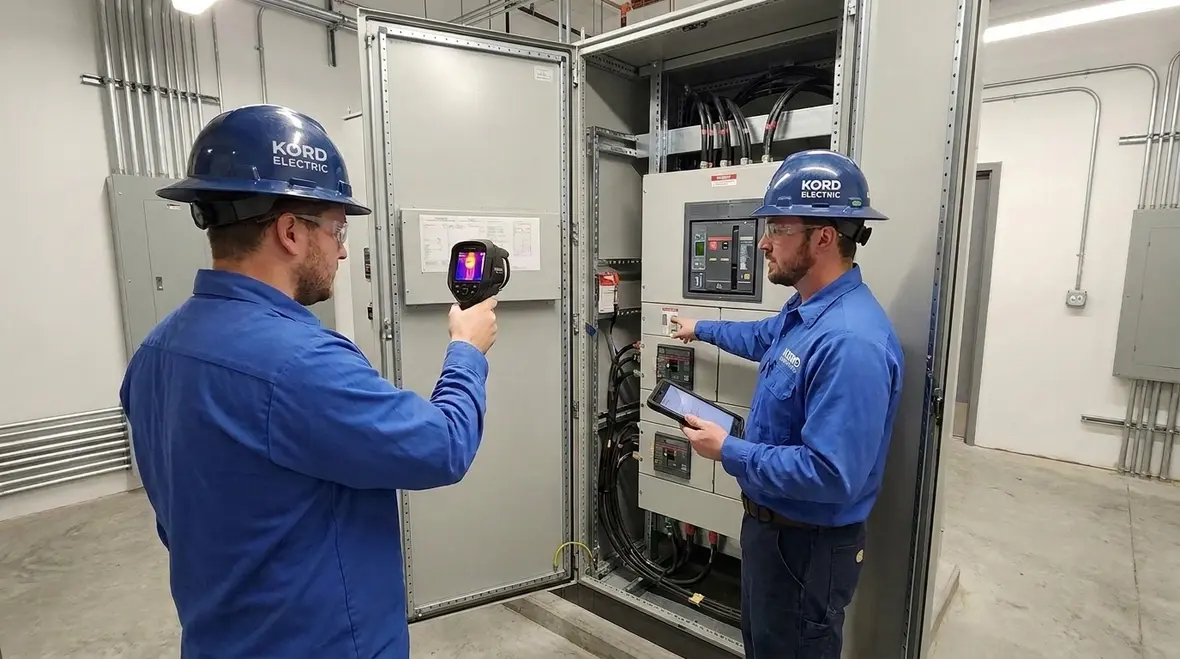
Power Equipment Audits Prevent Costly Electrical Surprises
Commercial and industrial power systems rarely fail without sending clues first. The challenge is that those clues hide in plain sight: a slightly warm panel door, a breaker that trips “once in a while,” or a transformer that sounds just a little different under load. Power equipment audits turn all of that scattered information into a clear picture of risk, reliability, and what to fix before it becomes an outage that nobody budgeted for.
At Kord Electric, our power audit work fits into a broader reliability strategy that includes structured maintenance, emergency power planning, and clear electrical documentation. In fact, many facilities pair their audit with ongoing preventive maintenance and upgrades, so the findings become part of a long term reliability roadmap instead of a one time report that gets lost in a shared drive.
Why Power Equipment Audits prevent costly surprises
At Kord Electric, we perform Power Equipment Audits: How to Identify Electrical Risks and Reliability Issues because commercial and industrial facilities cannot afford “maybe” when it comes to power. In the first glance, equipment can look fine, and yet hidden issues quietly grow like weeds in a parking lot. Our process catches those problems early by checking condition, history, and operation under real loads. Then, we translate what we find into clear next steps so others can act with confidence, not panic.
To be calm about it, we bring the kind of steady expertise that keeps facilities running while others are still searching for the right breaker label. As our technicians explain during site walk-throughs, the goal is not just to find defects. Instead, it is to prevent interruptions, reduce overheating, and improve reliability year after year.
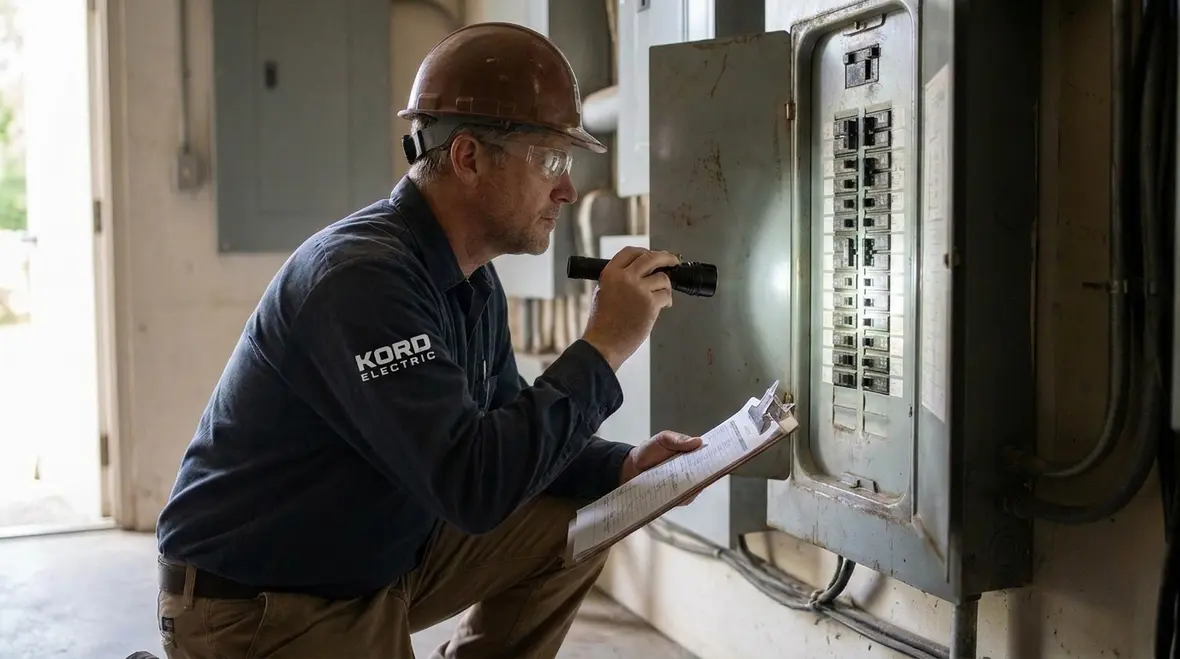
When we talk about preventing surprises, we also mean preventing those recurring nuisance issues that quietly eat time and budget. Facilities that pair audits with better load management and panel capacity reviews tend to see fewer tripping events, less overheating, and smoother day to day operations. Over time, that steadiness is worth far more than a last minute scramble during a failure.
What a power audit looks like on a real site
To start, our team focuses on the electrical systems that drive operations: switchgear, transformers, switchboards, panelboards, transfer switches, bus systems, power distribution, grounding, and protective devices. However, the audit is not a checklist that gets marked and sent off. Instead, we build a picture of how the facility behaves across time.
First, our technicians review available documentation such as one-line diagrams, equipment nameplates, previous maintenance logs, and past fault or alarm history. Then, we compare what the documents say to what the system actually does. If the drawings say a component was replaced five years ago, but the field shows age-related wear, we bring that mismatch into the light.
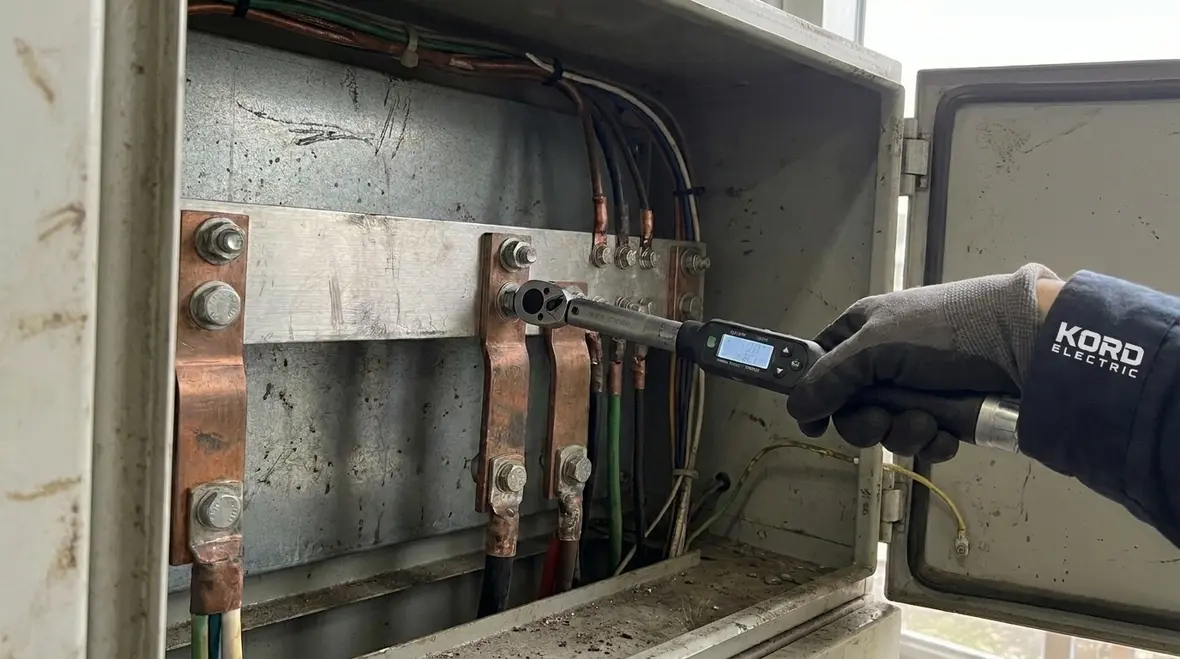
Next, we verify operational data and protective settings. We check loading patterns, conductor conditions, panel thermal performance, and any evidence of nuisance tripping or inconsistent power quality. At the same time, we inspect connections and terminations because loose or oxidized points often act like slow leaks. You do not notice them right away, but eventually they drain the system’s stability.

Throughout this on-site work, we also note access, labeling, and how easily future crews can service equipment. A power system that is safe, clearly marked, and logically laid out reduces response time during emergencies. For deeper reading on how we treat accurate records as an operational tool, see our article on electrical system documentation best practices, where we connect good paperwork to faster troubleshooting and safer work.
How we spot electrical risks before they become outages
Electrical risk does not usually announce itself with a fireworks show. Instead, it builds through small weaknesses that compound: increased resistance, heat damage, contamination, aging insulation, or protective devices that drift out of tolerance.
Our technicians look for common reliability threats in commercial and industrial settings. For example, they evaluate bus bar and conductor integrity, examine mechanical tightness, and assess signs of arcing or abnormal wear. Likewise, we evaluate transformer cooling, tap changer condition, and any evidence of oil degradation or hot spots.
Then we focus on grounding and bonding. Poor grounding does not only raise safety risk. It can also complicate fault detection and make protection act in unpredictable ways. Moreover, it can contribute to corrosion and elevated voltages on equipment surfaces, which no facility wants to find the hard way.
And yes, we also watch for the human factor. Labels missing from doors, “temporary” wiring that never became permanent, and last-year changes that never made it into the documentation. If power equipment could talk, it would probably roast the crew a little. We just handle it professionally.
Those human details show up again when we help facilities align their power equipment with backup strategies and emergency systems. Sites that combine regular audits with thoughtful emergency power for business continuity design tend to ride through utility events with far less drama, because the weak links get strengthened long before the first outage.
Reliability issues hide in the details of protection and power quality
Even well maintained equipment can fail if protection settings and power quality do not align with how the facility operates. Therefore, during Power Equipment Audits: How to Identify Electrical Risks and Reliability Issues, we pay close attention to protective coordination, breaker behavior, and system stability under load.
We verify that relays and breakers respond properly to real fault conditions. Then we confirm that time-current curves match the facility’s goals for selectivity, speed, and safety. If protection trips too early, it causes unnecessary downtime. If it trips too late, it escalates damage. Either outcome costs money, interrupts work, and drains patience.
Power quality matters too. Harmonics, voltage imbalance, and transient events can stress motors, drives, transformers, and controls. Over time, these stresses create heat, insulation wear, and electronic component failures. Meanwhile, the facility blames maintenance, operations, or “bad luck,” when the real culprit is often electrical design and ongoing conditions.
Our team explains these findings in plain language, so others across the building team understand what is happening. We do not hide behind jargon. Instead, we connect causes to symptoms, the way an experienced service staff member would explain an odd noise in an engine before it becomes a tow truck situation.
Because protection and power quality are tightly linked to how loads are distributed, audits often lead naturally into more detailed studies of load balancing and distribution health. Facilities that want to go deeper into that side of reliability can explore our guide to commercial electrical load balancing solutions, where we show how smoother loading cuts heat, nuisance trips, and surprise failures.
Thermal and condition checks that turn opinions into proof
Many facilities run on gut feel. Someone says, “That panel runs hot” or “That transformer seems tired.” Our job is to replace opinions with evidence. So we combine visual inspection with thermal condition review and practical measurements where appropriate.
For starters, we inspect terminations for discoloration, looseness, corrosion, and evidence of overheating. Next, we review cable and bus conditions, checking for signs of water intrusion, contamination, and insulation stress. We also look for unusual patterns that suggest recurring problems, such as recurring hot spots or repeated nuisance alarms.
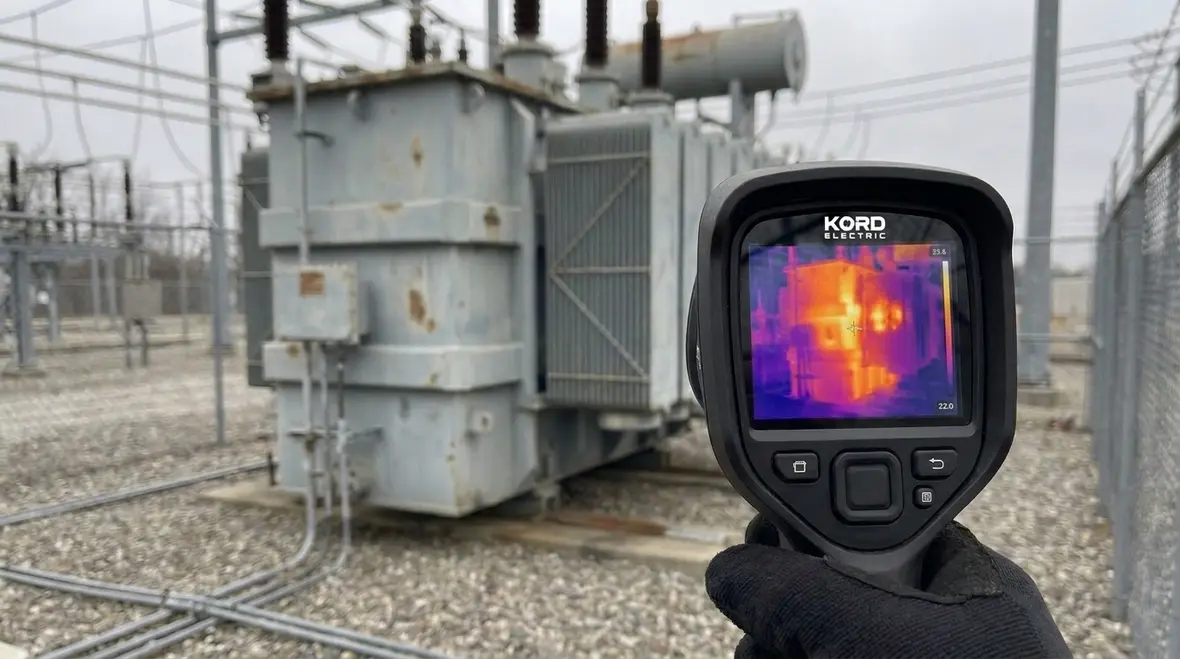
Then, when conditions allow, we use thermal imaging and targeted measurement approaches to identify abnormal temperatures at key points. Temperature is not a guess. It is a clue. And when we pair it with load conditions and equipment age, we can recommend what needs attention now versus what can be scheduled.
Importantly, we document findings clearly and tie them to risk levels. That means decision makers do not have to interpret chaos. They get prioritized actions, with reasons that hold up in the real world.
For facilities that want to go even further in validating capacity and long term plans, we often follow thermal checks with focused reviews of panel loading and future expansion needs. That emphasis connects closely with our detailed industrial electrical panel capacity assessment work, which helps teams stop guessing at limits and start planning upgrades with real data.
Maintenance planning that protects uptime and budgets
After we complete the on-site review, we structure recommendations to support commercial and industrial operation schedules. In other words, we design maintenance plans that reduce downtime and avoid emergency repairs.
We separate urgent items from those that can wait. Then we outline service actions that match the risk and the failure mode. For example, a loose termination might require immediate torque verification and rework, while certain inspection steps might fit neatly into a scheduled shutdown.
Additionally, we help others build a maintenance path that improves reliability. Instead of treating problems like isolated events, we recommend recurring checks that catch changes early. We also advise on documentation updates so future work reflects what is truly installed.
Our technicians and expert service staff review the proposed plan with facility leaders. And because trust matters, we show the “why” behind each step. If someone asks, “Can we just wait?” we answer with calm clarity, backed by what we saw. Nobody wants to gamble with power. We treat it like a business asset, not a survival hobby.
That same mindset shows up in our broader reliability articles, including pieces such as emergency electrical help for commercial facilities, where careful planning and fast response work together. Power Equipment Audits: How to Identify Electrical Risks and Reliability Issues simply move that planning further upstream, so emergencies happen less often and budgets stay more predictable.
How we communicate findings to decision makers
Not everyone wants to read technical notes that look like they were written in a different century. So we present audit outcomes in a way that helps commercial and industrial teams make fast, smart choices.
First, we summarize the most important risks and reliability concerns. Then, we provide details for each item: what we observed, how it affects performance or safety, and what action we recommend. We also include an impact perspective that fits how buildings actually run, including downtime constraints and operational priorities.
Because clarity reduces conflict, our approach keeps the conversation practical. We connect electrical findings to real outcomes such as equipment life, continuity of operations, and maintenance costs. As a result, others can approve work without guessing. And that is how a technical assessment turns into a business decision, not an argument.
As facilities grow or add new technologies like EV charging, these communication habits become even more important. Our team brings the same plain language to projects like commercial EV charging infrastructure planning, so that every upgrade, from new chargers to new switchgear, fits into a clear electrical story instead of a pile of loose ends.
Frequently Asked Questions
Take control of your facility’s electrical reliability
If your commercial or industrial building depends on steady power, now is the time to protect it. Kord Electric performs detailed power assessments that help others identify electrical risks before they turn into outages. Our technicians and expert service staff explain findings in business-friendly terms, then we help plan corrective actions around real schedules. Reach out to us to discuss your site, share available documentation, and schedule a Power Equipment Audit. Let’s keep your operations running, with fewer surprises than a season finale.
Facilities across Los Angeles County also rely on us for ongoing upgrades, troubleshooting, and capacity planning. If you are evaluating broader electrical needs beyond a single audit, explore our dedicated Los Angeles County electrical services page, where we outline how panels, distribution, emergency power, and new technology installations come together under one coordinated approach.
For facilities that want a deeper dive into how an assessment can shape long term strategy, we also walk through a real world approach in our commercial facility power audit by Kord Electric article. Combined with this guide to Power Equipment Audits: How to Identify Electrical Risks and Reliability Issues, you can see how one structured review often becomes the foundation for more resilient power across your entire site.


