Proactive Preventative Maintenance for Factories
Proactive preventative maintenance for factories is not a fancy idea. It is a practical one. At Kord Electric, we build plans for manufacturing facilities that help keep power stable, lighting safe, and equipment running with fewer surprises. Instead of waiting for a breaker to fail or a fixture to flicker like it is auditioning for a horror movie, we schedule checks early, document results, and correct issues before they become downtime. Our technicians and expert service staff explain what they find in plain language, because nobody should need a degree in electrical engineering just to understand their own facility.
In this guide, others will read about “maintenance” as if it is one thing. We treat it like a set of linked actions, from inspections to compliance-ready lighting upgrades. And we keep the tone steady, because your production line does not care about drama. It cares about uptime.
Why proactive maintenance protects production, safety, and budgets
In commercial and industrial spaces, small electrical problems often grow quietly. A loose connection heats up. Moisture works its way into a panel. A neutral begins to shift. Then, the next time demand rises, the system trips, and production stops. Therefore, preventative efforts must start before symptoms appear.
Our approach focuses on the links between electrical systems and operational risk. When we plan maintenance for factories, we reduce the chance of:
- Unexpected shutdowns from overheating, nuisance trips, and degraded components
- Safety events such as arc flash risk caused by worn parts or damaged insulation
- Cost creep from last minute repairs, expedited shipping, and emergency labor
- Quality impacts when unstable power affects drives, controls, and sensitive processes
And yes, we have heard the old line, “It was working yesterday.” That is true right up until it is not. Then it becomes a story nobody wants to tell to management.
What a real plan includes for manufacturing facilities
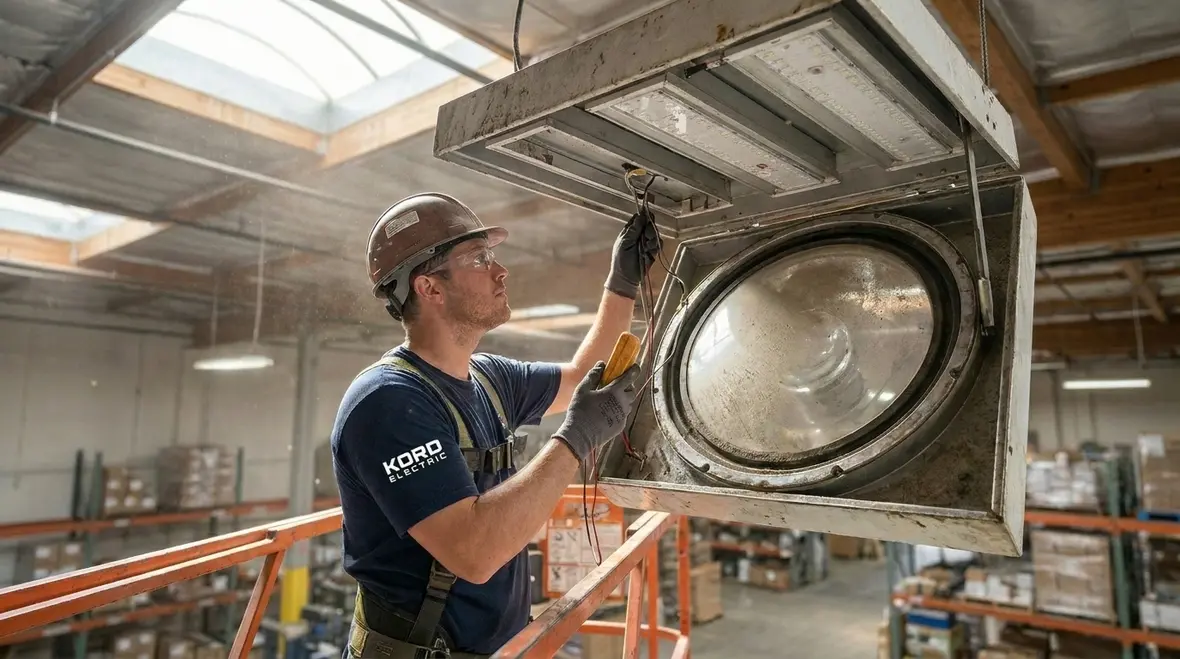
People sometimes think preventative work means a quick look and a verbal thumbs up. However, manufacturing facilities need structured plans that match equipment duty cycles, load patterns, and environmental conditions. So we start by building a baseline, then we schedule targeted actions.
Typically, our preventative maintenance program includes these core elements:
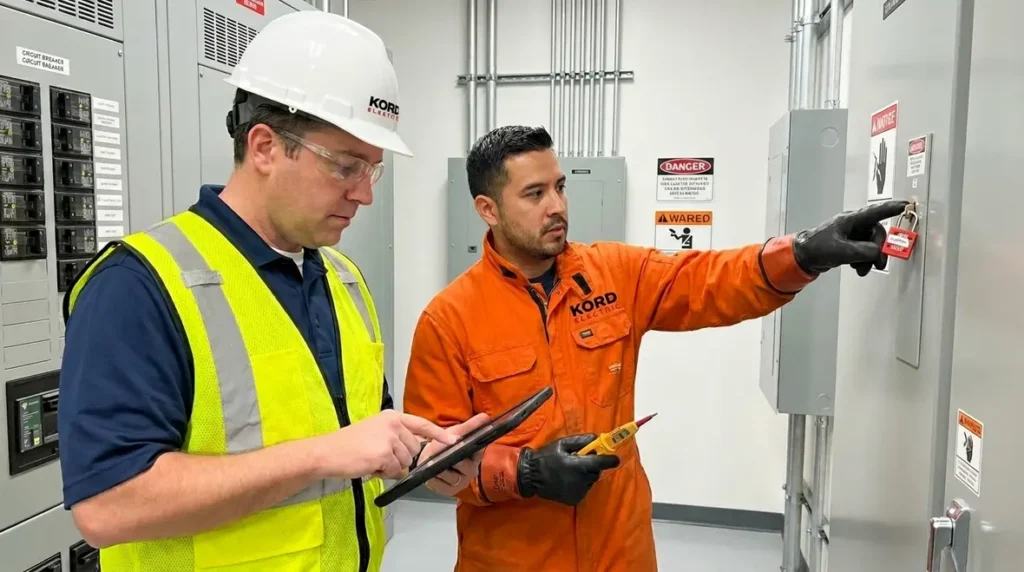
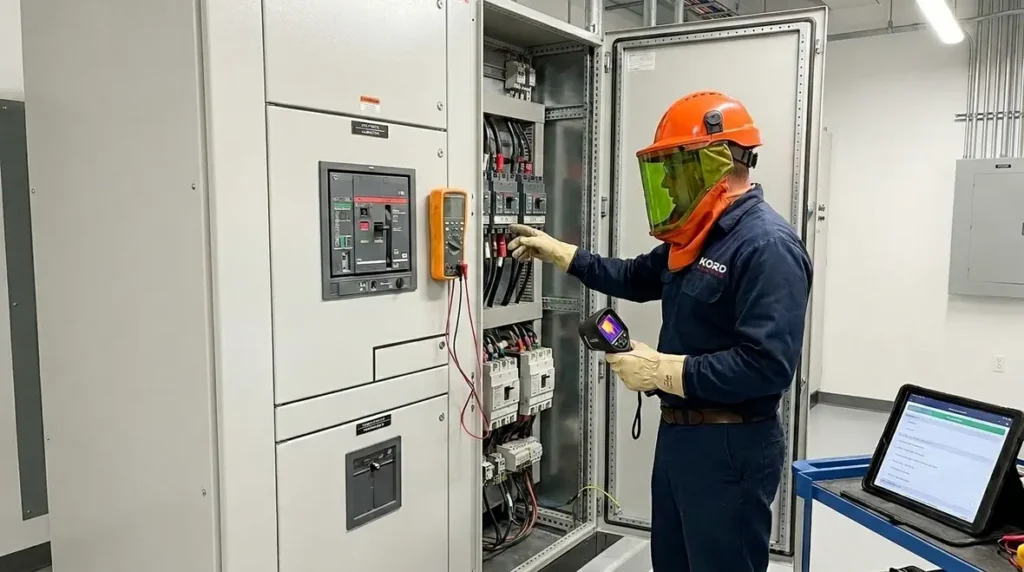
- Electrical inspections of panels, bus bars, terminations, and grounding pathways
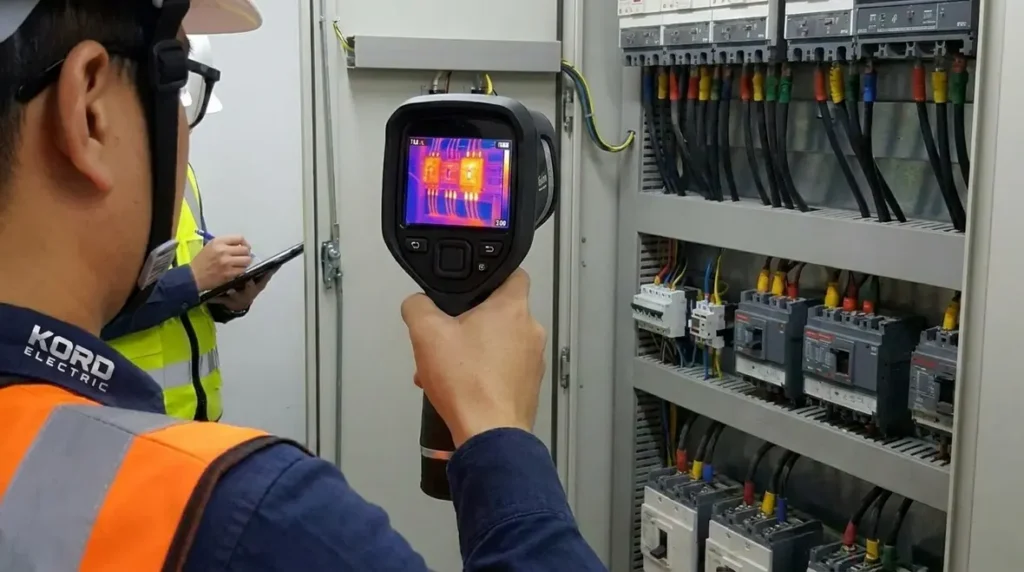
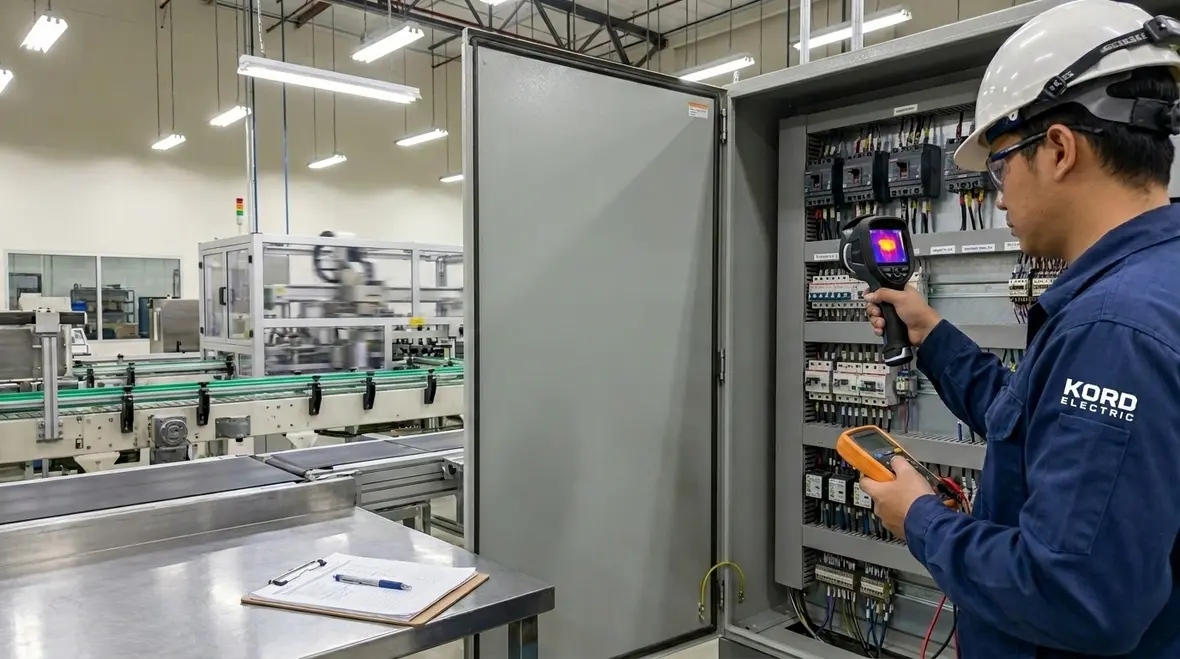
- Thermal scans to spot hot spots on connections and bus work before failure
- Load and power quality checks where stable operation matters, especially for variable speed drives
- Protective device verification including breakers and fuses that match installed loads
- Lighting system review with attention to fixtures, controls, and proper circuiting
- Documentation and correction tracking so fixes are not lost in emails
Next, our technicians and expert service staff review the findings and explain the “why.” For example, we will show how a failing connection can cause voltage drop, which can then trigger equipment instability. We do not just point at a problem and walk away. Instead, we help a facility team understand the chain reaction.
Finally, we align work windows with operations. After all, the best maintenance plan is useless if it blocks production.

How lighting code compliance fits into maintenance
Lighting seems simple until it impacts safety, visibility, and inspection readiness. Over time, fixtures age, drivers fail, and controls drift out of spec. Therefore, lighting must be part of any preventative maintenance strategy, not an afterthought.
Kord Electric also supports our commercial clients with code awareness. In our lighting installation code compliance guide, we outline key topics that help keep lighting projects aligned with common requirements. For example, the guide emphasizes planning around fixture placement, wiring practices, and safe installation methods, so lighting does not become a hazard or a compliance gap.
Additionally, we connect the dots between ongoing maintenance and compliance. If a facility already has aging lighting, we can plan scheduled checks of:
- Fixture condition, lens integrity, and signs of water intrusion
- Ballast or driver health where applicable
- Control operation, including occupancy and daylight sensing where installed
- Wiring integrity at junction points and at fixture terminations
- Labeling, routing, and condition of conductors in accessible spaces
When others ignore these checks, they often learn the hard way during a walk-through or audit. And audits have a way of arriving like surprise pop quizzes. Nobody studies because nobody expected the quiz. We prefer your teams to study early, with facts and clear next steps.
Risk-based scheduling that keeps work efficient
Not every asset needs the same frequency. Yet most maintenance programs act like they do. Our team builds a risk based schedule that uses what the site actually experiences. We consider:
- How often a panel feeds critical processes
- Where moisture, dust, and vibration sit in the facility
- How equipment cycles during shifts
- Historical failure patterns, including nuisance trips
- Changes in production loads after expansions or equipment upgrades
Then we set priorities. For instance, a high demand panel that powers production controls and motor drives gets attention sooner than a lightly loaded area. Meanwhile, areas exposed to harsh environments require tighter inspection intervals.
At the same time, we keep planning realistic. We help facilities balance what is ideal with what is possible. As a result, you get proactive work without turning the maintenance department into a circus. One technician may handle thermal checks in one zone, while another focuses on tightening and verification in another. Then, we document results so the next visit is smarter.
What technicians look for during factory electrical checks
We want maintenance to find real issues, not just “looks okay” reports. Our technicians inspect with a clear checklist mindset and an informed field view. They look for conditions that often precede failures.
Here is what typically shows up during thorough inspections:
- Loose or oxidized terminations that create heat and resistive loss
- Wear on components such as contact points in older protective devices
- Grounding and bonding issues that can affect safety and device performance
- Signs of moisture entry in enclosures, conduit runs, and junction boxes
- Abnormal thermal patterns indicating overloading or failing connections
- Cable condition that shows stress from vibration, abrasion, or aging
When we find a problem, we explain it in plain terms. For example, instead of saying “the connection is degraded,” we show how the condition raises temperature and increases resistance. Then we outline the repair options, so the facility team can decide with confidence.
And yes, we also handle the practical stuff. We coordinate access, label work areas, and confirm system performance after changes. We keep it calm, because nobody wants an electrical repair that creates new problems. We fix what matters, and we verify it.
Keeping major properties and industrial sites ready for audits
Commercial and industrial facilities, and major property buildings, face real scrutiny. Inspectors, safety teams, and internal auditors often look for evidence that systems stay safe and maintained. Proactive work helps because it produces records, not just memories.
Our team supports readiness by maintaining organized documentation that aligns with typical facility expectations. Therefore, clients can show:
- Inspection results and dates, including thermal scan summaries where used
- Corrective actions taken and the assets affected
- Follow-up items with clear schedules
- Any equipment changes that affect load or safety
- Lighting system status where applicable to ongoing compliance needs
This matters because “we think it is fine” does not hold up under review. Evidence does. And proactive preventative maintenance for factories makes evidence automatic, because the work is planned and logged.
We also help facilities plan upgrades when maintenance shows patterns that suggest replacement is the smarter path. That is how others avoid the cycle of patch, pause, and patch again like a broken treadmill you keep hoping will finally retire.
For facilities that want to go deeper into strategy, resources like our commercial and industrial electrical maintenance plans guide and our electrical system troubleshooting for factories checklist help connect day-to-day checks with long-term reliability.
FAQ: Preventative maintenance for manufacturing facilities
Call Kord Electric for a maintenance plan that stays ahead
If your facility runs on speed, quality, and safety, you deserve maintenance that runs ahead of problems. Kord Electric builds proactive preventative maintenance for factories that protects production, supports lighting readiness, and creates clear documentation for major property and industrial clients. Reach out to us to review your current electrical and lighting conditions. Then we will help you shape a plan your teams can trust, schedule, and follow. Let us take the edge off surprise failures, so your operation keeps moving.
For factories and industrial sites that want to connect day-to-day service with long-term stability, pairing this approach with our dedicated electrical preventive maintenance services and regional support such as Los Angeles County electrical services keeps your facility aligned with both production demands and local expectations.