Troubleshooting Commercial Power Issues Fast
When a business starts acting like it forgot how to be a business, it is usually not the employees. It is often the power. In this guide, we focus on troubleshooting commercial power issues fast, using practical steps our technicians and expert service staff follow every day at commercial and industrial facilities, plus major property buildings. We explain what to check, how to spot patterns, and when to call in help before the next outage turns into a “guess what we lost today” meeting. And yes, we have seen situations where the building behaves like a TV on the wrong input. Let’s make sure your site stops doing that.
Spot the symptoms early and document what you see
First, we have our team slow down just enough to move faster later. Therefore, we recommend starting with a quick, calm log. Next, we ask facility staff to note the exact time the issue began, what equipment was running, and whether the problem affected one area or the entire building. Even a simple line like “only office floors flickered” can shorten the troubleshooting path.
Then we look for patterns. For example, does the issue hit during HVAC startup, after lunch, or right when a dock door opens? If it does, we treat it like a clue, not a mystery. Moreover, we compare what happened to recent changes. New production equipment, a tenant move, a new service contract, or a repaired panel can all shift loads. For buildings that already dealt with emergency outages, pairing this documentation with what you learned during past events—like those documented in our insights on emergency power failures in commercial buildings—helps shorten the path to the real cause instead of chasing unrelated symptoms.
Our technicians also remind others that “it’s probably the breaker” is not a plan. So, while someone may be tempted to flip switches like they are resetting a video game, we instead verify data first. We gather information like:
- Observed lights behavior, including flicker, dimming, or full outages
- Any alarms from UPS systems, power meters, or building automation
- Repetitive tripping, nuisance shutdowns, or delayed resets
- Temperature or burning smells near panels, switchgear, or transformers
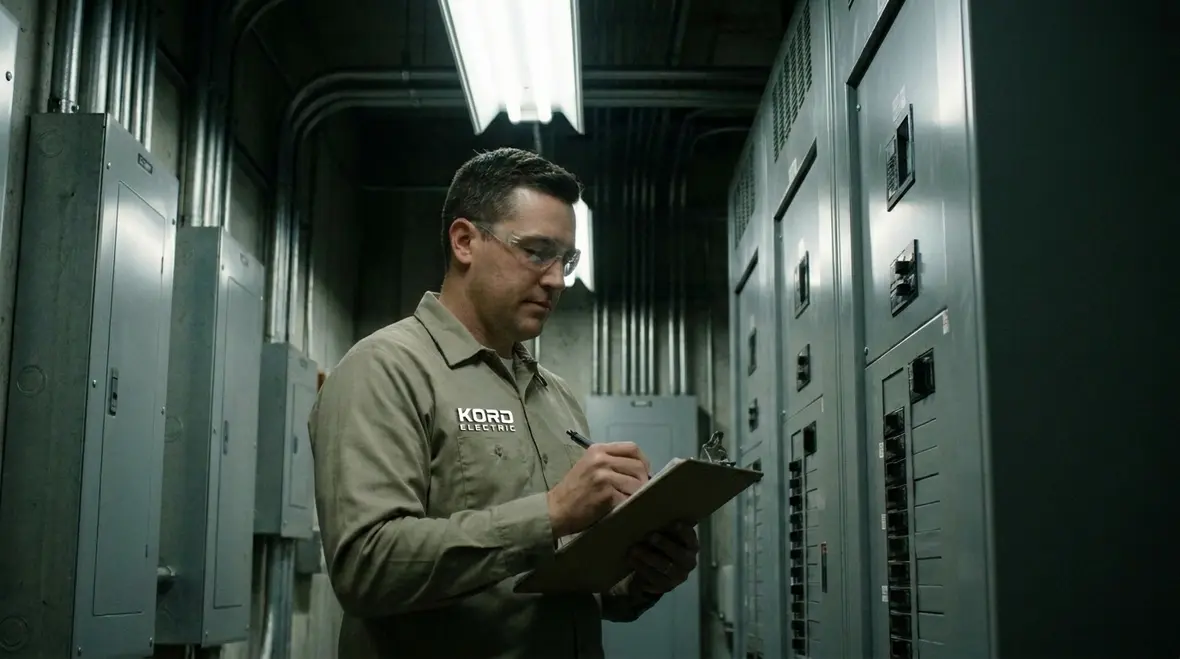
Why load changes often trigger power problems in commercial spaces
In commercial and industrial buildings, power problems rarely come out of nowhere. Instead, they usually show up when the building load shifts. For example, large motors, variable speed drives, air compressors, refrigeration systems, and elevators can create voltage dips or harmonics. As a result, sensitive equipment may fault even if the overall utility supply looks “fine.”
Furthermore, even if the equipment itself works during a slow period, starting loads can stress the electrical system. When multiple loads run together, the voltage drop can exceed what some drives and controls can tolerate. Then, protective devices may trip to keep things safe, but safety can look like downtime.
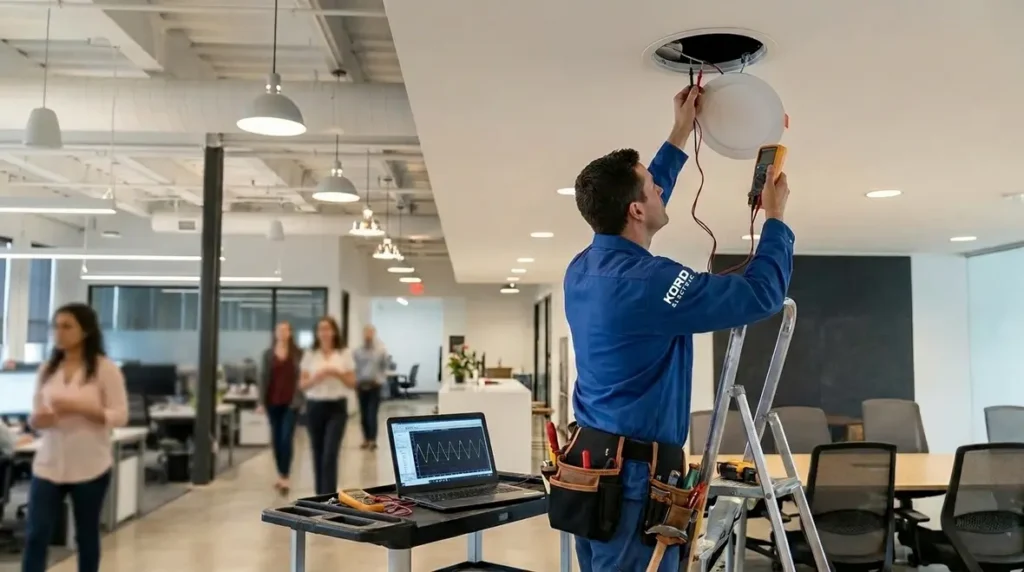
We also consider electrical signature changes. Our expert service staff often reviews trends from meters and UPS logs, because those records show whether the issue is related to inrush current, load imbalance, or power quality. If the building acts up after a short ramp up in production, we start there. If it happens during a generator transfer, we dig into transfer timing and load shedding settings. For facilities that see recurring events, combining these observations with structured programs like electrical preventive maintenance makes it easier to catch load-related weak points before they turn into outages.

How we run a faster troubleshooting process on site
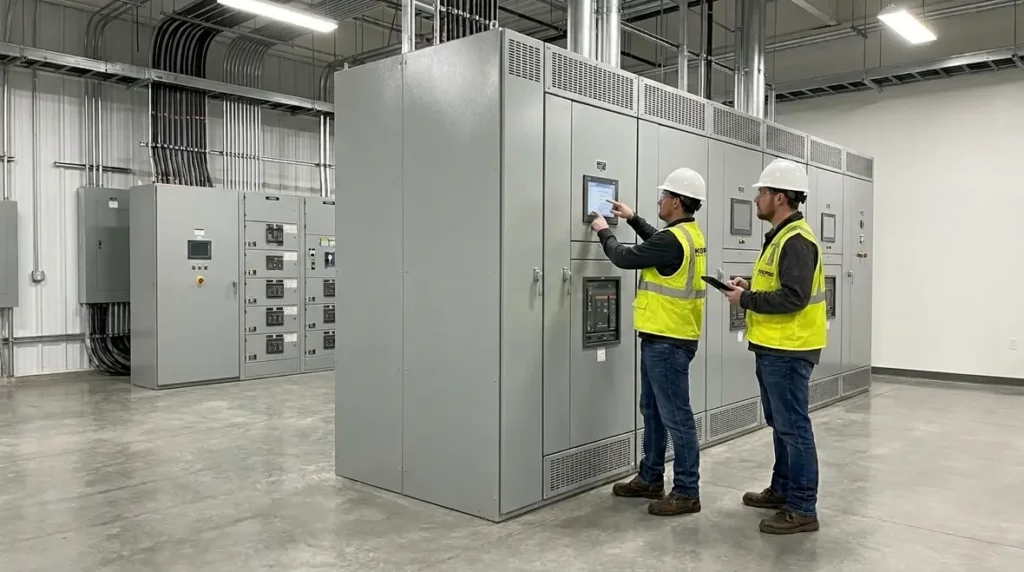
We keep our approach consistent because consistency beats chaos. First, our technicians separate the problem into three buckets: supply, distribution, and end use. Then we test each bucket with the least disruptive steps first. That way, we avoid guessing and avoid causing extra faults.
Step
Start with quick checks
Verify protective device behavior
Check voltage stability at key points
Confirm phase balance and load distribution
Inspect for heat, odor, and physical damage
Review UPS and control system logs
What it tells us
Shows if the issue is localized or site wide
Indicates overload, short, ground fault, or settings problems
Helps detect sag, drop, or unstable supply
Points to imbalance, miswiring, or failing components
Confirms arcing, loose connections, or overheating
Reveals the timeline and the exact failure mode
Meanwhile, we follow safety rules every time. We treat energized equipment with respect, and we do not assume a “recent fix” is still correct. Next, we test in a way that supports decisions. If a panel trips, we confirm why it trips, not just that it trips. And if the UPS reports faults, we read those messages like they are a story, because they are. Power quality logs often show what changed and when.
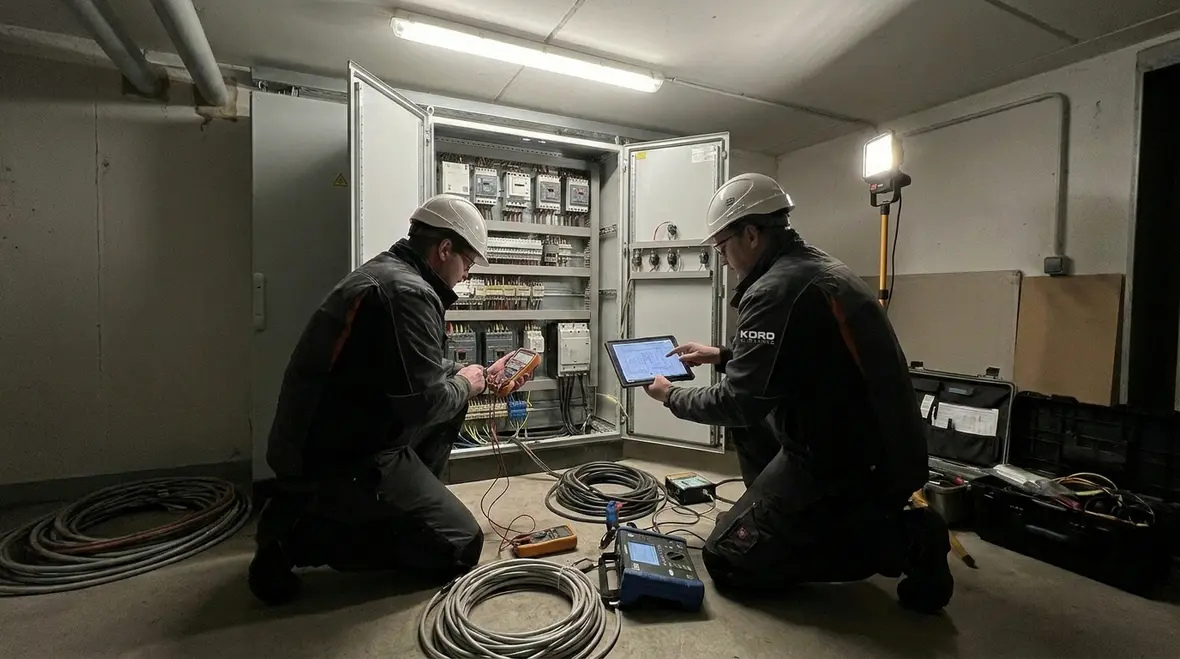
Common commercial fault paths and how to isolate them
Now we get specific. Below are the patterns we see most at commercial and industrial facilities and major property buildings. Our technicians often resolve issues faster when they follow the same logic each time.
1) Breaker or fuse nuisance trips
When protective devices trip repeatedly, it can look random, but it usually aligns with a load event. Therefore, we check for overload, shorted loads, ground faults, and failing components. Then we inspect for loose connections and measure current draw during the moments leading up to the trip.
2) Voltage sag during motor or HVAC startup
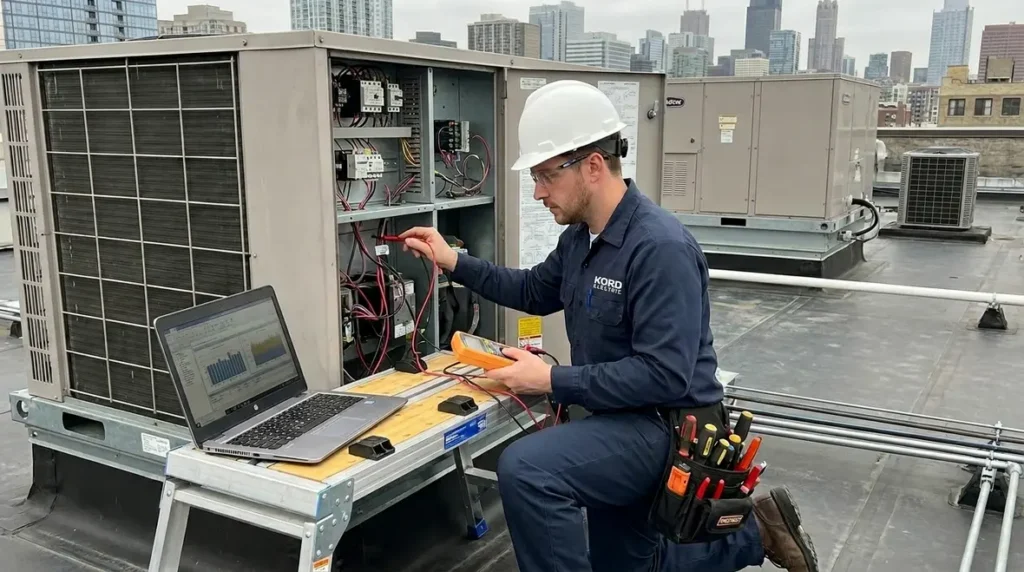
Voltage dips can start fires in control logic. As a result, drives and PLCs may reset, even if lights remain on. First we verify incoming voltage and then measure at downstream panels. If the sag shows up only after a particular feeder, we isolate that circuit and check load concentration and drive settings.
3) Flicker caused by loose terminations or arcing
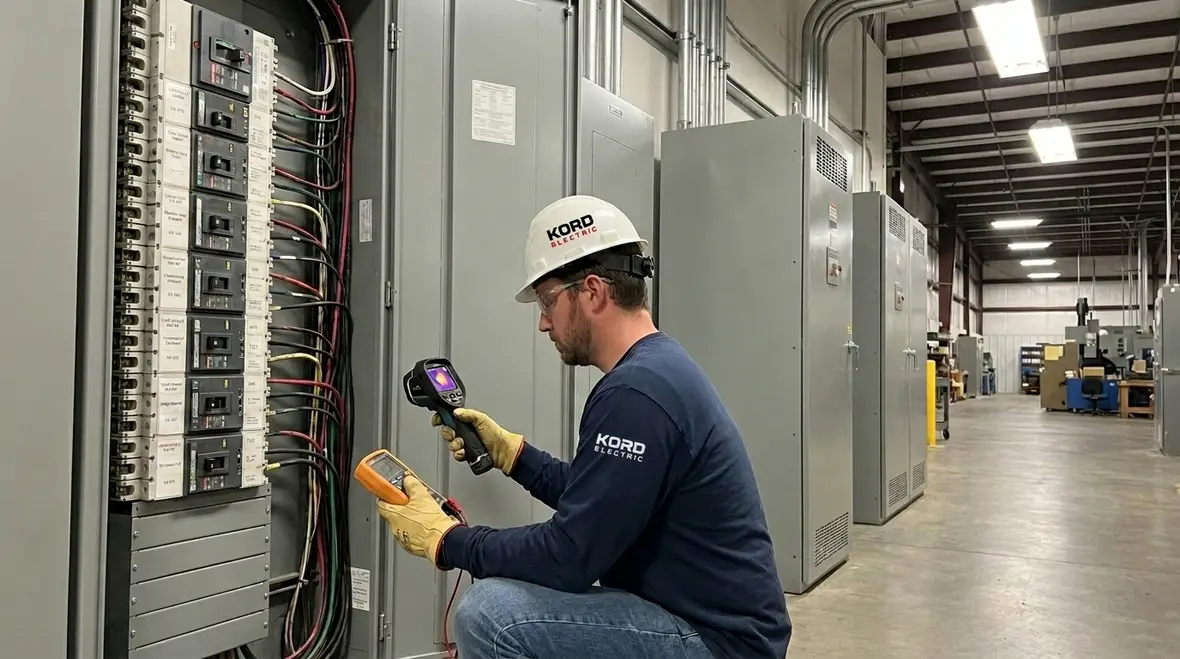
Flicker often means something is unstable. Next we inspect terminations in switchgear and panels, and we check for signs of heat. Our team also looks for intermittent faults, because arcing can appear for seconds and disappear before anyone remembers to “get the photo.”
4) UPS transfers and generator handover failures
In major properties, power continuity depends on transfer timing and configuration. Therefore, we review transfer thresholds, timing delays, and load shedding logic. Then we test whether the UPS stays within voltage and frequency tolerances. If transfers happen more often than expected, we treat it as a system tuning issue, not a one time glitch.
5) Phase imbalance and harmonics
Imbalance can create overheating, and harmonics can degrade performance. When the building has mixed loads like lighting, drives, and process equipment, harmonics can rise. As a result, we check phase current balance and evaluate power quality readings. Then we recommend corrective steps that match the facility, not generic advice.
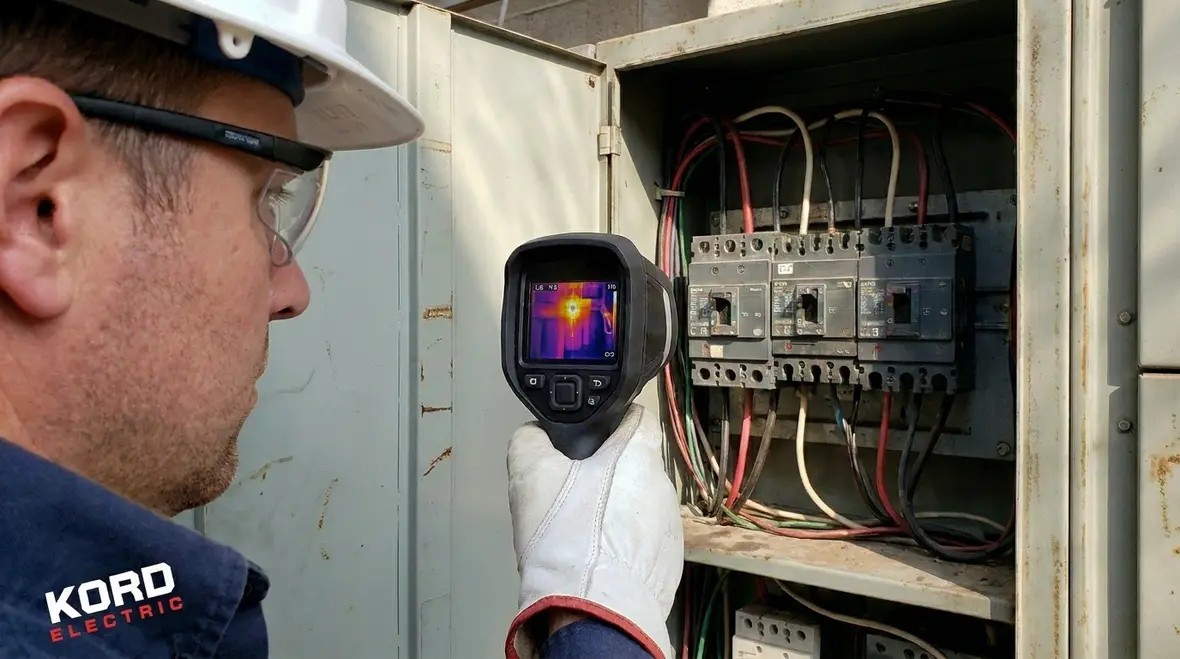
Power quality testing that leads to real fixes
Here is where we separate “looking” from “proving.” Testing should lead to an action, not just a report. Our expert service staff uses targeted testing during the periods that matter, because power quality problems often show up under stress. Therefore, we coordinate with the site team to capture readings during startup sequences, peak production, or scheduled load changes.
We focus on key signals that affect commercial equipment reliability. For example, we verify:
- Voltage dips and brief interruptions during load transitions
- Harmonic distortion that can overheat transformers and neutral conductors
- Frequency stability and drift, especially during generator operations
- Neutral behavior in systems with non linear loads
- Power factor and how it changes when large equipment starts
Then we interpret results in context. If a test finds a high harmonic level, we do not just say “harmonics exist.” Instead, we identify the likely load sources and evaluate distribution impacts. If neutral currents run higher than expected, we inspect bonding and panel loading. In short, we connect the measurement to the specific part of the electrical path that causes downtime. For facilities already wrestling with unstable systems, this type of testing pairs well with structured efforts like electrical system troubleshooting for factories, so your team has both data and a clear checklist for next steps.
Prevent repeat outages with simple, firm maintenance actions
After we resolve the immediate problem, we help the building avoid the next one. Thus, we recommend maintenance actions that match commercial and industrial needs, not residential habits. Our technicians often prioritize:
- Thermal inspections of switchgear, panels, and connection points
- Torque verification on critical terminations where safe and appropriate
- Inspection of contactors, relays, and drive cabinet components
- Review of protective device settings after equipment changes
- Power quality monitoring during peak and startup periods
We also work with others on training so facility staff know what to watch for. For example, if an alarm occurs, we explain what it means and what action should come next. Because the fastest way to troubleshoot commercial power issues is knowing the symptoms and not turning troubleshooting into a daily reality show. Over time, pairing that knowledge with dedicated programs like commercial and industrial electrical maintenance plans turns reactive scrambling into predictable, scheduled care that supports uptime.
FAQ: Troubleshooting commercial power issues
Call Kord Electric for faster, calmer power recovery
When power problems show up at a commercial or industrial site, we believe downtime should be brief and decisions should be backed by evidence. Kord Electric brings expert technicians and service staff to identify the cause, isolate the fault path, and guide you to a fix that lasts. If you want a team that documents, tests, and communicates clearly, contact us now. Let’s get your facility stable again, without the “flip a switch and hope” strategy that never made it into any training manual.
For organizations across the region, our broader Los Angeles County electrical services support everything from emergency troubleshooting to planned upgrades, so troubleshooting commercial power issues does not live on your calendar every week. Whether you manage a single major property or a network of facilities, our combination of emergency electrical services, preventive maintenance, and project support keeps your electrical infrastructure ready for the next demand spike instead of hoping the system “gets through one more season.”
If you are currently facing an urgent outage or repeated nuisance trips, our dedicated emergency electrical services team is ready to help you stabilize the site, trace the fault, and put long-term solutions in place. That way, the next time the lights blink, your team has a plan, not a panic.
Troubleshooting commercial power issues does not have to feel like a guessing game. With clear documentation, focused testing, and a partner who treats your facility like a critical asset instead of “just another stop,” your operations can stay online, your tenants can stay productive, and your maintenance meetings can focus on improvements instead of autopsies.