Warehouse Lighting Energy Efficiency Strategies
At Kord Electric, we focus on Warehouse Lighting Energy Efficiency Strategies that reduce bills without slowing operations. We start by treating lighting like the working system it truly is, then we upgrade it piece by piece. After that, we tune controls, improve layouts, and verify results with real measurements. Meanwhile, our technicians and expert service staff explain each step clearly, because nobody should need a lighting degree to understand their own building. If you have ever stared at a wall of fixtures and wondered which ones are wasting energy, you are not alone. Even the lights themselves probably feel judged.
Why warehouse lighting wastes energy in the first place
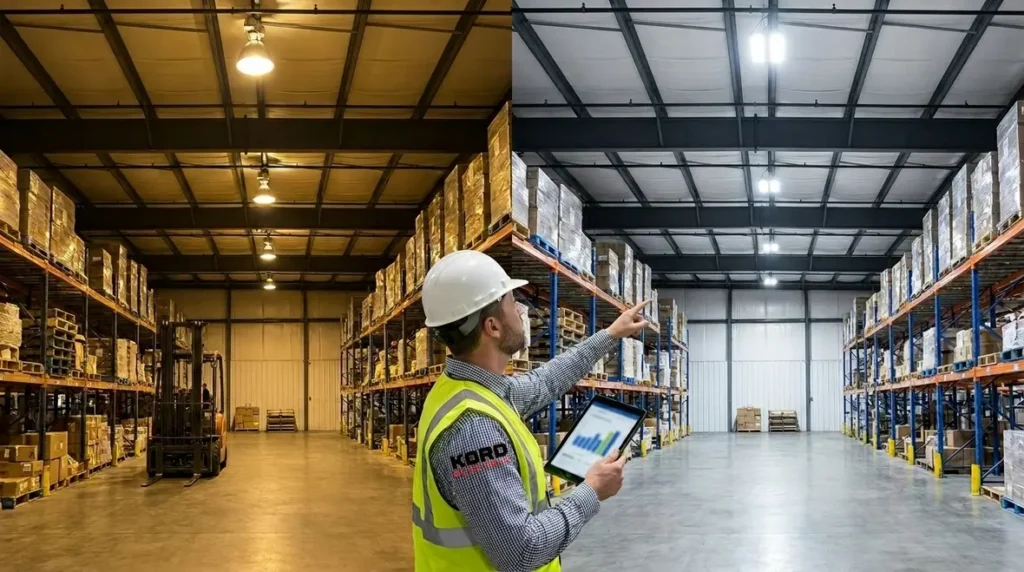
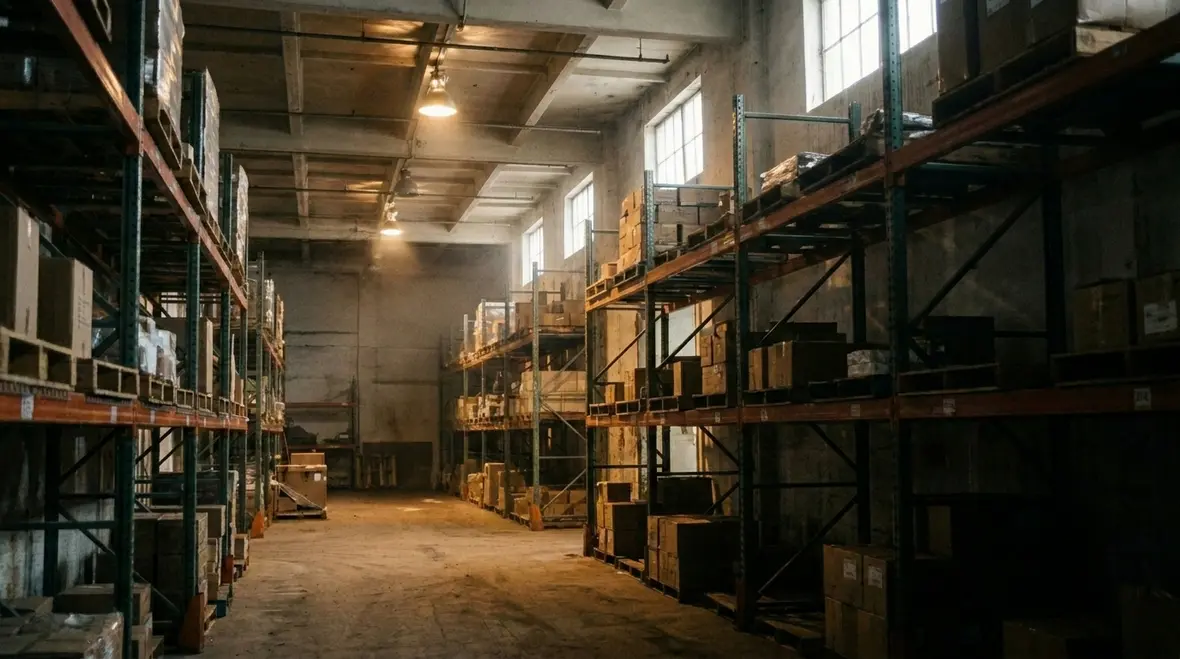
Warehouses rarely suffer from one single problem. Instead, energy waste usually comes from a stack of small issues that add up, like loose screws in a forklift. For example, many facilities use older high bay lamps that put out less usable light over time. As lamps age, output drops and glare increases, which pushes teams to “just turn it up.” In addition, fixtures often sit in the same positions for years, even after racking, inventory zones, or traffic lanes change.
Furthermore, control systems may be oversized or poorly set. Some buildings rely on simple timers when occupancy sensing would match reality better. Others keep lights on across large areas even when only a few aisles are active. As a result, the warehouse pays for illumination during downtime, lunch breaks, and nights when nothing moves except the HVAC. Finally, dirty lenses and neglected maintenance reduce light output while keeping energy draw the same. In plain terms, the lights work harder than they should.
Warehouse Lighting Energy Efficiency Strategies: audit to action
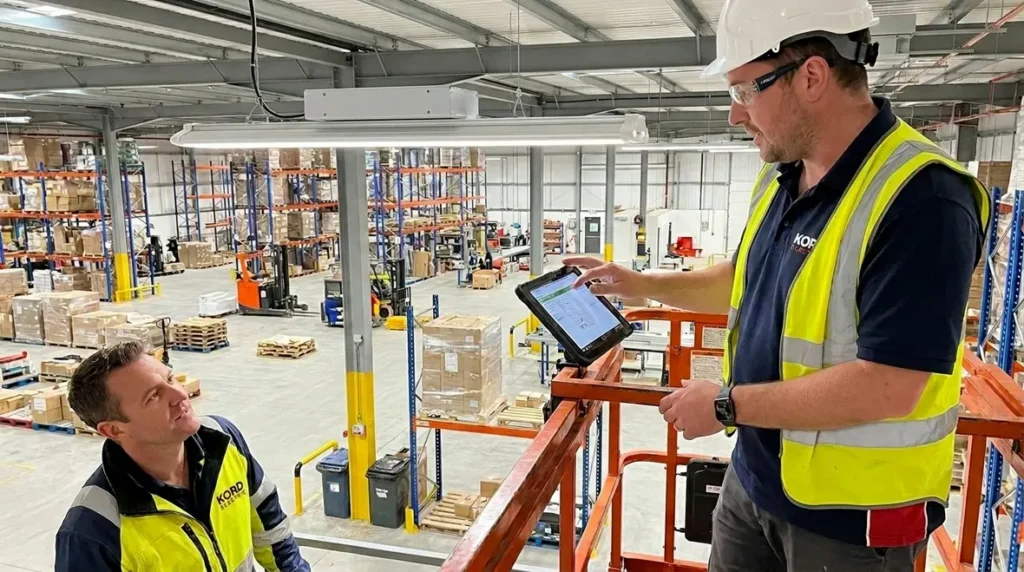
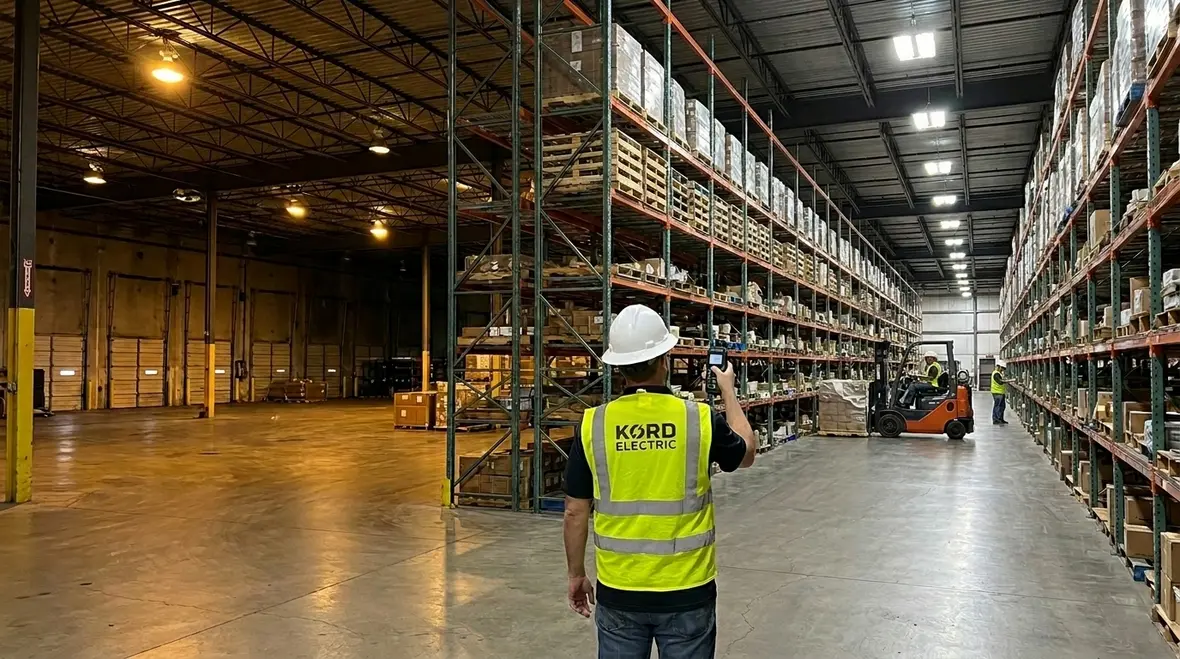
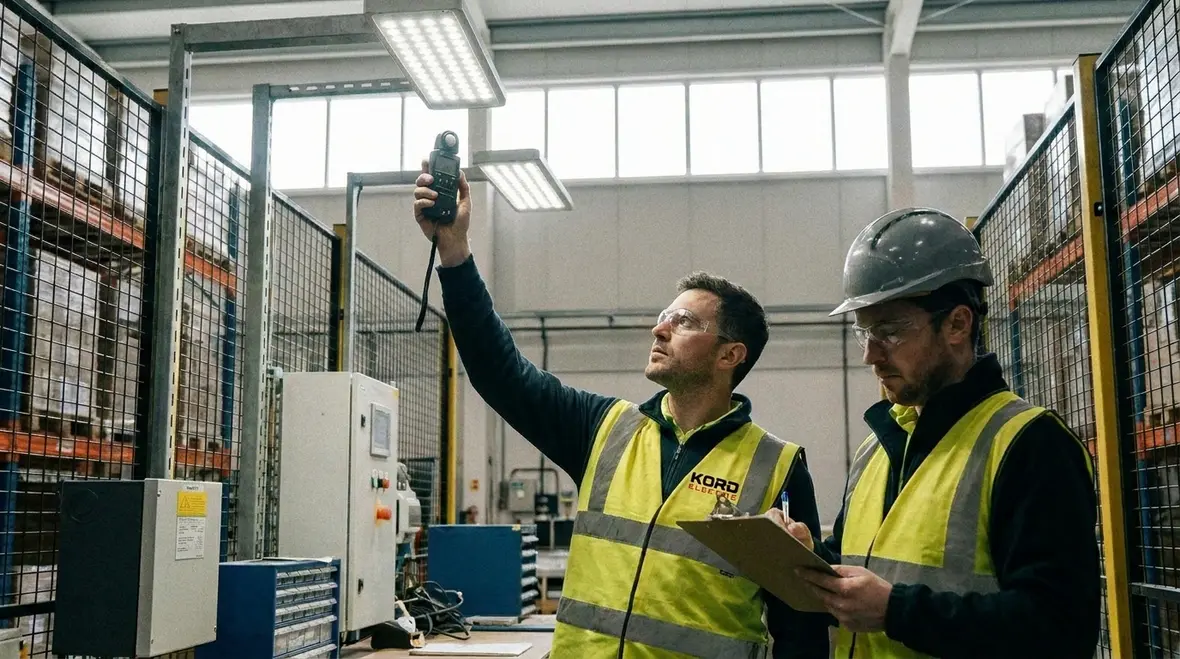
To build reliable improvements, we do not guess. We follow a practical path: inspect, measure, model, and verify. First, our team maps the lighting layout, fixture types, mounting heights, and target tasks like picking, staging, and loading. Then we review electrical data such as circuit loading and operating schedules. After that, our technicians measure real-world light levels at key work planes, so we can see where brightness falls short or where it overshoots.
Next, we analyze how the facility uses zones. If one wing handles active receiving while another stays idle, those areas should not share the same control behavior. Meanwhile, we check the reflectance of walls, floors, and ceilings. Light-colored surfaces can help distribute illumination without extra power. Finally, we convert findings into an upgrade plan that balances performance, uptime, and budget. We also explain the reasoning in plain language, because our expert service staff believes the client should always know why a recommendation makes sense.
For facilities that want deeper context on budgeting and long-term payback, our team often pairs this audit-to-action approach with guidance from resources like the Commercial Lighting Upgrade Cost Guide, so financial planning keeps pace with the technical discussion.
How LED upgrades cut power and improve usable light
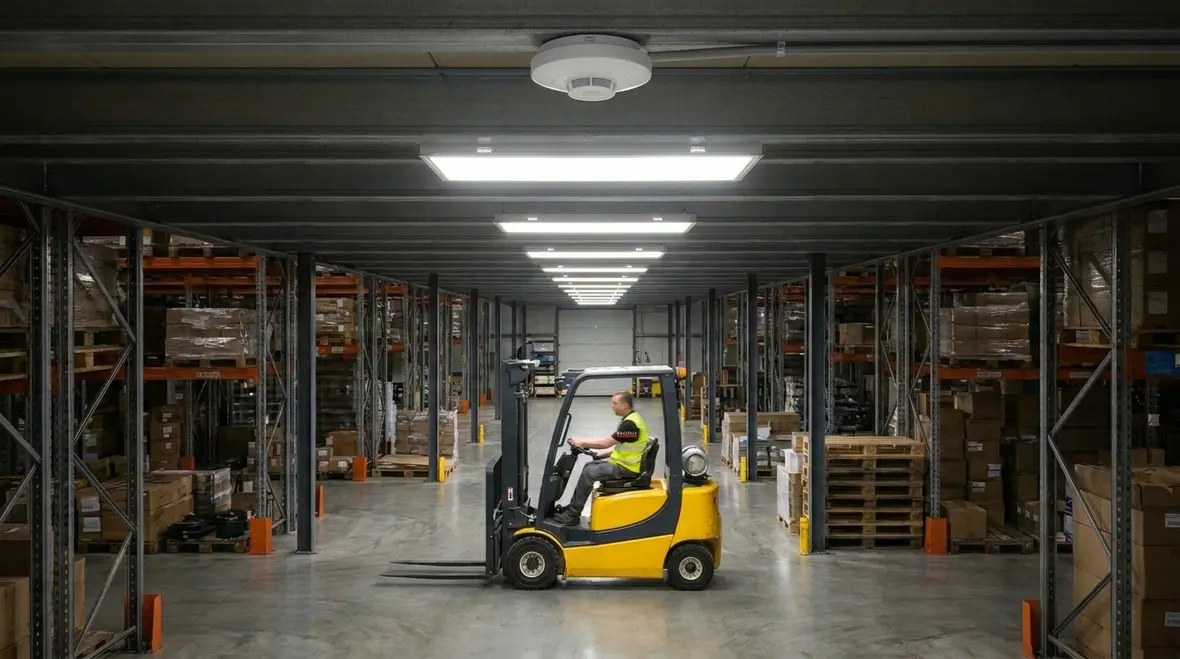
When we move warehouses to LEDs, we usually see two gains at once: lower wattage and better control of light distribution. Older fixtures often waste energy through inefficient optics and outdated driver electronics. In contrast, LED systems can be chosen for the right beam pattern, glare control, and mounting compatibility. That matters in industrial spaces where light needs to reach pallets, carts, and workstations without flooding the ceiling or creating eye fatigue.
Additionally, LEDs support longer service life. This reduces maintenance interruptions, and it also limits labor costs tied to relamping. For larger facilities, relamping schedules can become a recurring “event,” like a company-wide meeting nobody wants to attend. LEDs calm that down. We also advise selecting drivers and thermal designs that fit the site environment, including dust, moisture, and temperature swing. Doing this helps keep light output stable so the warehouse maintains consistent visibility year-round.
Finally, we tune the upgrade to real tasks. Instead of simply swapping the same brightness, we design for target illuminance and uniformity. That leads to safer pathways, fewer misreads during picking, and smoother operations at night shifts.
For property teams comparing retrofit paths across multiple buildings, pairing these Warehouse Lighting Energy Efficiency Strategies with the broader insights in Kord Electric’s California Title 24 Lighting Retrofit ROI Guide can clarify how LED upgrades, controls, and code compliance all influence return on investment.

Controls that match motion, schedules, and safety needs
Upgrading fixtures alone does not maximize savings. Controls decide whether lights run when they actually add value. We recommend a strategy that combines occupancy sensing, time scheduling, and daylight or skylight management when applicable. For warehouses, occupancy sensing should cover aisles and zones where movement and work frequency vary. Then, dimming should follow a sensible curve that maintains safety without keeping full brightness all night.
When crews operate forklifts, reach trucks, or pallet jacks, the system must react quickly enough to avoid dark spots. Therefore, our technicians test control logic during installation and again during commissioning. We also pay attention to how zones are grouped, since grouping too broadly can reduce savings and grouping too narrowly can cause frequent transitions that distract staff.
We also help facilities align lighting schedules with actual operating hours. Many buildings keep full lighting for shift start and then forget that activity falls off after a certain point. With properly set schedules and motion thresholds, the lights stay bright when people work and soften when the warehouse quiets down. That is energy efficiency without pretending the building never sleeps, because it does.
In many facilities, control strategies for warehouses also tie into company-wide standards covered in resources like the California Commercial Lighting Code Guide for 2026, which helps keep lighting behavior aligned with both safety expectations and evolving code requirements.
Layout, optics, and maintenance: the “boring” steps that matter
Warehouse lighting often fails because the layout and optics do not serve current workflows. Racking changes, ceiling obstructions, and aisle reconfiguration can block or scatter light. That means a fixture arrangement that looked great on day one might perform poorly after years of operational changes. Our approach accounts for these realities. We check fixture placement, aiming angles, and optics selection. Then we adjust where practical, especially in high task areas like staging and packing.
We also support reflectance improvements. Sometimes the cheapest way to get better light distribution is not a new fixture, but better surfaces or targeted cleaning. Dust and grime lower output. If a warehouse has a dusty environment, regular lens cleaning becomes a measurable part of energy performance. Our expert service staff also recommends maintenance timing based on usage and contamination level, so teams do not clean “because it looks dirty,” they clean when it affects output.
And yes, maintenance still matters even with LEDs. They do not burn out quickly like older lamps, but optics can still accumulate film. Keeping them clear preserves uniformity and reduces the temptation to crank up output to compensate. In that sense, maintenance becomes the quiet hero of the energy efficiency story.
For teams that want to connect these “boring” but essential steps to broader reliability planning, Kord Electric’s Electrical Preventive Maintenance programs help integrate lighting checks, Title 24 lighting compliance, and emergency testing into a single, organized plan.
Verification: prove savings and keep teams confident
Clients do not need a sales speech, they need evidence. So we verify results after upgrades. First, we confirm that installed fixtures match the design model and perform at the expected light levels. Then we validate electrical performance by reviewing meter data, circuit measurements, and operating schedules. If the facility already tracks energy usage, we help compare pre and post results using consistent time windows.
We also commission controls and document settings. That means when a facility manager changes shift timing or an operations supervisor adjusts workflow, the lighting system remains predictable. Our technicians train the right people on how the controls behave, where to access schedules, and how to respond if a zone does not react as expected.
As a result, the warehouse gets both performance and trust. Nobody wants lights that look good on paper but disappoint in real racks. We make sure the building performs in the ways that matter.
FAQ
What to expect from Kord Electric on your project
When we partner with a facility, we treat the upgrade like a coordinated operation, not a random swap day. First, we schedule site work around your workflow. Then our technicians install equipment in a way that protects uptime, safety, and access routes. After installation, our expert service staff explains what we changed, what settings control each zone, and how to maintain performance over time.
We also help you plan the path forward. That means recommending a phased approach when you have large coverage areas or multiple buildings. And because lighting affects safety, we do not leave it vague. We document the design targets and the commissioning outcome so your team can feel confident from shift to shift.
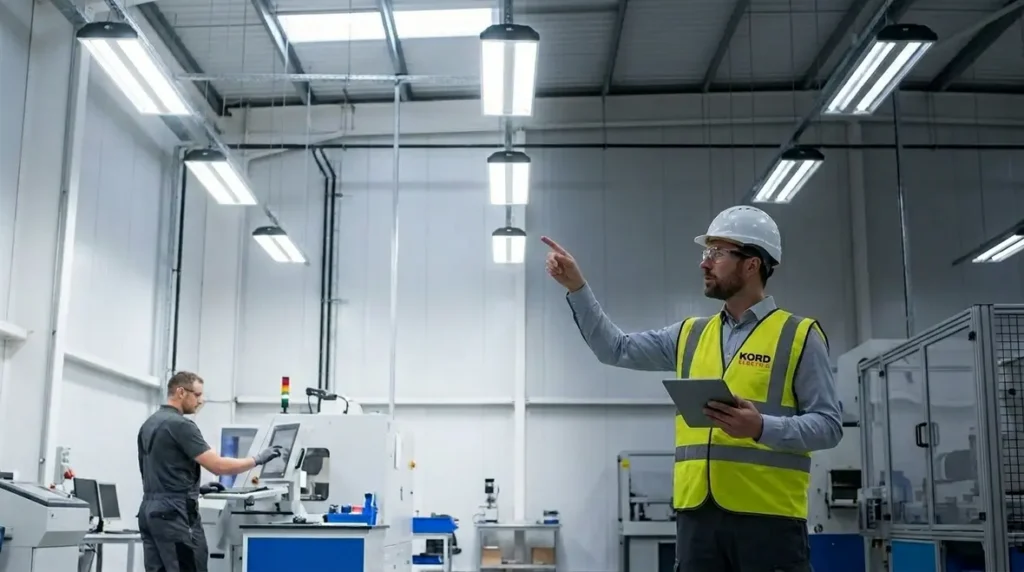
If you are evaluating broader improvements across production floors as well as warehouse aisles, Kord Electric’s Industrial Lighting Layout Optimization for Efficiency guide shows how layout, optics, workflows, and maintenance come together to support both productivity and safety.
Ready to cut warehouse lighting costs with real efficiency?
If you want Warehouse Lighting Energy Efficiency Strategies that perform in the real world, we are ready. Kord Electric can audit your warehouse lighting, design upgrades around your zones and schedules, and verify savings after installation. Our technicians and expert service staff will explain each step clearly and keep your operations moving. Reach out today for a walkthrough and a practical improvement plan made for commercial and industrial facilities and major property buildings. Let’s turn those lights from a cost center into a steady advantage.
To move from ideas to implementation, explore Kord Electric’s dedicated Lighting Installation Services for commercial and industrial facilities. From LED retrofit upgrades and high-bay installations to code-compliant controls and preventive maintenance, the service team is built to support complex warehouse portfolios as well as single-site projects.