
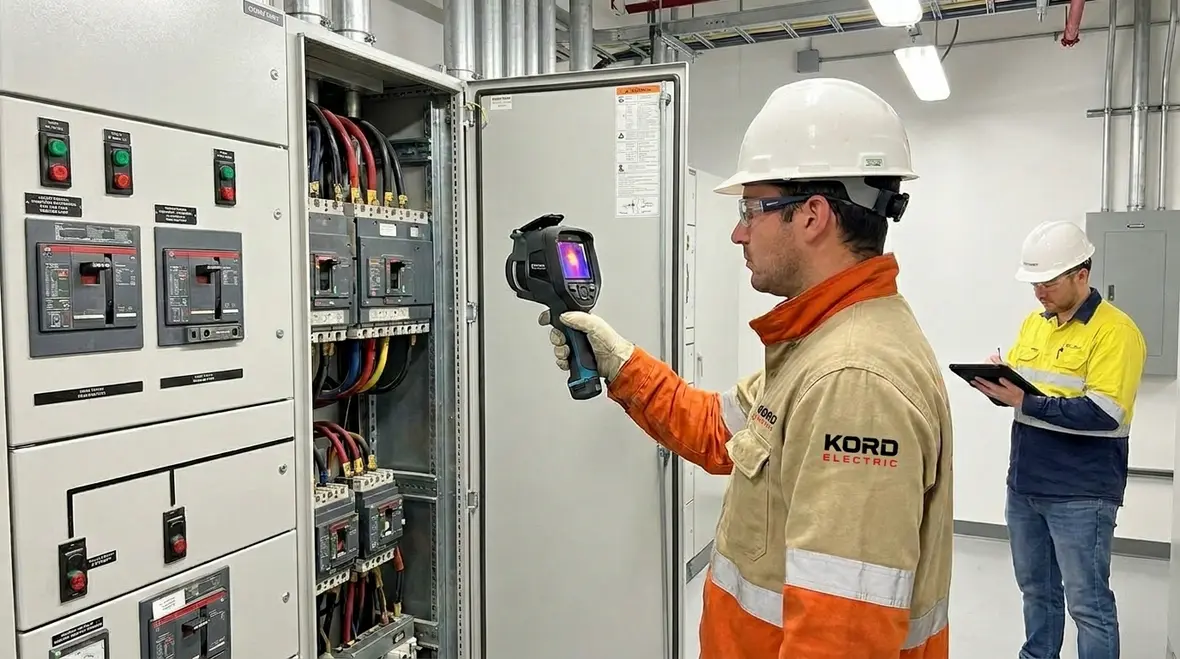
Comprehensive Electrical Safety Audit for Facilities
Kord Electric helps commercial and industrial leaders run a comprehensive electrical safety audit that actually finds risks before they become incidents. In our approach, we guide the facility team step by step, then we document what we see, why it matters, and what we recommend next. And yes, we keep it calm in the field, because no one needs a surprise arc flash to turn their Tuesday into a disaster movie. To conduct an electrical safety audit for facilities, we blend hands on testing, careful inspection, and clear reporting, so others can make decisions with confidence. After all, electricity does not care about slogans, budgets, or vibes.
Set the scope and goals before anyone touches a panel
First, our expert service staff confirms what the audit must cover. This matters because a facility can have multiple operating areas, tenant spaces, or critical systems that behave differently. We define the boundaries in writing and align the work with the facility’s real risk profile, not a generic checklist someone found online.
Then we identify the primary objectives. Some clients want compliance support. Others need reduced downtime risk or better system reliability. Still others need documentation that stands up during internal reviews or external audits. Whatever the goal, we build the plan around equipment categories such as switchgear, main service gear, distribution panels, motor control centers, transfer switches, and emergency power systems.
To keep the work efficient, we also confirm operational constraints. For instance, some buildings cannot shut down critical circuits. Therefore, we schedule testing windows, lockout and tagout steps, and any necessary coordination with operations managers. If someone thinks this part is “boring,” we politely remind them the boring part is usually what saves the exciting part.
Risk mapping: where hazards hide in plain sight
Turn building history into a usable risk map
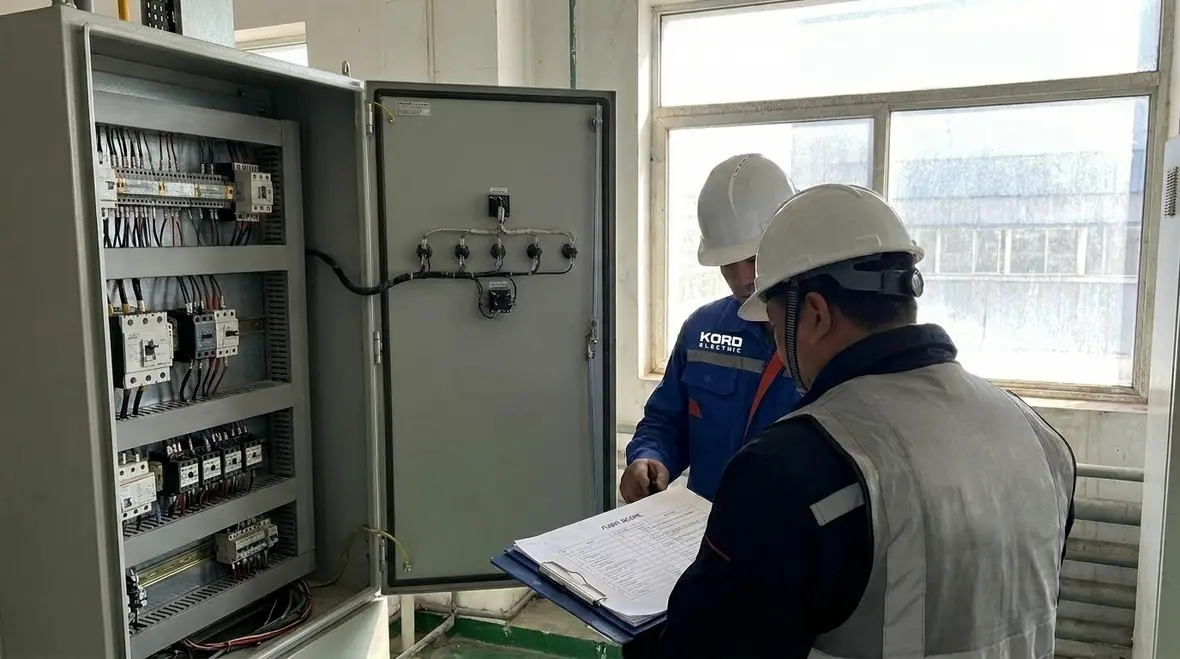
Next, we develop a hazard map based on the facility layout and the history of issues. Our technicians review prior maintenance records, incident logs, breaker trip trends, and any previous electrical deficiencies. After that, we walk the site with the operations team and mark areas where conditions suggest elevated risk.
Typically, hazards cluster around certain themes. Aging equipment can show insulation aging, loose terminations, and corrosion. Improper labeling or unclear circuit identification leads to unsafe work practices later. Moisture intrusion can quietly degrade enclosures and cable jackets. Overloaded circuits can run hotter than expected, even if nothing fails immediately. Meanwhile, incorrect bonding and grounding can create stray voltage concerns or increase fault clearing time.
We also look at how the facility works during everyday operations. For example, temporary power setups, frequent panel door openings, or after hours work can change the risk picture. In other words, the facility is never just “a building.” It is a living system with patterns, habits, and stress points.
Connect risk mapping with broader safety planning
For many properties, risk mapping during an electrical safety audit pairs naturally with broader safety work like electrical safety compliance for small businesses and hidden electrical risks in commercial buildings. When facility managers understand where hazards concentrate, they can align inspections, documentation, and future projects around the areas that truly drive risk.
Perform the visual inspection with a sharp, methodical eye
See beyond “looks fine from the door”
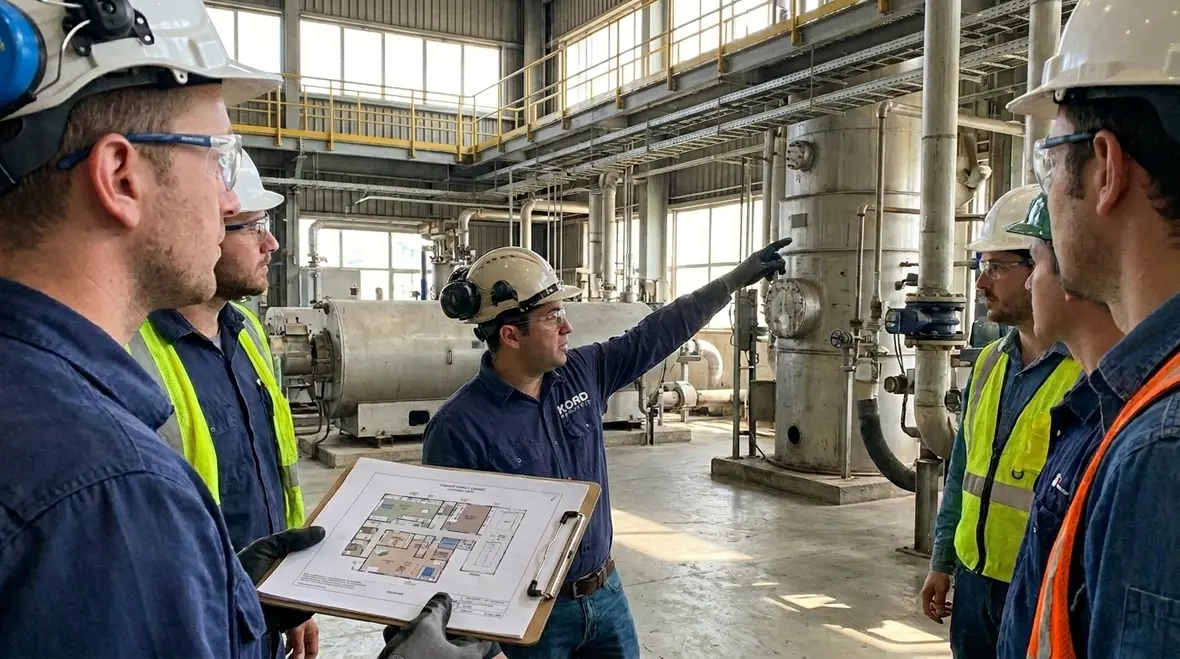
Now we conduct the on site visual inspection. Our electrical safety audit for facilities includes close review of equipment condition and installation practices. However, we do not just look for obvious damage. We also check the details that often get missed, like the quality of terminations, the condition of bus bars, and the presence of proper lugs and torque markings.
Our technicians examine panels, gutters, conduits, supports, and cable routes. They confirm that openings are sealed, that conduit entries are properly finished, and that cables maintain correct separation from heat sources. We also verify that covers, deadfronts, and barriers exist where they should, because exposed live parts never become safer just because they feel familiar.
While we work, we explain what we find in plain language. The goal is not to overload the team with theory. Instead, we help others understand what changes today will reduce risk tomorrow. If your team wants the “why,” we provide it. If they want the “what do we do next,” we provide that too. That is part of the service, not extra sales pressure.
Why visual inspections pair well with maintenance standards
Structured visual inspections during an electrical safety audit align closely with guidance from documents like NFPA 70B and Kord Electric’s own approach to NFPA 70B electrical panels and switchgear maintenance. When facilities combine preventive maintenance with disciplined inspections, they uncover loose connections, contamination, and age related wear before those details become outages.
Test and measure: verify protection, grounding, and continuity
When meters confirm what the eye cannot see
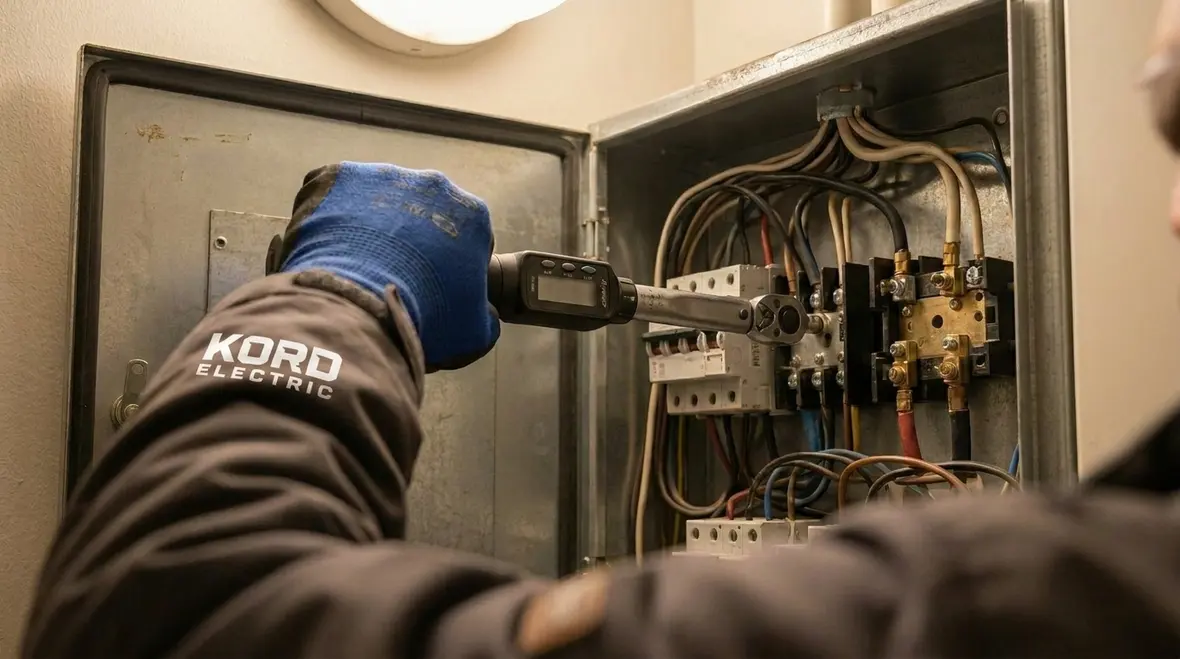
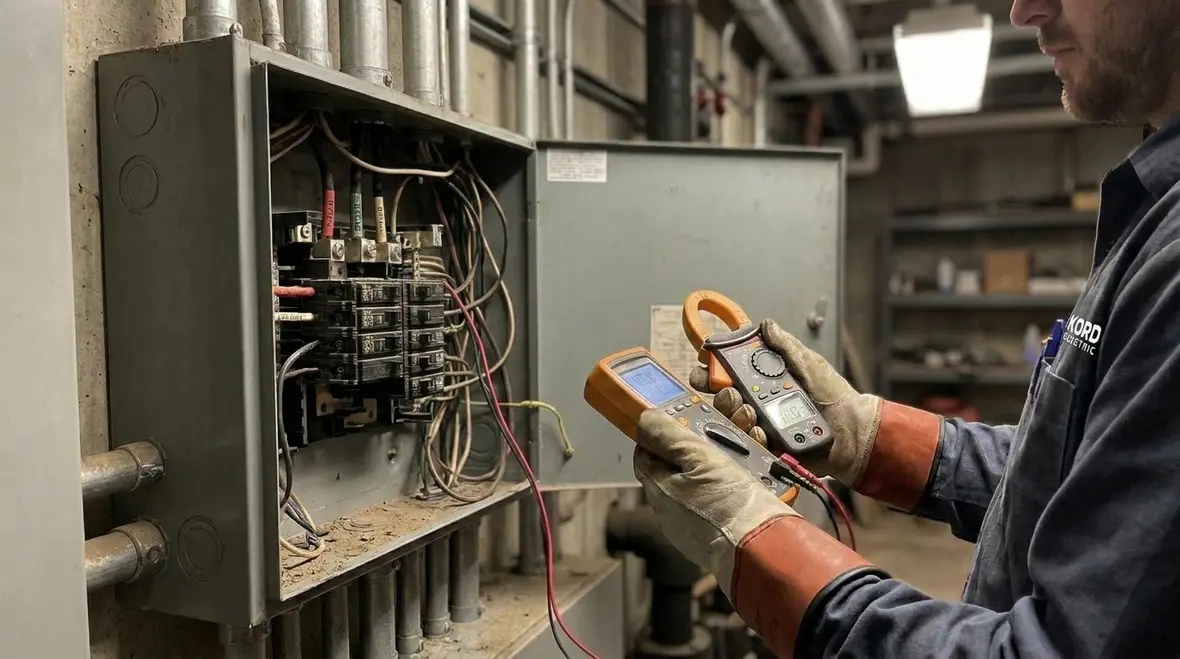
After visual checks, we verify performance with testing and measurement. This step matters because a panel can look acceptable while failing under load or during a fault. Our technicians use calibrated test instruments and document results so the facility team can track trends and verify improvements later.
We typically focus on protective device operation, grounding and bonding continuity, insulation resistance trends where appropriate, and conductor integrity. We evaluate whether grounding paths support safe fault clearing. We also review overcurrent protection settings relative to the connected loads and the available fault clearing capacity.
In addition, we verify that emergency and standby systems operate as designed, when the facility allows safe testing. For critical buildings, we review transfer equipment performance and coordination so the system restores power on time during an event. This reduces the chance of a power transition that leaves equipment half awake and unhappy, which is a classic way to create downtime.
Importantly, we follow safe test practices and coordinate with facility operations. We schedule work when it causes the least disruption. And whenever possible, we explain the process to the staff onsite so the team understands what each measurement means and how it links to real safety outcomes.
Link testing to preventive maintenance strategy
Test data gathered during an electrical safety audit for facilities becomes even more valuable when it feeds into a structured preventive program. Many clients combine audits with Kord Electric’s electrical preventive maintenance services so that breaker testing, insulation checks, and power quality measurements translate into a long term plan instead of a one time snapshot.
Evaluate labeling, documentation, and safe work readiness
Clarity on paper becomes safety in the field
Next, we assess how the facility supports safe electrical work. In many commercial and industrial settings, the biggest risk comes from confusion, not from broken equipment. Therefore, we check whether equipment labeling is clear, circuit directories are accurate, and single line diagrams match the actual system.
We review whether hazardous areas have the right signage and whether access control supports safe entry. We also confirm that lockout and tagout procedures align with how the electrical system is actually laid out. If your site uses permits, we verify that the process captures electrical hazards correctly and assigns responsibilities clearly.
Then we look at readiness for future work. For example, do teams know where disconnects are located? Are cables identified properly at accessible points? Are spares and replacement parts documented so maintenance does not become guesswork when something fails?
Our technicians and expert service staff explain these gaps in a practical way. We do not blame people for making do. We simply show how small documentation improvements reduce mistakes and speed up safe repairs.
Documentation that stands up during reviews
Strong labeling and records from an electrical safety audit for facilities help teams during internal evaluations and when answering questions about NFPA 70 national electrical code requirements. Clear diagrams and directories show that the building treats code compliance as part of everyday operations, not a last minute paperwork exercise.
Analyze findings and build a clear action plan
From raw findings to a prioritized roadmap
After the inspections and tests, we analyze findings and convert them into an action plan the facility can use. We do not hand over a thick report that gathers dust like an old manual. Instead, we organize issues by risk and impact, so decision makers can prioritize correctly.
To do that, we categorize each item based on potential safety severity, likelihood, equipment criticality, and how quickly it needs attention. Then we recommend corrective actions. These can include tightening terminations, repairing damaged cable insulation, replacing deteriorated components, updating labeling, improving bonding and grounding, or adjusting protective device settings where allowed.
Next, we help others understand effort and timeline. We also note any items that may require engineering review or utility coordination. This prevents surprises later, and it avoids “wait until it fails” strategies that tend to fail on the most inconvenient day. Yes, electricity has a sense of humor. It is not a friendly one, but it is consistent.
Finally, we include documentation guidance so the facility team can maintain records for compliance and future audits. Others can use this plan for maintenance scheduling, capital requests, and training updates without guessing where to start.
Action plans that connect to everyday operations
Instead of leaving teams with abstract recommendations, we align the action plan with real world constraints like outage windows, staffing, and other projects. When paired with services such as support for voltage fluctuations in commercial and industrial facilities, the plan becomes a bridge between audit findings and the reliability improvements that operators actually notice.
Keep the program alive with follow up and training
Turning a one time audit into an ongoing safety habit
Safety does not end when the audit report is delivered. Therefore, we recommend a program that includes periodic inspections, targeted maintenance, and updates when the facility changes. A remodel, a new production line, or a new generator setup can shift the risk profile quickly, and we support facilities in keeping documentation aligned.
We also recommend staff training that fits real job roles. Our expert service staff can brief maintenance teams on the audit findings, explain safe access and electrical boundaries, and reinforce correct procedures for work near live equipment. This reduces the chance of repeat issues caused by the same misunderstandings.
When facilities treat the audit as a living tool, they reduce risk and improve reliability. And while that may sound like a “systems philosophy,” it actually shows up in fewer trips, faster troubleshooting, and a safer day for everyone on the floor.
Where an electrical safety audit for facilities fits into your bigger picture
For many organizations, an electrical safety audit for facilities sits alongside other focused efforts like data center electrical maintenance checklists, commercial landscape lighting safety, and regional efforts such as Santa Monica electrical safety for coastal properties. Taken together, these programs form a broader culture of electrical safety instead of isolated projects.
FAQ
Conclusion
If a facility wants fewer electrical surprises, it needs more than “a quick look.” Kord Electric conducts a comprehensive electrical safety audit for facilities that finds real risks, verifies system performance, and turns findings into a practical action plan. Our technicians and expert service staff explain what matters and why, so your team can move forward with confidence. Reach out to Kord Electric to schedule an audit for your commercial or industrial property, and let’s make your electrical system safer before it makes headlines.
For organizations looking to extend the impact of an electrical safety audit for facilities, Kord Electric can also connect the findings to broader reliability work such as electrical preventive maintenance programs and targeted support for voltage fluctuations in commercial and industrial buildings. Together, these services help facilities turn today’s insights into long term protection for people, equipment, and operations.


