Kord Electric Verify NEC Service Point of Attachment
Kord Electric and the NEC service point of attachment you should verify first
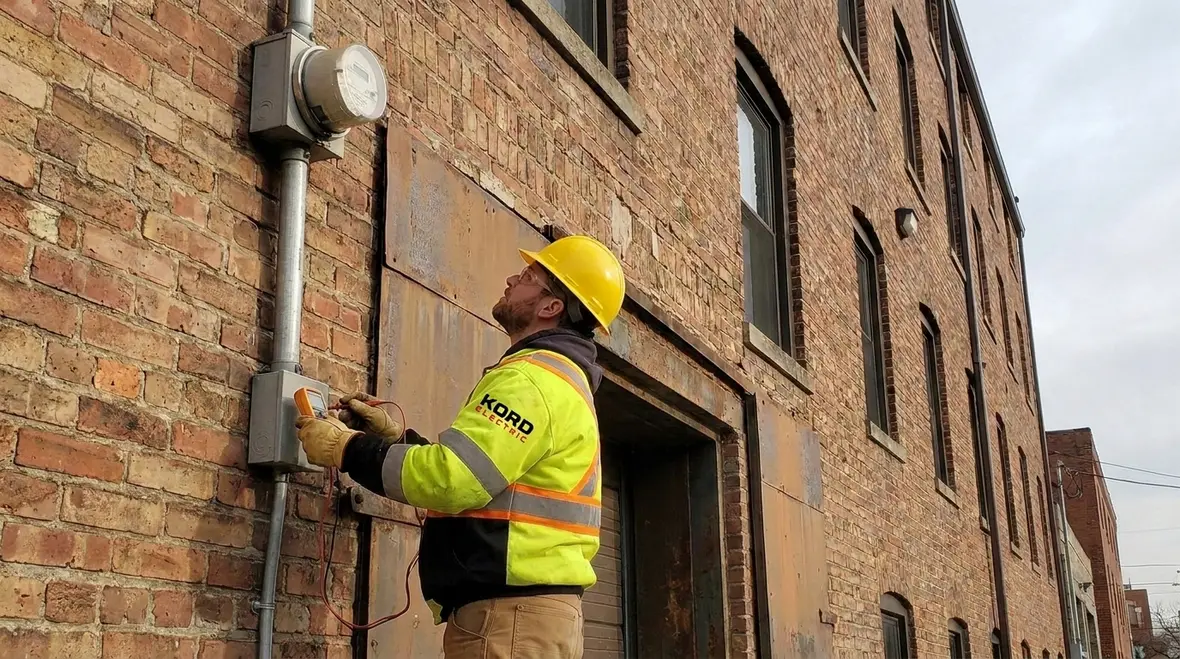
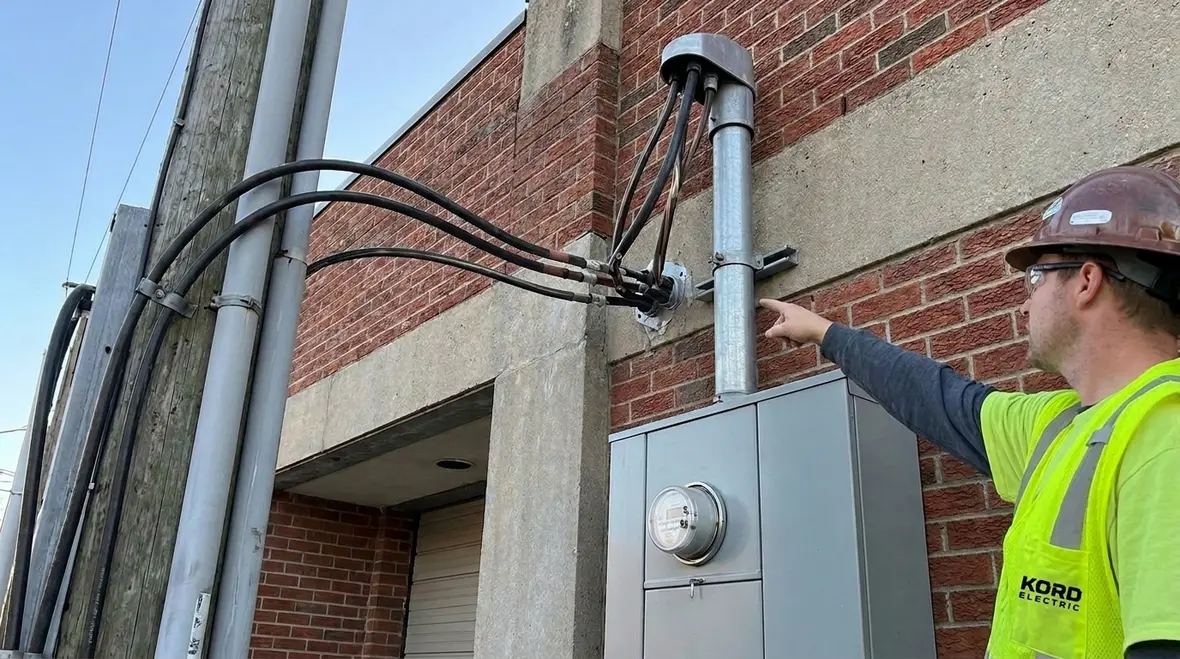
When a new service is planned, or an existing one is upgraded, we start by checking the NEC service point of attachment. This is the spot where the utility’s equipment meets the customer side, and it matters because NFPA 70 Section 230.26 lays out how that connection must be handled. In plain terms, we want the electrical system to connect in a way that stays safe, stays stable, and stays compliant. And yes, we explain it like we are talking to a real person, not like a textbook that learned to sprint.
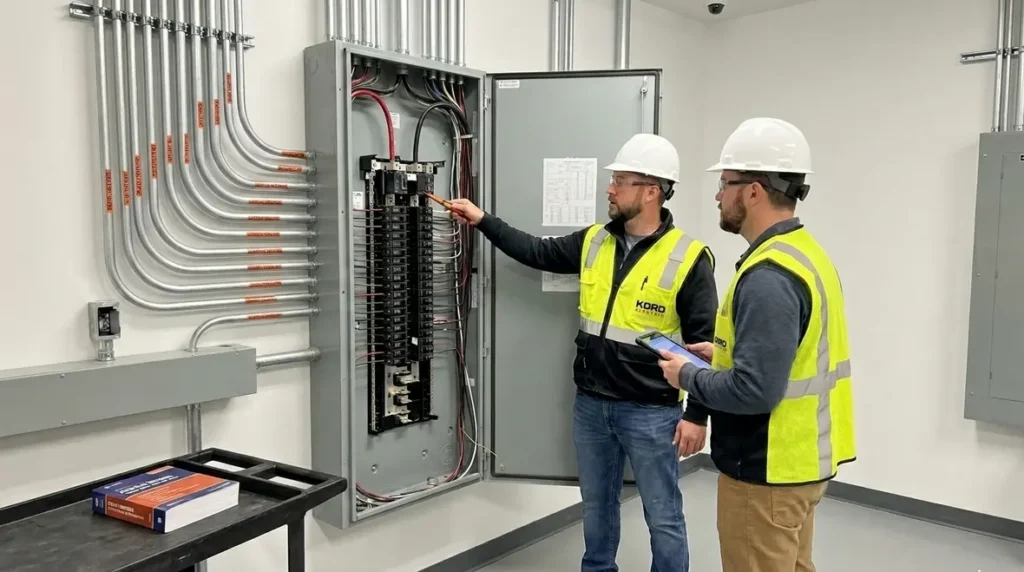
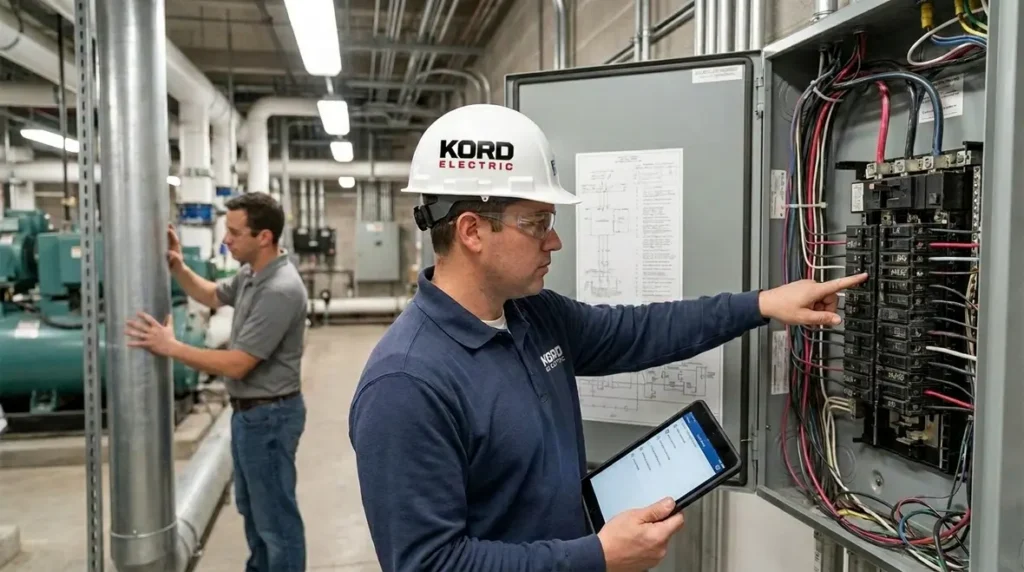
Our expert service staff at Kord Electric walks through the rules step by step for commercial and industrial facilities and major property buildings. Then, they document what they see, explain why it matters, and coordinate with engineers and contractors so the installation does not stumble later at inspection.
NFPA 70 Section 230.26: what it requires at the connection
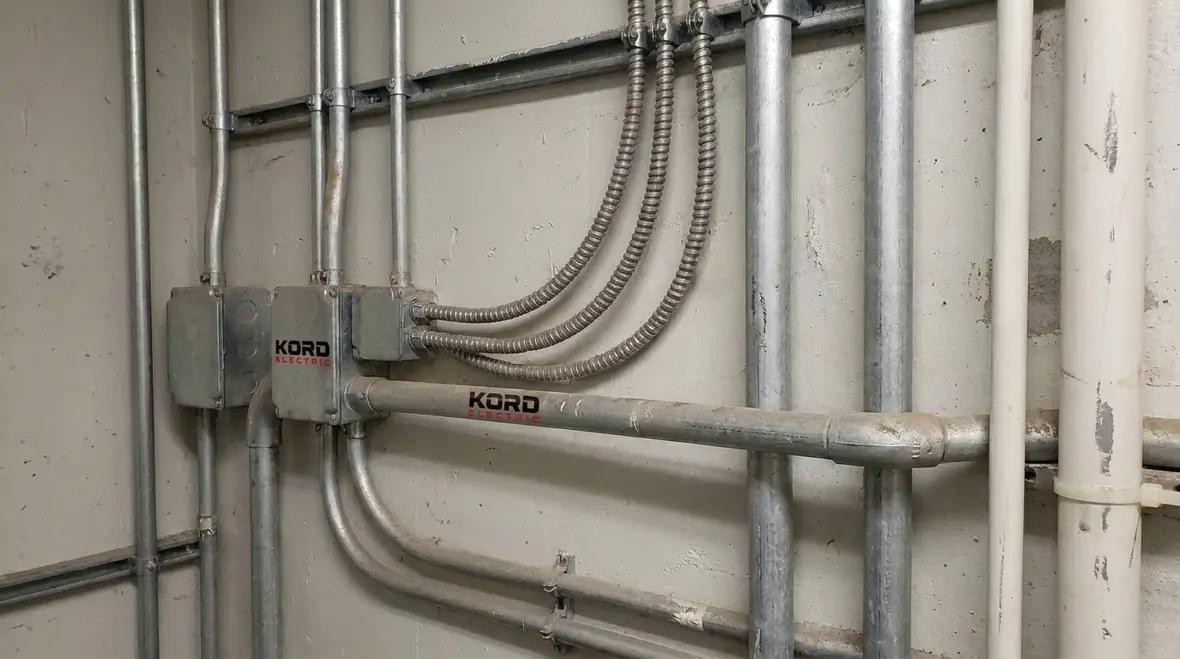
NFPA 70 is the National Electrical Code, and Section 230.26 focuses on point of attachment rules for services. To keep things grounded, we look at the practical intent: the service connection must be made at locations and methods that reduce hazards such as mechanical stress, arcing risk, and unsafe clearance conditions. Furthermore, these requirements help ensure the utility can maintain the line without creating problems for the building occupants.
In the field, we often find that confusion happens when teams treat “attachment” as a vague idea. However, the code treats it as a defined concept tied to where conductors are made ready for the service and how those conductors are supported and routed. That means the attachment method is not a decorative choice. It is a safety decision.
Our technicians do not just memorize the language. Instead, they connect the requirement to what the installer will actually build. As a result, the design and the construction match what the inspector expects. And when we say “match,” we mean it the way a zip line matches a harness, not the way a coffee order matches a random mood.
For facility teams who want a deeper dive into the broader NEC framework, our article Understanding NFPA 70: The National Electrical Code Explained for 2026 walks through how the 2026 direction shapes design, installation, and inspection planning.
How we identify the service point in commercial and industrial settings
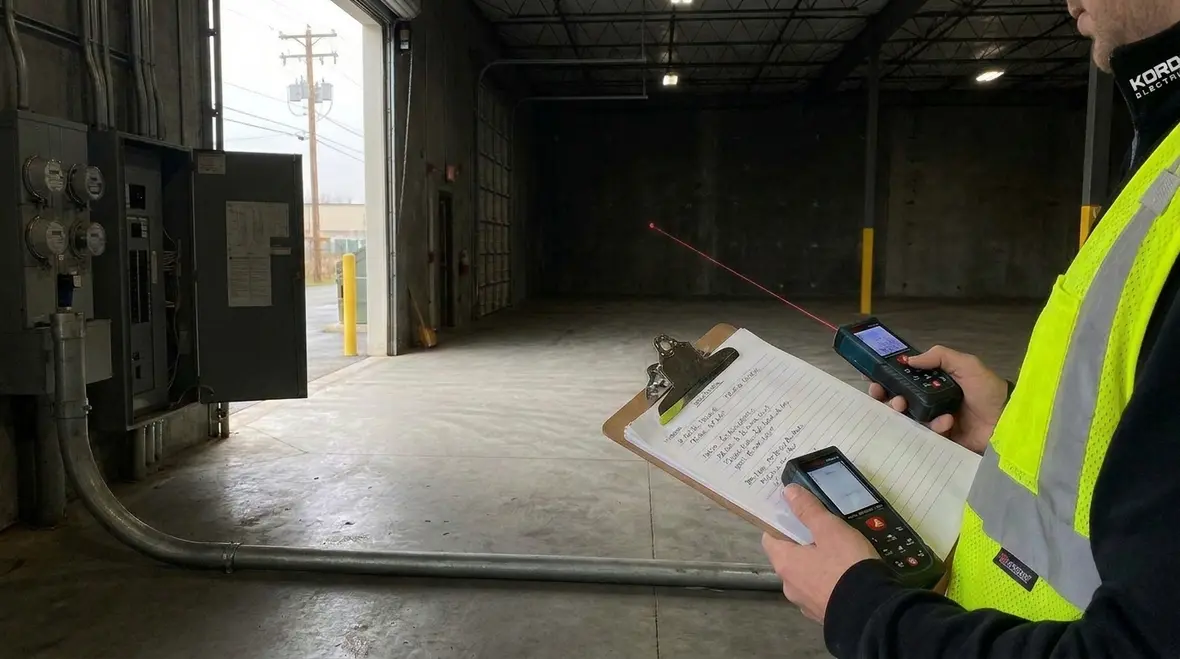
Every facility has its own layout, yet the process stays consistent. First, we map the service path from the utility side to the building service equipment. Then we identify the exact point where the customer’s system takes responsibility. After that, we verify what surrounds the attachment area, including nearby equipment, structures, and routing constraints.
Next, we check support and strain relief. Conductors and cables experience forces during wind, thermal expansion, and vibration. If the attachment strategy cannot handle those forces, the risk grows. Therefore, we confirm that the attachment location and method align with the installation requirements so the conductor stays protected and properly secured.
Finally, we focus on access. Inspectors and electricians need a workable environment. We make sure the placement does not create unsafe reach-in conditions or require sketchy “temporary” setups that somehow become permanent. Commercial and industrial properties do not get extra lives for improvisation. They get compliance.
For complex facilities, our team often pairs this review with data-driven planning approaches similar to what we outline in our data-driven electrical design guide for commercial and industrial projects, so the NEC service point of attachment aligns with the broader distribution strategy.
Clearances and mechanical protection that keep the system steady
Section 230.26 connects to the bigger theme of safe clearances and mechanical protection. Even when a building looks clean on the drawings, the final installation can shift. Conduit routing changes. Mounting brackets move. Field conditions show up like surprise plot twists in a sitcom.
So we verify clearances around the attachment area and ensure the conductor route avoids hazardous proximity. Additionally, we inspect for mechanical protection where conductors could be exposed to damage. That includes areas subject to impact, abrasion, or vibration. We also look at how the installer secured hardware and whether it supports long term stability.
When our technicians explain this portion, we keep it simple: a good attachment prevents problems before they start. It reduces the likelihood of loosened connections, protects conductors from strain, and supports safe maintenance access. In other words, it helps the service behave like a professional employee. Reliable, consistent, and never “off script.”
That same mindset shows up in our work protecting critical loads from disturbances. If you are responsible for sensitive equipment, our article on preventing commercial power surge damage in buildings explains how good wiring details and protection strategies reduce long-term risk.
Installation coordination and documentation for inspections
NFPA 70 requirements often intersect with other code sections and project timelines. Therefore, Kord Electric plans with the entire team, including electrical contractors, civil teams, and sometimes the utility coordination process. We help define the attachment approach early so the construction phase does not treat it like a last minute detail.
Our expert service staff also supports documentation. We track what we verify on site and what the design intended. When a mismatch appears, we address it quickly. That includes reviewing routing changes, checking support methods, and confirming that the final arrangement respects the intended point of attachment conditions.
Then we communicate the “why” clearly. People understand safety when the explanation connects to real outcomes. For example, if a change could affect conductor stability, we show what might happen over time. If a clearance concern exists, we point to how that impacts risk. By doing this, we help teams make decisions that keep projects moving rather than stalling for corrections later.
On projects that depend on continuous operation, this coordination often pairs with the strategies we describe in our emergency power for business continuity design guide, making sure the NEC service point of attachment and backup power design support each other instead of competing for space or priority.
Common mistakes we see and how our team prevents them
Let’s be honest. Most issues do not come from bad intentions. They come from rushed coordination, unclear responsibilities, or a design that did not survive reality. Over the years, we have seen patterns in commercial and industrial installs where teams stumble around the service connection area.
One frequent mistake is assuming the attachment location is “close enough.” However, close enough does not work when clearance rules and mechanical protection expectations apply. Another mistake is failing to account for conductor routing changes during construction. Even small reroutes can shift how strain and support apply to the conductor.
We also see teams underestimating the value of access. If maintenance and inspection become difficult, issues linger longer than they should. Our technicians prevent this by checking the layout and confirming that the installation supports safe future work.
And yes, we sprinkle in a little humor when it helps. If someone tells us they will “figure out the attachment later,” we respond with the kind of calm that says, “That is how problems learn to multiply.” Then we redirect them to the right plan.
When data centers and major property buildings are involved, the stakes go even higher. That is why we align our attachment decisions with the reliability goals described in our data center uptime strategy for power reliability and redundancy, so a small oversight at the NEC service point of attachment does not become a big outage later.
Related code context and why it still matters
The NEC covers much more than the attachment point. Yet Section 230.26 acts like a foundation piece. When that foundation is correct, the rest of the electrical design gains stability. It also supports how the building service equipment operates as a system, not as separate parts that just happen to share the same room.
In addition, NEC compliance ties into how fire and life safety teams think about electrical hazards. That is why facilities often want not only a compliant installation, but also a consistent approach to risk reduction. Kord Electric supports commercial and industrial projects with that mindset, and we coordinate with partners when fire pump systems or other safety equipment could be nearby and affected by service routing and clearances.
For readers who want broader NEC context, we also reference educational materials published by our Kord Electric and Kord Fire teams. Those resources help people connect code language to real outcomes in the field, including how the NEC supports safe electrical service behavior in major property buildings. You can explore a fire protection perspective in the Kord Fire overview NFPA 70: All About The National Electrical Code (NEC) 2026, which pairs well with our electrical-side guides.
FAQ: NEC service point of attachment and NFPA 70 230.26
Ready for a code compliant service connection?
If you are building, renovating, or upgrading a commercial or industrial electrical service, do not leave the service connection to guesswork. We at Kord Electric verify the point of attachment conditions, document what we find, and explain every correction with clarity your team can act on. Contact us to schedule a review with our expert service staff and get an approach that supports a smooth inspection, safer operation, and fewer surprises later.
For facilities across Southern California that need a trusted partner for ongoing electrical support beyond the NEC service point of attachment, explore our Los Angeles County electrical services to see how we support design, upgrades, and troubleshooting for commercial and industrial sites.