Lighting Control Systems for Offices with Sensors and Savings
In commercial and industrial spaces, lighting should work as hard as the people who run the place. At Kord Electric, we design Lighting Control Systems for Offices: Sensors, Automation & Energy Savings that help buildings stay comfortable, reduce waste, and respond to real day to day use. Instead of treating lights like a switch you either flip or forget, we help teams manage light the way they manage HVAC or security, with controls that sense, adjust, and schedule. And yes, we know some people still think “smart lighting” means a bulb that posts motivational quotes. That is not what we install. We build dependable systems that save money and keep work areas performing.
How office lighting controls improve comfort and productivity
First, we focus on human comfort because offices do not behave like warehouses. Morning daylight comes in at angles, clouds roll in, occupancy changes from meeting rooms to quiet hallways, and the result is glare, shadows, or lights that stay on too long. A well planned lighting control system keeps the visual experience steady. Then, it supports task performance by maintaining suitable brightness levels where work happens.
When Kord Electric technicians configure controls, they do more than pick devices. They map how light moves through the space and how people use each area. For example, we often set up zones so open offices do not get forced into the same setting as private rooms. We also coordinate daylight response so rows of desks near windows get smarter dimming while interior zones stay at a consistent level.
In practice, that means fewer complaints like “why is my screen glowing like a spaceship” and fewer manual overrides that turn into permanent on positions. As a result, teams get stable lighting without constant finger pointing, and building managers get predictable behavior they can measure. For facilities teams that want to compare strategies across different building types, Kord Electric’s article on automated lighting control benefits for facilities shows how schedules, zoning, and daylight tuning work together in real commercial spaces.
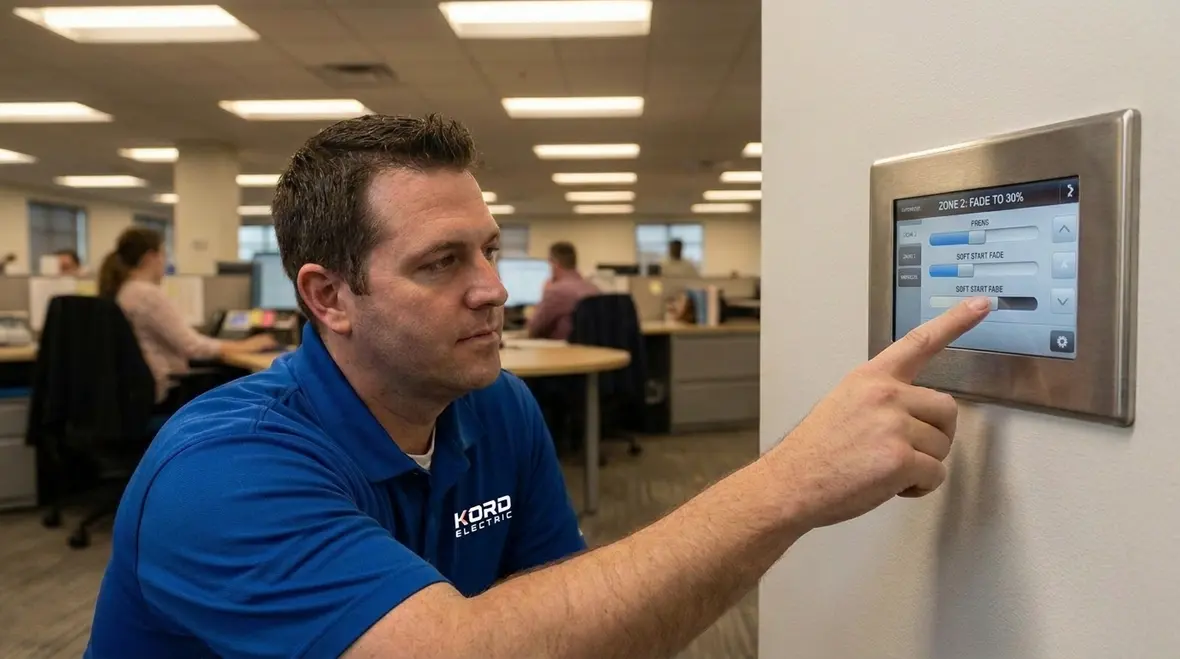
Beyond comfort, modern office lighting controls also support long term maintenance and safety. When zones are documented clearly, staff can troubleshoot quickly instead of guessing which switch feeds which area. That clarity matters even more in larger properties, where lighting control design ties into broader electrical planning, panel schedules, and power distribution. Kord Electric’s resources on commercial lighting control design, zoning, sensors, and code requirements expand on how zoning and sensor placement keep systems reliable from day one.
What sensors detect in day to day office use
Sensors act like the quiet operators behind the scenes. They notice occupancy, measure ambient light, and track changes in the environment that humans often miss until they feel uncomfortable. Instead of making people chase lighting settings, we let sensors do the detective work.
At Kord Electric, we commonly use these detection types based on the space:
- Occupancy sensors that identify motion and often learn patterns so lights turn on when people arrive and fade off when areas stay empty.
- Daylight sensors that read natural light levels so the system can dim or brighten based on what the windows deliver.
- Photosensors with tuning that help prevent flicker and reduce sudden changes when daylight shifts.
- System level inputs that integrate schedules, switches, and building automation signals.
However, we do not just place sensors and hope for the best. We calibrate them. Then, we adjust settings for the way people actually move through the area. For example, a conference room that gets used in bursts needs different timing than a hallway that sees steady foot traffic. We also account for coverings, mounting heights, and sensor placement so the system reads the right zone.
One of our technicians once described it this way: “A sensor is only as smart as the place you put it.” We laughed, because it sounded like something out of a construction sitcom, but it is true. When sensors match real workflows, the controls feel seamless.
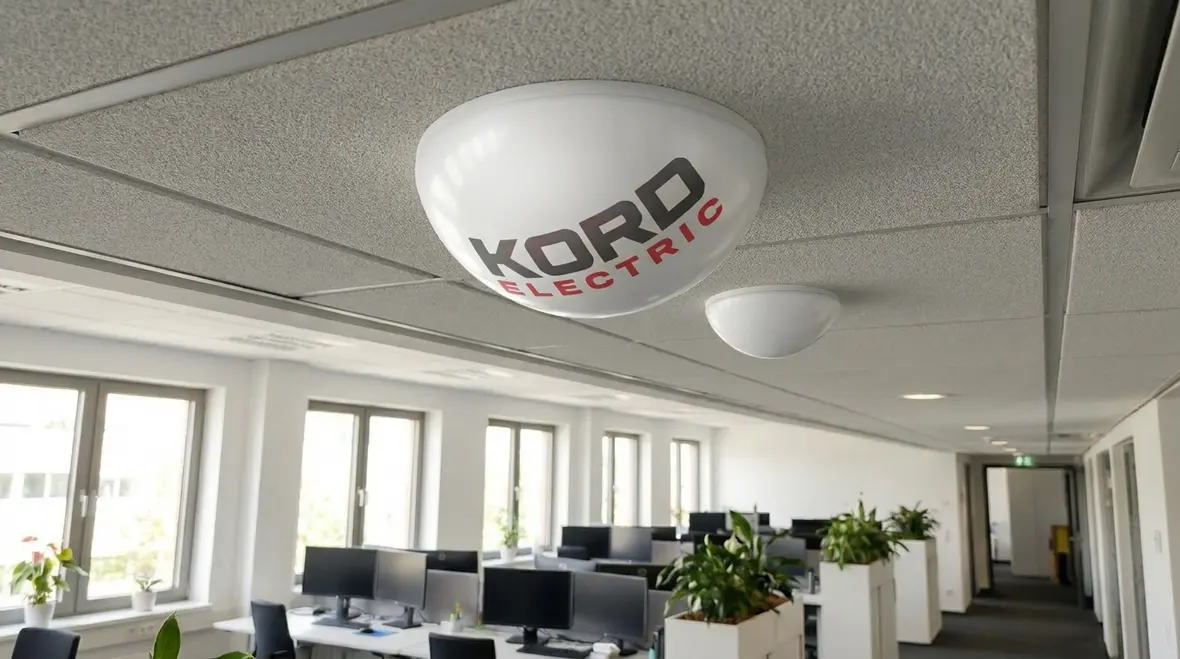
In many office projects, those sensors also support broader automation strategies beyond simple on and off. When paired with proper zoning and scheduling, they help shape lighting behavior around real occupancy patterns instead of guesses. For teams exploring upgrades, Kord Electric’s guidance on commercial lighting control retrofit costs, benefits, and energy savings walks through how sensors and control hardware fit into a practical retrofit scope.
Automation strategies that reduce waste without killing workflow
Once sensors collect signals, automation converts that data into consistent actions. In busy office environments, the key is timing and smooth transitions. You want lights to respond quickly when people enter, but you also want fade behavior that avoids distractions. So, we build control logic that supports workflow, not just energy targets.
Our approach often includes:
- Scheduling aligned to occupancy and operating hours, so the system follows the building rhythm.
- Daylight harvesting that dims lighting when daylight covers the need, while maintaining target levels.
- Zone control that separates work areas from corridors and meeting spaces.
- Soft start and fade rates that keep changes smooth for the eyes.
In addition, we help facilities set practical rules for overrides. For example, a training room should support temporary high light levels during presentations without staying maxed out for the next department meeting that never happens. We also design controls so maintenance staff can diagnose issues quickly.
That is where our expert service staff adds value. They explain the logic in clear terms, and they help facility teams understand what the system does and why. Instead of hearing “it just works,” stakeholders hear “this zone dims to maintain a set target, and it turns off after a vacancy window that matches your schedule.” When people understand the control strategy, they trust it. And trust means fewer late night calls that start with, “We touched one thing, and now the lights are doing… jazz.”
For major property buildings and multi level offices, those automation strategies often link directly to a broader facility plan. Kord Electric’s piece on commercial lighting control that saves energy with automation shows how scheduling, dimming, and commissioning work together so automation supports both comfort and measurable savings.

How integration supports building systems at scale
Large property buildings and multi tenant campuses need controls that play well with other systems. If the lighting controller acts like a lone wolf, the building staff loses visibility and the facility loses efficiency. Therefore, we plan for integration from the start.
Kord Electric supports commercial and industrial facilities by aligning lighting control behavior with the building environment. That includes compatibility with energy management, scheduling systems, and alarms where required. Then, we coordinate with existing infrastructure so we do not force a full replacement just to gain better control.
In the real world, integration helps with:
- Central visibility so staff can see zones and performance trends rather than guessing.
- Unified schedules that match occupancy hours, cleaning cycles, and after hours policies.
- Operational consistency where lighting rules follow the same approach used across HVAC and other controls.
- Reduced troubleshooting time because technicians can isolate faults in the control chain.
Our teams also document settings clearly. As a result, if a tenant changes a layout or a department shifts schedules, your control plan can adapt instead of breaking. That adaptability matters most in major property buildings where the “current state” is always changing, like office furniture, but with more cables.

Because lighting is only one part of your electrical story, integration often goes hand in hand with broader electrical planning. Many property teams connect their office lighting controls with larger programs like Kord Electric’s Los Angeles County electrical services for commercial and industrial facilities, so panel upgrades, power reliability, and automation all move in the same direction instead of fighting each other.
Energy savings you can explain to leadership
Energy reduction should not stay trapped in spreadsheets. We help leaders connect lighting control strategies to measurable outcomes. So we outline how sensors and automation reduce run time, cut unnecessary output, and prevent lights from operating during unoccupied periods.
Here is how savings typically build, step by step:
- Occupancy driven shutoff reduces energy in spaces that sit empty between shifts.
- Daylight responsive dimming lowers output when sunlight does the heavy lifting.
- Zone separation prevents whole floors from running at high output when only parts need it.
- Scheduling aligns lighting to real operating hours rather than broad assumptions.
Then, we support post installation review. Our expert service staff explains what to monitor and what it means, so your team does not need to guess whether the controls perform. In turn, leadership gets a clear story: these settings reduce wasted hours, maintain comfort, and support consistent operations.
Because frankly, no one wants to hear “trust us, it saves energy.” That is not business. That is a magic trick, and we try to keep the magic for birthdays, not utility bills.
When leaders want a deeper breakdown of cost, timing, and upgrade scope, Kord Electric’s resources on commercial lighting control retrofit costs and benefits and on lighting audits for California commercial buildings provide additional context. Together, they show how office lighting controls fit into a broader energy and compliance strategy instead of sitting on their own island.
Design and commissioning steps we follow before the lights go live
Good results do not happen by accident. They come from planning, testing, and commissioning. Kord Electric applies a careful process designed for commercial and industrial facilities, where downtime and disruption cost real money.
We typically move through these steps:
- Site review to understand layouts, mounting locations, and how spaces get used.
- Control plan that defines zones, set points, sensor types, and timing behavior.
- Programming and tuning so the system responds smoothly to occupancy and daylight changes.
- Testing to confirm correct behavior in real conditions, not just in a lab.
- Training where our technicians and expert service staff explain operation, overrides, and simple troubleshooting.
After installation, we also verify that controls match the building’s expectations. Furthermore, we ensure the system behaves consistently after typical transitions, such as morning start up and mid day daylight swings. That way, the controls feel predictable to occupants and manageable to staff.
Just as importantly, we provide practical guidance. When people know how to interact with the system, the system lasts longer in real life. And yes, we can hear the future email now: “The lights are on again,” but if that happens, we help you pinpoint why fast.
This same commissioning mindset shows up in Kord Electric’s work on data driven electrical design and preventive maintenance. Whether you are reviewing a new project or tying controls into existing infrastructure, articles like the company’s data driven electrical design for commercial and industrial overview and its commercial lighting maintenance guides help facilities connect day one performance with long term reliability.
FAQ
Get lighting controls built for your commercial facility
If your office spaces feel inconsistent, waste energy, or frustrate staff, Kord Electric is ready to help. We design Lighting Control Systems for Offices: Sensors, Automation & Energy Savings for commercial and industrial facilities, and we back it up with expert technicians who tune, test, and explain the system. Reach out to us for a site review and a practical control plan that fits your building use and your leadership goals. Let us make your lighting behave like a professional, not like a guessing game.
For teams that want to dive deeper into design options before a project starts, Kord Electric’s article on commercial lighting control systems for facilities connects office focused strategies with broader campus and industrial needs. When you are ready to align your lighting upgrades with other projects across your building portfolio, that context can help leadership see how everything fits together.
If your facility is in or around Los Angeles County and you need a partner who can handle both Lighting Control Systems for Offices: Sensors, Automation & Energy Savings and the underlying electrical infrastructure, Kord Electric’s Los Angeles County electrical services for commercial and industrial buildings bring lighting, distribution, and maintenance under one roof. That way, your control strategy lands on solid power, not on aging gear that is ready to retire.